A Cotton Poplin Shirt Can Pass Indoors and Turn Sheer Outside
A crisp white poplin button-up looked opaque in the fitting room, then exposed every underlayer in direct sun. Yarn density, finish, color, pockets and fit explain the change.
August 30, 2026 · 8 min read
The shirt that prompted this test was a white, long-sleeve cotton poplin button-up with a crisp collar, a single chest pocket and no lining. Over bare skin in a fitting room, it looked covered enough. Outside in direct midday sun, the pocket became a bright rectangle, the placket formed a solid white stripe and the outline of a gray tank showed through the rest.
Nothing had happened to the shirt between the mirror and the sidewalk. The light had changed.
This is unisex advice because the fabric mechanics do not depend on the department where a shirt is sold, although bust tension, chest-pocket placement and the cut through the torso can change where transparency appears. The useful buying test takes less than two minutes and tells you more than a fabric-weight number on a product page.
Why poplin changes in direct sun
Poplin is a plain weave, meaning each crosswise yarn passes over and under alternating lengthwise yarns. That structure creates the smooth, crisp surface associated with office shirts, but the word poplin does not guarantee a particular level of coverage. Two shirts can carry the same fiber and weave description while behaving very differently outdoors.
Yarn density, which is how closely the yarns sit together in the cloth, matters first. Closely packed yarns leave smaller spaces for light to pass through. A lower-density cloth may still feel crisp because stiffness can come from finishing treatments, so judging only by touch can overrate it; the white shirt in this test felt substantial between the fingers, yet light traveled through the open spaces once the fabric sat flat across the body.
Yarn thickness matters alongside density. Fine yarns can make a smooth, tightly packed shirt that gives good coverage without much bulk, while thicker yarns arranged farther apart may produce a heavier cloth with more visible gaps. This is why fabric weight alone is a weak opacity test. Weight describes how much material is present across an area, not how that material is distributed or how much light passes between the yarns.
Direct sun exposes those gaps because it is stronger and more directional than fitting-room light. Overhead retail lighting also leaves parts of the torso in shadow, particularly beneath a collar or near a rack. Sunlight strikes the broad front and back of the shirt, making the contrast between skin, bra, undershirt and doubled fabric much easier to see.
Color and finish can mislead the eye
Bright white is unforgiving. Skin and most underlayers create a strong contrast behind it, while seams, plackets and pockets contain extra fabric and stay visibly whiter than the single-layer body. The result can read as transparency even when no one area looks dramatically sheer on its own.
A cream, pale blue or skin-adjacent neutral may show less contrast on a particular wearer, although a color change cannot compensate for a very open weave. Dark shades often conceal underlayers better because less light returns through the cloth, but saturated color is not proof of density. Hold every colorway to the same test, especially if the white sample on display is not the shade you plan to buy.
Finish complicates the first impression. Calendering, a treatment that presses fabric between rollers for a smoother surface, can make poplin look denser and feel more polished. Other finishing agents add body, helping a light shirt stand away from the skin rather than settling against it. That space can improve apparent coverage indoors, yet neither crispness nor shine closes a visibly open weave.
Finishes may also soften with laundering. That does not mean every poplin shirt becomes more transparent after washing, but a new shirt whose coverage depends on a rigid, papery surface deserves caution. Follow the care label and judge opacity before removing tags or washing, since laundering usually ends the practical return test.
The pocket is part of the opacity problem
The white test shirt had one patch pocket over the left chest. Its two layers were much more opaque than the rest of the front, which made the surrounding single layer look thinner by comparison. Under direct sun, the pocket edge also highlighted where a tank neckline crossed behind the shirt.
Pocket placement can either help or create a target. A pocket that fully covers the area where an underlayer would otherwise show may be useful, particularly on a relaxed shirt. A small or high pocket can frame contrast rather than conceal it, and a single pocket makes the asymmetry obvious. Two pockets spread the doubled area across the chest, though the side body and back remain one layer and may still turn transparent.
The placket creates a similar effect down the center front. A back yoke, cuffs and collar stay opaque because they contain extra layers, so a shirt that looks evenly white on a hanger can break into blocks of different brightness when worn. On the test shirt, the pocket, placket and yoke passed every light check. The broad panels between them did not.
This is not automatically a flaw. A light, airy poplin can be the better summer shirt if you plan to wear it open over a tank or swimsuit. It becomes a poor buy when the styling goal is a stand-alone white button-up with no visible underlayer.
Use the hand test before the fitting room
Take one section of the shirt body, away from the pocket, placket, hem and seams. Slide your hand behind it and spread your fingers. Do not bunch the cloth or hold two layers together.
First, let the fabric hang loosely over your palm. Then pull it only enough to imitate the tension it will carry across your chest, upper back or stomach. If finger outlines, knuckles and skin tone become distinct under ordinary store light, the shirt will not gain coverage outdoors. Stretching matters because tension separates yarns and flattens the cloth against whatever sits behind it.
Compare the single layer with the pocket and placket. A sharp jump from the white of those doubled areas to a grayer hand behind the body predicts the blocked pattern that appeared on the test shirt in sunlight. This comparison works across skin tones because it judges the change between one layer and two, rather than treating one hand color as a universal standard.
Next, put the shirt on and button the point of greatest tension. Turn sideways, raise both arms and reach forward as if holding a steering wheel. Vertical pulling around a button, horizontal creases from the side seams or tiny openings between buttons show that the weave is under strain. If the shoulders fit but the chest pulls, sizing up may make the neck and sleeves too large; a roomier cut, a concealed button at the tension point or another fabric is usually a cleaner fix.
Add the phone-flashlight test
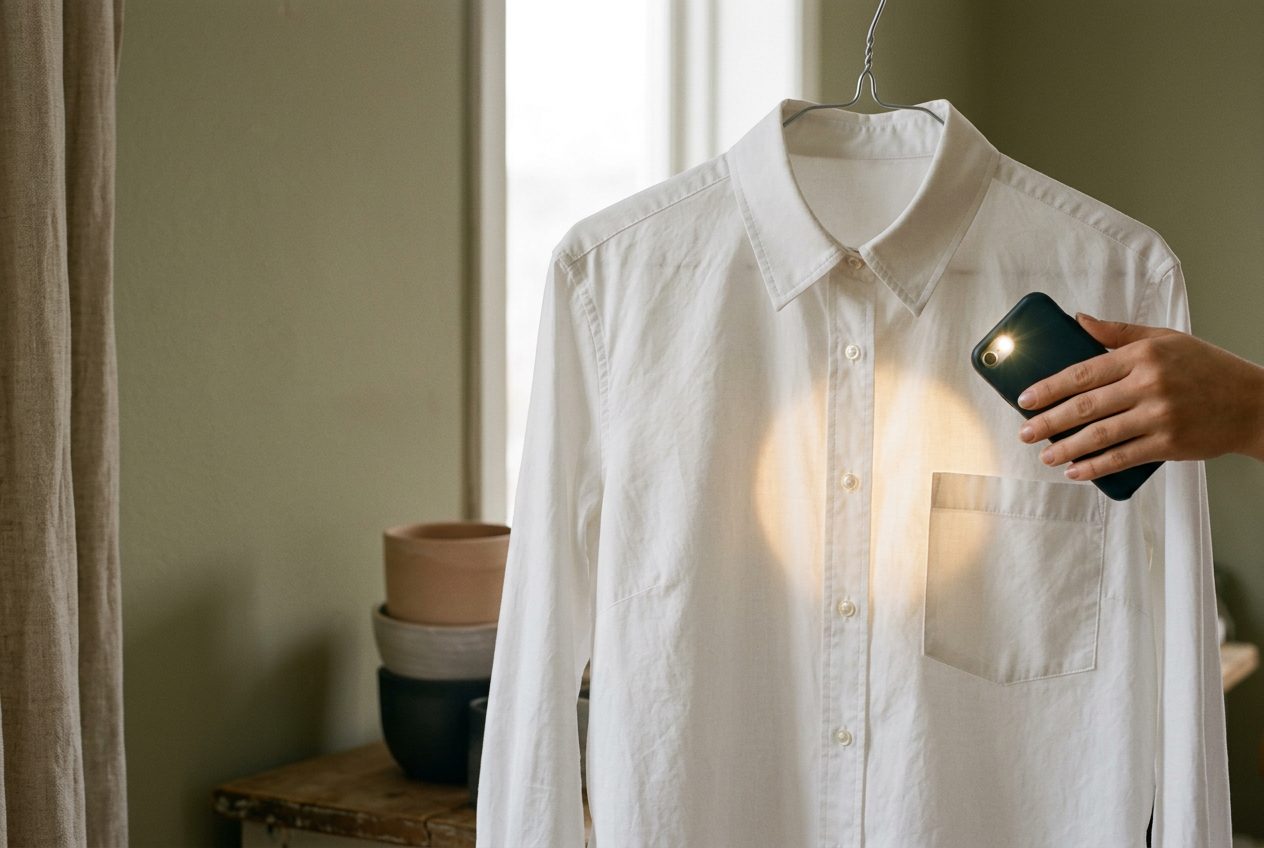
A phone flashlight is more revealing than the diffuse lighting in most stores, but use it as a comparison tool rather than a theatrical pass-or-fail test. Almost any thin white cloth will transmit some light when a bright LED is pressed directly against it.
Hold the flashlight several inches behind one layer of the shirt, with the beam aimed toward you. Move it behind the main body, then behind the pocket. If the beam becomes a broad glow through the body but nearly disappears behind the pocket, expect obvious contrast in sun. If individual yarn gaps or pinpoints of light appear, the weave is open enough that a dark bra, tank or waistband will probably register.
Repeat the test while holding the fabric at the mild tension it will have when worn. Do not pull hard enough to distort the shirt. The goal is to reproduce fit, not prove that cloth can become sheer when stretched beyond its intended shape.
For the white test shirt, the loose fabric softened the flashlight into a hazy circle. Under mild tension, the circle brightened and the gray tank became legible behind it. That result matched the outdoor failure more closely than the shirt’s crisp hand, substantial collar or opaque pocket did.
Decide whether to buy, layer or change fabrics
If the shirt passes both tests, check it near a window while wearing the underlayer you use most. A white or skin-adjacent bra generally creates less contrast than black, but seams, lace and molded edges can still show. A close-fitting tank gives predictable coverage at the cost of extra warmth and may interrupt the clean line that made a lightweight poplin appealing.
If you want opacity without layering, look for a visibly tighter poplin or change materials. Oxford cloth uses a more textured basket-like weave and often gives greater coverage, though it looks less sleek and can feel warmer. Cotton twill has a diagonal weave that tends to obscure what sits beneath it, trading poplin’s dry crispness for a denser surface and different drape.
Paying more does not guarantee an opaque white shirt. Better yarns and construction can produce a finer, denser cloth, but some expensive shirts are intentionally light for softness and breathability. Shop for the behavior you need, not the promise implied by a collar, a price or the word premium.
Questions people ask
Does a higher fabric weight make cotton poplin less transparent?
Sometimes, but weight alone cannot show how closely the yarns are packed. A heavier cloth with visible spaces may transmit more light than a lighter, tightly woven one. Use weight to estimate warmth and drape, then use the hand and flashlight tests to judge coverage.
Will sizing up stop a poplin shirt from turning sheer?
Sizing up can reduce tension if the fabric pulls across the chest, stomach or upper back. It will not fix an open weave that is transparent while hanging loose, and it may leave the shoulders, collar or sleeves too large. Compare the next size, then consider a roomier cut rather than accepting a poor overall fit.
What should I wear under a sheer white poplin shirt?
A smooth bra close to your skin tone usually creates less contrast than bright white or black. For full torso coverage, choose a thin, close-fitting tank with flat edges, accepting that it adds warmth. If the shirt is meant to stay open, a deliberate contrasting tank makes the transparency look planned.
Can washing make a cotton poplin shirt more transparent?
Washing can soften the finish that gave a new shirt stiffness and helped it stand away from the body. Results vary with the cloth and care method, so follow the label and avoid treating laundering as an opacity fix. Test before washing, especially when the pocket is already much whiter than the shirt body.
One update a day
Today's fashion update, in your inbox
One fashion update each morning — no hype, no filler, just pieces worth wearing.