A Chest Measurement Won’t Tell You If the Armholes Fit
A chest-only size chart leaves out the measurements that govern arm movement. Here is how to read shoulder width, sleeve room, fabric, and photos before ordering.
August 15, 2026 · 7 min read
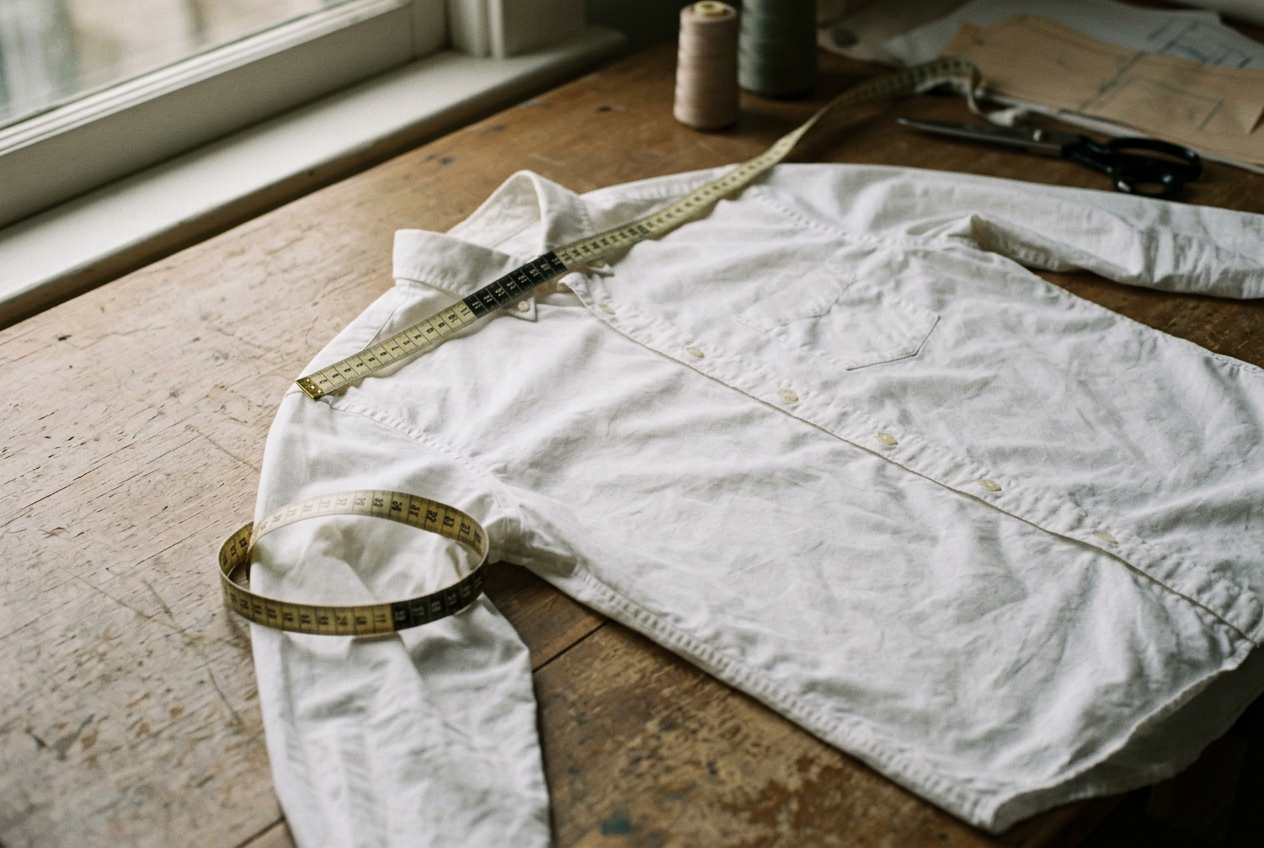
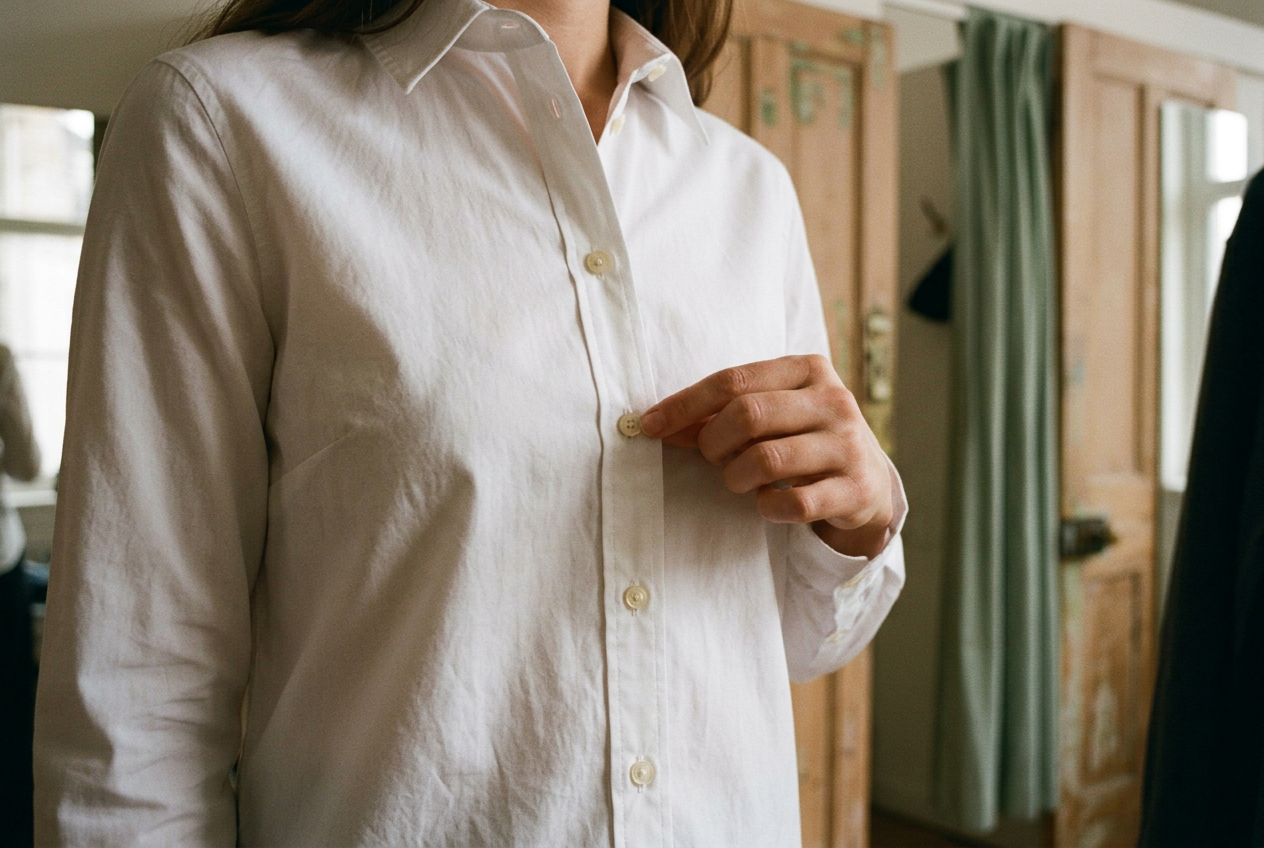
The test garment for this walkthrough is a white, 100 percent cotton poplin button-up with a chart that lists body chest circumference and nothing else. The shirt looks relaxed on the model, who is photographed mostly with her arms down, but the listing gives no shoulder width, sleeve circumference, or armhole depth.
That is enough information to choose a size only if your chest is the limiting measurement. For many people, it is not. Broad shoulders, a full upper arm, developed back muscles, or a short distance between shoulder and underarm can make a shirt pull or bite even when its chest measurement appears generous.
This is unisex advice because the same construction problem appears across women’s, men’s, and gender-neutral wardrobes, though the proportions used by each brand may differ. The goal is not to calculate an invisible armhole from one visible number. It is to decide whether the remaining evidence points toward a comfortable fit, a risky one, or a listing too incomplete to justify the order.
First, find out what the chest number measures
A chart may give a body measurement, meaning the chest circumference the size is designed to fit, or a garment measurement taken from the finished item. Those numbers are not interchangeable. A shirt needs ease, the difference between the body measurement and the garment measurement, so a garment chest should usually be larger than the chest it fits.
Look for wording such as “fits chest” or “body measurements.” If a retailer gives a pit-to-pit measurement, meaning the width of a garment laid flat from one underarm to the other, double it for an approximate garment circumference. That still does not reveal the shape or height of the armhole, but it tells you whether the listed number includes wearing room.
Our white poplin shirt gives body chest measurements. Choosing the size closest to your chest therefore says nothing about how much room the pattern adds at the upper arm, while moving up one size may add chest volume you do not need and lower the armhole further. Sizing up is a possibility, not a universal repair.
Use a shirt you own as the reference
Start with a woven shirt that already moves well and has a silhouette close to the candidate garment. A fitted work shirt is a poor benchmark for an oversized overshirt, just as a stretchy ribbed top will not explain the fit of crisp poplin.
Button the reference shirt, lay it flat without pulling, and smooth the back. Measure shoulder width from one shoulder seam to the other across the back. Then measure the upper sleeve about an inch below the underarm seam and double that flat width to get sleeve circumference. Record whether the armhole seam sits close to your underarm or several inches below it when worn.
You can also measure armhole depth, the vertical distance from the top of the shoulder area to the underarm seam, with the garment lying flat. Brands do not all measure this point in the same way, so treat it as useful only when comparing two garments measured by the same method.
These numbers give you a fit profile rather than a guaranteed conversion. If the reference shirt’s chest is roomy but its upper sleeve is only just comfortable, sleeve circumference becomes your hard limit. If its shoulders fit while the body is loose, choosing the white poplin shirt by chest alone could push you into a smaller size with narrower shoulders.
Shoulder position changes the whole armhole
Shoulder width is the strongest supporting clue because the armhole starts where the shoulder line ends. On a set-in sleeve, where the sleeve joins the body at a seam around the shoulder, a seam that lands before your natural shoulder point usually signals that the upper body is too narrow. The armhole may cut into the front of the armpit even though the shirt buttons without strain.
A dropped shoulder, meaning the seam sits beyond the natural shoulder point, behaves differently. It often places the underarm seam lower and creates a relaxed outline, but that extra-looking space can reduce reach because lifting the arm pulls more of the shirt body upward.
Return to the white poplin listing. If its photos show the shoulder seam well past the model’s shoulder, the shirt’s apparent looseness may come from a dropped cut rather than a large armhole or generous sleeve. If your comfortable reference shirt has a conventional shoulder seam, the two garments are not direct substitutes even when their chest measurements match.
When shoulder measurements are missing, search the full product description, garment diagram, fit guide, or retailer measurements rather than stopping at the main chart. Customer service may be able to provide the seam-to-seam width for a specific size. Ask how the measurement was taken so you can repeat that method on your reference shirt.
Sleeve circumference catches a different fit failure
A well-positioned shoulder does not guarantee enough upper-sleeve room. Compare the candidate’s sleeve circumference with your reference shirt whenever the brand supplies it, and do not substitute cuff width or a general description such as “relaxed sleeve.” The tight point is usually near the bicep, close to the armhole.
Product photos can help when that number is absent. A sleeve that presses flat against the upper arm, shows horizontal creases, or pulls the shoulder seam inward is carrying tension. One photograph is weak evidence because posing and pinning can change the garment, but the same tension across front, side, and back views deserves attention.
Sizing up often increases sleeve circumference, yet it also changes shoulder position and body volume. On the white poplin shirt, a larger size might free the bicep while making an already low armhole lower, leaving the wearer with more fabric and no improvement in reach. A different cut with a fuller sleeve is the cleaner alternative.
Fabric decides how much error you can tolerate
The fiber line matters. Cotton poplin is a tightly woven fabric that usually offers little stretch unless the composition or product description says otherwise. Our white shirt will not adapt like jersey, and a close armhole is unlikely to become comfortable through ordinary wear.
Elastane or spandex in the composition can add recovery and movement, but the percentage alone does not reveal stretch direction. A woven shirt may flex across the body while its seams and sleeve lining remain restrictive. Knits generally yield more because their loops can open under tension, though a dense knit or a stabilizing seam can still bind at the armhole.
Do not count on washing or break-in to solve the problem. A restrictive woven armhole can soften, but its seam length and basic shape remain fixed, while cotton may contract after laundering if the care instructions permit machine washing. Fit the least forgiving material first.
Read photos for motion, not mood
The most useful image shows the garment from the side or back with the wearer’s arm moved away from the body. Look at where the underarm seam sits, whether the shirt body rises sharply, and whether diagonal lines run from the armhole toward the chest or shoulder blade. Those drag lines can indicate tension, although posture can create them too.
Arms-down photographs hide both tight and low armholes. A tight armhole may look neat until the wearer reaches forward; a low one may look spacious until the whole hem lifts with the arm. Video can reveal more, particularly if the wearer turns, reaches, or puts a hand in a pocket, but edited movement is still not a fitting room.
Model measurements help only when they include the size worn and a dimension relevant to the garment. Chest alone cannot tell you the model’s shoulder breadth or upper-arm circumference. Styling also interferes: an unbuttoned shirt avoids chest tension, while rolled sleeves conceal the point you need to inspect.
For the white poplin shirt, repeated arms-down images, a dropped shoulder, and no sleeve measurement form a low-confidence listing. None proves that the armhole will fail. Together, they make a prepaid return label or an easy local return more important to the buying decision.
Make the decision before the package arrives
Compare the evidence in order. Match the candidate’s intended silhouette to your reference shirt, check any available shoulder and sleeve measurements, then adjust your confidence for fabric stretch and visible movement. Chest remains part of the decision, but it does not overrule a narrower shoulder or sleeve.
A fixed woven fabric with missing measurements deserves less guesswork than a forgiving knit. If the return will cost money, require a long trip, or leave you racing a short window, skipping an opaque listing can be more practical than ordering two sizes. The useful alternative is another shirt whose product page supplies garment measurements or shows the cut in motion.
Photos cannot replace trying on the item. They can, however, stop you from treating a chest number as a complete description of fit.
Questions people ask
Can
I estimate armhole size from the chest measurement?
Not reliably. Two shirts with the same chest circumference can use different shoulder widths, sleeve shapes, and armhole depths, so one may fit closely under the arm while the other hangs low. Use chest to establish body room, then look for garment-specific shoulder and upper-sleeve information.
Will sizing up fix tight armholes?
It may add shoulder and sleeve room, but it also adds volume through the body and can lower the armhole. If the current size fits your chest yet binds at the bicep, compare the next size’s shoulder and sleeve measurements before assuming it will move better.
How can
I tell a tight armhole from a low armhole in photos?
A tight armhole often shows pressure near the armpit, diagonal drag lines, or a sleeve pulling across the upper arm. A low armhole places the underarm seam visibly below the body and may lift a large section of the shirt when the wearer raises an arm.
What should I ask customer service to measure?
Ask for the shoulder width from seam to seam and the upper-sleeve width measured flat near the underarm, plus the size used. Request the measuring method as well. You can then take the same measurements from a shirt that already fits instead of comparing unlike numbers.
One update a day
Today's fashion update, in your inbox
One fashion update each morning — no hype, no filler, just pieces worth wearing.