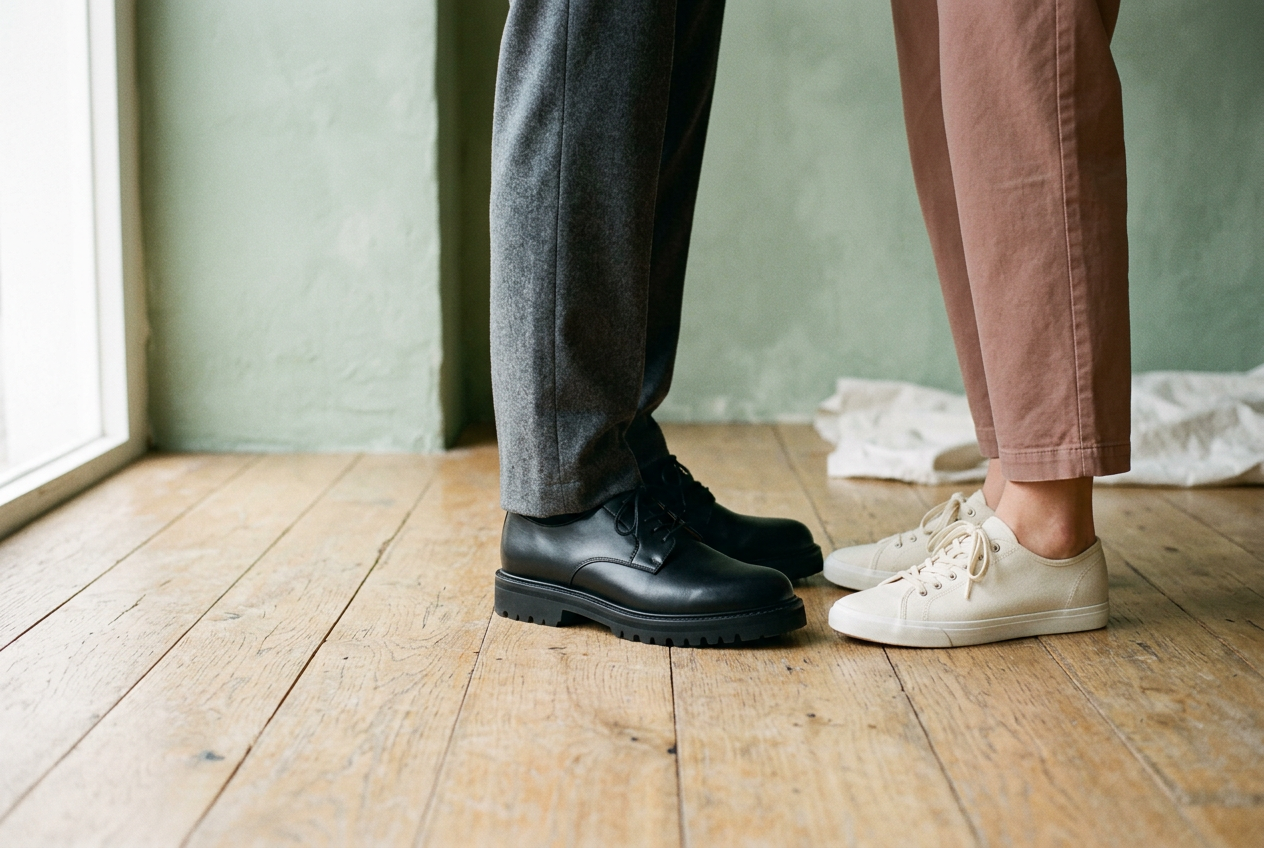
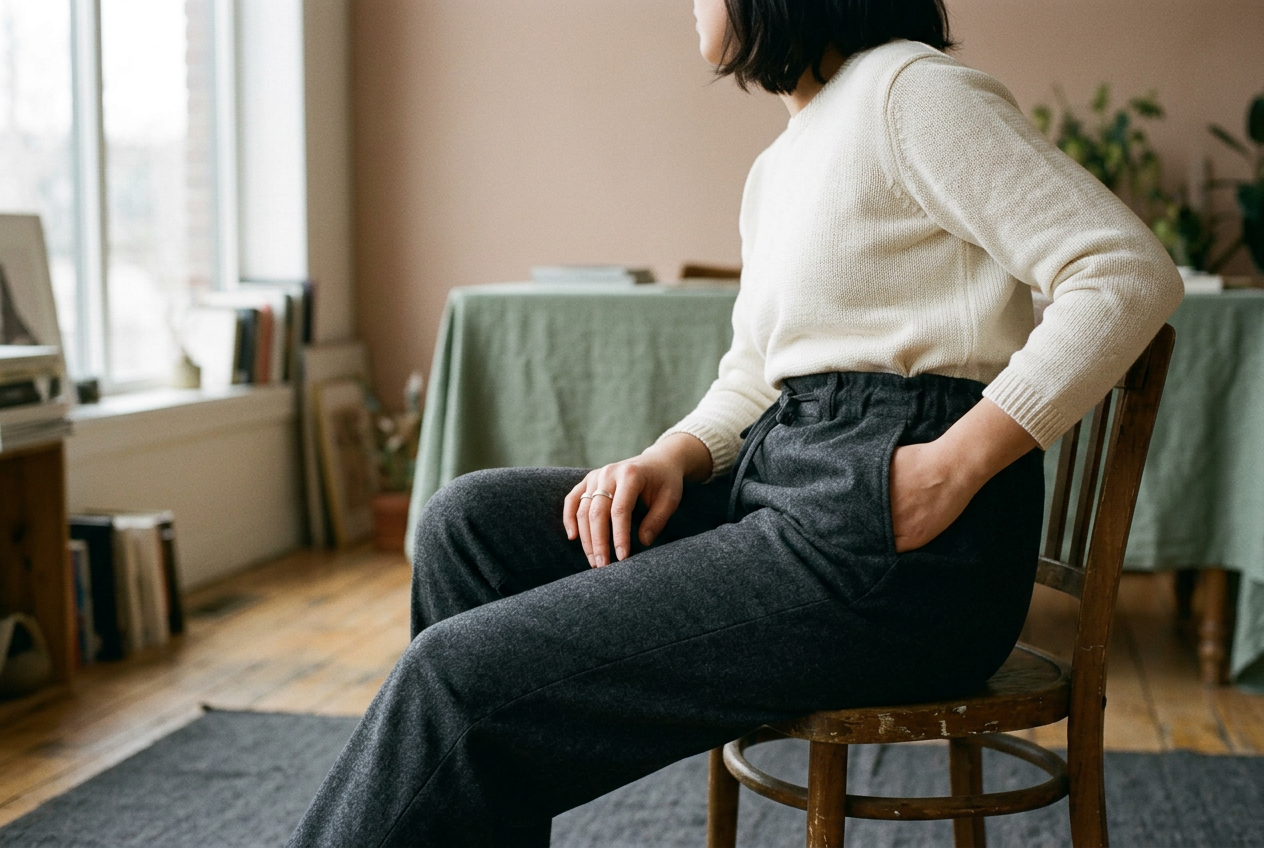
Your Two Work Shoes Should Not Share the Same Weakness
A useful work capsule covers bad weather, long walks, and office clothes without duplicating the same failure. Start with grip, drying time, toe coverage, and trouser shape.
November 24, 2026 · 8 min read
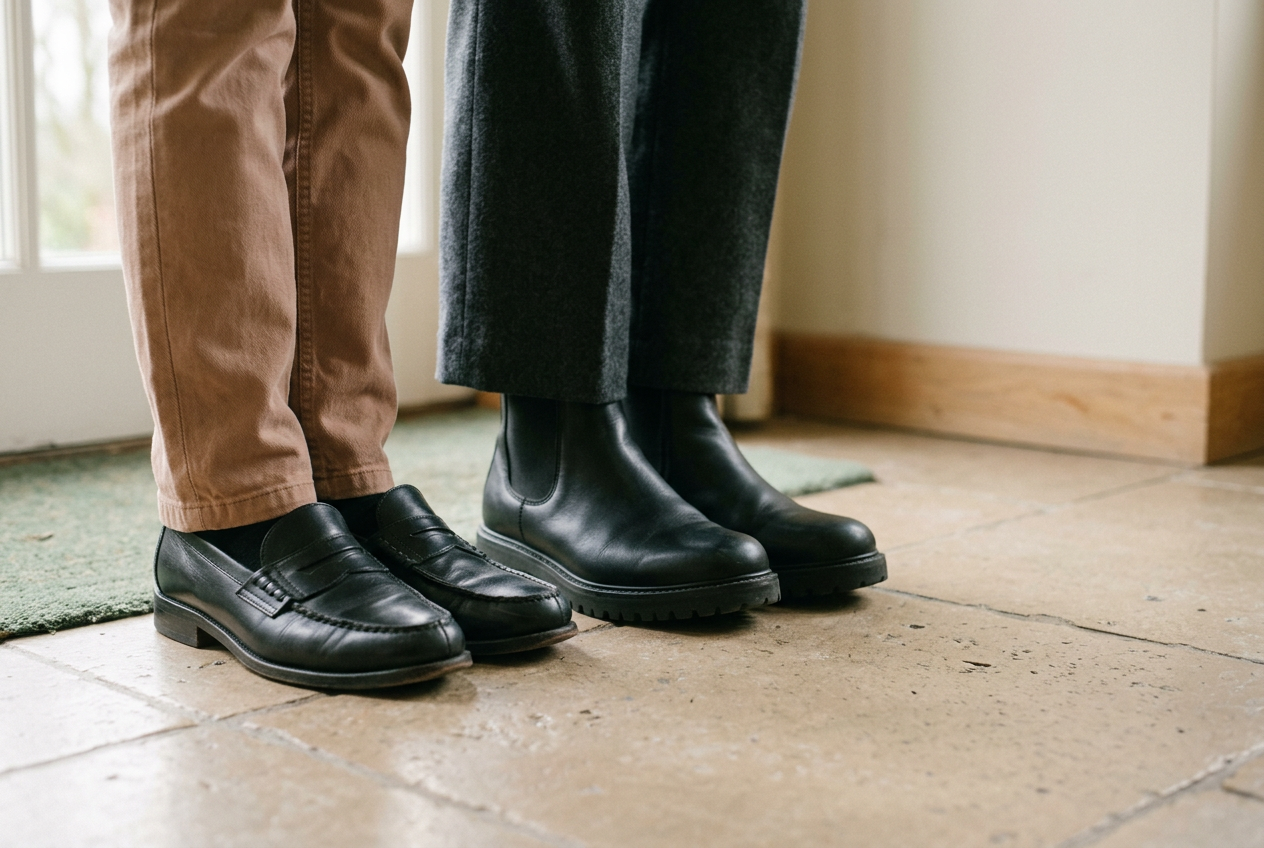
The working shoe for this exercise is a black leather penny loafer with a leather lining, full toe coverage, a low stacked heel, and a slim rubber half-sole, meaning rubber covers the front portion of the outsole rather than the entire bottom. It looks right with most office trousers and can handle a moderate commute. Its limits are more instructive than its strengths.
That loafer is the first half of the capsule, not because everyone needs a loafer, but because it gives us something definite to test. Your anchor might be a lace-up derby, a plain sneaker, or a low boot. The method is unisex and applies across wardrobes, though shoes sold in women’s sizing are often cut narrower than comparable men’s styles, so compare width and internal length rather than relying on the number alone.
Start with the shoe you already reach for
Do not begin by shopping for two ideal pairs. Put your most-worn office shoe on the floor and describe it without using style labels such as classic or versatile. Note the upper material, how much of the foot it covers, the outsole texture, and which trouser hems clear it cleanly.
The black penny loafer has a smooth leather upper that can be polished, but the opening exposes the top of the foot and lets rain enter quickly. Its slim rubber half-sole offers more traction than bare leather, yet the heel still has a relatively small contact area. A narrow trouser hem falls over it without catching, while a wide hem can drag because the shoe adds little height.
That description tells us what the second pair must do. It needs better wet-ground contact and more protection around the opening. A waterproof or water-resistant ankle boot with a full rubber outsole is a logical complement, provided its shaft fits under the trousers already in the closet. Another loafer may be useful, but it would mostly duplicate the first pair’s weather weakness.
Use four filters, in order
Begin underneath the shoe. The outsole is the layer that touches the ground, and its material and pattern matter more in rain than the color of the upper. Look for rubber with channels that give water somewhere to move, plus enough surface texture to interrupt a flat, slick contact patch. Deep lugs, the raised blocks molded into an outsole, can grip soft or uneven ground, though aggressive lugs may look heavy with formal trousers and can hold mud.
Flex the forefoot with both hands. A work shoe should bend near the ball of the foot rather than folding through the arch, but extreme stiffness is not proof of durability, and a soft foam bottom is not automatically comfortable for a full day. Foam can feel pleasant at first while leaving the foot less stable on wet pavement. For the anchor loafer, the rubber half-sole improves the front contact area, but the small heel and open topline keep it from becoming the rain specialist.
Next, judge drying time as part of comfort. A leather-lined shoe that gets wet inside may still feel damp the following morning, especially if it has a padded insole that cannot be removed. Mesh dries faster but allows water through immediately. Waterproof membranes block outside moisture more effectively, yet they can also slow the release of sweat, which matters during a warm subway ride or a long indoor day.
Test this at home without soaking the shoe. After ordinary wear, remove the insole if it is designed to come out, loosen the laces or open the tongue, and check the lining that evening and again the next morning. Dry shoes away from direct heat, which can harden leather and weaken adhesives. If the pair regularly needs more than one night, the second shoe must be comfortable enough to take the next full workday rather than acting as an emergency substitute.
Toe coverage comes third. Full coverage protects against shallow puddles, crowded transit, and office air-conditioning, but the shape must leave usable room around the toes. A pointed upper can appear long while narrowing too early inside; a square or rounded toe may give more space, though the visible shape does not guarantee internal width. Pressing a thumb over the upper is not a reliable fit test.
Walk downhill or down a flight of stairs and notice whether the toes slide forward.
The black penny loafer passes the coverage test at the front but fails around the opening, where rain can enter from above. A higher-vamp loafer, meaning the upper extends farther over the top of the foot, would reduce that exposure without changing the overall dress level. It still would not replace a boot when rain is steady or puddles are unavoidable.
Trouser compatibility comes last because it is easy to mistake visual compatibility for function. Try each shoe with the narrowest and widest work trousers you own. A cropped straight leg can sit neatly above a loafer yet expose the gap above a low boot; a full-length wide leg may need the boot’s extra height to stay off wet ground, but its hem can catch on a bulky shaft.
Watch the trouser break, the fold formed where the hem meets the shoe. If the fabric stacks heavily over one pair, that shoe is not compatible without hemming or a deliberate cuff. Alteration may be worthwhile for a daily uniform, but a two-shoe capsule should not require two hem lengths for every trouser silhouette.
Decide whether redundancy earns its place
Two similar shoes are sensible when the first pair’s main problem is recovery time rather than function. Someone who wears tailored trousers in a dry office might benefit from two loafers because alternating them lets moisture dissipate and reduces repeated pressure on the same spots. The second pair can use a roomier toe shape or a cushioned insole while remaining close enough in profile to work with the same hems.
Redundancy stops helping when both pairs lose traction in rain, rub the same part of the heel, or leave the same trouser hems near the pavement. In that case, the second purchase should change one structural feature. Replace the smooth sole with patterned rubber, the low opening with an ankle-height upper, or the delicate finish with a material that tolerates routine cleaning.
For the black penny loafer, a second polished loafer would add rotation but not coverage. A plain waterproof ankle boot with a moderately textured rubber outsole adds a separate job: wet commutes, colder mornings, and days when wide trousers need more lift. Keep the toe shape restrained and the shaft close to the ankle so the boot still sits under straight-leg trousers.
Run a five-day closet test before buying
Use the anchor pair for a normal Monday, including the real walk from transit or parking rather than an indoor lap. That evening, record only friction, dampness, and which trousers worked. On Tuesday, wear the best candidate for the second role, borrowed from elsewhere in your closet if possible, and repeat the same notes.
By midweek, alternate the pairs rather than favoring the more comfortable one. The point is to learn whether both can carry a complete day and whether the first shoe has recovered by the time it returns. If the loafer remains damp, or the boot feels too hot indoors, that is useful evidence about materials rather than a reason to tolerate discomfort.
Use the final workday for the harder combination: the longest walk, the stricter dress code, or the weather most likely to expose a weakness. Do not manufacture unsafe conditions by seeking slick ground. Ordinary wet entry tile, sloped pavement, and painted crosswalks will reveal enough if you shorten your stride and pay attention to slipping at the heel.
At the end, each pair needs one primary assignment. The loafer might cover dry office days and formal trousers; the boot might handle rain and longer hems. If both descriptions are nearly identical, delay the purchase until you can name the missing function.
Spend on the part that solves the problem
At the low end, prioritize fit and a rubber outsole over decorative leather treatments. Bonded or coated uppers can look tidy but may crease or peel rather than develop the surface changes associated with full-grain leather. They are difficult to repair once the outer layer separates.
Around the price of a decent pair of everyday sneakers, look for a removable insole, a secure heel, and an outsole that is attached cleanly without visible gaps. A higher investment makes more sense when the shoe can be resoled, the upper fits without a painful break-in, and the style works with enough trousers to be worn weekly. Expensive leather with a slick sole does not answer the rain brief.
Fit both pairs late enough in the day that your feet have expanded from normal activity, using the socks you expect to wear. The heel may move slightly in a new loafer, but it should not lift so far that the topline scrapes with every step. A boot needs enough instep room to lace or zip without pressure, while excess volume should not be disguised with a thick insole that pushes the toes into the upper.
The final capsule should be boring on paper and useful at 8 a.m. Keep the black penny loafer for the dry day with narrow trousers. Put the rubber-soled ankle boot beside it for rain, longer hems, and the commute that cannot be shortened.
Questions people ask
Can two sneakers make a good work-shoe capsule?
Yes, if the dress code accepts them and the pairs have different jobs. One might be a clean leather sneaker for indoor office days, while the other uses a more textured rubber outsole and a weather-tolerant upper. Two nearly identical knit sneakers will share the same problems with rain, drying, and exposed socks.
How much outsole grip is enough for commuting?
Look for rubber with visible texture and channels rather than a broad, smooth contact patch. The shoe should feel stable during ordinary turns and on damp entry flooring without requiring a cautious shuffle. Deep hiking-style lugs are unnecessary for most commutes and may make a shoe harder to pair with tailored trousers.
Should both work shoes fit the same trousers?
They should work with most of the same wardrobe, but perfect overlap is unnecessary. Test both against your narrowest and widest hems; if one pair needs a separate set of altered trousers, the capsule becomes less efficient. A cropped trouser can favor the loafer, while a longer wide leg may work better with the boot.
Is a waterproof shoe always the better second pair?
No. Waterproof construction helps with sustained rain, but it may feel warm indoors and can take longer to release sweat. If your commute is mostly covered, a water-resistant leather shoe with a grippy sole may be enough. Let it dry away from direct heat, with the opening loosened and the removable insole taken out.
One update a day
Today's fashion update, in your inbox
One fashion update each morning — no hype, no filler, just pieces worth wearing.