Your Trouser Hem Should Fit the Shoe Opening
Heel height does not decide trouser length by itself. Fit the hem against the sneaker collar, loafer vamp, sandal straps, or boot shaft you plan to wear.
October 17, 2026 · 8 min read
The working pair for this fitting is a charcoal, straight-leg trouser in a midweight wool blend, with an unfinished hem and enough width to pass over a low shoe without looking flared. It is an ordinary wardrobe proposition, which makes it useful: the cloth has some drape, the leg is neither narrow nor oversized, and the intended shoes range from a padded sneaker to a slim leather sandal.
The advice is unisex because the mechanics apply across wardrobes. Shoe sizing and trouser blocks may differ, but cloth still catches on a raised upper, drops past a low one, and changes its line when the hem opening is too narrow for what sits underneath.
Heel height is only part of the fitting
A trouser does not meet a shoe at the heel. Most of the visible interaction happens across the front and sides, where the shoe’s upper can hold the fabric up or let it fall toward the floor.
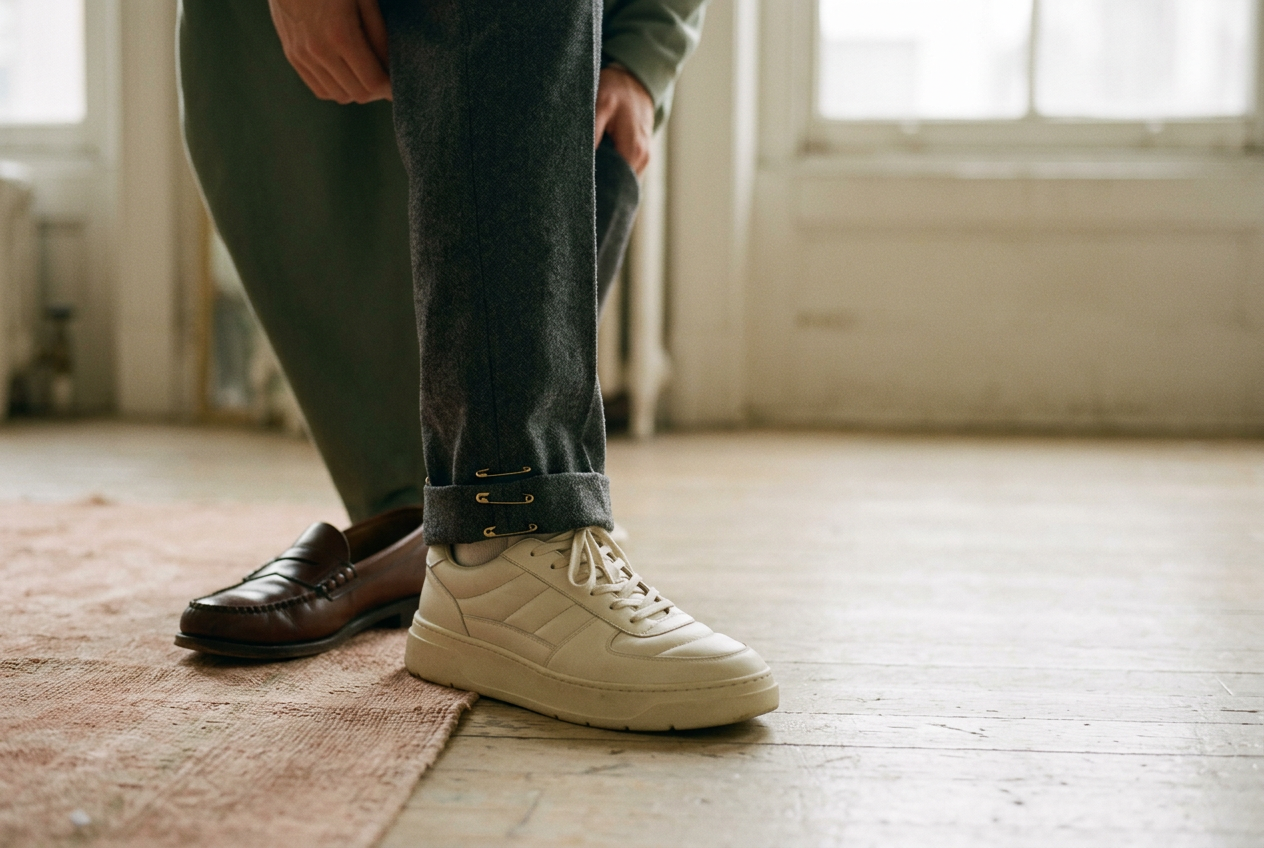
Consider the charcoal trouser with a chunky sneaker. Its padded collar, meaning the opening around the ankle, and raised tongue occupy more space than a low loafer, even if both shoes put the foot at nearly the same height from the ground. The trouser catches sooner on the sneaker and forms a deeper break, the fold created where the leg rests on the shoe. Worn with the loafer, that same inseam drops farther and may brush the heel or floor.
A slim sandal creates the opposite condition. With little material above the toes and almost nothing around the ankle, it offers no ledge for the trouser to rest on. A length that looks relaxed over a sneaker can read neglected over the sandal because the hem collapses forward, hides the foot, and picks up dirt at the back.
Boots complicate the picture differently. A shaft, the section rising above the foot, can push against the trouser from inside. If the leg opening is only slightly wider than the shaft, the fabric may hang neatly while standing, then catch and remain bunched after sitting or climbing stairs. More heel does not fix that.
Start with the hem opening
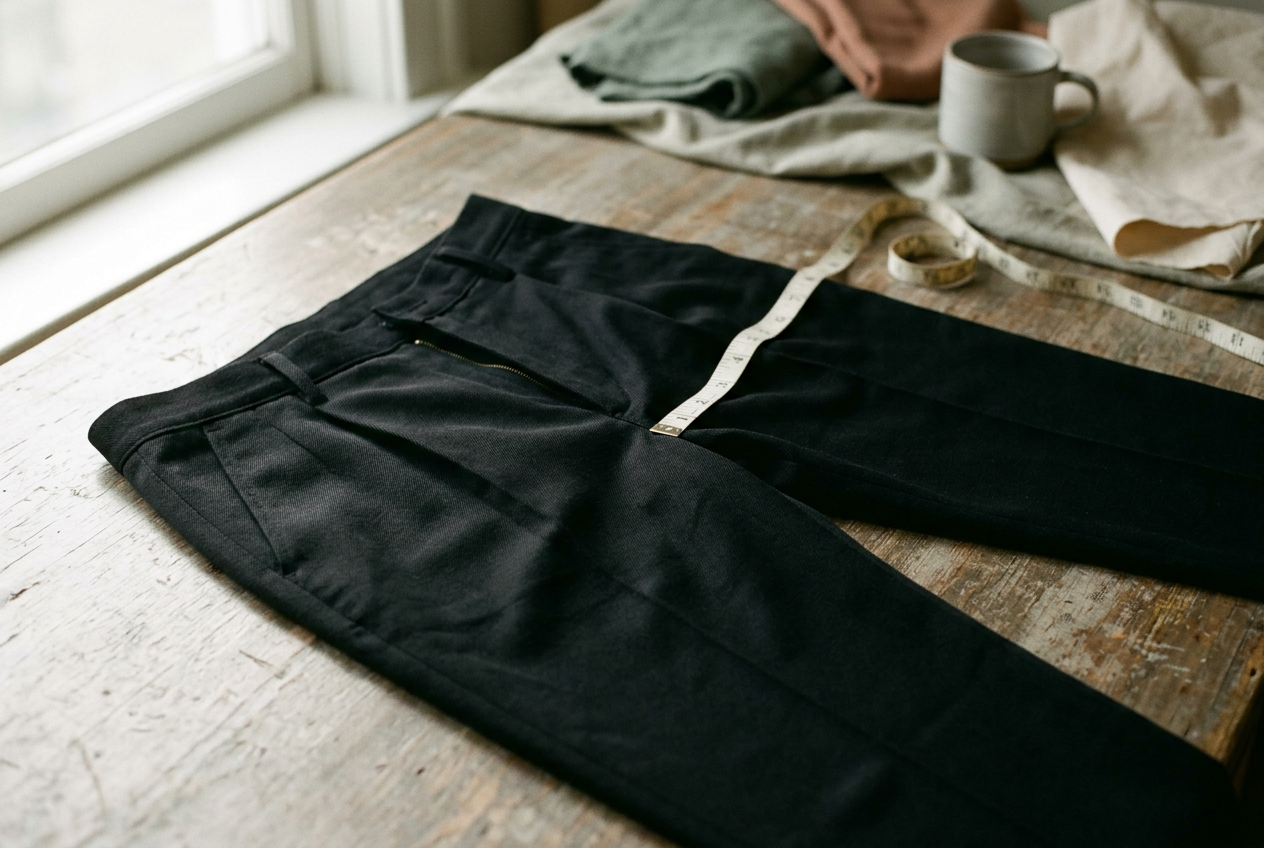
Before judging length, measure the trousers flat across the bottom edge and double that number to find the hem circumference. You do not need an ideal measurement from a chart. You need to know whether the opening can clear the shoe without gripping it.
Put on the charcoal trousers unhemmed and fold the excess fabric inward. Start with the shoe that has the largest upper, which in this case is the padded sneaker. Pin one leg so the front makes a shallow break and the back sits above the outsole. Leave the other leg longer as a comparison rather than trusting your memory between changes.
Walk, sit, and stand again. A useful length must recover after movement. If the hem stays perched on the sneaker collar, either the opening is too narrow or the pinned length is too short to drop back into place. Releasing more length may hide the problem while standing, but it usually adds folds at the ankle without improving movement.
This is the point to separate a width problem from a length problem. Pinch the side seams near the hem to imitate a narrower opening, then release them and watch the cloth. If extra width lets the leg fall cleanly over the shoe, shortening alone is the wrong alteration. A tailor may be able to widen the bottom only when there is enough seam allowance, meaning the fabric reserved inside a seam for adjustment.
Fit the front and back separately
The front view gets most of the attention, but the back determines whether a length survives real use. With the sneaker on, pin the charcoal trouser so the rear hem clears the outsole rather than the top of the heel counter. The counter is the structured rear section that cups the heel. Cloth resting on it can look controlled indoors, then slide under the shoe on stairs.
Check the front next. A straight leg generally needs less break when the hem opening is narrow, since there is less fabric available to spread around the upper. A wider straight leg can carry a fuller break, though soft wool may fold elegantly where stiff cotton twill creates a blunt stack. Material matters as much as the silhouette: fluid cloth settles, while dense denim and crisp suiting hold each bend visibly.
Do not pin both legs from a waistband reference alone. Bodies and trouser legs can hang unevenly, and alterations should follow the worn garment rather than an assumed inseam, the seam running from the crotch to the hem. Have the waistband sitting where you will wear it, empty the pockets, fasten the closure, and let the trousers settle before marking each side.
Change shoes without changing the pins
Once the sneaker length is pinned, switch to the loafer. Its vamp, the upper section covering the top of the foot, becomes the next fitting surface. A high vamp supports the trouser sooner and can take a little more length; a low-cut loafer exposes more foot and lets the hem descend.
On the charcoal pair, the goal is not to reproduce the sneaker’s fold. It is to see whether the loafer still gives a clean front line and keeps the rear edge off the ground. If the cloth pools around the instep or covers most of the shoe, raise the pin in small increments. Mark that second position with a different color of tailor’s chalk or a second row of pins.
Move to the slim sandal. Stand on a hard, level floor because a rug can hide a hem that is already touching down. The sandal test is strict: with no substantial upper to catch the fabric, the true hanging length becomes obvious. Check the rear edge while standing, then take several normal steps and inspect it again.
A hem that clears the floor only when motionless is too long for regular wear.
Finish with the boot. Pull the trouser leg over the shaft rather than arranging it from the outside, then sit long enough for the knee to bend fully. Stand without touching the fabric. If the hem remains caught halfway up the shaft, more circumference would help; if it drops but forms a heavy stack, the length is excessive for that boot.
The charcoal trouser now has several pin lines, and that is useful information rather than a failed search for one perfect inseam. The distance between the shortest sandal mark and the longest acceptable sneaker mark shows whether one alteration can serve the whole shoe rotation.
Choose the length that solves the most outfits
When the acceptable marks sit close together, choose the shortest point that still creates the break you want over the largest shoe. That protects the hem with lower shoes while preserving enough cloth for sneakers or loafers. Ask the tailor to press the finished hem at that marked line, not to copy the labeled inseam from another pair.
When the marks are far apart, prioritize the shoes worn most often. For the charcoal trousers, a sneaker-and-loafer length is more useful if those shoes handle most weekdays, even though the slim sandal may then need a small heel or a different trouser. Altering toward an occasional shoe tends to make the daily combinations worse.
There is another option when the wardrobe genuinely splits between substantial sneakers and nearly bare sandals: keep two trouser shapes. A wider, longer pair can fall over padded footwear, while a narrower ankle-length pair works with low-profile shoes. Paying for repeated re-hemming is rarely worthwhile, and temporary hem tape adds stiffness that can change the break you were trying to assess.
Cuffs also reduce flexibility. A turned cuff adds weight and structure at the bottom, which can help wool trousers fall cleanly over a loafer but makes a too-long leg more obvious over a sandal. Removing a cuff may release useful fabric, though old fold lines or wear can remain visible.
Allow enough time at the fitting to change every shoe, walk, sit, and take front and side photos at trouser height. Looking down shortens the apparent leg and hides what the back hem is doing. The alteration itself may be routine; deciding the line is the part worth slowing down for.
Know when hemming will not fix it
A trouser that repeatedly snags on a boot or sneaker may need more room from the calf down. Letting out the hem alone can produce a slight flare, so the cleaner alteration may involve reshaping the lower side seams, provided the construction allows it. That costs more than a basic hem and can disturb a pressed crease or finished cuff.
Likewise, shortening cannot make a very wide leg behave like a narrow one. Wide hems often need enough length to show their intended drape, yet that length demands a shoe with sufficient sole coverage or upper structure to keep the fabric controlled. If the charcoal pair were much wider, the slim sandal would stop being a sensible fitting reference.
Take the trousers to the alteration appointment with the priority shoe and one contrasting option. For this pair, that means the padded sneaker plus the loafer, not four boxes and a hope that the tailor will choose your wardrobe strategy. Show the pin lines, state which shoe wins when there is a conflict, and leave wearing the waistband at its normal position.
Questions people ask
Should trousers touch the top of my shoes?
They can, but contact alone is not the standard. The front may rest lightly on a loafer vamp or sneaker upper while the back remains clear of the floor. If the hem catches after you stand or forms several fixed folds, check the opening width before removing length.
Can one trouser length work with sneakers and sandals?
Yes, when the hem is wide enough to clear the sneaker and short enough to stay off the ground with the sandal. Low-profile sneakers make the compromise easier. A bulky collar paired with a nearly bare sandal may require prioritizing one shoe or keeping a second trouser shape.
How much break should straight-leg trousers have?
Use the smallest break that keeps the leg line intentional over your main shoe. Soft wool can absorb a shallow fold, while stiff cotton or denim makes the same fold look heavier. The rear hem should still clear the outsole after walking and sitting.
Should
I wear shoes to a trouser alteration appointment?
Yes. Bring the pair you expect to wear most and, if practical, one shoe with a contrasting upper. A heel measurement cannot show whether the fabric catches on a sneaker collar, lies over a loafer vamp, or hangs freely above a sandal.
One update a day
Today's fashion update, in your inbox
One fashion update each morning — no hype, no filler, just pieces worth wearing.