The Trouser Hem That Works With Sneakers and Flat Sandals
A soft no-break hem is the most useful summer compromise. Here is how to pin wide and straight trousers against both shoes before paying for alterations.
Women's · October 15, 2026 · 7 min read
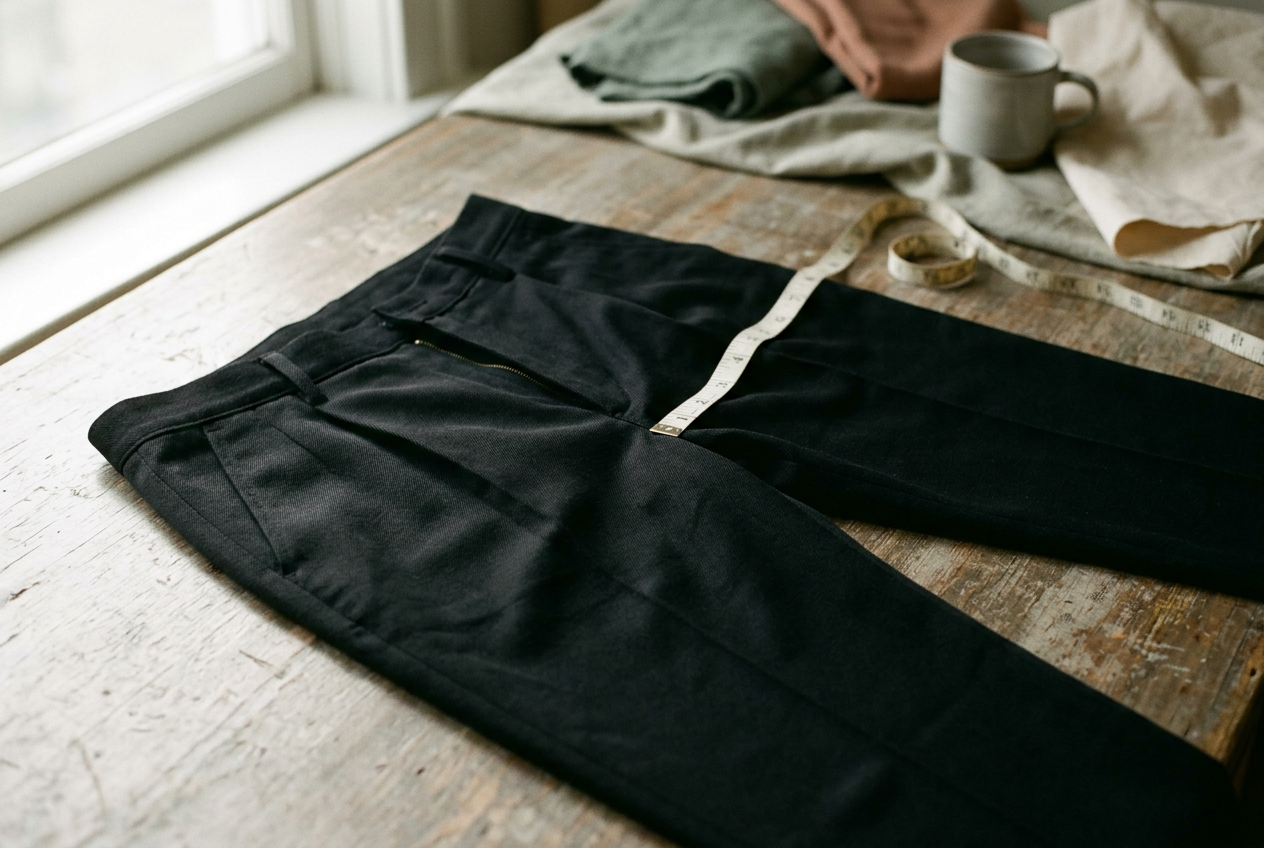
The useful length sits between a deliberate crop and a trouser that folds over the shoe. On a black pair of wide-leg linen-viscose trousers used for this fitting test, that meant setting the back hem clear of the floor in flat sandals while allowing the front to make light contact with a low-profile sneaker.
The result was not identical with both shoes. It looked clean and nearly unbroken over the sandal, then formed one shallow fold over the sneaker. That small difference is the compromise that makes the trousers wearable rather than theoretically perfect.
This is women’s fit guidance, particularly for full-length summer trousers sold with enough extra length to alter. The same mechanics can apply elsewhere, but women’s sizing often changes trouser length without consistently changing the rise, which can shift the finished hem after the waistband settles.
Start with the leg shape, not the shoe
A break is the fold that forms where a trouser hem meets the shoe. Full break means a visible fold and extra fabric resting on the upper; no break means the hem reaches the shoe without buckling; cropped means the hem ends above the ankle or exposes a clear strip between trouser and shoe.
Those descriptions sound precise until the leg opening changes. A wide leg falls around a shoe and is governed mainly by floor clearance, while a straight leg lands on the upper, so the same inseam can look longer and more folded on the narrower pair.
The black test trousers had a fluid wide leg and a linen-viscose fabric, which matters because linen brings body and visible wrinkling while viscose adds weight and drape. The cloth dropped back into place after walking instead of remaining caught above the sneaker. A crisp cotton twill or dense denim would behave differently: once a narrower opening catches on the shoe, it may stay there until it is tugged down.
Before pinning, wear the trousers for several minutes with the intended waistband position. Sit once, stand, and smooth the side seams. A waistband worn lower adds apparent length, and a soft summer fabric can relax slightly with body heat, so pinning immediately after pulling the trousers on may produce a shorter finished result than expected.
Full break favors the sneaker
A full break can look convincing on straight trousers when the sneaker has enough upper to support the fabric. It gives the leg a long, relaxed line, especially with a substantial leather or retro running shoe, although the front fold needs to look intentional rather than like unaltered excess.
Flat sandals expose the weakness. With little or no upper under the hem, the extra cloth drops toward the ground, brushes the heel, or slides under the foot. On the wide-leg test trousers, the length that produced a pronounced sneaker break sat too close to the pavement in sandals. The back edge also picked up more dust during an ordinary walk.
That is the practical failure. Full break is reasonable if sneakers dominate the wardrobe and sandals are occasional, but it is not the best shared hem for a summer pair expected to work with both. A wider leg makes the conflict stronger because its back hem has no shoe structure to hold it away from the ground.
No break is the useful middle
A strict no-break hem is often set to hover just above the shoe, but the more adaptable version is softer. The front can touch the sneaker without creating more than one shallow fold, while the back stays safely above the sole line when the flat sandal is on.
On the black trousers, this looked longest and cleanest with the sandal because the fabric fell uninterrupted from hip to hem. With the sneaker, the toe box pushed the front outward, yet the weighted cloth settled around it rather than stacking. That change was visible, but it did not make the trousers look incorrectly altered.
Wide trousers usually handle this compromise better than straight ones. Their larger opening can surround the sneaker, and a fluid fabric moves past the heel when walking. Check the inner edges carefully, though. If either side reaches the floor while standing, it will probably drag once the fabric swings.
For a straight leg, no break needs more clearance. The hem should meet or sit just above the highest part of the sneaker rather than resting firmly on it, because a narrow opening that catches creates repeated folds. With the sandal, the same length may expose part of the ankle or foot. That is acceptable if the trouser line remains clear and the gap looks intentional.
Cropped lengths need commitment
A crop avoids the two-shoe conflict by ending above both shoes. It keeps a straight trouser from catching on a sneaker, shows a slim sandal strap, and removes the risk of the back hem touching wet pavement.
The tradeoff is proportion. A small accidental-looking gap above the shoe can make trousers appear to have shrunk, particularly when the leg is wide and the hem ends at the broadest part of the lower calf. A deliberate crop usually needs enough space to register as a chosen silhouette, not a cautious alteration.
That makes cropping less flexible than it first appears. The black wide-leg trousers lost some of their long vertical line when folded high enough to clear both shoes unmistakably, and the stiffer doubled fabric at the pinned hem made the opening kick outward. A finished hem would lie flatter, but the changed proportion would remain.
Cropped straight trousers are easier to manage because the narrow leg already directs attention to the ankle. They work well when the sneaker is sleek and the sandal is minimal. If the shoes are visually heavy, however, the exposed gap can divide the outfit into obvious sections rather than carrying the trouser line into the footwear.
Use the two-shoe pinning test
Choose the flattest sandal and the bulkiest sneaker you expect to wear with the trousers. Testing two nearly identical sole heights proves little; the useful test puts the least supportive shoe against the upper most likely to catch the hem.
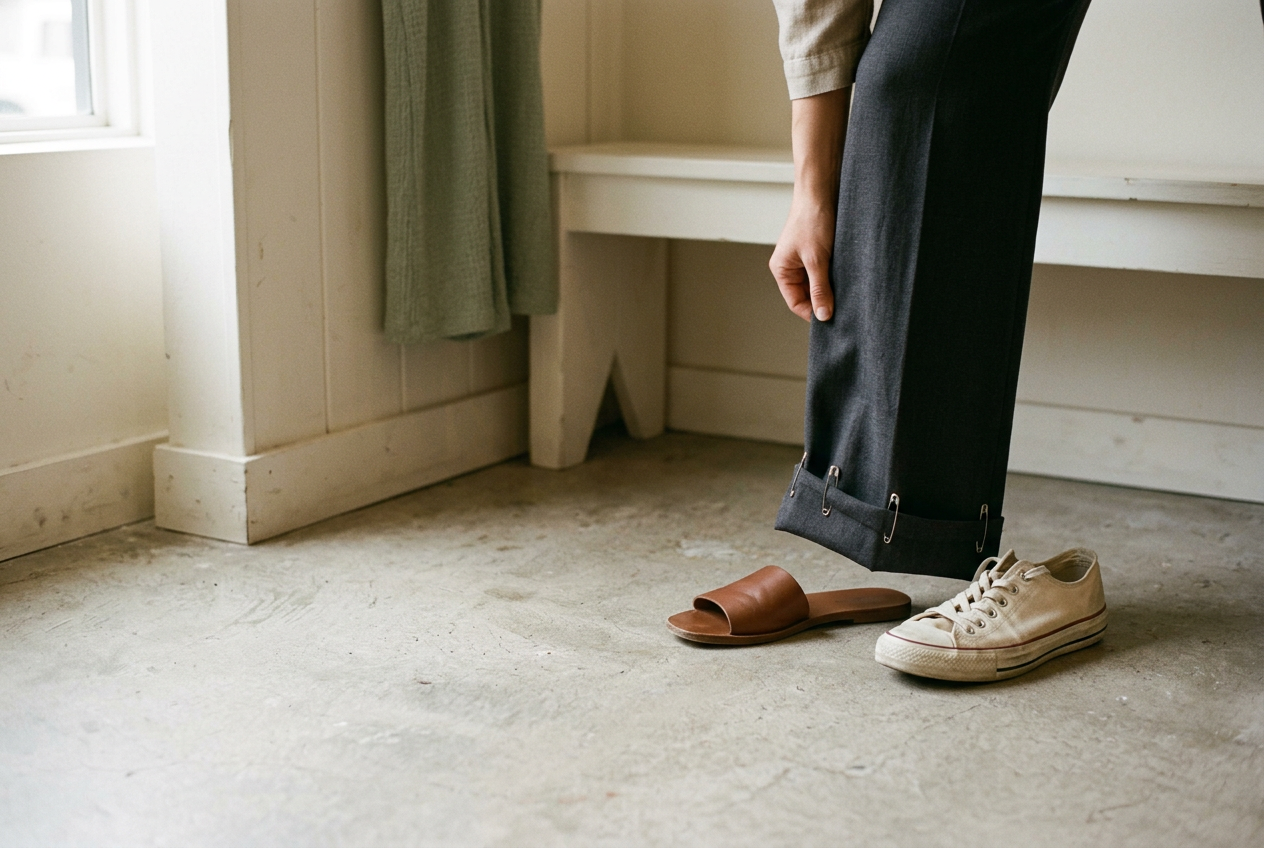
Put on the trousers with the underwear and waistband position you normally use. Start with the sandal. Fold the excess fabric inward, preserving the existing grain so the side seams hang vertically, then place pins parallel to the floor at the front, back and both side seams. Keep the back edge roughly half an inch above the floor as a starting point, rather than measuring from the sandal sole, since soles vary and the pavement is what can damage the hem.
Pin only one leg first. Compare it with the untouched leg in a full-length mirror, then walk across a hard floor, turn, and step onto a rug or low threshold. The hem should swing without slipping beneath the heel. Sit in a normal chair to confirm that the rise and waistband do not shift enough to change where the trousers settle when you stand again.
Switch to the sneaker without changing the pins. Lace it as worn, since a loose shoe sits differently at the heel, and check the front from the side. One light fold is workable. Several folds, fabric caught on the heel, or a hem that rests across the laces means the pinned length is still too long for that leg opening.
Adjust in small increments, then repeat the walk. With the black wide-leg pair, the sandal determined the safe back clearance and the sneaker determined how much front contact looked acceptable. That order matters: shortening solely to remove every sneaker fold can leave a wide trouser looking unexpectedly cropped with an open sandal.
Once the first leg works, match the other leg from the floor while wearing the same shoe. Do not assume both existing hems are level or both legs require an identical fold. Pin the second side independently, then ask the alterations professional to measure and mark both legs while the trousers are on your body.
Leave the pinned trousers hanging overnight before the final fitting if the fabric is loosely woven, cut on a curve, or especially fluid. Linen-viscose can settle under its own weight, and a wide circumference gives sections of the hem more opportunity to drop unevenly. A tailor may recommend letting the garment hang before cutting for the same reason.
Tell the tailor which compromise you chose
Bring both shoes to the fitting. Say that the sandal sets the minimum floor clearance and the sneaker may create a shallow front break. “Full length” is too open to interpretation, particularly on a wide leg that can be measured against the foot, the sole or the ground.
Ask whether the existing hem allowance can be preserved. Hem allowance is the fabric turned inside the garment to finish the bottom edge. A deeper allowance adds a little weight, which can help fluid trousers hang, but it may show as a ridge on lightweight or pale cloth. A narrower finish reduces bulk and can move more freely.
Straight trousers may need a shorter level hem rather than an angled one. Some tailors can set the front slightly shorter than the back, but the approach depends on the fabric, leg width and original construction; too much difference can twist or look uneven when the trousers move. The two-shoe pinning test should identify the problem before the cloth is cut, not prescribe a construction method that ignores the garment.
Alteration is worthwhile when the trousers already fit at the waist, seat and rise. If the crotch drops, the waistband slides, or the fabric pulls across the hips, fix that first because each issue changes where the hem lands. Paying to perfect the bottom of an unstable fit rarely holds up after an hour of wear.
Questions people ask
Should wide-leg trousers touch the floor with flat sandals?
No. Set the back and side edges high enough to clear the floor while standing and walking, even if the front appears longer over the foot. Fabric that only just clears the ground in a fitting room can drag when the leg swings, the waistband settles or the wearer steps off a curb.
Can one trouser length work with chunky sneakers and thin sandals?
Yes, if the leg is wide enough to fall around the sneaker and the sandal length remains safely off the ground. Expect the sneaker to create a shallow front break. If the opening is straight and narrow, a deliberate crop may be more reliable than trying to force one full-length hem over both shoes.
Should summer trousers be hemmed before or after washing?
Follow the care label first. If the trousers are washable and have not been cleaned, wash and dry them as directed before altering because linen, cotton and viscose blends can change length. Dry-clean-only trousers should not be home washed for the sake of a fitting; discuss likely settling and care with the alterations professional.
How much hem allowance should be left inside trousers?
There is no universal amount because fabric weight and original construction matter. Ask the tailor to retain useful allowance when possible, especially if you may later change the length, but avoid a deep turn-up that creates a visible line through lightweight summer cloth. The finished hem should hang cleanly without becoming the stiffest part of the leg.
One update a day
Today's fashion update, in your inbox
One fashion update each morning — no hype, no filler, just pieces worth wearing.