Your Threadless Flat Back Is Loose. Check the Post First
A spinning top is not always a failing top. This bench check separates harmless rotation from shallow insertion, weak pin tension, and a post that no longer fits.
August 20, 2026 · 8 min read
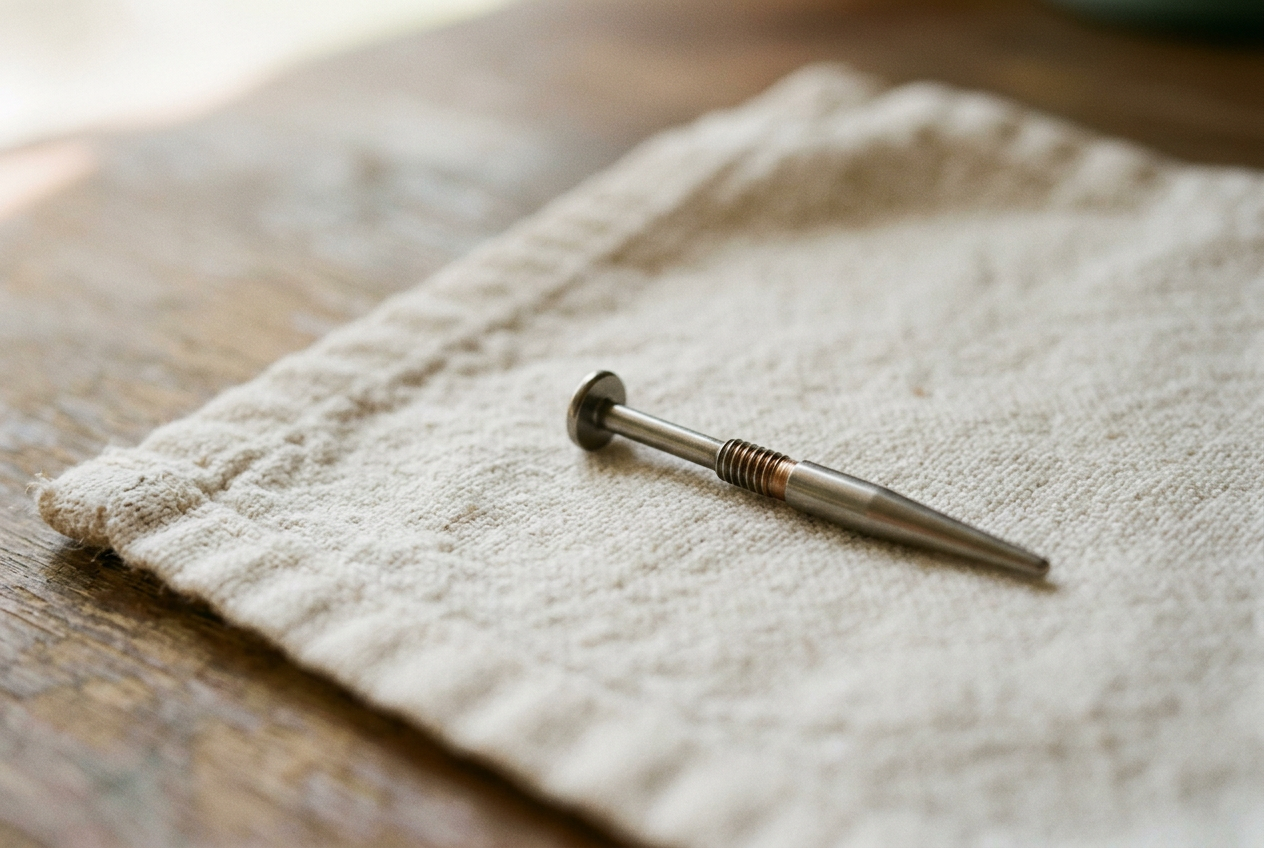
The detail that matters is barely visible: a narrow pin with a shallow curve, disappearing into a hole inside the earring post. Too straight, and the top can pull out. Bent too sharply, it may stop before the decorative end sits flush.
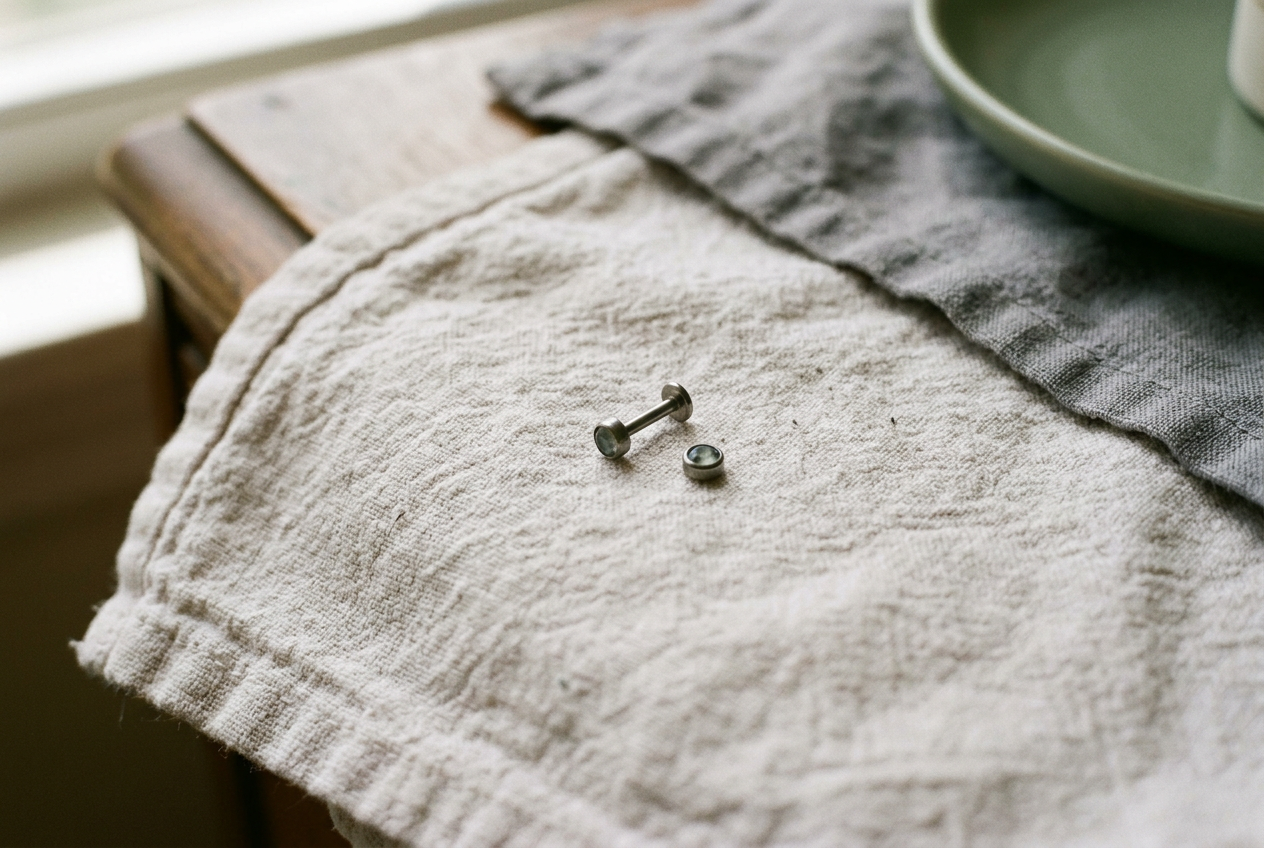
For this check, I used one 3 mm bezel-set cubic zirconia top with a titanium pin and a 16-gauge titanium labret post, meaning a straight post finished with a fixed flat disc. Gauge measures post thickness. The post was 6 mm long, although length does not affect how securely the pin fits inside it.
This is a flat back earring, meaning the post’s backing sits flush against the ear rather than using a butterfly clutch. The advice is unisex because the holding mechanism does not change with styling, placement, or the other earrings in a stack.
My test top had started turning in an upper-lobe piercing. Rotation looked like looseness, particularly when the stone shifted after dressing, but a dry bench check showed that the top could still reach the post without leaving a gap. A gentle pull straight away from the post did not lift it. That distinction saved a usable top from an unnecessary adjustment.
Rotation and release are different failures
Threadless jewelry relies on tension. The pin’s slight curve presses against the inside wall of the post, and that contact holds the decorative end in place without screw threads. Public fitting instructions from threadless-jewelry makers generally direct the wearer or piercer to insert the pin partway, create a small bend, then press the end fully into the post.
A round top can rotate while remaining secure because the system does not lock its orientation. Skin movement, cleaning and contact with clothing can turn it. Directional pieces such as clusters, marquise stones and tiny chains make that movement easier to notice, but the turn alone does not show that the pin is backing out.
Look for vertical movement instead. If the decorative end lifts away from the mouth of the post, leaving a dark line or a visible section of pin, it has not stayed seated. A top that repeatedly rises after being pressed flush needs a fit check. So does one found loose on the pillow, caught in hair or sitting at an angle it did not have earlier.
The 3 mm test top turned freely through a full rotation, yet its underside remained in contact with the post. I left the bend alone. Adding more curvature would have increased the force needed for removal without correcting a real failure, and repeated bending would have placed avoidable stress on the narrow pin.
Test insertion depth before changing the bend
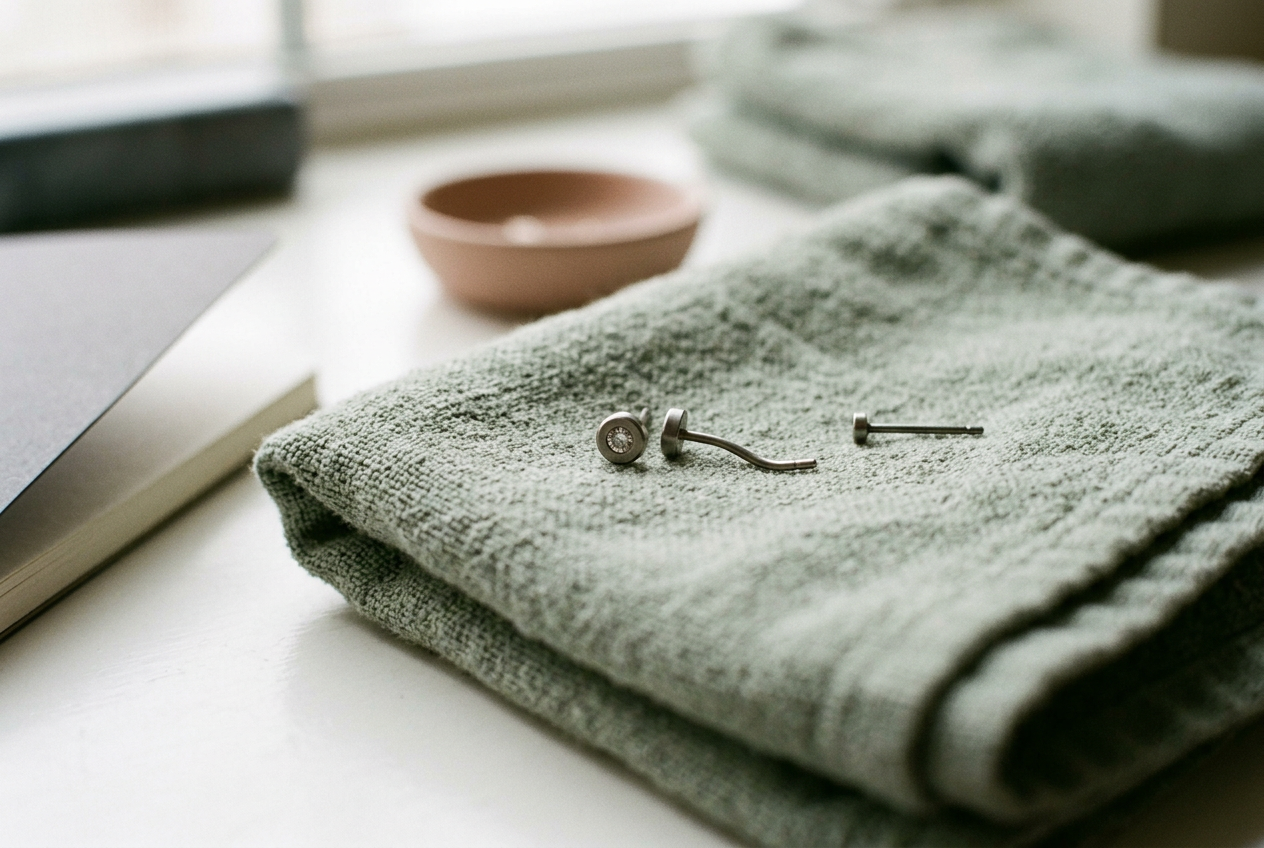
Work over a folded light-colored towel, where a small top cannot bounce far. This check belongs on clean, healed jewelry that can be removed without irritation. A fresh or tender piercing should stay in place and go to a qualified piercer, since removing jewelry can disturb the channel and handling can introduce contamination.
Start with the top and post outside the ear. Inspect the pin in good light, using phone magnification if needed. A useful bend looks like a smooth, slight arc. A hard angle, flattened spot or crease is damage rather than tension, especially if the same point has been flexed more than once.
Align the pin with the opening and press gently. It should enter without scraping, reach full depth and bring the underside of the top into even contact with the post. Do not use the ear to supply leverage. Do not force a pin that stops abruptly, because resistance near the entrance can indicate a diameter mismatch rather than a bend that needs muscle.
Insertion depth is easy to misread on bezel-set stones. The metal cup beneath the stone may naturally sit wider than the post, creating a tiny ledge, while the actual mating surfaces remain flush. View the joint from the side and turn it under steady light. A consistent ledge is part of the construction.
A wedge-shaped opening is a gap.
With the test stud fully inserted, I held the post by its disc and pulled the top straight outward with fingertip pressure. This was not a hard tug test. The goal was to see whether the top lifted under the kind of light contact it would meet from a towel or shirt, not to measure maximum strength or bend the jewelry.
A click is not required. Some combinations seat with a distinct final movement, while others feel progressively firmer, so the visible joint and resistance to a light pull give better information than sound alone.
A tighter bend should remain a small bend
If a known-compatible top reaches full depth but slides out with almost no resistance, a slightly stronger curve can be reasonable. Insert the pin partway into the matching post, tip the decorative top by a very small amount, then remove it and inspect the curve before attempting a full insertion. The post supports the pin while the bend is formed.
Small is the operative word. The finished pin should still show a smooth arc rather than a kink, and it should press to full depth without tools. If the top becomes painful to grip, requires hard pressure or stops short, the adjustment has gone too far. Remove it on the bench and have a piercer correct or replace the component instead of flexing the pin back and forth.
Material affects that decision. Titanium and solid-gold threadless ends can both use tension pins, but their dimensions and response to repeated bending are not guaranteed to match, even when the decorative end and post are sold for the same nominal gauge. Verify the alloy and compatibility with the maker or retailer. Implant-grade titanium should be identified by a recognized material specification, such as ASTM F-136, rather than by color or the word titanium alone.
Once a pin shows a sharp crease, cracks near the decorative setting or refuses to form a smooth curve, I would replace the end. A broken pin can leave the jewelry unusable, and preserving an expensive stone top is not a good reason to keep flexing a compromised connection.
Mixed brands can expose a tolerance mismatch
Post gauge does not guarantee pin compatibility. The 16-gauge measurement describes the thickness of the post that passes through the piercing, not the exact diameter of the receiving hole or the usable length of the pin. Two brands may label parts for the same post gauge while machining the internal connection to slightly different tolerances.
I moved the 3 mm top from its matched post to an unbranded 16-gauge post for comparison. The pin entered, but the decorative end stopped before its underside reached the post. More pressure did not close the gap. Bending the pin further would have made the mismatch worse, so that pairing failed the depth test even though both pieces were described by the same gauge.
The reverse problem is quieter. A pin may fall deeply into another post with little resistance because the receiving hole is wider or worn. Adding a larger bend can sometimes create temporary tension, but it also concentrates force at the curved section and may make removal unpredictable. An uncertain mixed-brand pairing is not worth rescuing through an aggressive adjustment, particularly for jewelry worn overnight.
Use substitution to identify the failing part. If several confirmed-compatible tops sit loosely in one post, replace that post. If one top is loose across several compatible posts while other tops hold, the top or its pin is the likely problem. This comparison is more useful than repeatedly bending the same pin and hoping the connection changes.
Brand mixing is reasonable only when the manufacturer or retailer confirms compatibility and the pieces pass the depth check outside the ear. Keep matched parts together when possible. A small labeled pouch costs less effort than reconstructing which polished titanium post belonged to which nearly identical top.
Replace the post when the hole is the problem
A post should go when its opening looks distorted, rough or wider than it once did, or when known-good compatible tops no longer hold in it. Also replace one that has been forced onto an incompatible pin. Damage inside the receiving hole may not be visible, but changed fit across multiple tops is enough evidence.
Replacing only the post is often the lower-cost option when the decorative end is solid gold or stone-set. It also preserves a carefully chosen stack. The tradeoff is another fitting appointment or shipping charge if the correct post is not stocked locally, but that is preferable to losing the top during sleep or while changing clothes.
I returned the 3 mm stud to its matched titanium post and kept the original shallow curve. It still rotates. It does not rise from the post, which is the behavior that matters.
Questions people ask
Can
I bend a threadless pin while the earring is in my ear?
No. Remove jewelry only from a healed piercing, then adjust and test it over a clean, padded surface. Bending against the ear gives poor control and can stress the piercing. Leave fresh, swollen or painful jewelry in place and ask a qualified piercer to check the fit.
How can
I tell whether a threadless top is fully inserted?
The underside of the decorative end should meet the post evenly, without a wedge-shaped gap or visible section of pin. Test the connection outside the ear with a light, straight pull. Do not rely on hearing a click, since properly fitted threadless jewelry does not always make one.
Can
I mix threadless tops and posts from different brands?
Only when the maker or retailer confirms compatibility and the parts reach full depth in a bench test. Matching post gauge is not enough because pin diameter, pin length and the receiving hole can vary. Never force a mixed pair or use a severe bend to compensate for a loose fit.
Why does my flat back earring rotate if it is secure?
Threadless connections hold through pressure against the pin, but they do not necessarily prevent rotation. A round end that turns while remaining flush can still be secure. If the top rises, exposes the pin or releases under light contact, check insertion depth and compatibility before increasing the bend.
One update a day
Today's fashion update, in your inbox
One fashion update each morning — no hype, no filler, just pieces worth wearing.