Threadless Labrets Are Easier to Change, With One Catch
Threadless ends win for frequent at-home changes, provided you can control the tiny tension-fit pin. Internally threaded jewelry takes longer to align but suits a set-and-forget ear.
August 10, 2026 · 8 min read
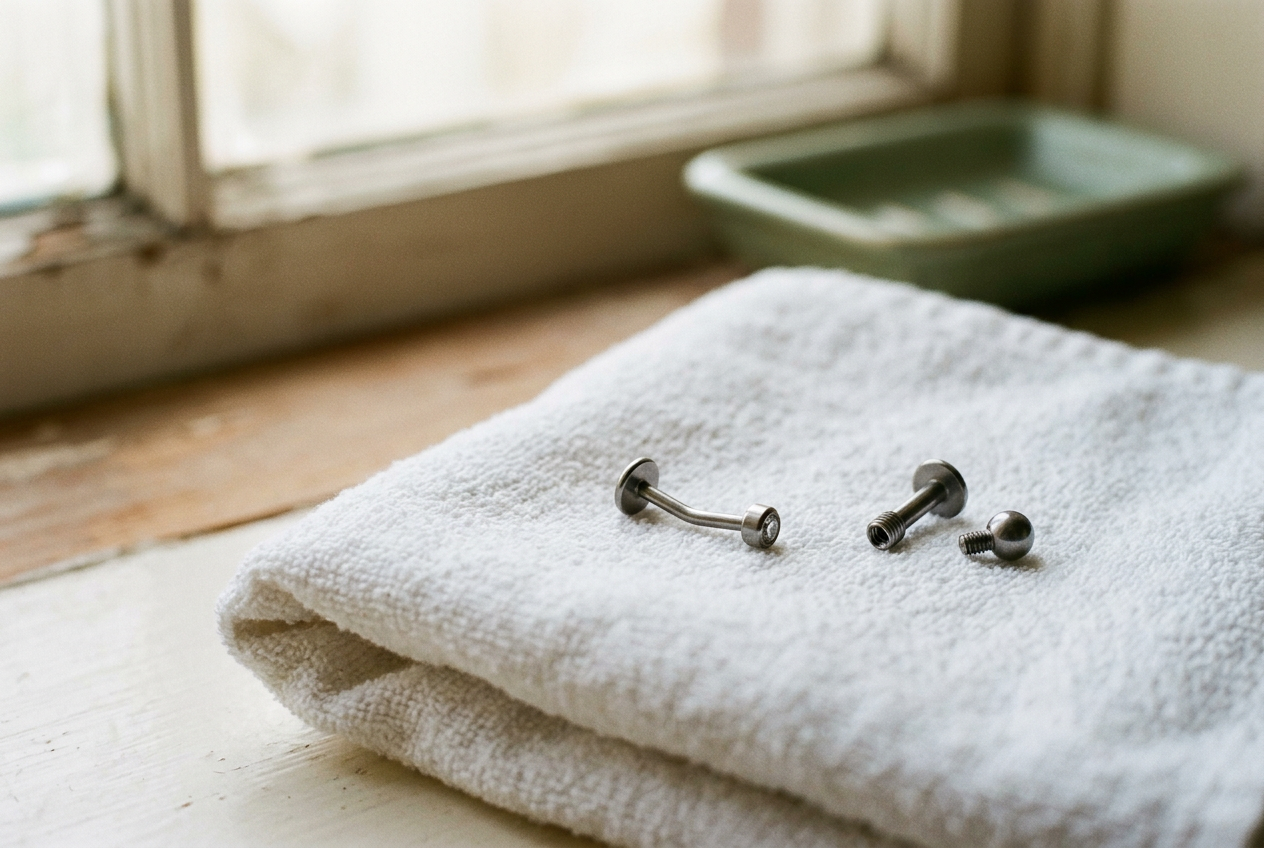
The deciding detail is barely visible: a slim metal pin on one decorative end, compared with a tiny screw on the other. Both fit inside a hollow post. Only one asks you to find a thread behind your ear while looking into a mirror.
For this comparison, I handled two otherwise matched flat back earrings, meaning each post ends in a disc that sits flush against the back of the ear. Both were manufacturer-labeled implant-grade titanium, with 16-gauge posts measuring 5/16 inch long and 3-millimeter round fronts. Gauge describes the thickness of the post. I changed each at the same bathroom mirror over a folded white towel, first leaving the post in place and then removing the entire piece.
That matched pair exposed the real difference. Threadless was quicker when the post stayed in the piercing. Internally threaded felt more controlled once engaged, but getting it engaged took patience. This guidance is unisex: ear anatomy, post fit and hand dexterity matter here, not wardrobe category.
The connection changes the whole job
A threadless end has a narrow insertion pin that slides into the hollow post and stays there through tension. The pin is given a slight bend, following the maker’s fitting instructions, so it presses against the inside wall of the post. To install it, hold the backing steady, guide the pin into the opening and press the two pieces together.
That sounds easier because it is. There is no thread to catch, and the front does not need several fingertip rotations once it meets the post. Alignment still matters, however, because the pin is thin enough to miss the opening or bend if it is pushed at an angle. A sharply kinked pin is not a grip improvement.
It is damaged jewelry.
An internally threaded end has a small threaded stem that screws into matching threads inside the post. This keeps the rough threading away from the piercing channel during insertion, unlike externally threaded jewelry, whose exposed screw pattern passes through tissue. The decorative end must meet the post squarely before it will turn.
On the matched titanium pair, that first connection was the slow point. I could feel the threaded stem touch the opening, yet it took several attempts to seat it without crossing the threads. Cross-threading means the screw enters at the wrong angle, which can damage the tiny ridges and leave the top sitting crooked. Stop if there is resistance at the first turn.
Grip favors threadless, until the top releases
Small jewelry gives the fingers very little surface. With the 3-millimeter fronts, the threadless end asked for one firm pull during removal and direct pressure during installation, while the internally threaded end required repeated turns without allowing the flat disc to rotate behind the ear.
Clean nitrile gloves made the largest practical difference in both cases. They added traction without putting a metal tool against the polished titanium. Dry fingers worked, too, but moisturizer, hair products and damp skin made the fronts harder to hold. Long nails complicated the threaded top more because its removal depends on maintaining a pinch through several rotations; threadless needed a secure pinch, then a short pull.
The catch arrives at separation. A threadless end can release suddenly. Over a bare sink, that 3-millimeter top has a direct route to the drain, and the narrow pin makes it awkward to spot on a patterned floor. Pull with both hands close to the towel rather than holding the earring at face height.
An internally threaded end is less likely to spring away, but it can still drop during the final turn. Its screw stem also creates a second problem: a top placed loose on a counter may roll, and finding a replacement requires matching the post’s threading rather than choosing a front that merely looks the same size.
Changing the top is easier than changing the post
Frequent styling changes work best when the labret post already fits and remains in the piercing. On the test pair, swapping only the fronts avoided the most awkward step, which was guiding the post through from the back of the lobe without scraping the channel or losing sight of the opening.
This is where threadless earns its advantage for a curated ear. A plain disc or bezel-set stone can come off with a controlled pull, and another compatible end can press into the same post without turning. Compatibility still needs checking. Threadless ends and posts can vary by maker, dimensions and intended gauge, so a pin that enters one post should not be assumed to fit every other one securely.
Internally threaded jewelry also allows top-only changes, but the mirror reverses the hand movement and the post tends to spin unless the disc is held firmly. Viewed straight at the decorative end, counterclockwise loosens it. The final turn is delicate because the stem must stay level until it clears the post.
Removing the full earring raises the stakes for either system. Piercing channels can tighten sooner than expected, particularly if they are relatively new or prone to irritation, and forcing a post back through can injure the tissue. An insertion taper, a tool that temporarily guides jewelry through the channel, can make the transfer smoother when its size and style match the post. A professional piercer is the better choice if the angle is hard to reach.
The useful tools are mostly about control
A folded white towel is more valuable than a crowded jewelry tray. It catches a dropped end, stops rolling and makes titanium or gold easier to see. Close the sink drain before touching the earring.
Gloves are the next useful addition. A well-lit mirror helps with internally threaded alignment, while a second mirror can expose the back of a cartilage placement that cannot be seen straight on. Specialized holding tools or hemostats may help an experienced user grip a disc, but bare metal jaws can scratch a polished post or crush a fine decorative setting. Do not reach for household pliers.
Threadless tension sometimes needs adjustment. Brand instructions commonly show the pin inserted partway into the post before a slight bend is added, but the amount is small and the correct tension depends on the components. Test the connection outside the ear when possible. If a top slides out with little resistance, or if installation requires enough force to hurt, have a reputable piercer assess it rather than repeatedly bending the pin.
Internally threaded jewelry needs no tension adjustment, although it does need compatible threading and a clean connection. Hand-tight is enough. Tools used to force the end tighter can scar the finish, damage the setting or make the next home change far harder.
Pick according to how often the front changes
For someone who changes an ear stack with outfits, threadless is the practical buy. The post can remain comfortable and undisturbed while small fronts move in and out, and the lack of twisting is helpful in placements where fingers have little room. Keep changes over a towel. Store every removed end in a closed compartment rather than dropping it into an open dish.
Internally threaded labrets suit jewelry intended to stay installed. Once the small stem is aligned and tightened, the connection feels deliberate, and there is no tension-fit pin to inspect or adjust. The tradeoff returns on removal, when the backing must be immobilized through several turns and a hard-to-reach placement may require professional help.
Material and fit remain more important than the fastening system. Implant-grade titanium is lightweight and widely used for body jewelry, while verified solid gold from a reputable body-jewelry maker offers a precious-metal option; plated mystery metal is not improved by a threadless pin. Post length also matters. The 5/16-inch test posts had enough room on the healed lobes used for handling, but that measurement cannot be generalized to another ear, especially one with swelling.
Neither system should be changed at home during active healing unless a qualified piercer directs the change. Pain, heat, marked swelling, discharge or jewelry pressing into the tissue are reasons to stop handling it and seek appropriate professional care.
For the matched 3-millimeter pair, threadless won the mirror test. The top changed with less finger work, and the post could stay put. The folded towel was not optional.
Questions people ask
Do threadless labret ends fall out easily?
A correctly fitted threadless end should resist an ordinary pull because the slight bend in its pin creates tension inside the post. Retention varies with the specific post and end. If the front feels loose, test it outside the ear and ask a piercer to adjust or replace the component rather than adding a sharp bend.
Can
I change a flat back earring in a fresh piercing?
Leave initial jewelry in place for the healing period recommended by your piercer. Even a quick top swap can move the post, irritate the channel or allow a new piercing to tighten. If the jewelry is too long, too tight or causing pressure, have a qualified piercer inspect and change it with sterile, correctly sized equipment.
Which system is easier with long nails?
Threadless is generally easier because installation uses a direct push instead of several tiny rotations, although the smooth front still needs a firm pinch. Nitrile gloves improve grip. If nails prevent you from holding the back disc steady, a piercer can make the change without scratching the post with improvised tools.
Can any decorative end fit any labret post?
No. Threadless pins can differ in dimensions and intended post compatibility, while internally threaded ends must match the post’s gauge and thread pattern. Buy the post and end as a confirmed system or check the manufacturer’s specifications. A top that enters is not necessarily one that will remain secure.
One update a day
Today's fashion update, in your inbox
One fashion update each morning — no hype, no filler, just pieces worth wearing.