Flat back earrings you can actually sleep in
The flush backing is the selling point, but post length and disc size decide whether you wake up with a sore lobe.
Women's · August 9, 2026 · 5 min read
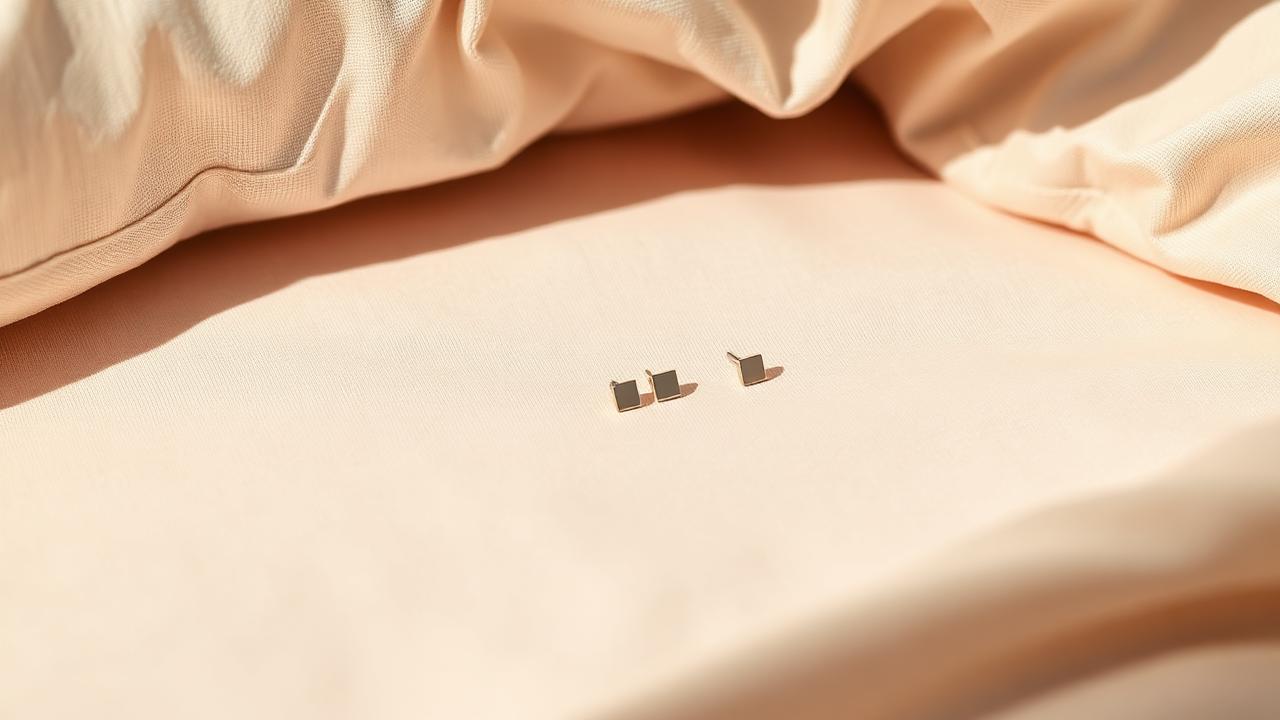
A flat back earring, meaning the post's backing sits flush against the back of the earlobe instead of pinching it with a butterfly clutch, is the piece most often recommended to anyone who wants to stop taking earrings out at night. The recommendation is broadly right and almost always missing the part that matters.
The flush disc is only half the equation. The other half is post length. A post cut for a thicker lobe leaves a few millimetres of bare bar behind the ear, and that gap is where the earring shifts, tilts and presses in the night. A post cut too short does the opposite: the disc sinks into the tissue and you feel it by the second night.
What to check before buying
Measure the piece, not the vibe. Reputable sellers list gauge, post length and disc diameter, and those three numbers tell you more than any product photo. A wider disc spreads pressure, which sounds comfortable and is, right up to the point where it catches the edge of a pillowcase every time you turn over.
The front matters too. A low-profile stud, a small bezel-set stone, a flat huggie: these disappear under a pillow. A raised prong setting does not, and no backing design will fix it.
Metal is the part people get wrong
If your ears react, the metal is usually the reason, not the shape. Implant-grade titanium and solid gold are the two materials that consistently behave on reactive skin. Plated pieces are a gamble: the plating is what your skin touches at first, and the base metal is what it touches later.
Threadless titanium posts have another practical advantage. There is no thread to cross, no tiny ball to drop down a drain at midnight, and the front pushes into the post with a friction fit that holds through a night of sleep.
Give it a week before you decide
One night proves nothing. The pattern shows up around day four: a lobe that is faintly tender at the piercing, or a spot on the cartilage where the disc has been resting at an angle. Either is a fit problem, not a piercing problem, and swapping the post length usually solves it.
If a piece is still comfortable after a week of continuous wear, showers included, it has passed the only test worth running. That is also the point at which the price stops mattering much. A well-measured titanium stud you keep in for a year is a better buy than a beautiful gold one that lives in a dish.
Fit and comfort notes here describe our own wear tests, and are not professional advice.
Questions people ask
How do I choose flat back earrings that are comfortable to sleep in?
Check the gauge, post length and disc diameter rather than relying on product photos. The post should not leave bare bar behind the ear or press the disc into the tissue, and a low-profile front is less likely to catch on a pillow.
What metal is best for reactive ears?
In our wear tests, implant-grade titanium and solid gold behaved most consistently on reactive skin. Plated earrings were less dependable because the base metal becomes exposed as the plating wears.
How long should I test flat back earrings for comfort?
Wear them continuously for a week, including in the shower, before deciding. Tenderness around day four or pressure where the disc rests can indicate a fit problem that may improve with a different post length.
One update a day
Today's fashion update, in your inbox
One fashion update each morning — no hype, no filler, just pieces worth wearing.