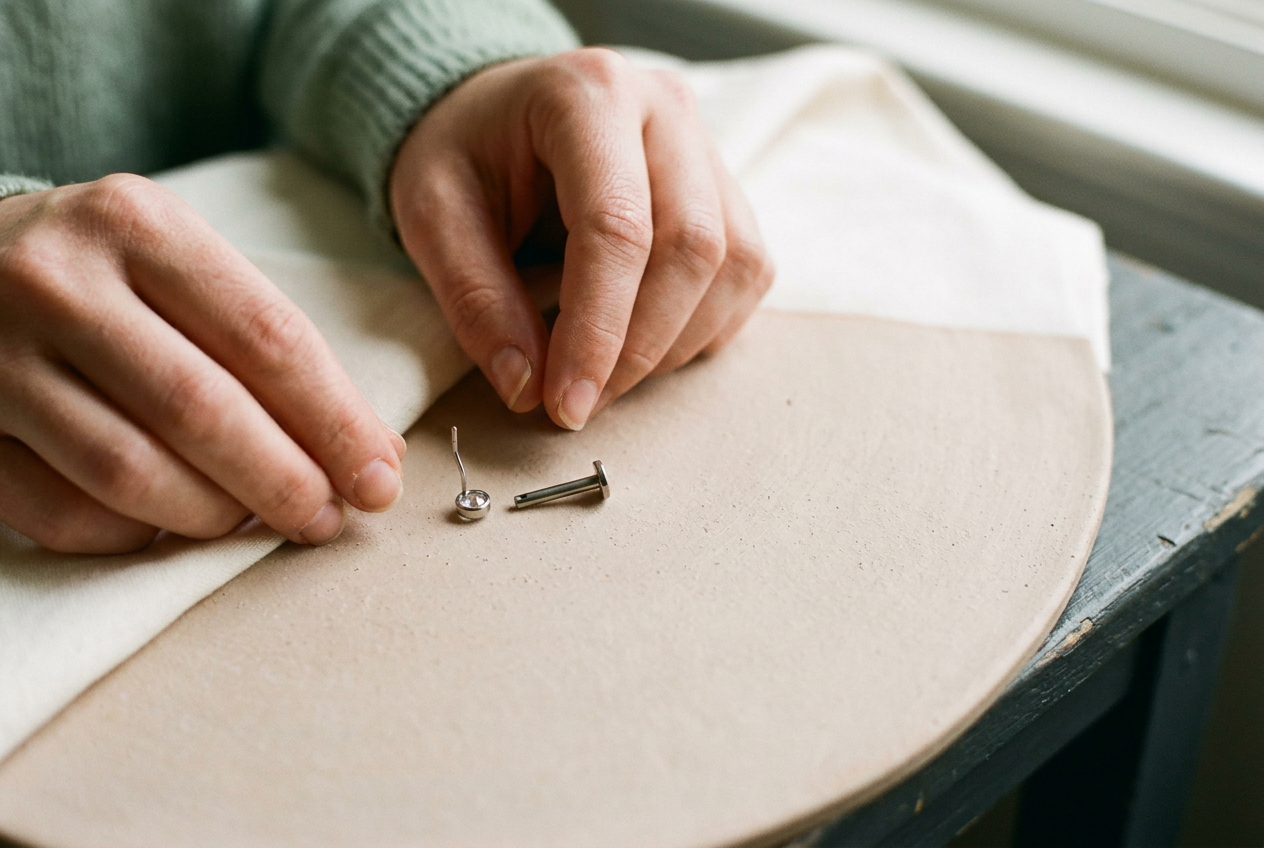
Hollow Gold Hoops Cost Less. The Dents Are the Tradeoff.
A hollow tube gives gold hoops their generous shape without the matching weight or price. It also makes a small dent capable of shifting the clasp and complicating repair.
November 22, 2026 · 7 min read
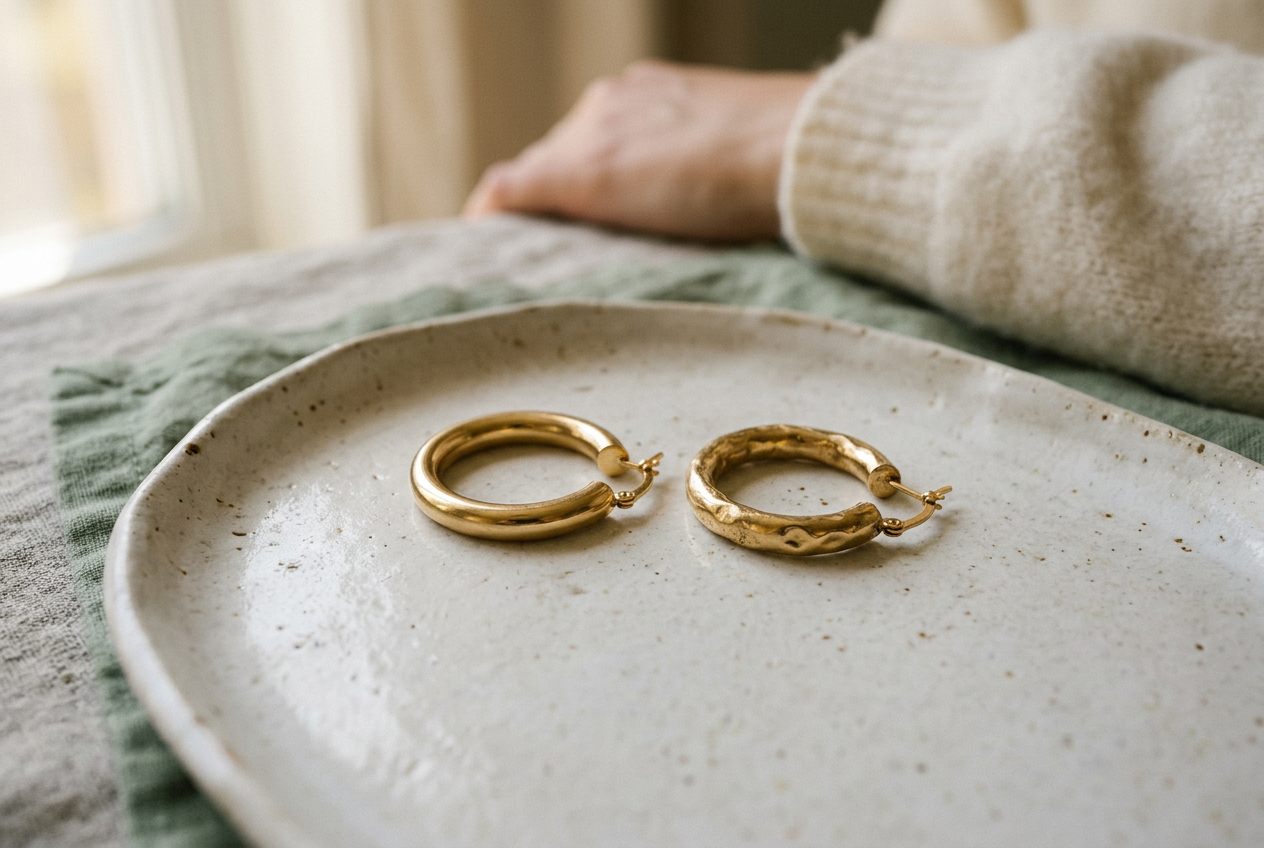
The telling detail is a shallow flat spot on an otherwise round gold tube. It may be no wider than a fingernail. On a hollow hoop, that small depression can stay put, interrupt the reflection and pull the opening slightly out of line.
For this analysis, the reference pair is a medium 14k yellow-gold tube hoop with a hinged post, meaning the wire that passes through the ear pivots from one side and clicks into the opposite catch. It is the familiar polished hoop with enough width to look substantial beside a blazer collar, yet little enough weight for a full workday. This is unisex advice because the construction behaves the same across wardrobes and piercings.
That generous-looking tube can be made in two very different ways. A solid version uses gold alloy through the full cross-section. A hollow version bends thin gold tubing into a circle, then adds the hinge and catch. From arm’s length, the silhouettes can be nearly identical.
In the hand, they are not.
“Solid gold” may not mean solid construction
Retail wording creates the first trap. “Solid 14k gold” often distinguishes gold alloy from gold plating, rather than promising that every visible section is filled with metal. A hoop can be made from genuine 14k gold and still have a hollow interior.
Ask a narrower question: Is the hoop body hollow tubing or solid wire? “Semi-hollow” also deserves clarification, since the term can describe a substantial wall without telling you its thickness or how the findings are attached. A hallmark confirms metal fineness, not the space inside the tube.
Karat describes the proportion of pure gold in an alloy. It does not settle the durability question by itself, because alloy recipe, manufacturing and the finished tube wall all affect how the hoop responds to pressure. A thick-walled hollow 14k hoop may tolerate ordinary handling better than a very thin one, but no polished exterior reveals that wall thickness with certainty.
The reference pair earns its lighter feel by removing metal from the center. That reduces material cost as well as strain on the piercing, which can be a real advantage for larger diameters. The compromise sits in the shell. A solid hoop has more material available to resist a squeeze; hollow tubing can buckle when pressure concentrates on one point.
A dent changes more than the surface
Gold hoops rarely meet force in a laboratory-clean direction. They get pressed beneath over-ear headphones, caught between a phone and the side of the face, or trapped under another piece in a travel pouch. Sleeping in them can place body weight against the tube for hours. None of those actions guarantees damage, but each can focus pressure on a narrow area.
Once hollow tubing dents, pushing the mark outward is difficult because the jeweler usually cannot reach the inside of the closed curve. The metal may also have stretched around the depression. Pressing from the exterior can move the damage rather than erase it, leaving a ripple or thinning the wall further.
Solid hoops are not crush-proof. A fine solid wire can bend, and a heavy hoop can distort after a hard impact. The practical difference is repair latitude: a jeweler can often reshape a solid section with controlled pressure, while a hollow tube may crease, split at a stressed point or resist restoration to a clean circular surface.
Polish will not remove a structural dent. It removes a minute amount of surface metal, so treating a low spot as a scratch can soften the surrounding finish without restoring the missing curve.
The clasp is the early warning
Return to the reference pair. Its hinged post needs to meet the catch at one precise angle. If the hoop body becomes slightly oval, the post may land above or beside the opening, even when the dent itself looks minor.
A wearer may compensate by pulling the two sides together. That can make the earring close for the moment, but repeated sideways pressure loads the hinge and catch rather than correcting the tube. The closure may begin to feel vague, or the post may need guidance from a fingertip each time. A secure click should not depend on twisting the hoop.
The same caution applies when the hardware is solid but the body is hollow. Findings, the functional parts such as posts and catches, are commonly joined to the decorative hoop body. Those junctions carry opening and closing force. If thin tubing distorts beside a joint, repairing the clasp alone may not restore alignment.
Heat adds another complication. Traditional soldering can be risky around thin tubing because the repair area heats quickly, while a laser-equipped jeweler may have more control. Even then, access, wall condition and finish determine whether a repair is sensible. A replacement can cost less than repeated work on an inexpensive lightweight pair.
Inspect the pair without squeezing it
Start with the product description. Look for “hollow,” “tubular,” “semi-hollow” or an explicit statement that the body is solid. If the listing says only “solid gold,” contact the seller and use the construction question above. A published gram weight can help compare two hoops of the same diameter, width and karat, although weight alone does not expose every internal detail.
In person, hold the reference-style hoop under raking light, meaning light that travels across the surface at a low angle. Rotate it slowly. A smooth tube should carry an even band of reflection around the curve; a dent, flat spot or previous repair interrupts that line. Check both earrings because one may have been handled more heavily during display or return shipping.
Look at the circle from the front, then turn it edge-on. The opening should not appear twisted, and the post should approach its catch without being pushed sideways. Open and close it several times while supporting the hardware rather than gripping the middle of the tube. The movement should feel repeatable.
Grinding, a delayed click or a post that scrapes the catch deserves attention before purchase.
Do not test durability by pinching the hoop. That can create the damage you are trying to detect, and a sales sample that survives one squeeze tells you little about repeated wear. Inspection works better than force.
Examine the areas beside the hinge and catch for dimples, uneven solder color or a change in contour. A visible join is not automatically poor workmanship, but the surrounding tube should remain round and the hardware should sit square. On an online order, perform this check before removing return tags or wearing the earrings outside.
The reference pair also needs a realistic comfort test. A lighter hollow hoop may win if the solid alternative pulls on the piercing by midday. Wear it at home for the permitted return period, move your head normally and try the headphones or sunglasses used most often. Comfort has value.
It should not be confused with impact resistance.
The lower price buys less repair margin
Hollow construction can place a large-looking gold hoop at the lower end of fine-jewelry pricing because less gold is used. As diameter and tube width grow, a comparable solid version generally becomes heavier and more expensive. That spread is the reason hollow hoops exist, not evidence that they are counterfeit or inherently badly made.
The better budget choice depends on the job. Hollow hoops make sense for occasional wear, careful storage and anyone whose ears reject the weight of a substantial solid pair. They are less convincing as a leave-on accessory for sleep, workouts, commuting under tight headphones or days spent changing clothes over the head.
For daily wear, compare the full cost rather than the first receipt. A smaller or slimmer solid hoop may offer less visual volume, yet tolerate reshaping better and remain wearable after the hollow reference pair would need specialist assessment. If the larger silhouette matters most, accept that it needs more deliberate handling.
Store hollow hoops closed, separated from harder jewelry and supported so nothing rests on the tube. Put them on after pulling tight necklines over the head. Remove them before sleeping or exercising, and stop wearing the pair if the post starts missing its catch. Clasp misalignment is not a quirk to train around.
It is evidence that the geometry has changed.
Questions people ask
Can hollow gold hoops work for everyday wear?
Yes, if everyday wear still includes taking them off for sleep, exercise and situations that press against the ear. A well-made hollow pair can remain useful for years with controlled handling, but it is a poor set-and-forget choice for anyone who routinely wears hoops under headphones or stores jewelry loose in a bag.
How can I tell whether a gold hoop is hollow?
Read beyond “solid gold” and ask whether the hoop body is hollow tubing or solid wire. Compare weight only against hoops with matching dimensions and karat. A very light feel can support the answer, but the seller’s construction disclosure matters more because a thick tube and a slim solid wire can overlap in weight.
Can a jeweler repair a dented hollow hoop?
Sometimes. A jeweler needs to assess the dent, tube wall, finish and proximity to the clasp before promising a result. Minor reshaping may be possible, while a sharp crease or split can remain visible or cost more to address than the pair warrants. Do not press the dent out at home first.
Are solid hoops always worth the higher price?
No. Solid construction is easier to justify for frequent wear, long-term repairability and small hoops where the weight stays comfortable. Hollow construction can be the better purchase when low weight and a larger silhouette matter more, provided the clasp begins in clean alignment and the earrings will be stored separately.
One update a day
Today's fashion update, in your inbox
One fashion update each morning — no hype, no filler, just pieces worth wearing.