A Close-Fitting Huggie Can Still Pinch While You Sleep
A week of side-sleeping showed that hinge shape and post coverage matter more than a huggie’s small diameter. The closest fit was not the most comfortable.
November 13, 2026 · 8 min read
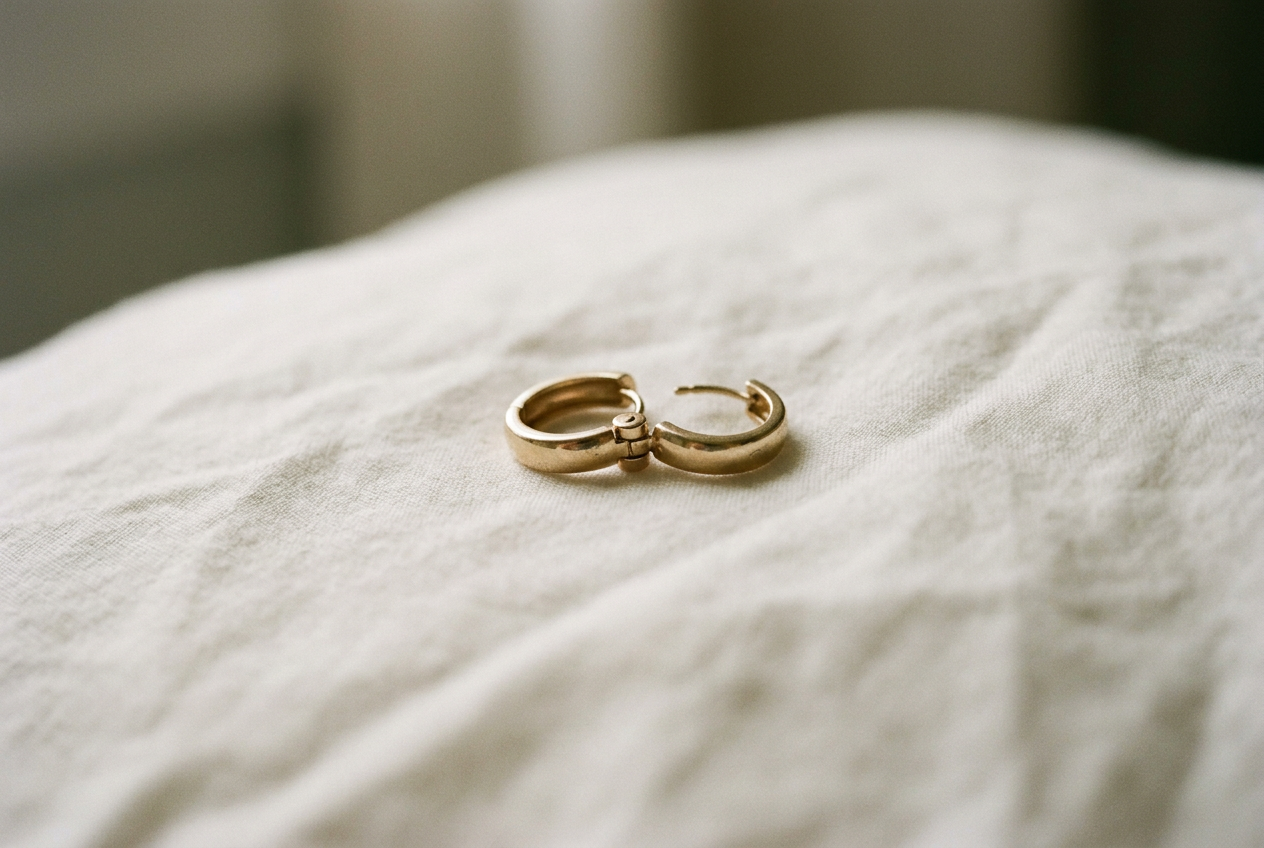
The reference pair looked ideal for sleep: plain 14k yellow gold huggies with a 10-millimeter outer diameter, an inner opening of about 7 millimeters, and a straight post that clicked into the opposite side. They sat close enough to follow the lower curve of the earlobe. No charm. No exposed butterfly backing.
After seven nights in a healed first-lobe piercing, the problem was not the hoop’s overall size. It was the lower hinge, where two sections of gold met in a narrow seam. On my back, I forgot the earrings were there. On my side, that seam became a small, firm pressure point whenever the hoop rotated toward the pillow.
This is unisex advice. Earlobe thickness, piercing placement, pillow firmness, and sleeping position matter more than the wardrobe in which the hoop appears.
The smoothest hinge was the least distracting
A huggie is a small hoop designed to sit close to the earlobe, usually with a hinged section that opens and snaps around a straight or curved post. That moving joint is the first detail to inspect for overnight wear.
On the reference pair, the hinge barrel, meaning the small tube around which the hoop pivots, was compact but not fully recessed into the curve. A fingertip could find its edges. So could a pillow. The sensation never rose to sharp pain, yet it was distinct enough to prompt an adjustment during the night, particularly when the hinge had rotated behind the lobe.
The better construction is a hinge that follows the hoop’s profile, without a squared block extending beyond the metal. Run a clean fingertip around the closed earring. If the joint catches a nail or feels wider than the rest of the hoop, that ridge is likely to remain noticeable under steady side pressure, even when it seems insignificant during the day.
A visible seam is not automatically uncomfortable. A flush seam can disappear against the skin. Gaps are less successful, since they create two separate edges and may catch fine hair or pillowcase fibers as the hoop moves. The reference pair stayed closed all week, but the joint still announced itself because its outer corners sat proud of the curve.
Post coverage matters more than the click
The satisfying snap of a huggie says that the closure engaged. It does not confirm that the post tip is buried.
With the test pair closed, the straight post entered a hollow opening on the opposite side and remained covered. That spared the skin from a direct point. On close inspection, however, the receiving end was slightly thicker than the post side, so pressure collected along that section when it turned between the lobe and pillow.
Check the earring from inside the circle, not only from the polished front. The end of the post should sit fully within its channel, with no pin-like tip visible and no rough edge around the opening. A post that overshoots can feel acceptable while standing, then press into the neck or back of the lobe when the head settles sideways for several hours.
Curved snap posts can remove the obvious straight tip, but the curve may sweep across more skin as the hoop rotates. They also require enough clearance to open through the piercing without forcing the earlobe into the hinge. The useful distinction is less about straight versus curved and more about whether the closed mechanism leaves a smooth inner surface.
Closure tension needs attention too. A loose latch risks opening during sleep. An extremely stiff latch takes more pressure to close, and that pressure can encourage wearers to squeeze the hoop against the lobe while checking it. The reference pair gave a clear click with light finger pressure and did not open overnight.
That part worked.
The closest fit created the clearest pinch
A huggie should follow the lobe, but it needs enough inner space for the tissue to remain uncompressed when the head meets the pillow. Close fit is visual. Compression is physical.
The 7-millimeter opening left a narrow strip of air below my lobe while upright. Side pressure removed it. The lobe shifted into the lower arc, the hoop stopped rotating freely, and the hinge held one small area in place. By the fourth night, that repeated pinch mattered more than the post or outer diameter, although the skin looked normal by morning.
Piercing placement changes the result. A low first-lobe piercing gives a small huggie more room beneath the tissue. A higher hole asks the same inner diameter to enclose more lobe, while a thick lobe can fill the opening before the pillow enters the equation. This is why a product photo showing a neat, close circle cannot establish sleep comfort.
Before committing to overnight wear, close the hoop and gently move it through its natural range. It should pivot without pulling the piercing channel, and a thin gap should remain between the lower lobe and the inner curve. If the hoop leaves an indentation after ordinary daytime wear, it is too close for a full night.
One size larger often helps more than a supposedly softer pillowcase. The tradeoff is movement: a roomier hoop can rotate, catch hair, or present its hinge to the pillow. For this test pair, a little more inner diameter would have reduced the pinch, but it would not have erased the raised hinge seam.
Four construction details ranked for overnight wear
The most comfortable huggie construction in this evaluation was a continuous-looking outer curve with a recessed hinge and a post fully contained inside the receiving end. It still placed a hard ring beneath the lobe, but no single corner took the pressure.
A flush hinge with a slightly thick latch section came next. This describes the reference pair. It was wearable for a night and easy to put on, yet the extra metal near the closure became apparent during sustained side-sleeping.
A blocky external hinge ranked below that, even when the hoop had generous clearance around the lobe. More space reduced pinching but allowed the earring to rotate, which repeatedly brought the block behind the ear.
Last was any huggie with an exposed post tip, a gapped closure, or a seam rough enough to catch a fingertip. Small scale does not excuse unfinished contact points. Those details are noticeable before sleep and gain leverage against a pillow.
Metal quality cannot correct poor geometry
Solid 14k or 18k gold avoids surface plating that can wear through, but the alloy composition still matters for anyone sensitive to particular metals. Sterling silver is accessible and familiar, though it can tarnish and may need more frequent cleaning. Gold vermeil and plated brass occupy lower price bands, yet their surface finishes are a weaker match for continuous wear once abrasion exposes the base metal.
Implant-grade titanium, meaning titanium manufactured to a recognized implant material standard, is lightweight and often chosen for metal-sensitive ears. A well-finished titanium huggie can be sensible for daily wear. The same material in a thick, projecting hinge will still press. Material quality and mechanical comfort are separate buying decisions.
At the fashion-jewelry end of the market, inspect plating and closure finish rather than assuming a tiny hoop carries little risk of wear. Sterling silver and vermeil usually sit in the middle. Solid gold costs more, sometimes approaching the price of a good pair of shoes, so the hinge deserves scrutiny before the expense feels justified.
A flat back remains the calmer sleep option
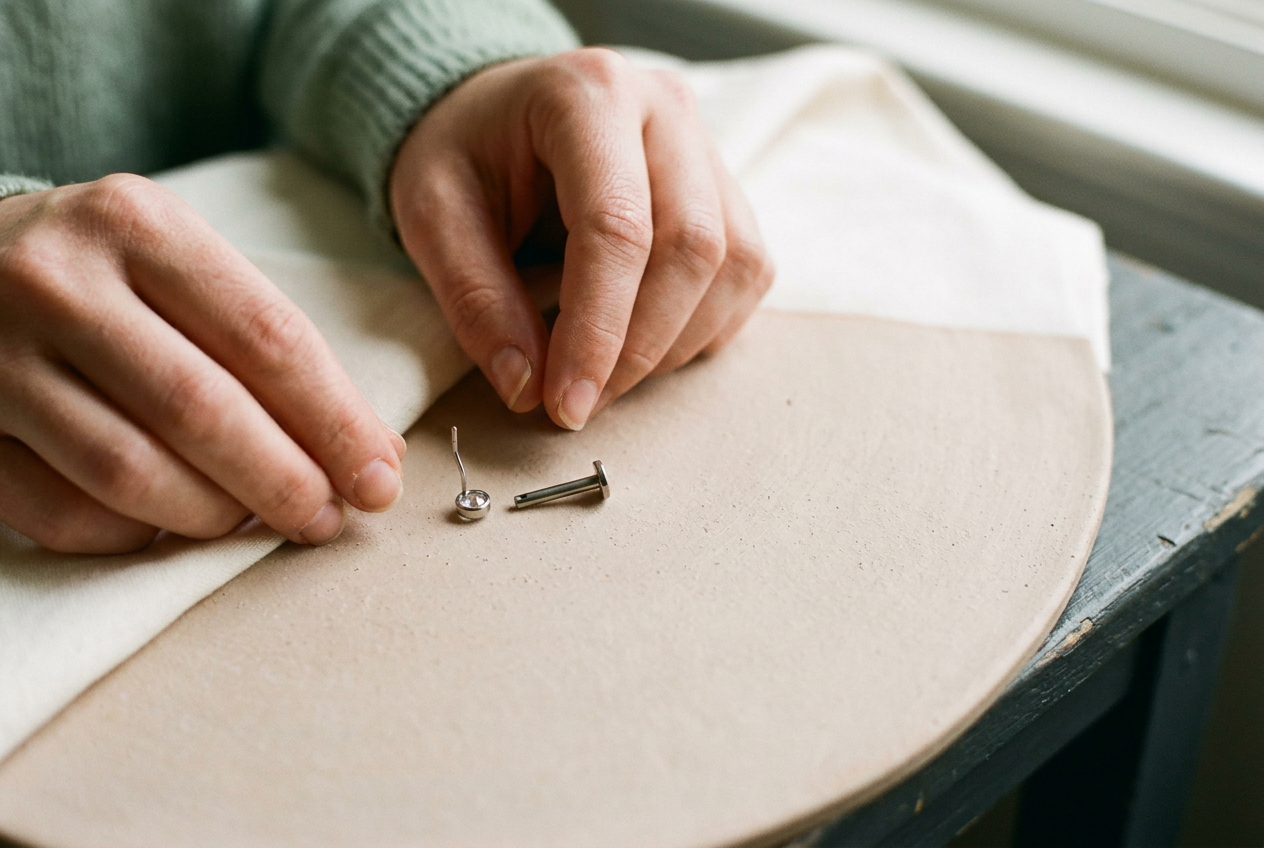
A flat back earring, meaning the post’s backing sits flush against the earlobe, distributes pressure differently from a hoop. There is no lower arc to trap the lobe and no hinge rotating toward the pillow. Correct post length is crucial: too short presses the tissue, while too long lets the front tilt and the backing travel.
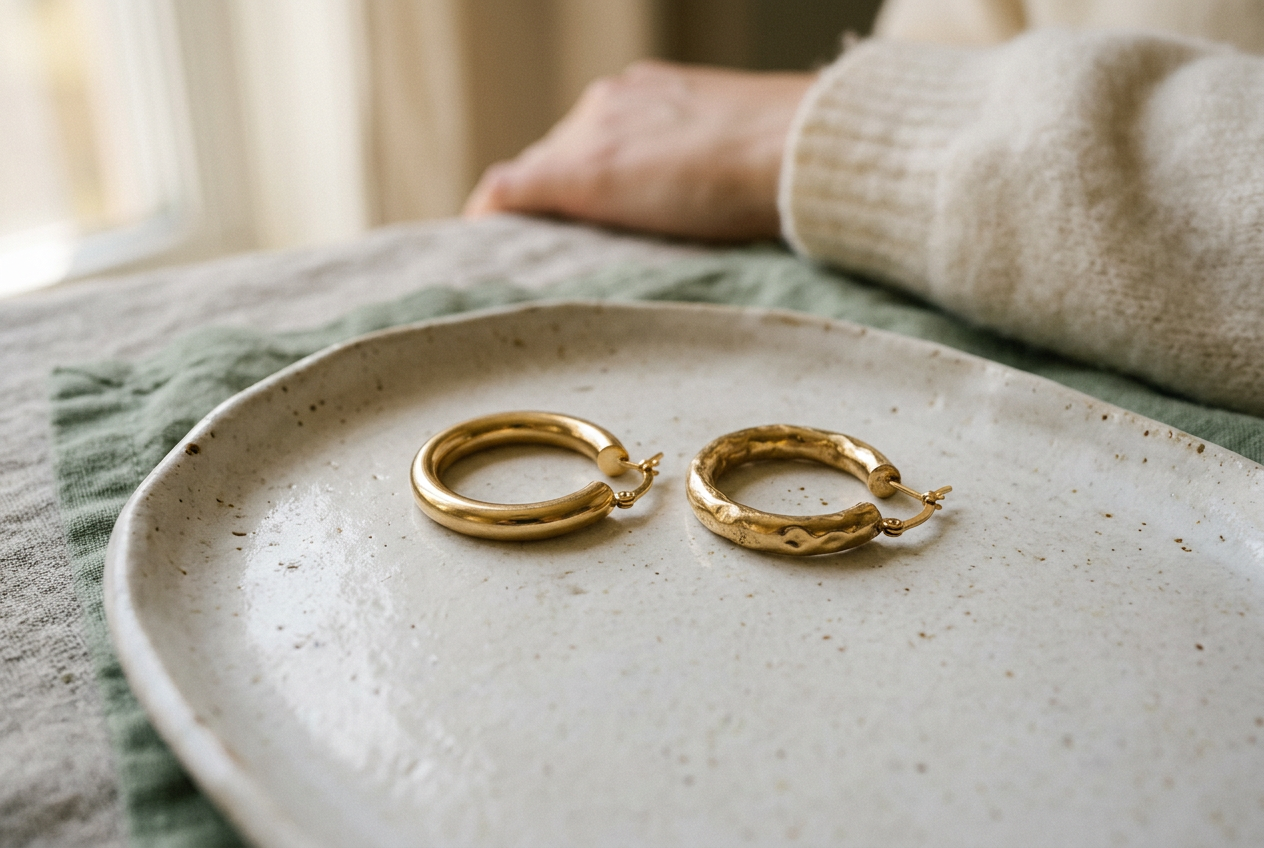
The huggie’s advantage is daytime ease. It offers a finished circle from every angle, needs no separate backing, and can be removed without managing a tiny threaded or threadless end. The reference pair was faster to open and close than a small flat back. It also looked intentional alone, rather than like piercing hardware.
For occasional overnight wear, a smooth huggie with visible clearance can be acceptable in a healed piercing. For habitual side-sleeping, the flat back wins on geometry. It places less rigid metal beneath the lobe and has fewer moving seams.
The buying check that takes one minute
Open and close the huggie several times. Trace the outer hinge and inner latch with a fingertip, then check whether the post disappears fully when shut. Once the hoop is in, confirm that it rotates without tugging and leaves a sliver of space under the lobe.
Keep the packaging until one full day of wear has passed. An indentation, warmth around the piercing, or a hinge that becomes distracting while reclining is enough reason to move up a diameter or choose a flat back. The reference pair passed the closure test and failed only under prolonged side pressure, which a mirror could not predict.
Questions people ask
Are huggie hoops better than studs for sleeping?
They can be better than studs with long posts and butterfly backs, which may poke or collect pressure behind the ear. A properly fitted flat back is usually less noticeable than either option because it has no hoop beneath the lobe and no hinged seam to rotate toward the pillow.
How tight should a huggie fit for overnight wear?
The hoop should follow the lobe without squeezing it, and a small gap should remain below the tissue when you are upright. It also needs to pivot without tugging the piercing. If daytime wear leaves an indentation, pillow pressure is likely to turn that close fit into a pinch.
Can I sleep in huggies in a fresh piercing?
A fresh piercing needs jewelry selected for healing, with enough room for swelling and a design that minimizes movement. A close huggie can compress tissue or rotate through the channel. Follow the placement and aftercare guidance from a qualified piercer rather than substituting a fashion hoop early.
Which metal is best for sleep-friendly huggies?
Implant-grade titanium and verified solid gold are common choices for continuous wear, provided the wearer tolerates the alloy and the surface is well finished. Metal alone does not make a huggie sleep-friendly. A raised hinge, exposed tip, or undersized inner diameter can still create pressure.
One update a day
Today's fashion update, in your inbox
One fashion update each morning — no hype, no filler, just pieces worth wearing.