Flat Back Earrings Win at Bedtime but Test Your Grip
A flush disc feels better against pillows and phones, while a butterfly clutch is faster to remove. The deciding details are post length, cleaning, and how easily you handle tiny parts.
November 12, 2026 · 8 min read
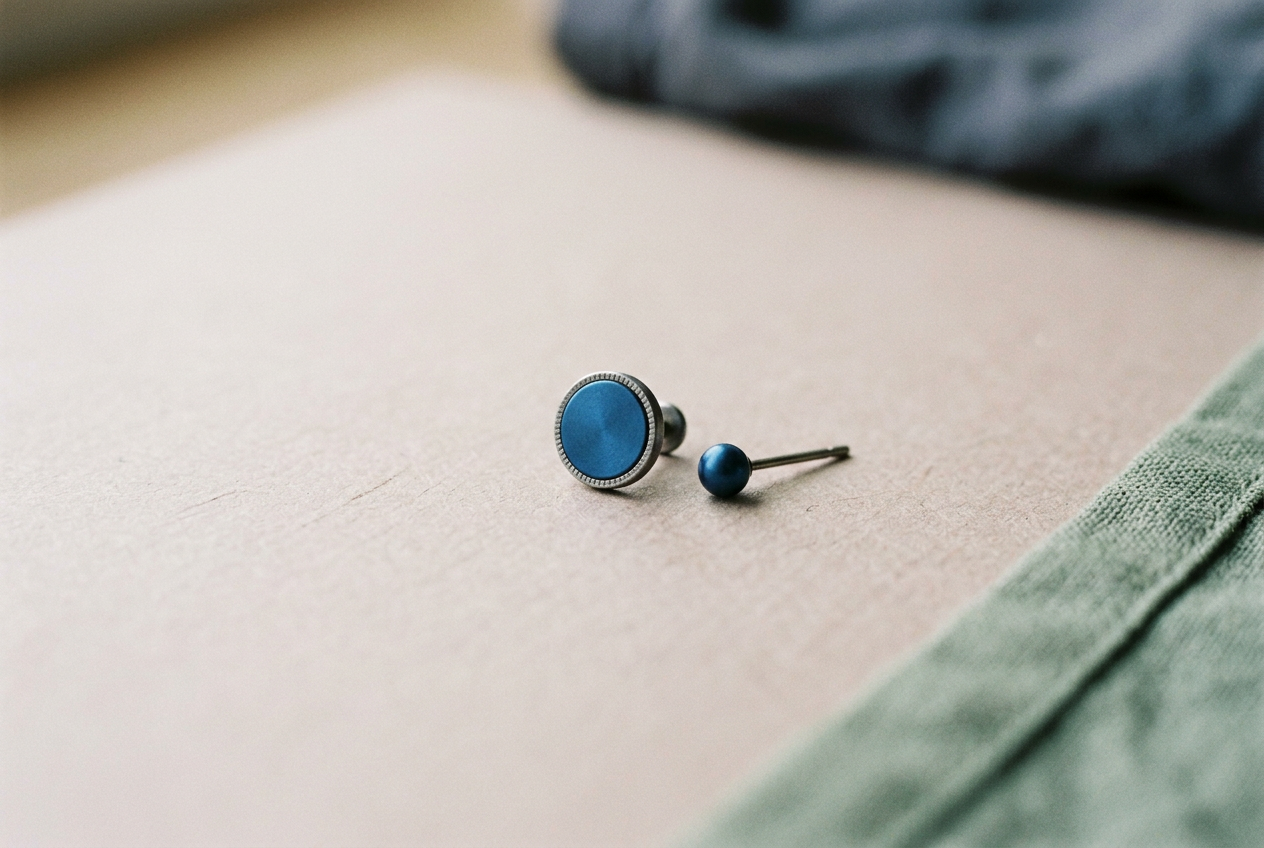
For one week, I wore a matched pair of small bezel-set studs with implant-grade titanium posts: a conventional butterfly clutch on the left ear and a threadless flat back on the right. A flat back earring, meaning the post’s backing sits flush against the earlobe, changed the physical experience more than the appearance. From the front, the studs looked identical.
The comparison was deliberately narrow. Both piercings were fully healed. The flat-back post had been fitted closely enough to limit movement without pressing a mark into the skin, while the butterfly clutch sat in its usual position with a small amount of post extending behind it. That difference affected sleep, cleaning, changing clothes, and phone calls.
This is unisex advice. Backing comfort depends on anatomy and fit rather than wardrobe, though long hair, close collars, headphones, and the way someone sleeps can make the contrast sharper.
The pillow test favors a fitted flat back
The butterfly backing announced itself as soon as my ear met the pillow. Its two curled metal wings created a wider pressure point, and the exposed end of the post could shift toward the skin when the pillow pushed the earlobe sideways. It was not painful every night. It was noticeable every night.
The flat disc spread that pressure across a smoother surface. On my right side, I could still feel the stud if the pillow folded firmly under the ear, but there was no narrow post end pressing inward and no clutch edge catching the pillowcase. The improvement was clearest during repeated turns rather than while lying still.
Post length determined whether the flat back worked. A post that is too short can make the disc press into the lobe, especially after a hot day or any temporary swelling; one that is too long leaves enough movement for the front to tilt and the disc to knock against the skin. Flat does not automatically mean comfortable. Fitted does.
That makes the flat back strongest for people who leave healed-ear studs in overnight and know they will not remove them before bed. Side sleepers benefit most. Back sleepers may notice less of a difference, and anyone who already takes earrings out nightly is paying more for a feature they will barely use.
Security depends on the mechanism and the fit
The familiar butterfly clutch grips a grooved or notched post through spring tension. It is quick to push on, easy to reposition, and forgiving when the post length is generous. During the week, mine stayed attached through ordinary dressing and sleep.
Its weakness was gradual movement. After several clothing changes, the clutch had shifted slightly farther down the post. It had not reached the end, but the extra space let the stud droop. Pushing the butterfly tighter corrected the angle in seconds, which is part of its appeal: you can see and feel what needs adjustment.
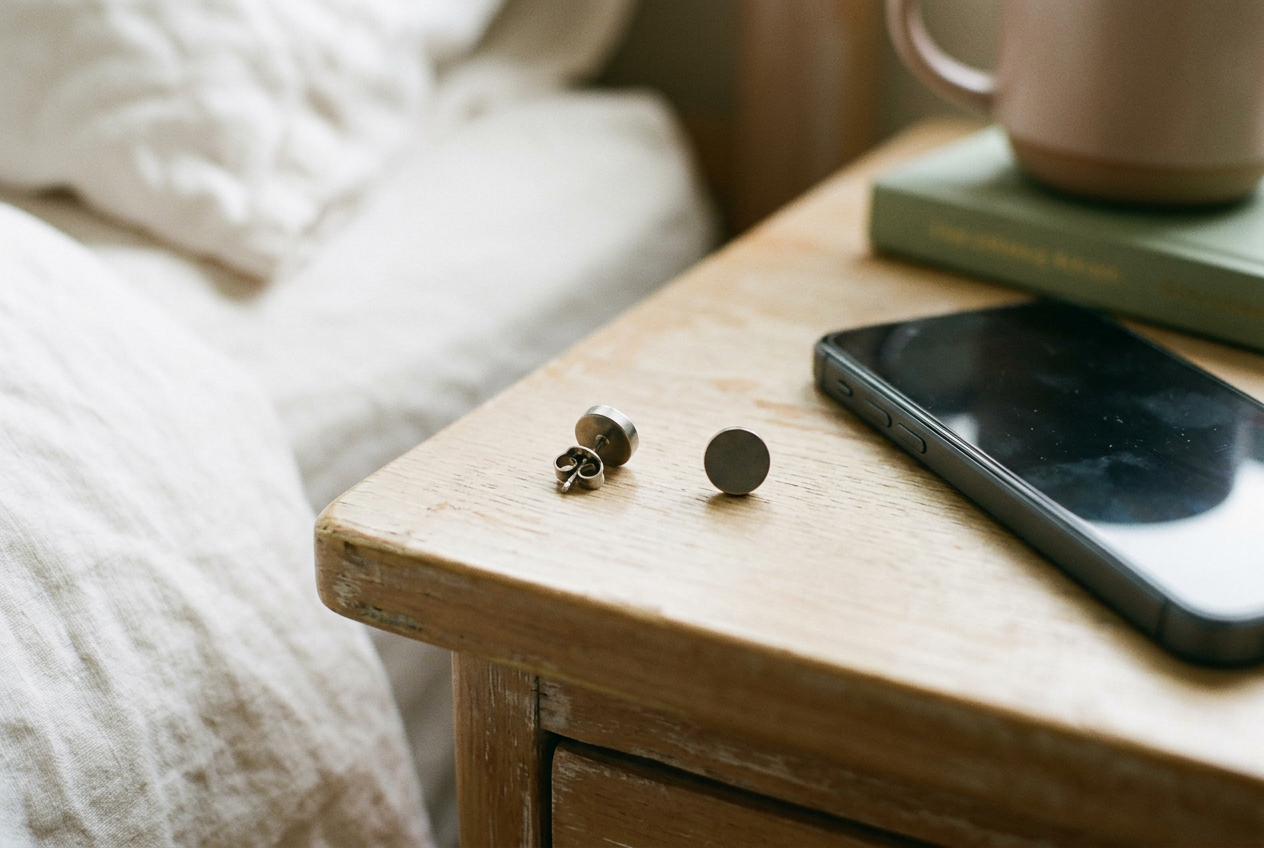
My flat back used a threadless labret post, a hollow post that holds the decorative end through tension from a slightly bent pin. Once seated, it did not migrate along the post because there was nowhere for it to slide. The front stayed close to the ear throughout the test, including after a sweater collar brushed it.
Threadless does not mean incapable of coming apart. Security depends on adequate tension in the pin and on pressing the end fully into the post. If the front spins freely, feels loose, or pulls out with little resistance, it needs attention before daily wear. Internally threaded flat backs, which screw together inside the post, remove the tension-fit variable but can be fiddly to align.
For a healed piercing worn continuously, a properly fitted flat back felt more stable. For a stud changed several times a week, the butterfly was less demanding and easier to check without a mirror.
Cleaning exposes the butterfly’s hidden surfaces
After a week, the largest visible difference sat behind the ear. The butterfly clutch had collected more shampoo residue around its curls and central grip. Those folded surfaces are difficult to wipe while the backing remains on the post, and a quick shower rinse did not clear them.
The flat disc was easier to wipe around because its outer face was smooth. It was not self-cleaning. Residue still gathered where the disc met the post and in the narrow space between the disc and the lobe, particularly when the fit was snug. A flush silhouette reduces exposed hardware; it also makes the contact area harder to inspect without removing the jewelry.
For both styles, I removed the earrings, washed my hands, cleaned the jewelry with mild soap and water, rinsed it well, and dried it before reinserting it. The butterfly demanded more attention around its wings. The flat back demanded more concentration during reassembly, since the small front and post were easier to lose at the sink.
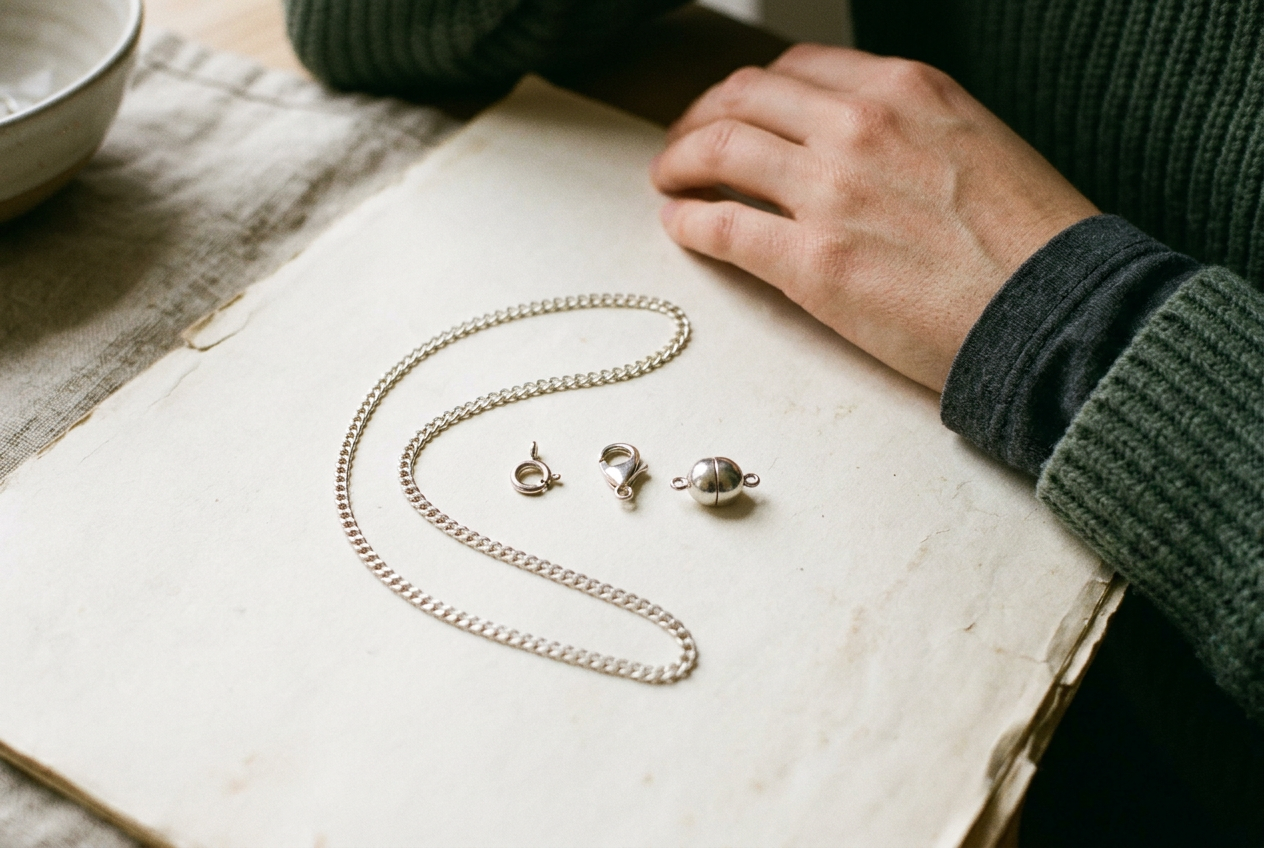
Material matters here. Implant-grade titanium is light, corrosion resistant, and widely used for body jewelry, while solid nickel-free gold is another common higher-cost choice. A finish described only as gold tone or surgical steel does not tell you enough about the alloy or plating underneath, especially if your ears react easily. Flat and butterfly describe the backing shape, not the metal quality.
Fresh or irritated piercings are a separate case. Do not treat a comfort comparison as a reason to change healing jewelry yourself; the initial post length and aftercare need to account for swelling.
Clothing changes reveal two different snag points
The butterfly caught once on the inside of a close crewneck as I pulled it over my head. The clutch stayed on, but the fabric tugged the stud backward. With long hair tucked behind the ear, individual strands also found the open spaces in the backing.
The flat disc passed under the same collar without catching. Its decorative front could still snag, because the backing does not change the profile of a prong setting, hoop, or pointed motif on the outside of the ear. A low bezel front paired with a flat disc is the more complete solution for daily wear around knits.
The tradeoff appeared when it was time to take the jewelry out. I could pinch the butterfly wings and pull in one movement. The flat back required me to hold the disc behind the ear while pulling the tiny front straight out, and short nails made that manageable, though not quick. Long nails, limited hand mobility, or reduced fingertip sensation may turn a minor inconvenience into the deciding problem.
Threaded versions ask for a different motion. You hold one side steady and unscrew the other, often without a clear view of either piece. A rubber grip or clean disposable glove can help, but that is extra equipment for a task a butterfly handles unaided.
Long calls make the pressure difference obvious
A phone pressed against the butterfly created a small, hard pressure point behind my left lobe. The discomfort built rather than arriving immediately. During a brief call it barely registered; during a long one, I kept shifting the phone to move its edge away from the clutch.
The flat disc sat closer to the skin and did not catch the phone as I repositioned it. Pressure remained if I clamped the handset tightly, but it was broader and less sharp. Over-ear headphones produced a similar result when the cup touched the lobe, although cup depth and ear size can outweigh the backing design.
A flush backing also spends more time against the skin, so phone hygiene still matters. Wiping the phone and removing residue from the disc contact area did more for end-of-week comfort than leaving the jewelry untouched because it was marketed for continuous wear.
The practical verdict
Switch to flat backs if you sleep in healed-ear studs, take long calls with a phone against your ear, or regularly pull knits over your head. Choose implant-grade titanium or solid gold from a seller that states the post construction, then prioritize correct length over the smallest possible disc. A reputable piercing studio can fit the post and install a threadless end, which adds time and may cost more than buying an ordinary pair of studs.
The price comparison is not always direct. Butterfly studs are commonly sold as a pair with both backs included, while body-jewelry flat backs may be priced as individual posts and decorative ends. Check the quantity before deciding that one option sits in the same price band as the other.
Keep butterfly backs if you remove earrings every night, change studs often, or need a backing with a larger gripping surface. They require more detailed cleaning, and the exposed post is less pleasant under pressure, but their uncomplicated push-on action remains useful. My matched titanium pair made the choice clear: the flat back stayed in for sleep, while the butterfly was the one I would choose for a single day and remove before bed.
Questions people ask
Do flat back earrings work for a fresh piercing?
Flat backs are commonly used as initial jewelry, but a fresh piercing may need extra post length to allow swelling. The close fit that feels good in a healed lobe can be too tight during healing, so have the post selected and changed by a qualified piercer rather than copying the fit of an established piercing.
Are flat backs more secure than butterfly backs?
A correctly tensioned threadless end or properly tightened threaded end can stay fixed without sliding along the post. Butterfly clutches can shift as their spring grip wears or fabric pulls them, though they are easier to inspect and tighten. Neither design is secure if its mechanism is loose or damaged.
Can you sleep in butterfly-back earrings?
You can, but the projecting post and curled clutch may press into the skin or catch a pillowcase. If you already sleep comfortably in them, there is little reason to switch for sleep alone. Remove and clean the backing regularly because its folds can hold hair-product and skin residue.
What size flat back is most comfortable?
There is no universal post length or disc diameter. The post should leave enough room for normal movement without pressing into the lobe, yet remain short enough that the stud does not tilt. A disc needs enough width to stay stable, but a larger one may overlap nearby piercings in a close stack.
One update a day
Today's fashion update, in your inbox
One fashion update each morning — no hype, no filler, just pieces worth wearing.