Saffiano Beat Rain, but Pebbled Leather Hid Scuffs Better
Three black leather totes took the same commuter route. Saffiano wiped clean fastest, pebbled leather concealed knocks, and smooth leather demanded the most attention.
November 10, 2026 · 8 min read
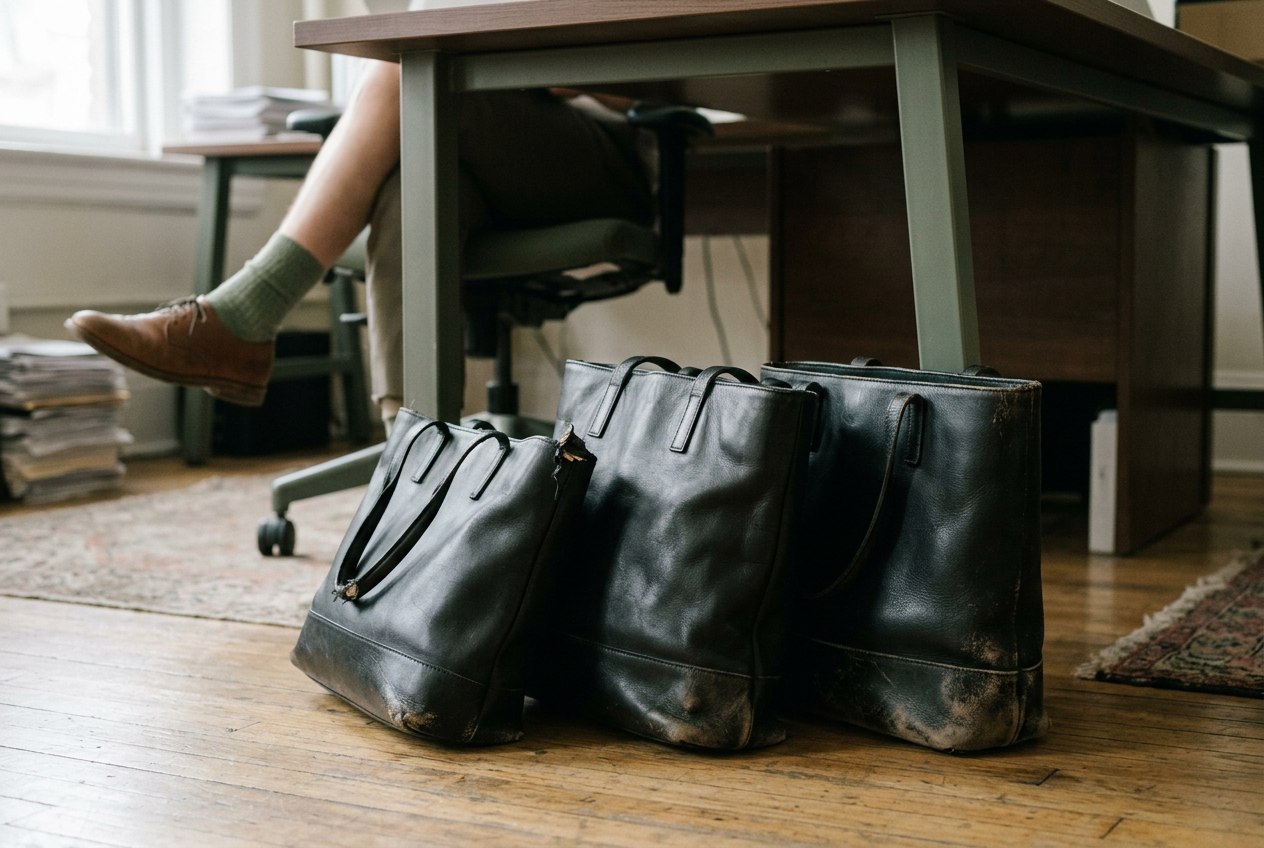
The first visible change was a dull patch on the lower front corner of a black pebbled leather tote. It appeared where the bag repeatedly met a transit seat, yet the grain broke up the mark so well that I had to tilt the corner toward a window to find it again.
That corner became the reference point for this wear test. I carried three similarly sized black leather zip-top totes, one pebbled, one saffiano, and one smooth, for a commuting week apiece. Each took the same transit route and an ordinary work load, including a laptop and filled water bottle. Each sat under the same desk, encountered light rain, and received one end-of-week wipe with a damp white microfiber cloth.
This is unisex coverage. The findings apply across wardrobes, although the construction and leather quality of an individual bag can matter more than the finish stamped into its product name.
Texture did not equal toughness
Pebbled leather has an embossed or naturally pronounced grain, meaning its raised and recessed surface is visible and easy to feel. Saffiano has a fine crosshatch pressed into the leather and is commonly protected by a surface coating. Smooth leather has little visible texture, though that broad description can cover everything from delicate full-grain calfskin to heavily finished corrected-grain leather.
Those distinctions matter because texture mainly changes how wear looks. It does not guarantee that the hide underneath is thick, supple, or well finished. A thin pebbled leather can stretch at the handles. A rigid saffiano shell can still lose its edge paint.
Smooth leather may scratch quickly while remaining structurally sound for years.
The three totes made that separation clear. Saffiano looked most unchanged from several feet away. Pebbled leather collected minor contact marks without advertising them. Smooth leather developed the most readable record of the commute, including a fine line near the base and darkened handling around the zipper pull.
Pebbled leather concealed the daily knocks
The pebbled tote was the easiest bag to live with. Its grain scattered light across the surface, which kept the dull transit-side corner from becoming an obvious pale scuff. Small pressure marks from brushing a doorway and resting against a coat button also disappeared into the texture.
Close inspection was less flattering. The lower corner had flattened slightly, and dust had settled into the deeper grain near the base. A damp microfiber cloth removed surface dirt, but cleaning required several passes in different directions because one straight wipe skimmed over the recesses. The cloth lifted more gray residue from this tote than from the saffiano bag.
Rain produced a few darker dots while the leather was wet. Most faded as the bag dried naturally, away from a radiator, though one faint spot remained visible under direct light. Pebbled leather is not automatically water resistant; the finish and protective coating decide that. An untreated or absorbent pebbled hide may spot more readily than the one tested here.
Structure was the larger tradeoff. By the end of the week, the side carried against my body had softened and curved inward when the tote was set down. The bag still closed properly, but it no longer stood with the same symmetry. If a clean, upright silhouette matters more than a forgiving surface, check for a reinforced base and side panels rather than relying on the grain to hold the shape.
I would choose pebbled leather for a bag that travels on crowded transit, sits on office floors, or gets placed beside a chair without ceremony. That dull lower corner was real wear. It just remained discreet.
Saffiano handled rain and cleanup best
The saffiano tote felt firmer from the first carry. Its crosshatch surface resisted the soft dents that appeared on the pebbled bag, while the body stayed upright even after the laptop leaned against one side for much of the day.
Light rain sat on the surface in small beads rather than darkening it immediately. After blotting the bag with a clean cloth and letting it dry, I found no obvious spotting. The end-of-week wipe was quick because dust remained near the surface instead of lodging deeply in the pattern. Of the three, this was the finish I would be least nervous about carrying when the forecast looked unsettled.
The weak point was the corner. A small rub on one lower edge showed as a lighter, sharper mark than the flattened patch on the pebbled tote, partly because saffiano's repeated pattern made the interruption easy to see. The surface did not absorb the damage visually. It framed it.
That is the important distinction for commuters. Saffiano resists broad softening and wipes clean with little effort, but a hard scrape can leave a crisp scar, and damaged edge coating may be more noticeable against an otherwise uniform bag. Examine corners, piping, and handle attachment points when shopping. Those areas often fail before the crosshatched panels do.
Saffiano also has a particular hand. It feels dry and controlled rather than buttery, which suits structured work bags but may disappoint someone expecting leather to soften and develop a relaxed patina, the gradual change in color and sheen caused by use. Its polish comes from staying consistent.
Smooth leather recorded every contact
Smooth leather looked richest at the start of the test because uninterrupted black leather reflected light evenly. It also changed fastest. A fine scratch appeared near the base after the tote brushed a rough painted surface, and handling created a slightly shinier area around the top opening.
Rain was more complicated here. Small drops left temporary dark marks, most of which faded after drying, but a few outlines remained visible until the surface was wiped. The damp microfiber cloth removed them without much pressure. It did not remove the scratch.
I resisted polishing or conditioning the bag during the week because that would have made comparison difficult. On a bag I owned, I would first test any leather cream on a hidden area, then use a product intended for that specific finish. Conditioner can deepen color, alter sheen, or leave residue, and some coated smooth leathers do not need it.
The body retained more shape than the pebbled tote but less than the saffiano one. That result came partly from internal reinforcement, a reminder that smoothness itself does not cause slouching. Press gently on an empty bag's side panel. If it folds immediately and the base has no firm support, the silhouette will relax regardless of how pristine the surface looks on the shelf.
Smooth leather suits a reader willing to accept visible wear as part of the bag. It also makes sense when refinishing and professional repair are realistic options, since an even surface can sometimes be polished more successfully than a deeply embossed one. For a low-maintenance commuter bag, however, it asked the most attention during this test.
The price band changes what deserves inspection
At a budget price, the finish name tells only part of the story. Look at the material description, the consistency of the surface, and the cut edges inside a pocket if they are visible. “Genuine leather” confirms leather content but says little about which layer of hide was used or how heavily it was coated.
A less expensive saffiano bag may still be the practical choice if the coating is even and the corners are neatly finished. A budget pebbled bag can perform well when its handles are reinforced, though softness may expose weak attachment points sooner. Smooth leather in this band needs close inspection because a flawless initial surface can conceal a finish that scratches or peels rather than aging gradually.
At an investment price, demand more than an attractive grain. Corners should be balanced, edge paint should not pool or feel tacky, and handles should recover when bent gently. Ask what leather was used and whether the brand offers repairs. Paying more for saffiano only makes sense if the structure and finishing support its durability; paying more for smooth leather makes sense when the hide can develop character rather than merely showing damage.
The alternative is not always another leather finish. A coated canvas or technical nylon commuter bag may handle sustained rain with less care, and a removable leather pouch can supply the polished detail without putting the entire purchase at risk.
Match the finish to the failure you dislike
Choose pebbled leather if visible scuffs bother you more than gradual softening. Check that the base and handle anchors are reinforced, then expect to spend a little longer cleaning dust from the grain.
Choose saffiano if rain, spilled coffee, and quick wiping are the main concerns. Inspect hard corners closely. The surface stayed neat in this test, but its sharpest scuff was also the least easy to ignore.
Choose smooth leather if you value depth of color and are comfortable with scratches, shine, and patina becoming part of the bag. Keep it away from rough walls, blot rain promptly, and budget either time for care or money for occasional professional cleaning.
The pebbled tote's dull transit-side corner remained the most useful result. Texture did not prevent wear. It decided how loudly the wear announced itself.
Questions people ask
Is saffiano leather waterproof?
Saffiano leather is often more water resistant than uncoated smooth or pebbled leather because its crosshatched surface commonly has a protective finish. It is not reliably waterproof. Blot rain rather than rubbing it, let the bag dry away from direct heat, and follow the maker's care instructions.
Does pebbled leather scratch easily?
Pebbled leather can scratch, but its uneven grain often conceals fine marks better than a smooth surface. Deep scrapes and flattened corners still show. The tested tote disguised its commuter scuffs well, although dust lodged in the grain and took several passes with a damp cloth to remove.
Is smooth leather a bad choice for commuting?
No, but it suits someone willing to see and manage wear. Smooth leather showed fine scratches and handling shine first in this test, while rain marks needed a wipe after drying. A protected finish, reinforced structure, and access to repair matter more than smoothness alone.
Which leather bag finish is easiest to clean?
The saffiano tote wiped clean fastest because dirt and rain stayed near its coated surface. Pebbled leather needed more work around the recessed grain, while smooth leather cleaned easily but retained a scratch that wiping could not address. Always test water or cleaner on a hidden area first.
One update a day
Today's fashion update, in your inbox
One fashion update each morning — no hype, no filler, just pieces worth wearing.