Your Moving Earring Charm Is Pulling the Whole Stack Down
A balanced-looking ear stack can still ache by late afternoon. Hoop diameter, moving charms and off-center posts often matter more than the number of earrings.
November 14, 2026 · 7 min read
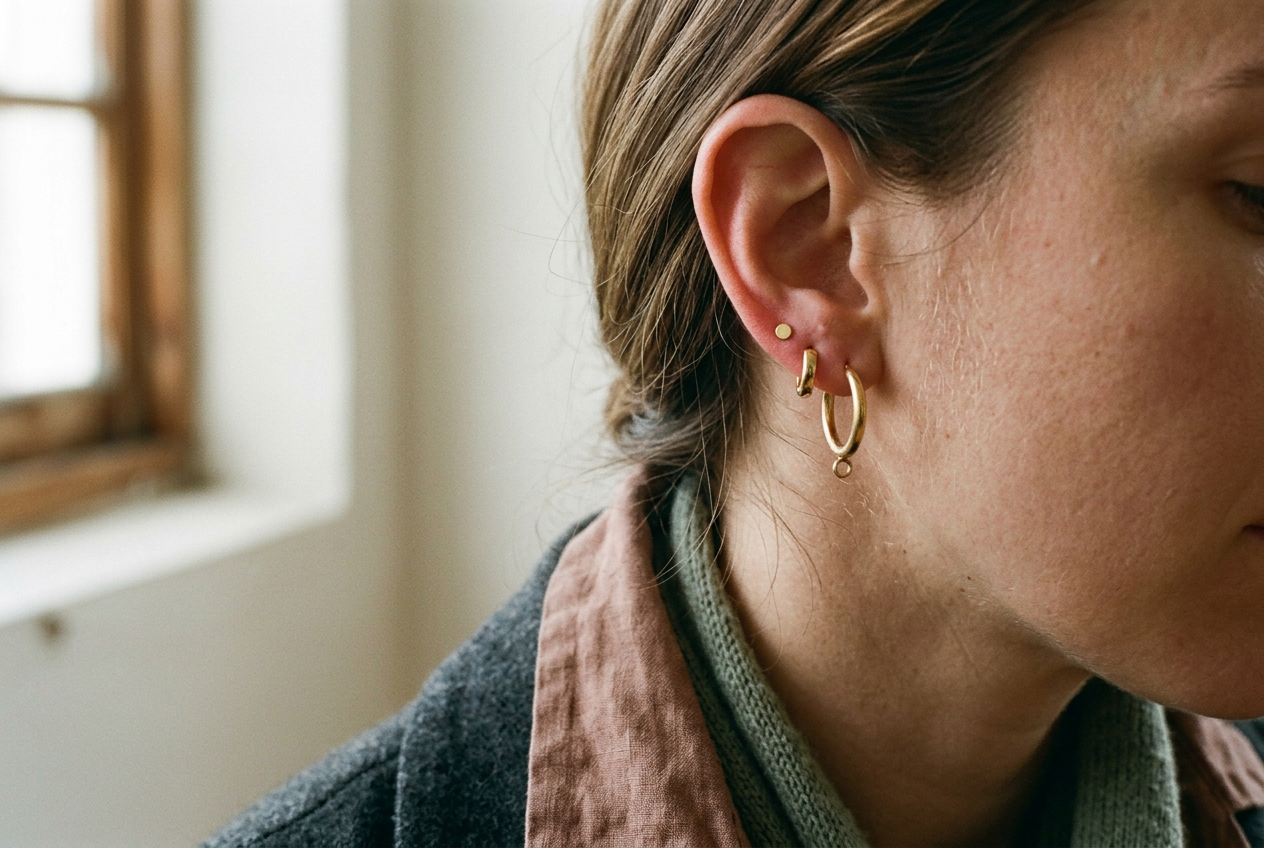
The problem piece in my test stack was easy to spot by the end of the workday: a medium 14k yellow-gold hollow hoop with a removable pear-shaped charm in the first lobe piercing. A close-fitting solid huggie sat above it, followed by a tiny flat back stud, meaning the post’s backing sat flush against the ear.
Visually, the stack was balanced. The hoop gave the ear a clean lower curve, the charm added movement, and the smaller earrings stepped upward without crowding. In wear, that pear charm changed the calculation. It swung while walking, tugged when I turned my head and pulled the hoop forward whenever the charm settled away from the lobe.
This is unisex fit guidance. Earlobe thickness, piercing placement and healed channel shape matter more than the department where an earring is sold.
Weight is only the starting point
Total weight matters, but a scale cannot predict comfort by itself. Two earrings with the same weight can feel different if one sits close to the piercing and the other hangs below it, where each step gives the metal room to move.
Think of the distance between the piercing and the lowest point of the earring as a lever arm, the span that increases the turning force on the hole. A compact stud keeps most of its mass against the lobe. A larger hoop carries metal farther from the post, while a charm adds weight at the bottom and may continue moving after the ear has stopped.
That was the weakness in the test stack. The hollow hoop itself was not the obvious burden. Once the pear charm was attached, the earring began to tip outward at the post, and the movement made a moderate load feel persistent rather than momentary. Removing the charm preserved the hoop’s diameter and the stack’s overall shape, but the pulling eased because the lowest moving mass had gone.
A jewelry scale that reads small increments can help compare pieces, especially when two hoops look alike but use different construction. Weigh every earring worn on one ear, including detachable drops and backs. Treat the result as a personal comparison, not a universal safe limit. Your useful number is the total that remains comfortable on your own healed piercings through a normal day.
Check the hoop before blaming the whole stack
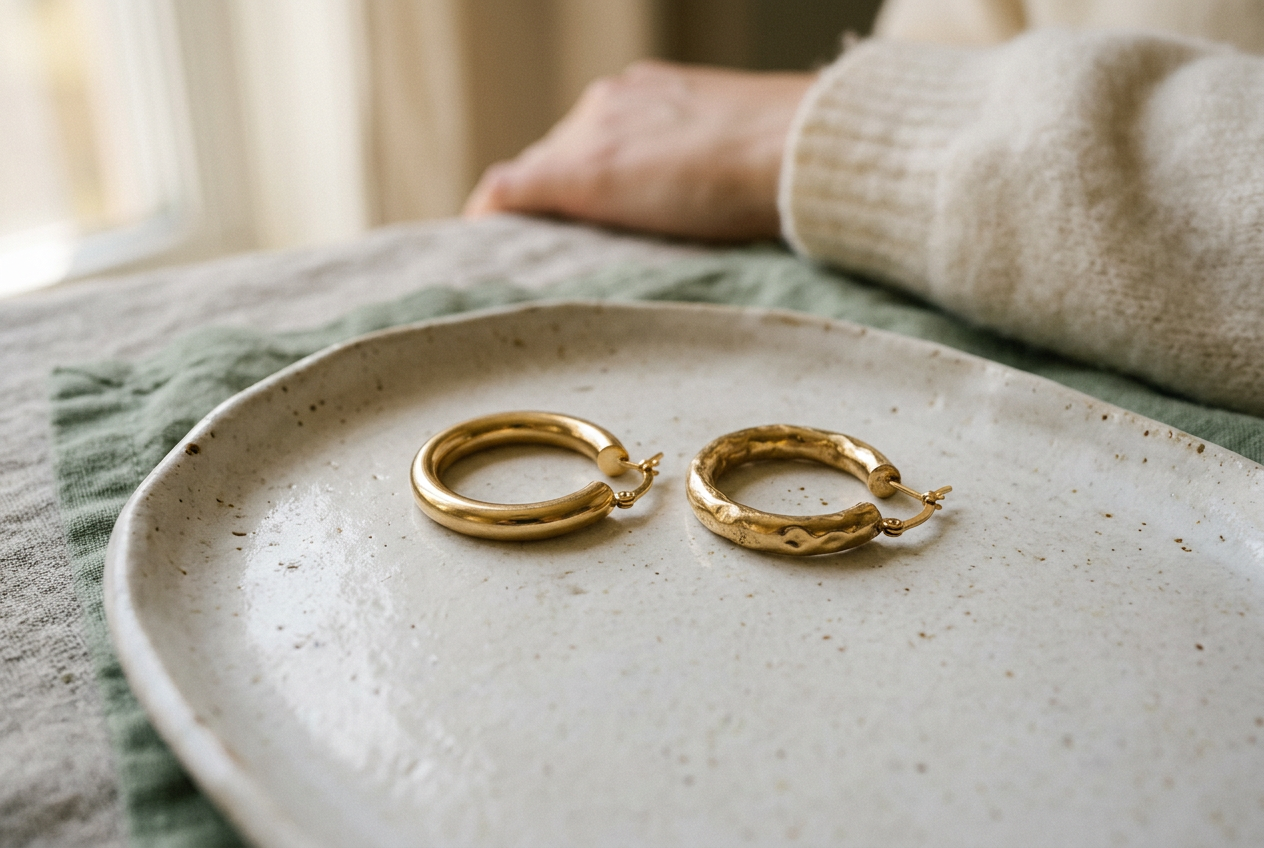
Hoop diameter changes how weight behaves. A small huggie, which curves closely around the lobe, has little room to swing and usually keeps its center of mass near the piercing. Increase the diameter and the bottom of the hoop travels farther with every step, even when the hoop is hollow.
Construction complicates the comparison. A wide hollow hoop can weigh less than a narrow solid one, though the larger diameter may still feel busier because it moves more. Hollow gold is useful when visual scale matters, but thin walls can dent and are not the best choice for earrings that are frequently tossed into a bag or squeezed under headphones. Solid gold resists that kind of denting, yet it adds mass quickly as the hoop thickens.
For the anchor stack, replacing the medium hoop with the solid huggie removed too much visual length. The ear looked top-heavy because every piece hugged the lobe. Keeping the hollow hoop and removing its charm worked better: the lower curve remained, while the source of repeated downward movement disappeared.
If a larger hoop is essential to the look, choose a thin-walled hollow style with a secure hinge and skip the detachable drop. Another route is implant-grade titanium, a metal commonly used for body jewelry because it is light and suitable for many metal-sensitive wearers. Its cooler gray color differs from yellow gold unless it has a durable colored finish, so the tradeoff is visual as well as financial. Titanium generally sits below solid gold in price, while well-made hollow gold costs more but preserves a fine-jewelry finish.
Post position can make a light earring tilt
A centered post does not always produce the best fit. On a round stud, placing the post slightly above the decorative center can help the face sit upright because more of the design hangs below the piercing. Put that post too low, however, and the top may tip away from the ear.
Hoops have their own positioning issue. If the pierced channel angles downward or has stretched over time, the hoop may pitch forward before any charm is added. A heavy backing will not correct the angle; it can pinch the lobe while the front still droops. An oversized disc back may stabilize a broad stud, but it also occupies space behind the ear and can press under over-ear headphones.
Look at the earring from the side as soon as it is fastened. The post should not drag against the lower edge of the piercing, and the front should not need a tightly clamped backing to stay level. That first-minute tilt is useful evidence. An earring already pulling at breakfast is unlikely to improve by late afternoon.
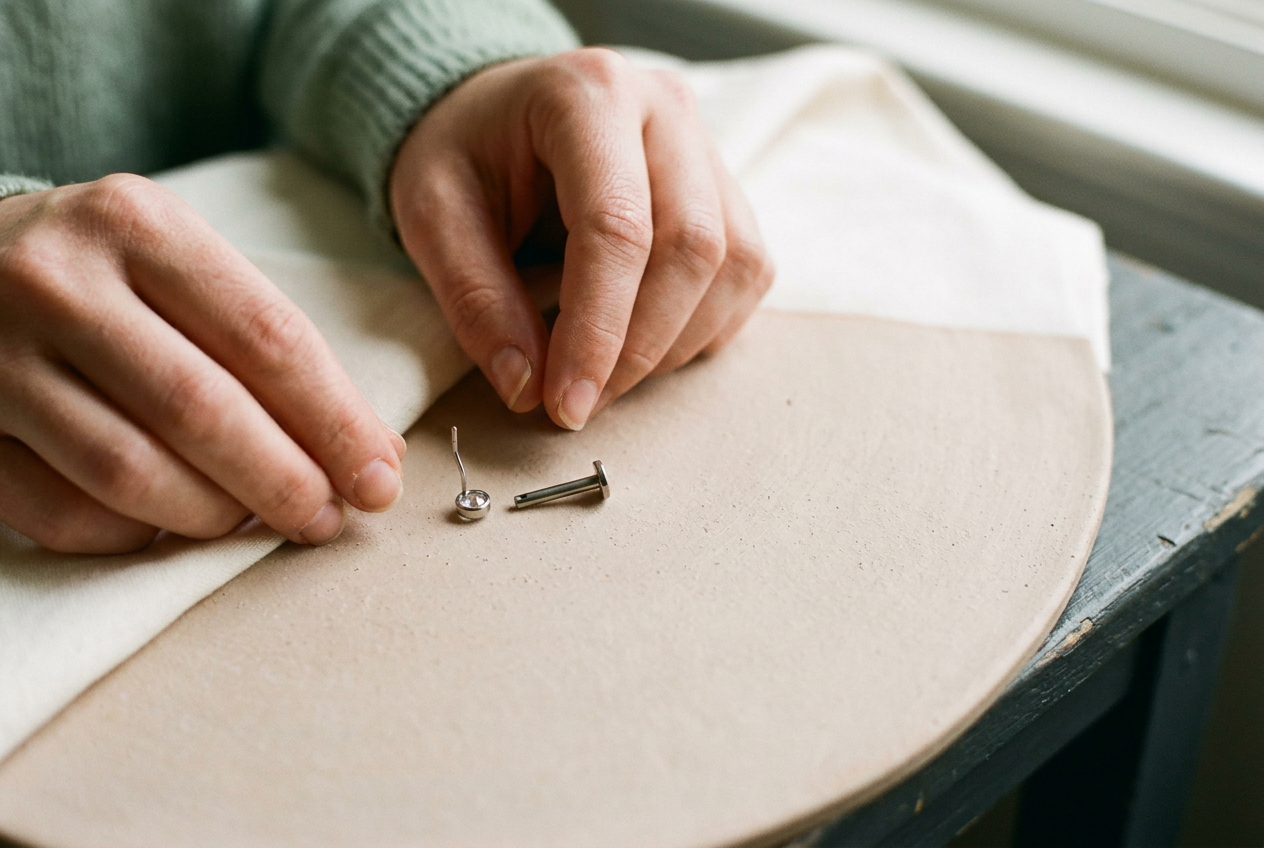
The flat back at the top of my stack remained the least demanding piece because its tiny decorative end sat close to the ear and the backing did not catch on hair. Post length still mattered. Excess post created room for the stud to tip, while an overly short post compressed the tissue. A fitted threadless labret post, meaning a straight post that holds a push-fit decorative end, gave the small stud enough space without leaving it loose.
Run a workday test, not a mirror test
Start with the stack you want to wear and photograph it from the front and side in neutral light. Note whether the first-hole earring is level before leaving home. Then check it after the parts of the day that create movement: a commute, a brisk walk, pulling on a sweater or wearing headphones.
Do not wait for sharp pain. Warmth, an urge to touch the lobe, a deep line under the piercing or a hoop that has rotated forward all count as failure for an everyday stack. The point is not to prove that you can tolerate the earrings until dinner. It is to find a combination you can forget about.
Change one variable for the next wear. With the yellow-gold test stack, the first change was removing the pear charm while leaving the hoop, huggie and flat back in place. That isolated movement without changing the overall number of piercings. If discomfort remains, replace the large hoop with a smaller diameter or lighter material; changing several pieces at once may produce comfort, but it will not show which construction caused the pulling.
A useful final check happens after removal. Temporary pressure marks from a backing should fade rather than remain angry or tender, and the piercing should not look longer or lower than it did at the start of the day. Persistent swelling, broken skin or discharge is outside a styling adjustment. Stop wearing the problem piece and seek guidance from a reputable piercer or clinician.
Rebuild the same visual balance with less pull
The lightest stack is not always the best-looking one. Three tiny studs can erase the graduated line that made the original combination work. Preserve the proportions first, then reduce the mechanical load.
For this stack, the successful edit kept the medium hollow hoop in the first piercing, moved the visual detail into the close-fitting huggie and left the tiny flat back at the top. A textured huggie can replace the sparkle or contour lost with the charm, yet it keeps that detail near the lobe instead of suspending it below the hoop.
If movement is nonnegotiable, choose a thin chain drop attached to a small stud rather than a dense cast charm on a broad hoop. The chain can still brush the neck or catch in knitwear, so this is a style tradeoff rather than the universal answer. A short, lightweight drop with limited swing is the better workday option.
Another method is to split the visual weight across ears. Wear the larger hoop on one side and keep the opposite ear closer with a huggie-led stack. Symmetry is not required for polish, and reducing one moving element can matter more than removing two small studs that were never causing trouble.
Do not pay a solid-gold premium merely to recreate a thick, heavy hoop that already makes your piercing tilt. Spend on the part that touches the body well: a properly fitted post, a secure hinge and a metal your skin tolerates. Volume can come from hollow construction. Detail can move upward into a huggie or stud.
Questions people ask
How heavy is too heavy for an everyday ear stack?
There is no single cutoff that suits every healed piercing. Weigh your current pieces to create a personal reference, then watch for immediate tilt, warmth, pressure or soreness during normal movement. A stack that stays aligned and unnoticed through your workday is a better benchmark than a generalized weight limit.
Why does a light hoop still pull on my piercing?
Diameter and movement can make a light hoop feel demanding. The farther its lower edge sits from the piercing, the more room it has to swing and rotate. A charm intensifies that motion, while an angled or stretched piercing channel may cause the hoop to pitch forward before much weight is added.
Should
I remove a charm or switch to a smaller hoop first?
Remove the charm first if the hoop feels comfortable while you are still but tugs when you walk. That keeps the stack’s visual scale while isolating the moving weight. If the bare hoop still tilts at the post or rotates forward, reduce its diameter or try a lighter construction.
Are flat backs better for a stacked ear?
Flat backs are useful for upper-lobe positions because they sit close to the ear and are less likely to catch on hair. They are not automatically comfortable: the post must allow enough room for the tissue without leaving excess length, and the decorative end still needs to be light enough to remain level.
One update a day
Today's fashion update, in your inbox
One fashion update each morning — no hype, no filler, just pieces worth wearing.