Your Threadless Earring Top Should Not Pop Out in Bed
A slight pin bend keeps a threadless top inside its flat back post. Here is how to check that tension without damaging the jewelry, and when to stop troubleshooting.
August 26, 2026 · 8 min read
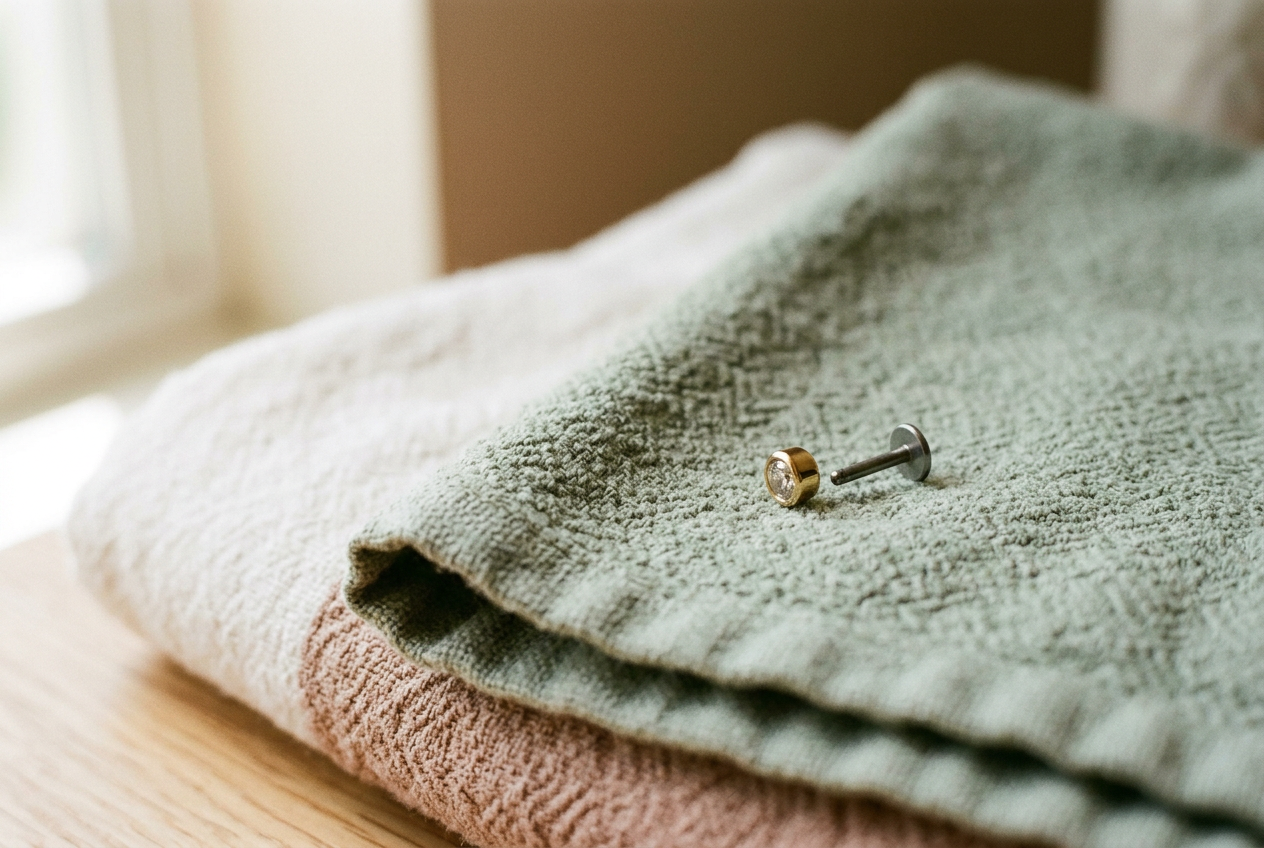
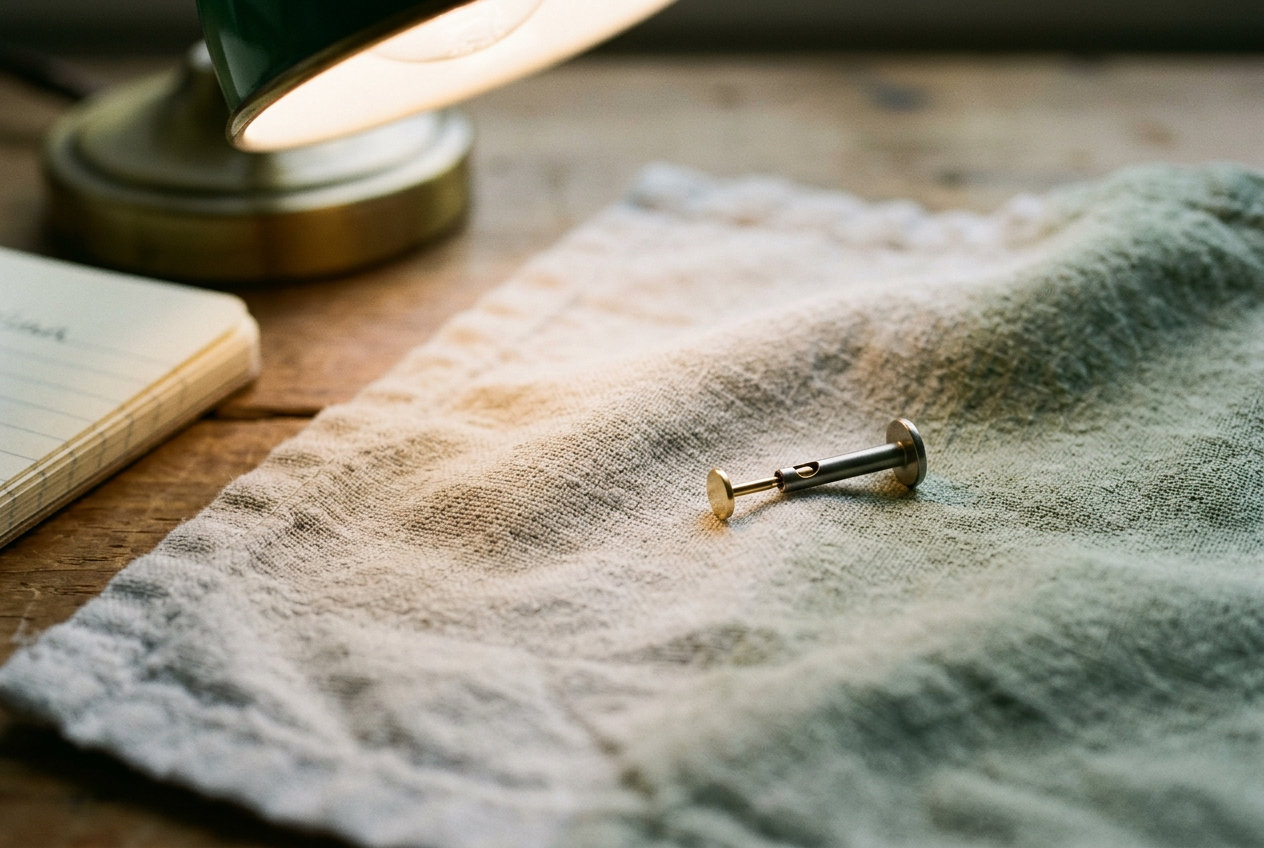
The useful detail is tiny: the pin attached to the decorative top should have a shallow bend, while the visible top should sit flush against the end of the post. Too little bend means weak tension. Too much can make insertion difficult, damage the pin or disguise a mismatch between components.
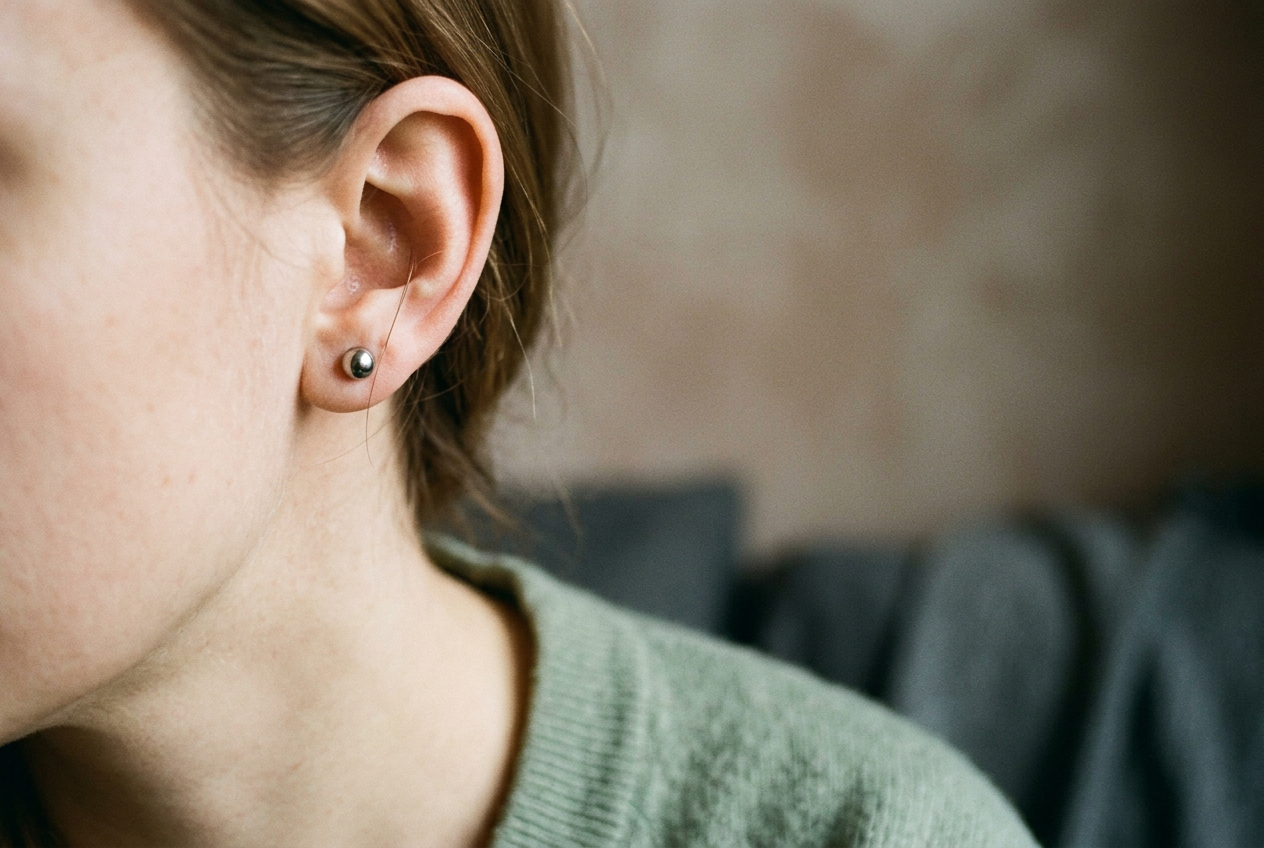
This guide follows one concrete setup: an implant-grade titanium flat back post with a small solid 14k gold bezel top, worn in a healed upper-lobe piercing. A flat back earring, meaning the backing sits flush against the rear of the ear, is generally comfortable under a pillow and less inclined to catch on hair than a butterfly-backed stud. In this case, however, the gold top releases while a sweater is being pulled overhead and is found loose after sleep.
That is a fastening problem, not an inevitable tradeoff of sleep-friendly jewelry. The same mechanics and checks apply across wardrobes, so this is unisex coverage.
The bend is the fastening mechanism
A threadless labret is a hollow post that holds a decorative end through pressure rather than screw threads. The end has a narrow pin. When that pin carries a slight bend and is pressed fully into the post, it bears against the inside wall, creating enough friction to resist ordinary movement.
The post does not click shut. There is no clasp to hear and no thread to tighten, which is why a top can look installed even when the pin has only entered partway. The final small push matters. On the titanium-and-gold setup, there should not be a visible strip of pin between the bezel and the post once the end is seated.
This design is convenient for small jewelry because the front can be changed without replacing the post, but it relies on close tolerances. The pin diameter, post opening and pin bend must work together. A top that slides straight in with almost no resistance may have an insufficient bend, yet it may also be too narrow for that particular post.
Do not assume every threadless component is interchangeable merely because it carries the same generic description. Manufacturers can use different specifications, and wear or accidental distortion can alter a component that once fit. The hollow post can also lose its shape if it has been pinched with inappropriate tools.
Remove it without pulling on the piercing
Work over a tray or folded towel, not an open sink. Small gold ends bounce, and the point of this check is to inspect the jewelry rather than lose it to the drain.
Wash and dry your hands, then hold the flat disc behind the ear with clean fingers. Grip the decorative top from the front and pull the two pieces apart in a straight line, using a gentle rocking motion only if the maker's instructions permit it. Do not twist as though the jewelry were threaded. Rotation does not unlock a pressure-fit end and can irritate the piercing if the post turns with it.
If the top will not release with light hand pressure, leave it alone. A piercer has tools that can stabilize the post without crushing it, and a brief jewelry check costs less in comfort than an inflamed piercing or a bent gold setting.
This at-home inspection is for a fully healed piercing that is calm, with no swelling or persistent tenderness. Jewelry in a fresh or unsettled piercing should be handled by a qualified piercer, particularly when removal might allow the channel to shrink or close.
Check the pin before adding more bend
Lay the removed gold top on the towel and look along the pin from the side. You are looking for a subtle curve rather than a sharp kink. Brand instructions commonly tell the wearer to insert the pin partway and apply a small bend, but the amount and method vary, so the documentation for the actual post and top should take priority over a generic online diagram.
First inspect for damage. A pin that is sharply creased, visibly cracked, loose where it joins the decorative end or no longer aligned with the setting should not be adjusted at home. Set it aside and take both components to a piercer. Fine pins tolerate normal fitting pressure, not repeated bending back and forth.
If the pin appears straight and both pieces are known to be compatible, start with the smallest correction. Insert the pin only partway into the post, leaving enough exposed to avoid levering against the decorative setting, then make the slight adjustment specified by the manufacturer. Never bend the pin at its joint with the top. That connection is the expensive part to damage on the 14k gold bezel.
Test once. A correctly tensioned pin should meet noticeable resistance as it goes in, but it should still advance under controlled finger pressure. If it must be forced, remove it rather than pressing harder. Excessive resistance can mean the bend is too pronounced, the pin is entering at an angle or the two components do not belong together.
Repeated trial bends are not good troubleshooting. Each adjustment works the same small area of metal, and a pin that survives one measured correction may not tolerate a cycle of bending, straightening and bending again. If the first modest change does not create a secure fit, the useful next step is comparison with a known-compatible post at a piercing studio.
Insertion depth can mimic weak tension
The gold bezel in this walkthrough can pass the first friction point and still remain slightly proud of the titanium post. That partial insertion may hold during breakfast, then release when a knit collar drags across the ear. Sleeping adds slower pressure from the pillow and movement from hair, making a marginal fit easier to expose.
Hold the back disc steady and align the pin with the post. Press the top inward along the post's axis rather than from above or below. Once it is seated, inspect the join under bright light or with a phone camera: the base of the decorative end should meet the post cleanly, without an exposed section of pin.
Do not use pliers to gain the final fraction of travel. Tool pressure can mark a polished gold top, deform the hollow titanium post or apply more force than the piercing can comfortably take. If clean, dry fingers cannot seat the end despite firm resistance, a piercer should check it.
Post length matters to comfort, though it does not create the pin tension. The wearable length, meaning the section of post that passes through the piercing, should leave room for the tissue without allowing so much movement that the top repeatedly tilts and catches. A post that presses into the skin needs professional resizing; a long post may snag more often, but shortening it will not repair an incompatible pin.
Dressing and sleep reveal different failures
A top that releases only when clothing passes over it may be secure enough for still wear but insufficiently resistant to a direct pull. Change the dressing move first: widen the neck opening with both hands, keep it clear of the ear and put high collars on before inserting removable jewelry when the piercing is healed enough for that routine.
A top found in bed presents a less obvious pattern. Check whether the decorative face has a raised edge that catches hair or textured bedding, and inspect the post length for excess movement. Smooth bedding may reduce incidental snagging, but it cannot compensate for a pin that slides into its post without tension.
The flat disc itself should also sit evenly. If it angles sharply because the post is too short, or sinks into swollen tissue, stop wearing the setup and consult a piercer. Sleep-friendly describes the low-profile shape. It does not promise that every disc diameter, post length or decorative top will suit every ear.
For the titanium post and gold bezel, the decisive test is boring and useful: after proper insertion, can the top withstand ordinary handling without creeping outward? If the join develops a gap, the fastening is not reliable enough for overnight wear.
Know when the components are incompatible
Compatibility is the likely issue when the pin remains loose after one restrained bend, when a previously secure top fits one post but not another, or when the pin cannot be inserted without force. Stop there. More bending may produce temporary grip while placing stress in the wrong part of the pin.
Bring the top and post together to a reputable piercing studio. A piercer can compare them with known components, inspect the post opening and determine whether one piece is worn or merely built to a different specification. Ask whether the post alone can be replaced before retiring the decorative end; with a solid-gold bezel, that may preserve the costlier part of the earring.
Match the replacement through the original maker or let the piercer supply a tested pair. Keep the metal appropriate for long wear, such as titanium with documented implant standards or solid nickel-free gold from a body-jewelry manufacturer, and confirm post length on the ear rather than ordering by appearance. Material quality will not fix mismatched dimensions, but low-quality construction adds another failure point.
A secure replacement should not demand a hard shove each morning. It should offer controlled resistance, seat flush and remain attached through the normal friction of hair, clothing and sleep. If the piercer cannot make the existing gold top hold safely in a compatible post, replacing the top is the sensible call. A lost bezel costs more than ending the experiment.
Questions people ask
How much should I bend a threadless earring pin?
Use only the slight bend described by the component manufacturer, and make it while the pin is partly inserted so the joint at the decorative top is not stressed. The finished pin should show a shallow curve, not a kink. If one modest adjustment does not create controlled resistance, take both pieces to a piercer.
How do
I know whether a threadless top is fully inserted?
The base of the top should meet the end of the post without a visible strip of pin or a growing gap. Hold the flat disc still, press in a straight line and inspect the join under bright light. Do not use pliers or force a top that stops abruptly.
Can
I sleep in a threadless flat back earring?
A properly fitted flat back can be comfortable for sleep because its rear disc sits close to the ear, but the pin must hold securely and the post must have the right wearable length. Remove or replace a setup whose top creeps outward, and see a piercer if the disc presses into the skin.
Should
I mix threadless tops and posts from different brands?
Only when the makers confirm compatibility or a piercer has tested the pair. Threadless does not guarantee identical pin and post dimensions across every line. If a favorite gold top stays loose in a titanium post after one restrained adjustment, replace the mismatched component rather than repeatedly bending the pin.
One update a day
Today's fashion update, in your inbox
One fashion update each morning — no hype, no filler, just pieces worth wearing.