That Flat Back Earring Tilts Because the Post Is Too Long
Once swelling has settled, spare post length can make an earring lean, travel and catch. Here is how to judge a downsize without trading movement for pressure.
August 19, 2026 · 7 min read
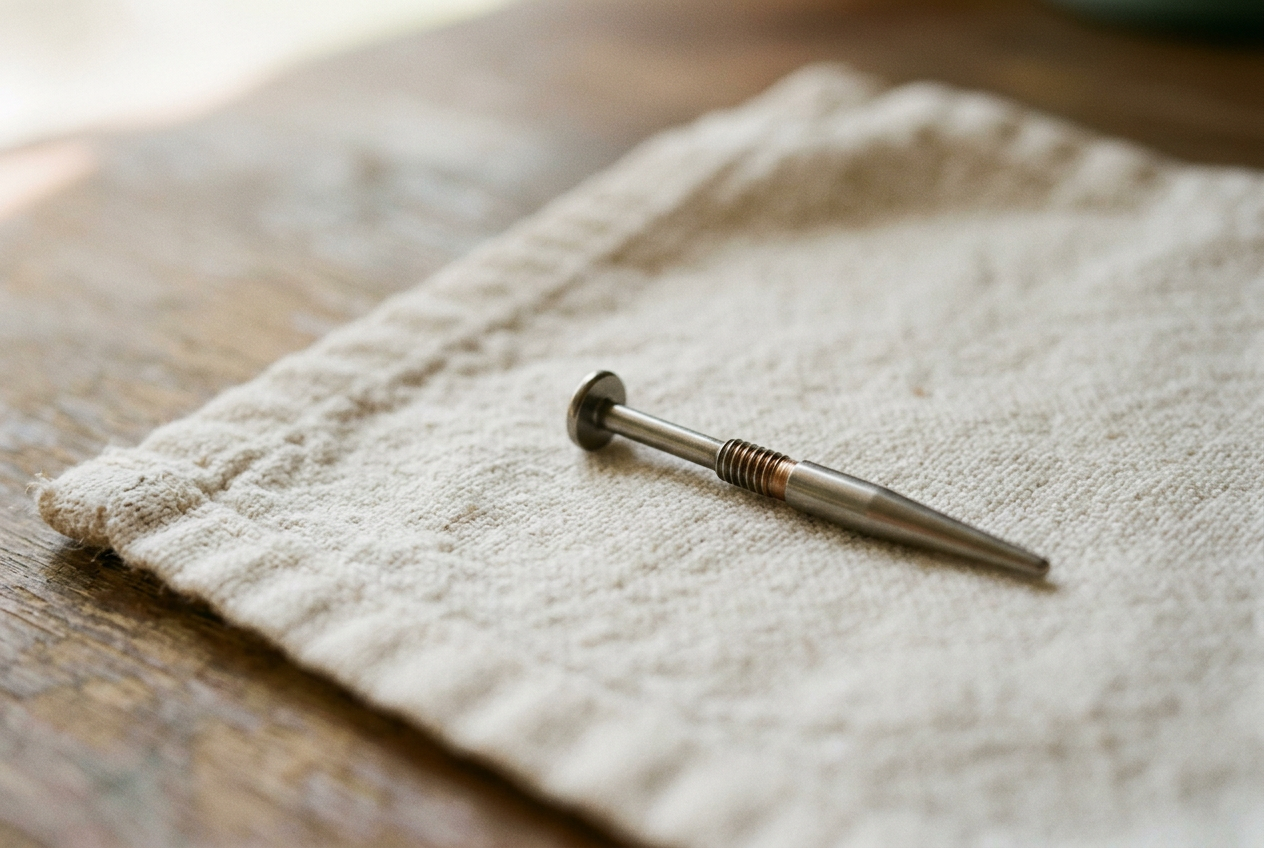
The small silver line behind the ear is the clue. On an 18-gauge implant-grade titanium flat back worn in a healed second-lobe piercing, an 8 mm post may have been useful while the tissue was swollen, yet look and feel loose once the ear returns to its usual thickness.
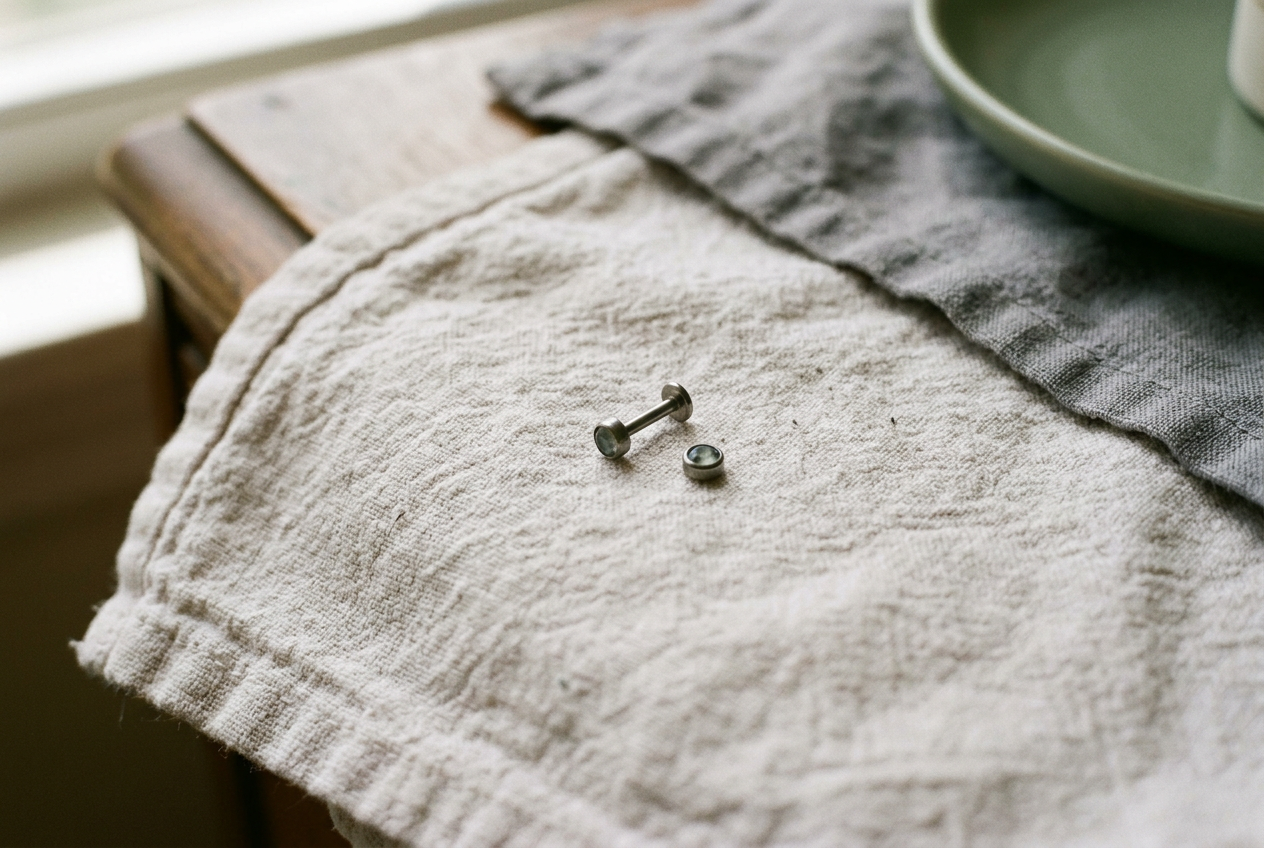
A flat back earring, meaning the post’s backing sits flush against the ear, should leave enough room for normal tissue changes without sliding back and forth all day. Our working case is a threadless labret, a post whose decorative top is secured by a tension-fit pin rather than a screw, worn continuously and slept in. Its original post now projects at the front when the backing is pushed against the lobe. The decorative end tips downward.
Hair finds the gap.
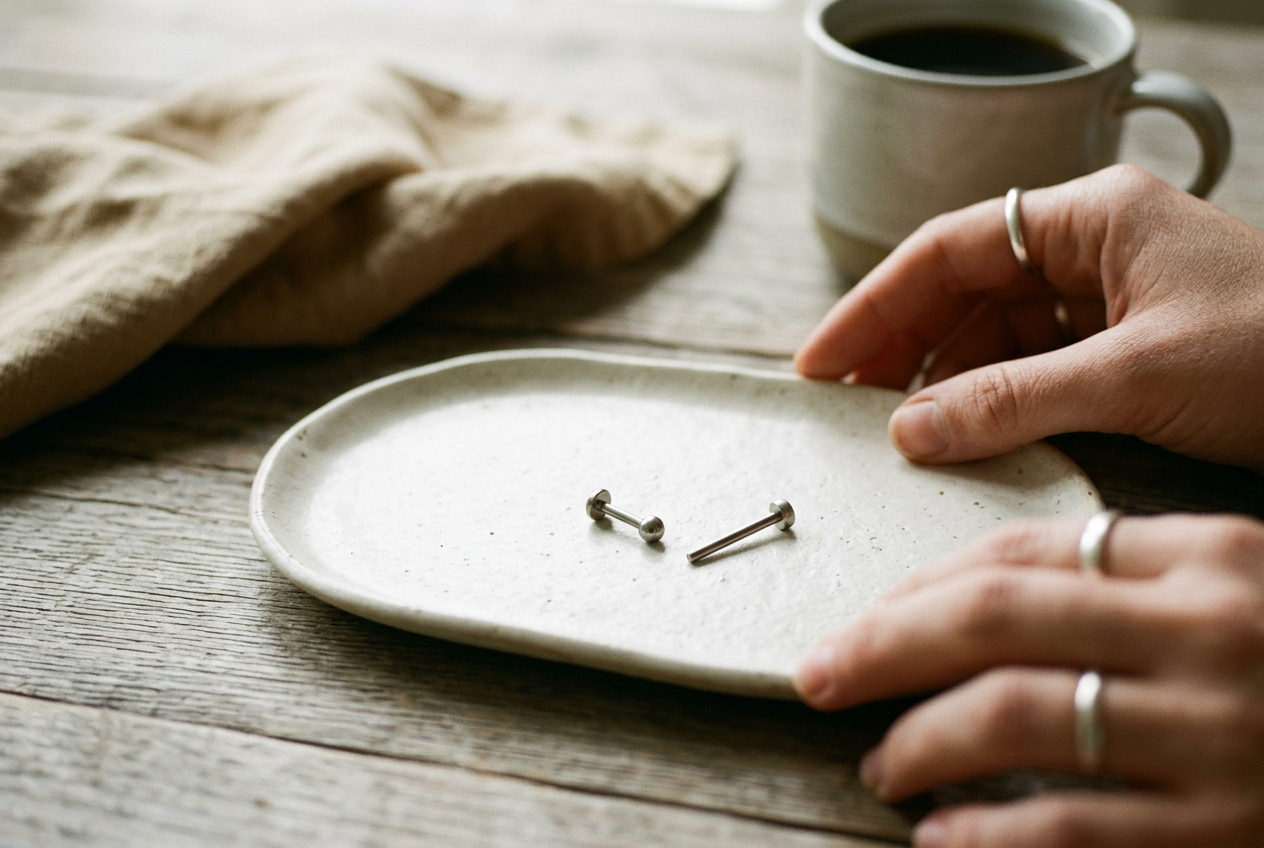
Moving from that 8 mm post to a 6 mm post is a common kind of downsize, but those measurements are an example, not a prescription. Ear thickness, piercing angle and the shape of the decorative end all change the fit. This guidance is unisex because the mechanics do not change across wardrobes or genders.
Excess post length changes the front of the earring
A long post does more than show at the back. It gives the decorative end room to pivot, so a small crystal, bezel or gold ball can droop instead of facing forward; when the ear brushes a phone, sweater or pillowcase, the post can also travel through the channel and pull the top off-center.
That movement explains why an otherwise light earring begins to look badly placed. Push the flat disc against the back of the lobe and the top projects forward. Push the top into position and a section of bare post appears behind the ear. Neither is the settled fit.
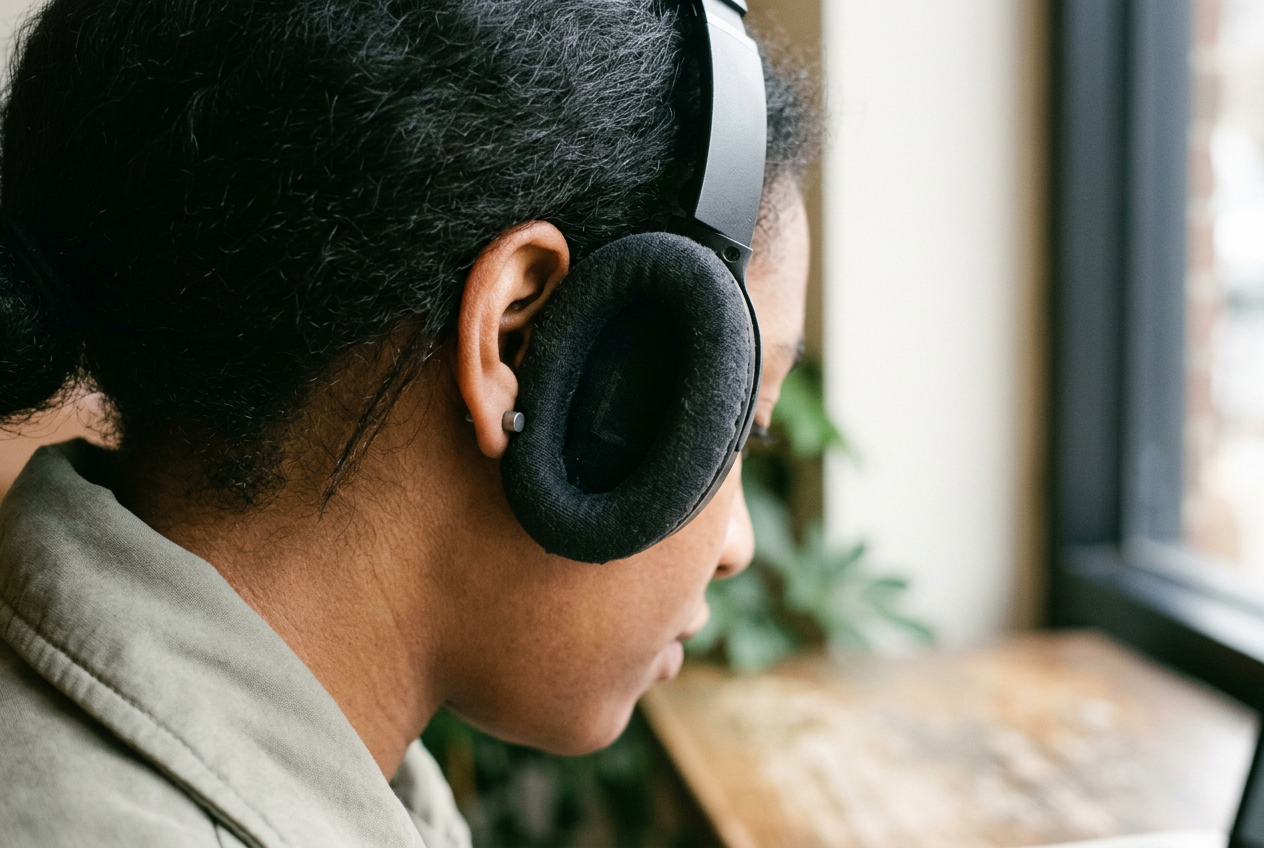
The gap is also where daily snags start. Fine hair loops around the exposed post. A towel catches the decorative end and draws it outward. Over-ear headphones can nudge the backing.
None of those events proves the piercing is damaged, but repeated motion can irritate tissue that had been calm, particularly when the earring is worn around the clock.
Downsizing removes most of that lever. In the working 18-gauge example, the shorter post brings the decorative end closer to the skin, holds its angle more consistently and leaves less metal available for hair to wrap around. The tradeoff is unforgiving: a post that is too short presses instead of floating, and pressure is not an acceptable route to a neater stack.
Swelling going down is only the first test
A piercing can look quiet before its internal channel has stabilized. It can also swell temporarily after sleeping on it, catching it while dressing or changing the jewelry too early, which is why one calm morning does not establish the correct post length.
Watch the 8 mm post over several ordinary days. If the same spare length remains visible in the morning and evening, the disc does not leave a deep mark, and the piercing stays comfortable during cleaning and dressing, a fit review is reasonable. Brand aftercare documentation commonly treats downsizing as an individual fit decision rather than a calendar date, and that distinction matters more than copying another wearer’s measurement.
Wait if the site is tender when untouched, noticeably warm, increasingly red, bleeding or producing persistent discharge. A new bump, a post that seems tighter than it was, or skin beginning to cover either end also rules out a casual jewelry change. Those signs do not identify the cause. They mean the piercing needs assessment by a reputable piercer, and concerning or worsening symptoms may require a qualified medical professional.
Even a healed piercing can have a bad week. If the lobe was caught on a knit, compressed by headphones or slept on heavily, let it return to its baseline before measuring the gap. Downsizing irritated tissue can turn a temporary fluctuation into constant pressure.
Match the post before changing the jewelry
Start with the specification, not the visible gap. Gauge is the thickness of the post, and an 18-gauge top cannot be assumed to fit every post that looks similar. Wearable length is the section of post available inside the piercing, measured without counting the decorative top or flat backing.
Check the original order, packaging or manufacturer’s size guide for both measurements. Confirm whether the system is threadless or internally threaded, which means the decorative end screws into a hollow post. Tops and posts from different brands may not be compatible even when their listed gauge appears to match, so staying within the documented system is the cleaner purchasing decision.
For the working earring, the useful comparison is 8 mm versus the next shorter documented option, not 8 mm versus the shortest post sold. Going down one available increment preserves some allowance for ordinary tissue changes while removing the obvious excess. If the current post has a large flat disc, keep in mind that disc diameter affects how the backing feels against the ear even though it does not change wearable length.
Material deserves the same attention. Implant-grade titanium is titanium manufactured to a recognized implant standard; it is light, durable and often sits in a lower price band than solid gold. If choosing gold, look for a solid, nickel-conscious alloy from a maker that discloses its material rather than a plated post whose surface can wear. Do not use the downsize as a reason to switch several variables at once when the current metal has been comfortable.
A replacement post usually costs less than buying the decorative end again, although a studio may charge for fitting or installation. That service can be worth the extra spend when the original gauge is unknown, the end is difficult to grip or the piercing sits at an angle, since a piercer can measure the ear and test clearance without forcing the channel.
Change the post without chasing a skin-tight fit
If the piercing is fully healed and the jewelry maker documents at-home changes, prepare a clean, well-lit surface and wash your hands. Keep the decorative end where it cannot roll away. Threadless pins and threaded ends use different removal methods, so follow the manufacturer’s instructions for that exact system rather than twisting or pulling experimentally.
Stop if the jewelry resists, the channel hurts or the new post will not pass with light handling. Forcing metal through can injure the piercing, and the small saving in time is not worth turning a straightforward fit adjustment into an irritation problem. A professional installation is the better alternative.
Once the shorter post is in, check both sides of the ear. The decorative end should rest close enough to remain upright, while the backing should sit against the lobe without digging into it. A slight amount of clearance is useful. The disc must not create a deep indentation, and neither end should appear to sink into the skin.
Revisit the fit later that day and the next morning, especially if the earring is worn for sleep. The 6 mm post in our example succeeds only if it removes the persistent 8 mm gap while leaving the ear calm after normal overnight pressure. If the backing feels pinched, the top leaves a pronounced mark or the jewelry becomes difficult to move during routine care, return to the longer post and arrange a fit check.
A better sleep fit still needs breathing room
Flat backs are sold as sleep-friendly jewelry because the low disc is less likely than a butterfly backing to poke behind the ear. A shorter post improves that design when the old one slides and catches, but the backing does not become safer by being clamped tightly against the skin.
Pillow pressure changes with sleep position, and a post that seems neat while standing can feel restrictive after several hours on one side. Side sleepers may still need a piercing pillow or a temporary change in sleep position while the fit settles. The goal is quiet jewelry: no projecting post, no repeated tilt and no pressure mark that deepens overnight.
That is the useful difference in the second-lobe example. The decorative end should face forward instead of hanging from spare metal, while the flat disc should remain low enough to avoid a pillowcase without pressing into the ear. If the shorter option cannot do both, the size is wrong for that piercing.
Questions people ask
How much post should show on a healed flat back earring?
There is no universal visible allowance. A well-fitted post usually sits close enough that it does not slide, tilt or expose a persistent section of metal, yet it still leaves the tissue uncompressed. Judge the fit at the front and back after several calm days rather than aiming for a skin-tight look.
Can I downsize a flat back earring myself?
A fully healed, comfortable piercing may be changed at home if the jewelry maker provides instructions and you know the gauge, length and fastening system. Use light handling and stop at resistance. If the piercing is hard to reach, angled, irritated or made with unfamiliar jewelry, have a reputable piercer measure and install the post.
Does a shorter post stop an earring from tilting?
It often helps when excess length is allowing the decorative end to pivot. A shorter post holds the front closer to the ear and reduces movement, but it cannot correct the angle of the piercing channel itself. If a snug, pressure-free post still leaves the top tilted, ask a piercer to assess the placement.
Are flat back earrings always comfortable for sleeping?
No. The low disc removes the sharp projection of a butterfly backing, but an overly long post can travel and snag while an overly short one can press overnight. Sleep comfort depends on post length, disc size, ear anatomy and sleep position. Check for pinching or deep marks the morning after a downsize.
One update a day
Today's fashion update, in your inbox
One fashion update each morning — no hype, no filler, just pieces worth wearing.