Your Threadless Earring May Need a Bend, Not a New Post
A nearly straight threadless pin can make a secure-looking earring end drop out. Check the tension first, then replace only the part that has failed.
September 2, 2026 · 8 min read
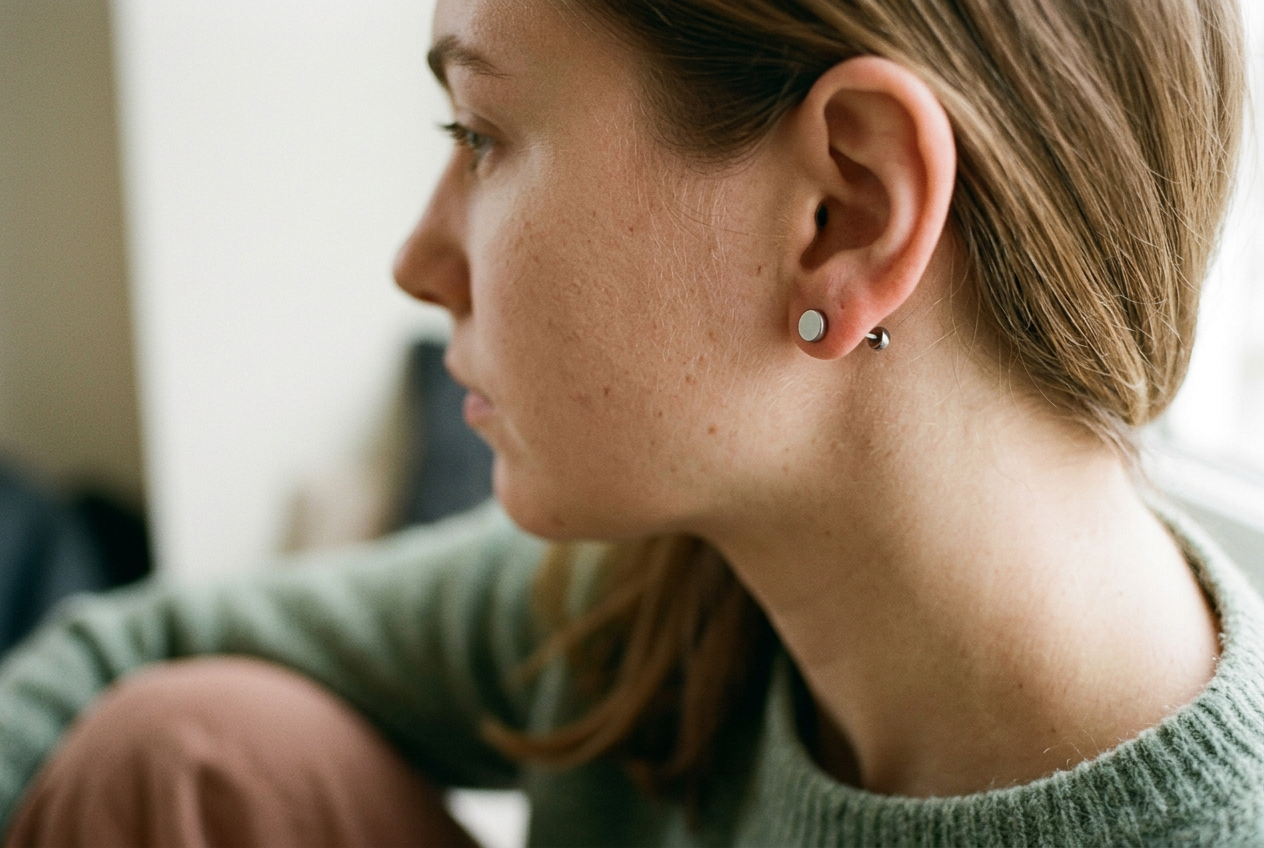
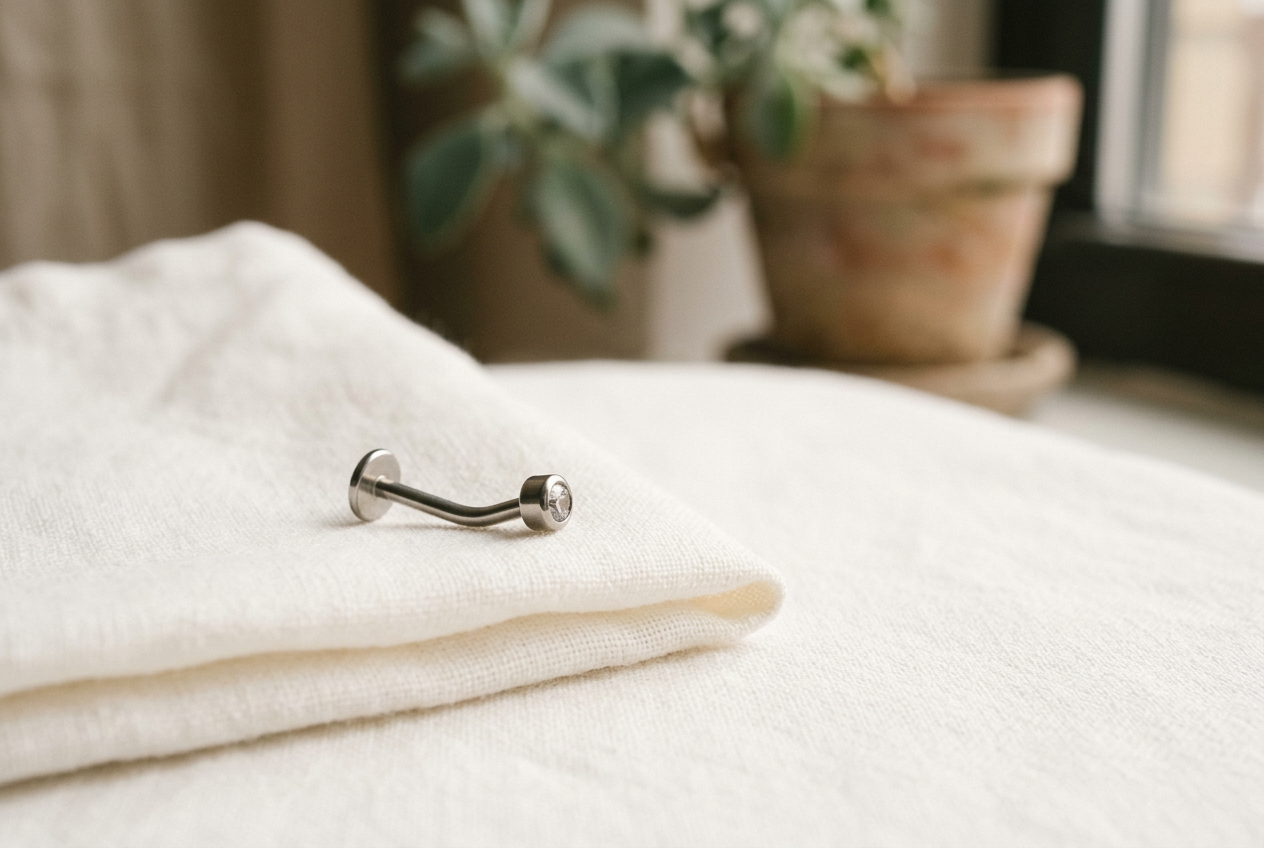
The loose piece on my desk was a small bezel-set cubic zirconia end attached to an implant-grade titanium flat back earring, meaning the post’s backing sits flush against the ear. It had spent a week in a healed upper-lobe piercing, including overnight, before the end worked forward twice. The post looked fine. The pin looked almost ruler-straight.
That physical detail mattered more than the age of the jewelry. A threadless end, the decorative top with a smooth pin rather than a screw, stays inside its hollow post through pressure. The pin must press against the inside wall. If it slides in without resistance, there may be nothing holding the stone in place beyond friction from skin and dried product.
A modest bend restored the grip in this case. It took less time than ordering another post, and it preserved the comfortable post length that was already sitting correctly against the ear. The adjustment is suitable for unisex jewelry and any wardrobe; the relevant variables are construction, compatibility, and whether the piercing has healed.
The bend is the fastening mechanism
A threaded earring screws together. A threadless one does not. Its pin enters a hollow post, and a slight curve creates tension as the metal tries to straighten inside the channel. Brand fitting instructions commonly show the pin being inserted partway before it is bent, which supports the pin along part of its length and keeps force away from the decorative end.
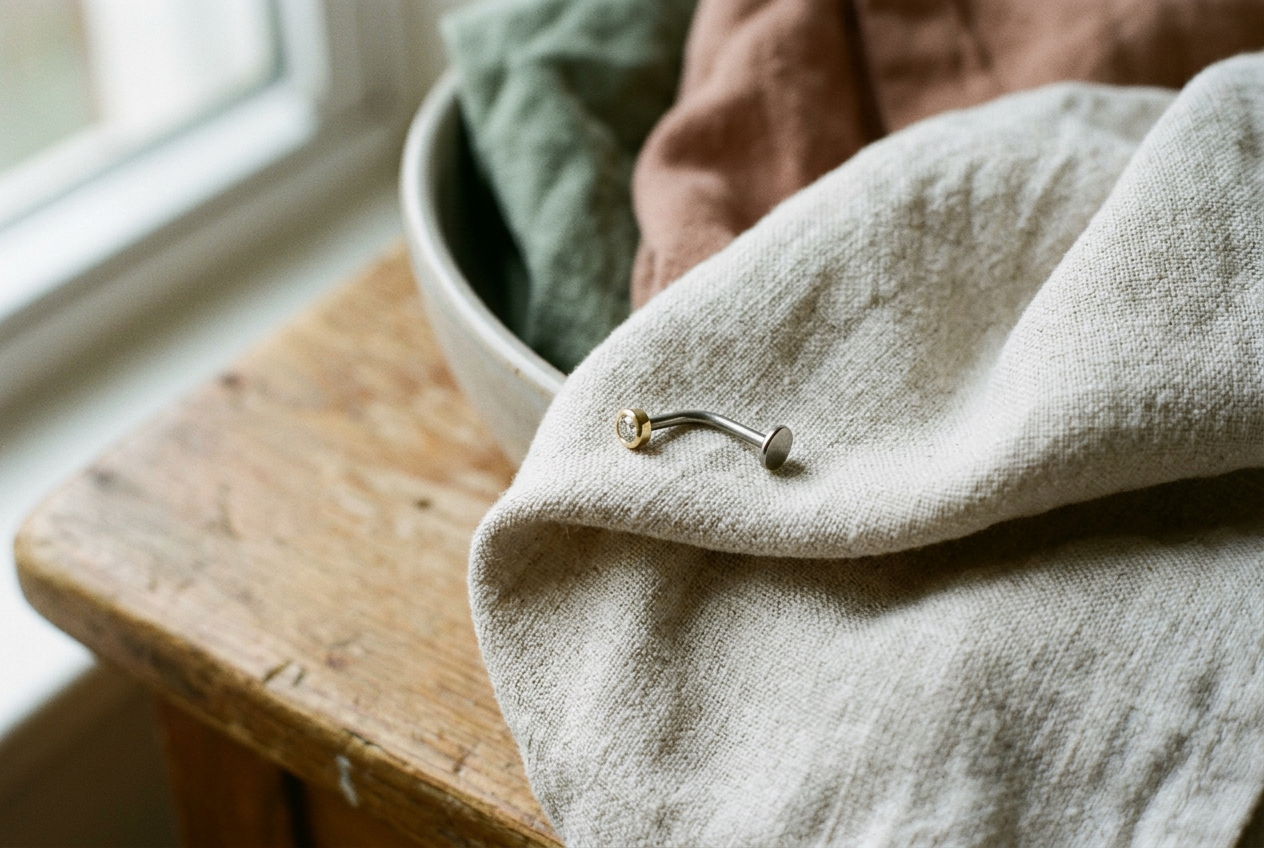
The ideal shape is subtle. Viewed from the side, the pin should have a shallow arc rather than a hard elbow. Once fully inserted, the end should sit close to the opening of the post and resist a deliberate pull, although it should still come apart when removal is intentional. There may be no audible click.
On the bezel-set end, the original pin had so little curve that it entered the titanium post with almost no pressure. The stone still appeared seated when the earring was worn, which made the problem easy to blame on the post. A threadless fit can look finished while remaining mechanically weak.
Fit also depends on the pairing. Threadless parts are widely sold as interchangeable, but pin diameter, post channel, pin length, and manufacturing tolerances can differ. An end that holds firmly in its original post may feel loose in another brand’s post, even when both pieces are marketed for the same general system. Do not force a mismatched pin to prove compatibility.
Work out which part is loose
Remove the jewelry only from a healed piercing. Wash and dry your hands first, then work over a folded light-colored towel so a tiny end cannot bounce into a sink or carpet. Grip the decorative end by its solid edges, not by a gemstone or delicate prongs, while holding the post or flat disc with the other hand.
Start with the existing pair. Press the pin fully into the post, then pull the two pieces apart with controlled pressure. An end that releases with barely any resistance needs attention. If it takes a firm pull and remains flush during wear, repeatedly testing it will add wear without giving you useful information.
Next, inspect the pin under strong light. A nearly straight pin can often be adjusted. A smooth existing curve may already be correct, pointing instead to incompatibility or damage inside the post. Stop if you see a sharp crease, discoloration along a stress line, a crack, or movement where the pin joins the decorative top.
A comparison test can separate an end problem from a post problem. If the suspect end is loose in more than one known-compatible post, the pin is the likely issue. If several compatible ends are loose in the same post, replace that post rather than adding larger bends to every pin. This is particularly important when the post opening looks spread, split, burred, or out of round.
The bezel-set end passed the post comparison: another end held in the original post, while the straight-pinned stone felt loose in both compatible posts. That narrowed the correction to one small piece.
Add tension without making a kink
Insert the pin partway into a compatible post. Enough of the pin should remain outside for a slight adjustment, while the section inside the post stays supported. Hold the post itself, then press the decorative end gently to one side. The movement should be small.
Pull the end out and inspect the result. You want a continuous, shallow bend. If the pin now has a visible corner, do not keep flexing it back and forth in an attempt to make the shape prettier; a corner concentrates stress and can turn a fit adjustment into a future break.
Reinsert the pin in line with the post opening. A correctly adjusted end should meet gradually increasing resistance, then seat without crushing pressure. Keep the end and post aligned as they come together. Pushing a curved pin sideways against the rim can mark the opening or exaggerate the bend.
Test the joined earring over the towel. Hold the post, pull the end with steady pressure, and look for a gap at the post opening. If it slips free too readily, one more minimal adjustment may be reasonable. If insertion already feels difficult, stop.
More bend is not more security once the pin starts scraping, binding, or deforming the hollow post.
I adjusted the titanium pin once. Its new curve was visible only from the side, but the end then required a firm pull to remove and remained flush during the same handling that had previously made it creep forward. The change corrected tension without changing the post length, disc size, or feel against the ear.
Avoid pliers unless the jewelry maker specifically instructs their use. Metal jaws can score a polished pin, while gripping a tiny bezel can distort the setting. Fingers and a compatible post give less leverage, which is useful here because the desired movement is restrained.
A tight end can be the wrong fit too
An end that will not seat is not automatically safer. Too much bend can make installation painful, damage the post opening, or leave a visible gap where hair and fabric catch. Straightening a mild curve can reduce tension, but repeated bending in opposite directions fatigues metal.
First confirm that the parts belong to compatible threadless systems and that no debris is blocking the hollow post. Clean the jewelry according to its maker’s material-specific instructions. Do not drive the pin deeper with a tool, and do not use glue, which can complicate removal and expose the piercing to an unsuitable adhesive.
For jewelry worn overnight, the end should remain seated without requiring forceful installation. The point of the flat back is low-profile comfort. A fastening problem that turns every removal into a struggle defeats that advantage.
Retire the end when the metal has started to fail
A pin is no longer a candidate for another bend when it has a sharp kink, a crack, heavy scoring, or a wobble at the point where it meets the decorative end. Retire it as well if the pin has been adjusted repeatedly and no longer holds predictably. Metal can harden and weaken where it is flexed, and a broken pin may leave the decorative end lost or the remaining section lodged in the post.
Damage around the setting changes the calculation too. If the top twists independently of the pin, a bezel has opened, or a prong has shifted, stop wearing the end even when its tension feels adequate. Pin security cannot compensate for a loose stone or a compromised joint.
The post should be retired if its opening is visibly split or rough, if multiple compatible ends fall out of it, or if a sound pin moves inside it without developing resistance. Replace the least expensive failed component rather than the whole earring by default, but keep the original material and dimensions in view. Implant-grade titanium, solid gold, and steel are not interchangeable descriptions, and a replacement post that is shorter or has a larger disc can change comfort even when the end fits.
Take uncertain pieces to a reputable piercer. A piercer can check the connection away from the ear, confirm post length, and install a secure end without asking irritated tissue to tolerate repeated attempts. Fresh, swollen, painful, or discharging piercings are not home-adjustment projects.
Questions people ask
How bent should a threadless earring pin be?
The pin needs a shallow, smooth curve that creates resistance inside its compatible post. It should not have a sharp angle. If the end slides in freely, the curve may be too slight; if it binds, scrapes, or will not sit flush, the bend may be too strong or the parts may not be compatible.
Can I bend a threadless pin more than once?
One restrained correction may be enough for an undamaged pin, but repeated back-and-forth bending fatigues the metal. Retire the end if you have adjusted it several times, if the bend has become a kink, or if the pin shows a stress line or movement at its base.
How can
I tell whether the end or post is faulty?
Try the end in another known-compatible post, and test another compatible end in the original post. A loose end across multiple posts points to its pin. Several loose ends in one post point to a worn or damaged post, especially when the opening appears spread or rough.
Should
I adjust a threadless end in a fresh piercing?
No. Do not remove or repeatedly manipulate jewelry in a fresh, swollen, painful, or irritated piercing. A reputable piercer can assess the connection, adjust or replace the component away from the tissue, and reinstall jewelry with less disturbance to the healing channel.
One update a day
Today's fashion update, in your inbox
One fashion update each morning — no hype, no filler, just pieces worth wearing.