Your Sneakers Can Be Wide Enough and Still Crush Your Toenails
Width charts ignore the space above your toes. Here is how to spot a shallow sneaker, test nail clearance, and avoid sizing up into heel slip.
August 18, 2026 · 7 min read
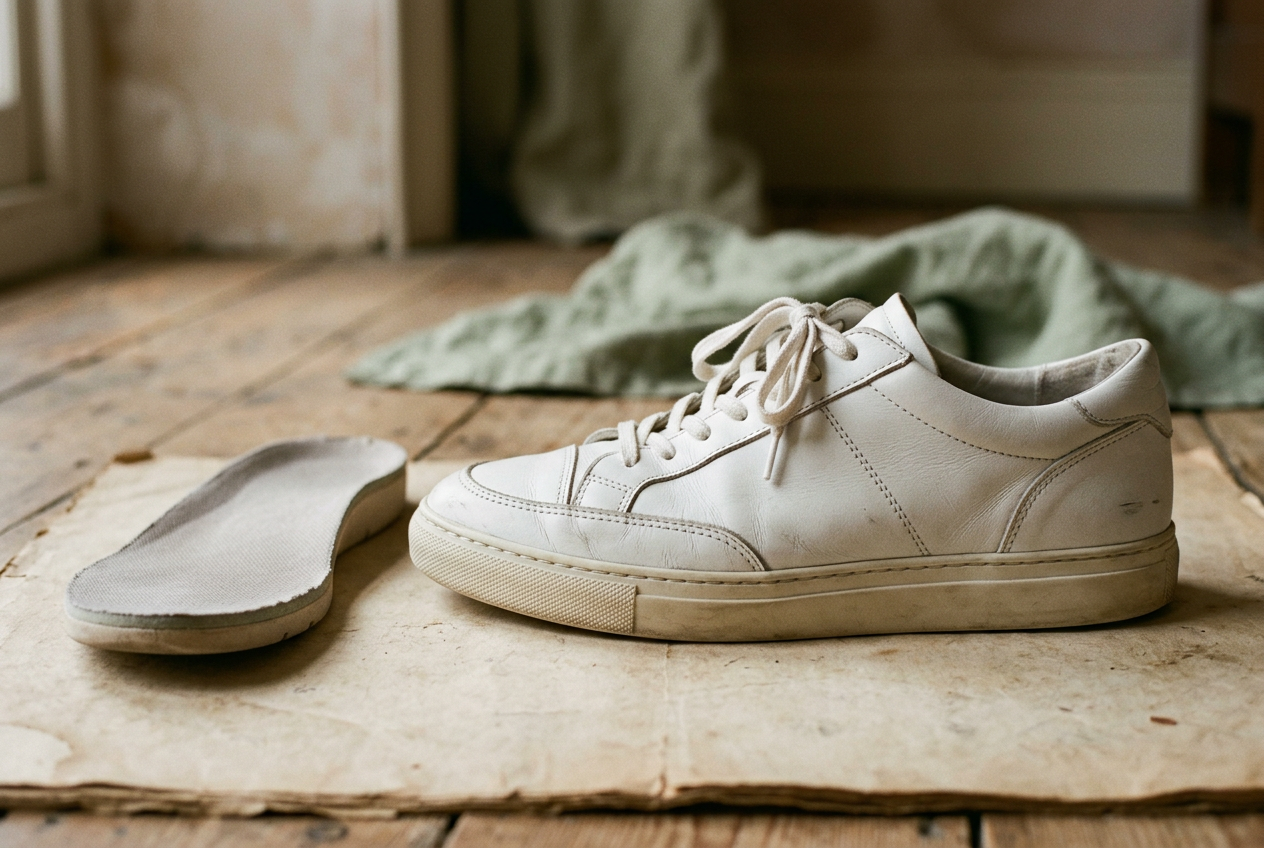
A white leather court sneaker on my shoe rack passed the usual fit checks. My toes did not touch the front, the sides of my feet were not squeezed, and my heel stayed in place. After a week of ordinary city wear, however, the stitched suede panel over the forefoot kept pressing the nails of my big and second toes. The shoe was wide enough.
It was also too low.
That distinction matters because most sneaker sizing advice treats the foot as if it were a flat outline. A size chart may give length, and a brand may offer standard or wide fittings, but neither tells you how much vertical room sits between the insole and the upper. The missing measurement is toe-box height.
This is unisex fit advice. Foot shape varies more than the gender label printed on a box, while the same low-profile sneaker can flatten toenails in the women's aisle, the men's aisle, or whichever section had the better color.
Toe-box height is separate from width
The toe box, meaning the front chamber of a shoe that surrounds the toes, has length, width, shape, and height. Retail filters usually reduce that arrangement to shoe size and perhaps width. Two sneakers with similar outside dimensions can therefore feel unrelated once your foot is inside them.
A shallow toe box may suit toes that lie fairly flat. It can press painfully on a raised big toenail, a second toe that sits slightly higher, curled toes, or any foot that needs more room above the joints. Thick socks add another layer. A foot can spread sideways without touching either edge while the upper bears down from above, which is why ordering a wide version does not reliably solve nail pressure.
The court sneaker made the problem unusually clear. Its rounded front looked roomy from above, and the sidewalls did not pinch, but the roof sloped down early. The suede overlay landed over my highest nails, turning a decorative line into a small upholstered ceiling.
The construction can steal the missing space
Start with the last, the foot-shaped form around which a shoe is built. A shallow last gives a sneaker a neat, low profile, particularly in retro court shoes and slim terrace styles. That visual tidiness has a physical cost: less internal height. The outside can look bulbous enough while the usable chamber remains low because the upper, lining, and footbed all occupy space.
Overlays matter next. An overlay is an extra panel attached over the main upper for structure, durability, or design. Soft mesh may lift when the toes flex, but a leather or synthetic overlay can hold its position, especially when stitching runs across the top of the toe box. Bonded layers can be just as stubborn.
Breaking in may soften the surface; it rarely relocates a seam or creates meaningful height beneath a reinforced panel.
The white sneaker combined leather, a lined forefoot, and that suede strip. None of those materials was defective. Together they made a roof that barely moved, and the pressure became more obvious once walking warmed the foot and the toes shifted during push-off.
Then there is the insole, the removable or fixed footbed directly under the foot. A thick molded insole raises the entire foot toward the upper. Plush foam feels persuasive during a brief try-on because it cushions the sole, although the same foam can remove the few millimeters your toenails needed. More cushioning underfoot does not guarantee more room around the foot.
Shoes enjoy this sort of administrative contradiction.
I removed the molded insole from the court sneaker and tried the shoe indoors with a thinner spare footbed of the same length. The nail pressure eased immediately, confirming that internal volume, meaning the total usable space around the foot, was the issue. The replacement also gave less arch support, so it was a diagnosis rather than a free upgrade.
Check height while your weight is on the shoe
A seated try-on can miss the problem. Fit both sneakers with the socks you expect to wear, lace them as you would outside, and stand long enough for your feet to settle. Set each heel into the back before judging the front; otherwise, a foot parked too far forward can make a suitable shoe appear short.
First confirm that the longest toe has a small margin ahead of it and does not meet the front while standing. Next, lift and lower the toes inside the shoe. They do not need room for a piano recital, but the nails should not immediately catch the lining or push against a rigid panel. Pay attention to the big toe and second toe separately, since either may be the highest point even when it is not the longest.
Press lightly on the upper above those nails while your weight remains on the foot. You should be able to identify a little material or air before meeting the nail. If the upper already rests on it, walking will add repeated contact. A soft knit may move harmlessly; a stitched leather strip that sits directly against the nail has made its position quite plain.
Walk on a hard surface rather than a thick fitting-room rug. Include several turns and, where possible, a short downward slope or a few stairs, because the foot shifts forward during descent. Pressure that appears only on the first step down still counts. Fashion has many legitimate forms of suspense.
Waiting to see which toenail becomes tender is not one of them.
Test both feet. Many people have one foot that is longer or higher, and a shoe only needs to fail on one side to become inconvenient. In my court sneakers, the left felt acceptable while the right overlay pressed across two nails. Averaging those experiences would not have improved the walk home.
Finally, take out a removable insole and inspect its thickness beneath the toes. Try the shoe briefly indoors without it only as a diagnostic check, not as a permanent wearing plan. If the pressure disappears, a lower-profile replacement may help, provided it lies flat, fills the base correctly, and does not leave the foot sliding or unsupported. A replacement footbed costs extra and may alter heel fit, so it is rarely sensible to rescue a new shoe unless the rest of the fit is excellent.
Extra length creates a different problem
Sizing up is tempting because larger sizes often gain some height as well as length. The tradeoff arrives elsewhere. The widest part of the shoe may sit ahead of the widest part of the foot, the flex point can move forward, and the heel may lift as the extra length lets the foot travel.
I tried the next size in the same court sneaker. The overlay bothered my nails less, but the forefoot crease formed beyond the natural bend of my toes and the heel moved during a brisk walk. Tightening the laces held the ankle more firmly while doing nothing useful at the front. Longer was not better; it was a second poorly fitting shoe with more floor area.
Lacing adjustments have limits. Loosening the lower rows can relieve pressure over the midfoot, but fixed overlays near the toe usually remain fixed. Stretching works unpredictably on lined leather and offers little help with synthetic reinforcement, so paying for a stretch before establishing that the material can move is optimistic.
A better alternative is another model built on a higher last, ideally with flexible mesh or an uninterrupted soft panel over the highest toes. Look at the shoe from the side rather than only from above. A roof that stays level for longer before tapering toward the bumper often offers more usable height, although the standing test still decides the matter.
Shop the inside, not the size label
Online product pages rarely publish toe-box height, and exterior photos cannot show how much room the lining and insole consume. Before ordering, check whether the footbed is removable and study side-profile images for overlays crossing the nail area. Reviews that mention toe pressure, low volume, or contact on top of the toes are more relevant here than generic claims that a shoe runs narrow.
If returns are allowed, try the pair late in the day on a clean hard floor, using the intended socks. Keep every insert and avoid outdoor wear until you have tested turns, stairs, and several minutes of standing. A premium sneaker does not receive a height exemption, while a less expensive mesh model may fit better because its upper yields in the right place.
The white court sneakers stayed useful for short errands with a thinner footbed, but they did not become walking shoes. That was the practical cost: one attractive pair demoted because the top of the toe box had been treated as scenery rather than fit.
Questions people ask
Can a sneaker be too shallow even if it is labeled wide?
Yes. A wide label generally describes lateral room, while toe-box height concerns the space between the footbed and the upper. A wide sneaker can still use a shallow last, thick insole, or rigid overlay that presses down on the nails.
Will a low toe box stretch with wear?
Soft knit or unreinforced leather may relax slightly, but stitched overlays, bonded synthetic panels, and lined toe boxes have limited movement. If the upper already rests firmly on a nail during a standing try-on, break-in is a poor plan for creating clearance.
Should
I remove the insole to get more toe room?
Remove it briefly to identify whether insole thickness causes the pressure. For regular wear, use a properly fitting lower-profile footbed rather than walking on the unfinished base, and check that the change does not reduce support, create heel slip, or expose internal seams.
How do
I get more toe height without buying a longer shoe?
Choose another model with a higher last, a thinner removable insole, and a flexible upper without a reinforced panel over your highest toes. Test it while standing in your usual socks; the right length should leave front clearance while the upper remains off the nails.
One update a day
Today's fashion update, in your inbox
One fashion update each morning — no hype, no filler, just pieces worth wearing.