Your Sneaker Heel Slips. Fix the Laces Before Sizing Down.
Heel lift does not always mean a sneaker is too long. A five-minute lacing and sock test can show whether the fix is adjustable or the shoe was built on the wrong shape for your foot.
August 24, 2026 · 7 min read
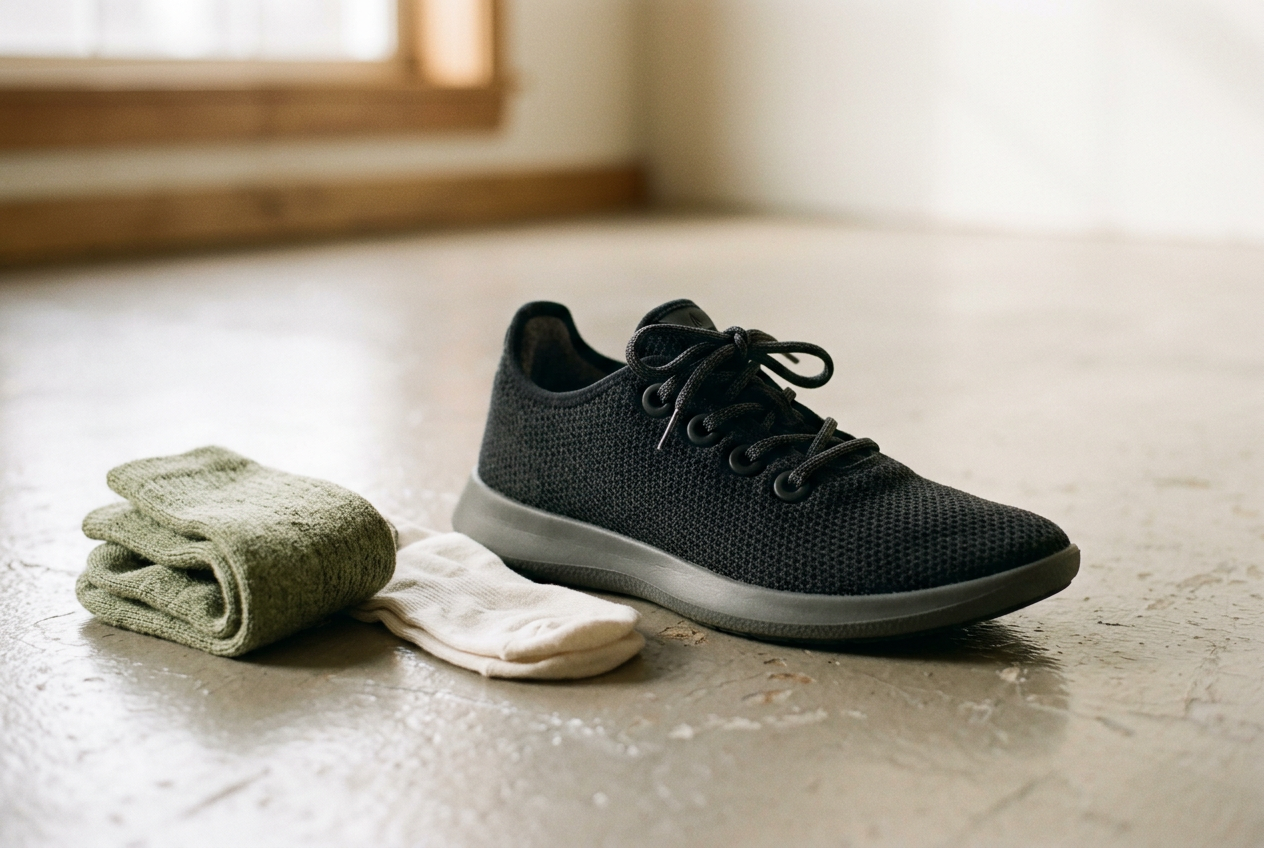
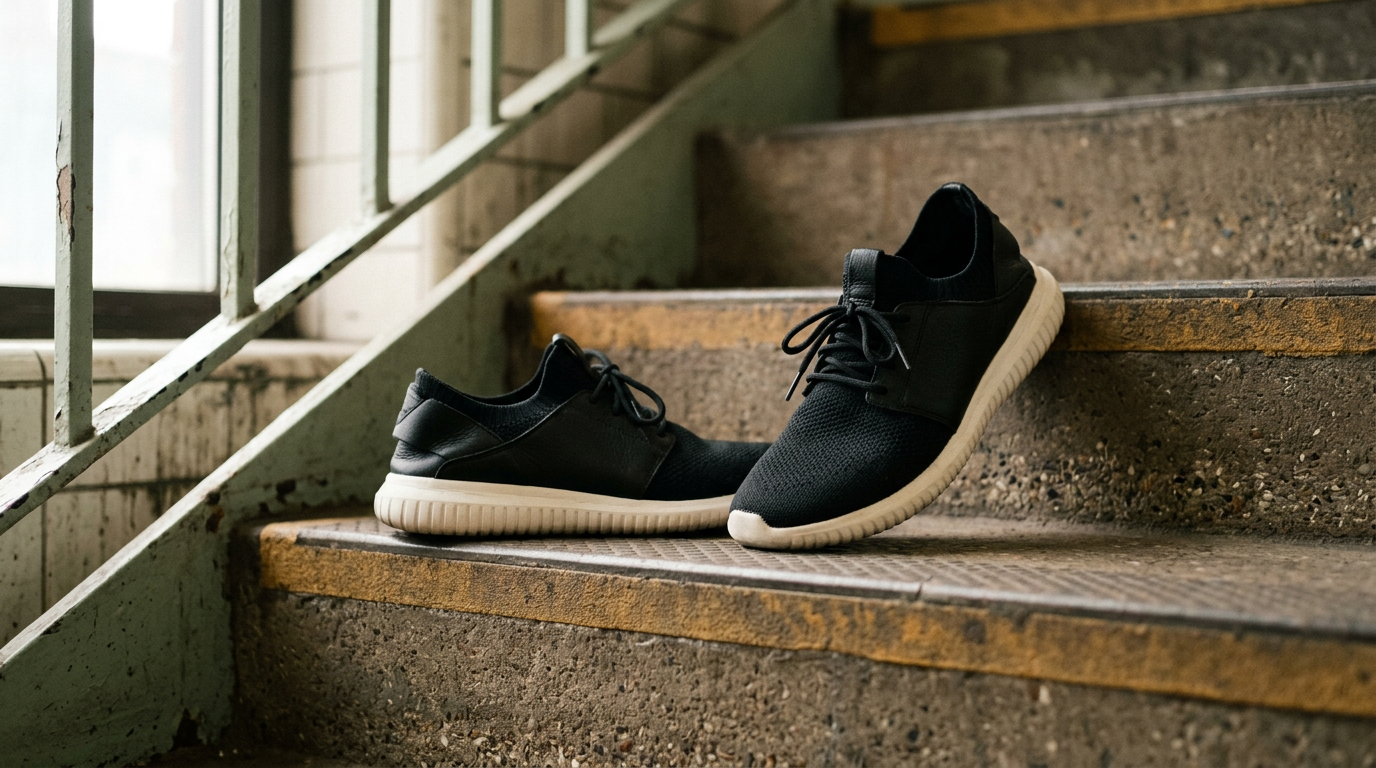
My test pair was a black knit-upper running-style sneaker with six regular eyelet pairs, one offset eyelet near the ankle, a padded tongue, and a firm molded heel. The length felt right while standing, but the heel rose on stairs and rubbed the collar during longer walks.
Across a week of ordinary wear, the lift was worst with thin cotton-blend crew socks and loose factory lacing. The usual retail-floor answer would be to request the next size down. That smaller shoe would have held the heel more firmly, but it also pushed the longest toe toward the front and compressed the outside toes once the foot spread under body weight. A secure ankle is poor compensation for toes arranged like carry-on luggage.
This is unisex fit advice. Women’s and men’s size labels differ, but the mechanics of heel volume, shoe length, lacing tension, and last shape apply across wardrobes.
Check the front before changing the size
Start with the toe box, the front section that surrounds the toes, because heel movement can distract from a shoe that already fits correctly in length. Stand with full weight on both feet, then walk down a slight incline or stop firmly after several quick steps. The longest toe should not strike the front, and the smaller toes should be able to spread without pressing into the upper.
A thumb-width rule is only a rough prompt. Toe length, nail shape, intended use, and the amount a foot swells all change the useful allowance, so the better test is movement: the foot should bend at the shoe’s main flex point without sliding forward, while the toes remain clear of the end during a brisk stop.
If the sneaker has a removable insole, take it out and stand on it. This does not reproduce the upper’s pressure, but it exposes an obvious length or width problem. Toes sitting close to the edge will not gain manners in a smaller size.
The black test sneaker passed these checks. Its length was not the problem, and the knit upper was already close enough across the forefoot that sizing down reduced space where none needed removing. That pointed the investigation toward ankle hold rather than overall scale.
Use the extra eyelet for a runner’s loop
The offset top eyelet is there for more than visual punctuation. A runner’s loop, meaning a lacing pattern that creates two small loops near the ankle, redirects tension around the opening and draws the heel toward the back of the shoe.
Lace normally to the second-highest eyelet. Instead of crossing the lace ends immediately, feed each end through the final eyelet on the same side, leaving a small loop. Cross the ends, pass each one through the opposite loop, then pull the laces diagonally down and back before tying them.
Direction matters. Pulling straight upward can clamp the top of the foot while doing little at the heel; drawing the laces back lets the loops narrow the collar around the ankle. Keep the lower rows comfortably tensioned rather than hauling every section tight, because a runner’s loop should secure the rear of the shoe without turning the tongue into a tourniquet.
On the test pair, this took about five minutes, including relacing after the first attempt was too tight. The heel still moved slightly, which is normal in many flexible sneakers, but it stopped rising high enough to scrape the collar on stairs. More important, the toes retained their original space.
Walk indoors before committing. Try level ground, stairs, a quick change of direction, and a firm stop. Loosen the top if the foot tingles, the tongue edge digs in, or the laces leave a painful ridge. Discomfort is information, even when it arrives wearing an attractively minimal upper.
Reset the tongue before blaming the heel
A padded tongue can drift sideways as the shoe is pulled on, especially when the laces remain tied between wears. That shift changes pressure across the top of the foot and can make one side of the collar feel loose, prompting the wearer to tighten the whole shoe unevenly.
Undo the laces far enough to open the sneaker properly. Set the heel against the back, center the tongue, and smooth any folded fabric where the tongue meets the upper. Retighten from the lower eyelets upward, leaving the forefoot relaxed and adding tension near the ankle.
The tongue on the black sneaker had been sitting slightly toward the outside after several slip-on entries. Centering it did not solve the heel lift alone, but it made the runner’s loop feel even across both sides and removed a pressure spot over the top eyelet. This is why lacing tests need a reset, not one furious tug at the bow.
Some sneakers use a gusseted tongue, meaning the tongue is joined to the sides of the upper with elastic or fabric panels. That construction usually wanders less, though a folded gusset can create its own lump. Check the fabric rather than assuming more structure guarantees less irritation.
Change sock thickness one step at a time
Sock thickness alters the usable volume inside a sneaker. A medium cushioned athletic sock can fill a slightly generous heel and increase friction at the lining, while a thin, smooth sock may allow more movement even when the shoe’s measured length remains appropriate.
For the test pair, changing from a thin cotton-blend crew sock to a medium-weight terry athletic sock reduced the remaining movement after the runner’s loop was tied. A very thick sock went too far: the forefoot felt crowded, the toes became warmer, and the laces needed loosening across the middle.
Run this comparison with the same shoe, lacing pattern, and short walking route. Otherwise, several changes arrive at once and the result becomes guesswork. The useful sock is the thinnest one that helps the heel without stealing toe room or making the upper bulge.
Buying special socks is not a sensible rescue plan for a fundamentally mismatched shoe. If the sneaker only works with winter-weight cushioning, but it was meant for warm-weather wear, the fit has failed its actual assignment.
Read the heel counter and collar shape
The heel counter, the stiff structure that cups the rear of the foot, determines whether lacing can pull the shoe into useful contact. Press around the outside of the heel to find where the rigid section starts and ends, then put the sneaker on and notice whether that structure follows the curve of your heel or leaves open space on both sides.
The collar matters too. Some sneakers have a deep, curved pocket that catches below the ankle; others use a straighter, wider opening that can miss a narrow heel even when the shoe is correct in length. Soft padding can disguise this mismatch in the store, then compress during wear and reveal the empty space underneath.
A last is the foot-shaped form around which a shoe is built. If its heel is broad while your heel is narrow, tightening the laces may pull the upper inward but cannot redraw the molded base and counter. Persistent side gaps, movement in every sock, or a heel that lifts even with a comfortably tied runner’s loop point toward the wrong last.
That was not quite the outcome with the black pair. Its counter matched the heel closely enough once the tongue was centered and the top eyelets were used, so the adjustable fixes held through ordinary walking. Had the counter remained visibly wider than the foot, exchanging the shoe for another model would have been the better move.
Adhesive heel grips can occupy a small amount of space, but they also change where the collar contacts the skin and may peel inside a damp shoe. They are a minor adjustment for an otherwise successful fit, not structural engineering with a sticky backing.
Decide after the walking test
Keep the current size when the toes have appropriate clearance, the forefoot does not spill over the insole, and a centered tongue plus runner’s loop reduces lift without painful pressure. The adjustment costs a few minutes and no money if the existing laces are long enough.
Try another model on a different last when the heel counter leaves space around the foot, the collar sits at an irritating height, or the laces must be pulled hard enough to distort the upper. A different shoe in the same labeled size can fit more securely because its rear shape is narrower or deeper.
Size down only when the whole shoe is too long and roomy, not when the heel alone moves. Test the smaller pair while standing and walking; if the toes touch the front, overlap, go numb, or press against the sidewall, the new size has replaced one fit problem with a less negotiable one.
Questions people ask
How much heel slip is normal in sneakers?
A small amount can occur in flexible new sneakers, particularly before the upper and collar settle around the foot. The heel should not rise enough to rub repeatedly, pull the sock downward, or make the foot work to keep the shoe on. Test stairs and firm stops, not just a few soft steps on carpet.
Does a runner’s loop make sneakers fit smaller?
It makes the ankle opening more secure without shortening the shoe or narrowing the toe box. If the top of the foot feels pinched, loosen the lower rows and reduce tension at the loops. The pattern should redirect hold toward the heel, not force the entire foot downward.
Can thicker socks fix heel slip permanently?
A moderately thicker sock can correct a small volume difference, especially when thin socks feel slick against the lining. It is not a good permanent fix if the toes become crowded, the foot overheats, or the shoe only works with much heavier socks than the season and activity require.
When should I return sneakers that slip at the heel?
Return or exchange them when centered lacing, a runner’s loop, and a reasonable sock change fail to control movement without pressure elsewhere. A visible gap around the heel counter usually signals a last mismatch. Choose another model in the correct length rather than shrinking the shoe until the toes hit the front.
One update a day
Today's fashion update, in your inbox
One fashion update each morning — no hype, no filler, just pieces worth wearing.