Your Headphones May Be Pressing Flat Back Earrings Into Skin
A flush backing can still become a pressure point under a headphone pad. Post length matters, but piercing placement often decides whether jewelry or headphones should change.
October 23, 2026 · 8 min read
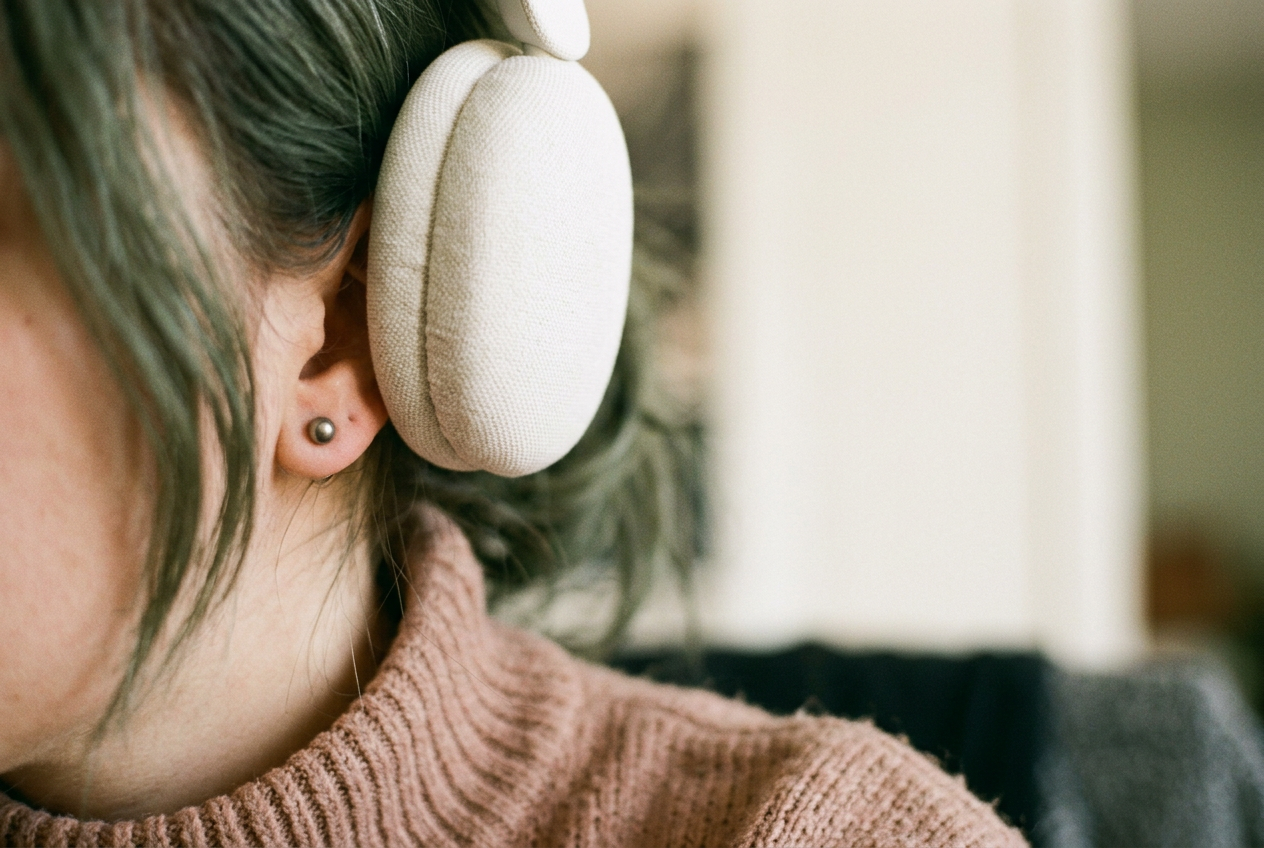
A 3 mm titanium disc looks unobtrusive behind the ear until an oval headphone cushion lands on it. In the fitting case for this guide, a 6 mm implant-grade titanium labret in a healed second-lobe piercing sat comfortably on its own, yet the left backing became noticeable as soon as the lower edge of an over-ear cup compressed the lobe.
The earring was not badly fitted. The headphone was not unusually tight. Their contact points overlapped.
That distinction matters because a flat back earring, meaning the post’s backing sits flush against the earlobe, is often sold as the comfortable answer for sleeping and daily wear. It can be. A smooth disc does not catch like a butterfly clutch, but smooth and pressure-free are different qualities, especially when foam presses the disc inward for a commute or a desk session.
This is unisex fit advice. Ear shape, piercing placement and headphone geometry determine the result, rather than the section of a jewelry counter where either item was sold.
Find the contact point before changing the post
Over-ear headphones surround the ear, but the cushion still has to seal against the head. On some ears, the lower part of that seal crosses a first or second lobe piercing. A narrower cup can also touch the upper ear, while thick pads may compress far enough for the fabric-covered inner edge to reach jewelry that appeared to sit inside the opening.
On-ear headphones are less forgiving. Their pads rest on the ear itself, so a flat backing can become a firm spot beneath soft foam. The pressure may feel diffuse at first. After the pad warms and settles, the disc is easier to locate: there may be a round indentation, tenderness at the channel or a sense that the front end is being pulled tight against the lobe.
Take the headphones off and look at the ear before adjusting anything. A brief pad mark is different from a backing that has left a distinct circle around the piercing. Jewelry that feels tight without headphones needs attention on its own; jewelry that becomes uncomfortable only where the cup lands has a headphone-clearance problem.
The 3 mm disc in the second lobe made that separation easy to see. Without the cup, the front and back rested against the skin without pinching. Under the cup, the lower cushion pressed the disc inward while the decorative end resisted from the other side. The lobe was caught between them.
Post length can fix pinching, not direct pressure
Post length means the wearable distance between the underside of the front end and the flat backing. It has to accommodate the thickness of the tissue, along with any room required for normal fluctuation. A post that is too short clamps the ear before headphones enter the picture, while one that is too long lets the earring slide and tilt.
That makes “size up” incomplete advice. Moving from a fitted 6 mm post to a longer one may give a compressed lobe more room, but it does not move the backing away from the headphone pad; instead, the disc can travel inward until the front end meets the ear, producing more motion along the piercing channel.
A longer post is most useful when the existing jewelry is visibly tight at rest, or when the ear changes enough during the day that the front or back starts sinking into the tissue. That fit should be assessed without headphones first. For a healed piercing, a reputable piercer can compare adjacent post lengths and check the angle, which is often more reliable than ordering several parts and guessing at home.
A shorter post has a narrower but legitimate use. If excess length lets the 6 mm labret lean under the edge of the cup, downsizing to a closer fit can reduce leverage and keep the front from drooping. It will not help when the disc itself sits directly beneath the pad. Too short is worse.
Threadless jewelry, in which a tension-fit pin secures the decorative end inside a hollow post, makes changing the post possible without replacing a favorite front. Internally threaded labrets offer the same modular advantage with a screw-in end. Compatibility is not universal, so match the post system and thickness rather than assuming any end will fit.
Placement decides how much clearance is available
A low first-lobe piercing may fall below an over-ear cushion, particularly when the ear sits fully inside a tall cup. Second and stacked lobe placements are more variable. They occupy the exact transition where the cushion curves toward the jaw, which is why the left second-lobe labret in this fitting case worked with one deep over-ear shape but met the seam of a shallower pad.
High lobes and outer-rim cartilage piercings need the closest check. The upper and rear portions of an over-ear cushion often follow the ear’s outline, leaving little empty space around jewelry. Even if the decorative front clears the cup opening, the flat disc behind the ear may touch the inner edge or be pressed against the head as the band tightens.
A conch piercing, positioned in the ear’s inner bowl, can look protected inside a roomy over-ear cup. Its backing still exits behind the ear, where cup depth matters. If the housing sits close to the head, a long post may knock against it; if the rear disc aligns with the cushion, the pad can load the piercing from behind. On-ear models commonly apply pressure from the front as well.
Tragus jewelry is less likely to meet the outer seal of a large over-ear cup, although a compact cup can crowd the front of the ear. Earbuds are the more obvious conflict there. Changing from headphones to earbuds therefore solves one placement problem while potentially creating another, especially in an ear with several piercings.
The practical clearance check is visual. Put on the headphones as you normally wear them, then trace the pad’s perimeter with a fingertip and note which fronts or backings sit beneath it. Repeat after adjusting the headband, since raising the cups can move the lower cushion off a lobe while bringing the upper edge onto cartilage.
The disc is part of the fit
Backing discs are available in different diameters. A larger disc can distribute the earring’s normal load across more skin, but it also gives a headphone pad a larger surface to contact. A smaller disc occupies less space, although the same inward force is concentrated over a tighter area and the edge may feel sharper.
The 3 mm titanium disc used here was already discreet. Replacing it with the smallest backing available would not have been an automatic improvement because the cushion crossed the center of the piercing, not just the disc’s rim. Moving the cup worked better than reducing the contact area.
Material also affects the purchase decision, though it cannot correct geometry. Implant-grade titanium is lightweight and commonly chosen for body jewelry, while solid gold adds cost and can make a larger decorative end heavier. For a component hidden behind the ear, paying more for gold does not buy additional headphone clearance. A compatible titanium post is often the more practical replacement, provided the wearer tolerates the material and the construction is appropriate for the piercing.
Run a short fit check at home
Begin with a healed, calm piercing and headphones adjusted to their usual position. Wear them briefly while sitting still, then remove them and check both sides in good light. The useful comparison is not whether the headphones leave any mark; it is whether one backing creates a defined pressure point that the other ear does not show.
Next, shift the cups slightly higher or lower without forcing the headband into an unstable position. A small adjustment can move the cushion away from a second-lobe disc. If the headphone immediately slides back, or if the new position presses an upper piercing, that is not a durable fix.
Hair, glasses and earrings should all be in their normal places during this check, since a glasses arm can alter the angle of an over-ear cup and thick hair beneath the pad can change the seal. Test the position you will wear, not an idealized version that lasts only until you move.
Stop if the piercing becomes painful or stays irritated after the headphones come off. Persistent swelling, discharge or worsening heat is outside a jewelry fit test and should be assessed by an appropriate health professional. Do not remove or change jewelry from a fresh or troubled piercing based on headphone comfort alone.
Change the cheaper component, unless it cannot solve the problem
Changing jewelry is the practical first move when one healed piercing is the only conflict, the headphones otherwise fit well and the post is clearly too long or too tight at rest. A replacement titanium post generally costs much less than another set of quality headphones, and a piercer can often preserve the decorative front if the parts are compatible.
Choose different headphones when the pad runs across several piercings, when an on-ear design presses the whole lobe, or when the disc remains centered beneath the cushion after every reasonable adjustment. No post length can create an empty pocket inside a pad. A deeper over-ear cup with a larger opening addresses the source of the pressure, though glasses, head size and ear height still affect the final position.
For the 6 mm second-lobe labret, the decisive clue was that the jewelry sat correctly before the headphones went on. A longer post would have added travel. A smaller disc would still have occupied the pad’s pressure zone. Raising the over-ear cup enough to place its lower seam beneath the piercing removed the contact; with an on-ear pair that landed squarely on the lobe, changing headphones was the cleaner choice.
Questions people ask
Can
I wear flat back earrings with over-ear headphones?
Yes, if the ear sits inside the cup and neither the cushion nor the inner housing touches the front or backing. Check second lobes, high lobes and cartilage placements after the pad has settled. A flush disc prevents snagging, but it does not protect the piercing from inward pressure.
Should I use a longer post under headphones?
Only when the existing post is too tight without headphones or the tissue needs room that a piercer has confirmed. Extra length does not create clearance between the disc and the pad. It can let the earring slide, tilt and transfer pressure from the backing to the decorative front.
Which piercings are most likely to be pressed?
Second and stacked lobes often meet the lower curve of an over-ear cushion, while high lobes and outer cartilage can meet its upper seal. On-ear pads may press almost any placement they cover. Conch jewelry can also contact shallow inner housings or cushions behind the ear.
Do flat back earrings work with headphones in a fresh piercing?
The flat profile may reduce catching, but fresh piercings need jewelry selected for swelling and healing rather than headphone fit. Do not downsize or swap the post to accommodate a pad without guidance from the piercer. If the headphone touches the site, use another listening option until that contact can be avoided.
One update a day
Today's fashion update, in your inbox
One fashion update each morning — no hype, no filler, just pieces worth wearing.