Flat Back Earrings Can Still Hurt Under Headphones
A flush backing removes one snag point, but it cannot fix excess post length or a shallow ear cup. Here is how to find the pressure point before your commute.
October 6, 2026 · 7 min read
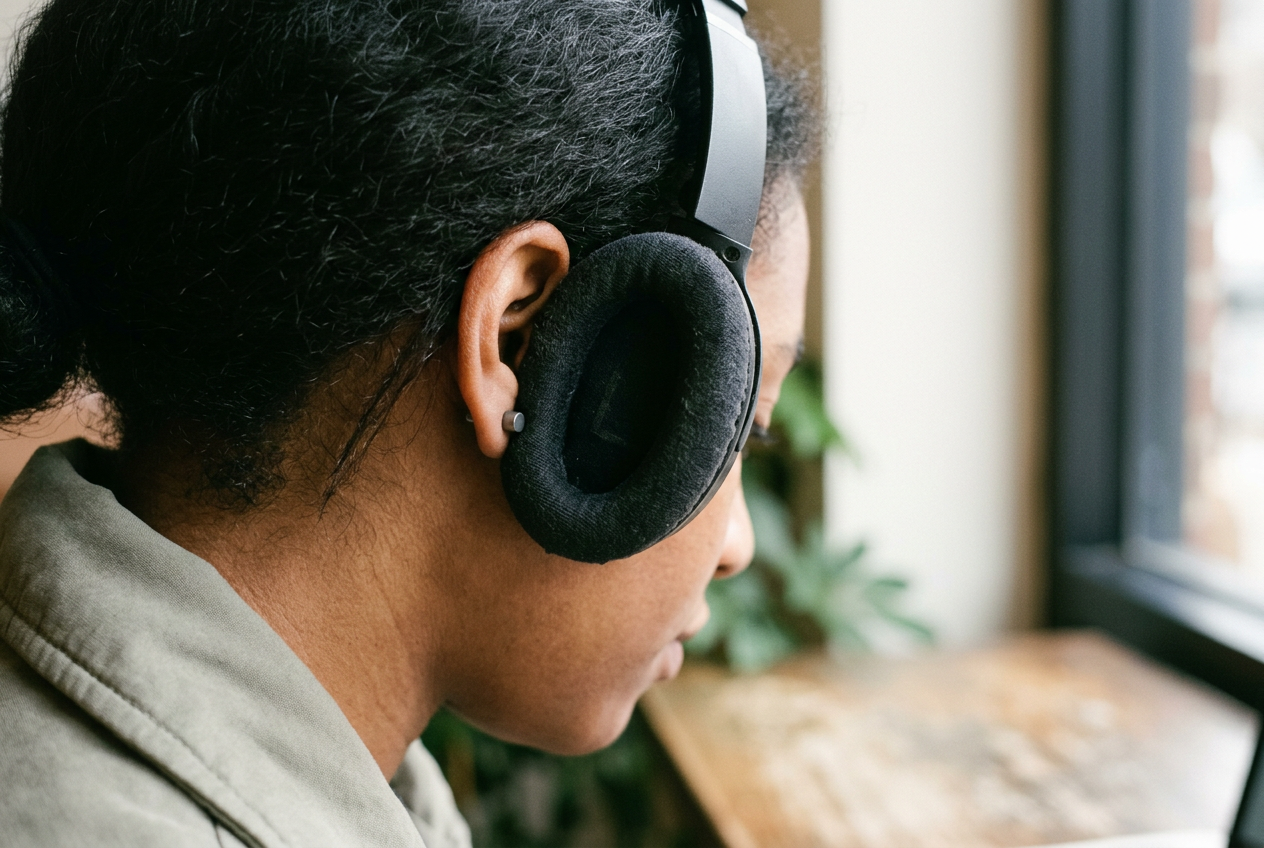
The first warning is usually a small, precise pinch. It may sit behind the lobe, where a flat disc meets the head, or at the front, where the headphone pad nudges a stud sideways. Leave the headphones on and that pinch can spread into a dull ache that feels larger than the earring causing it.
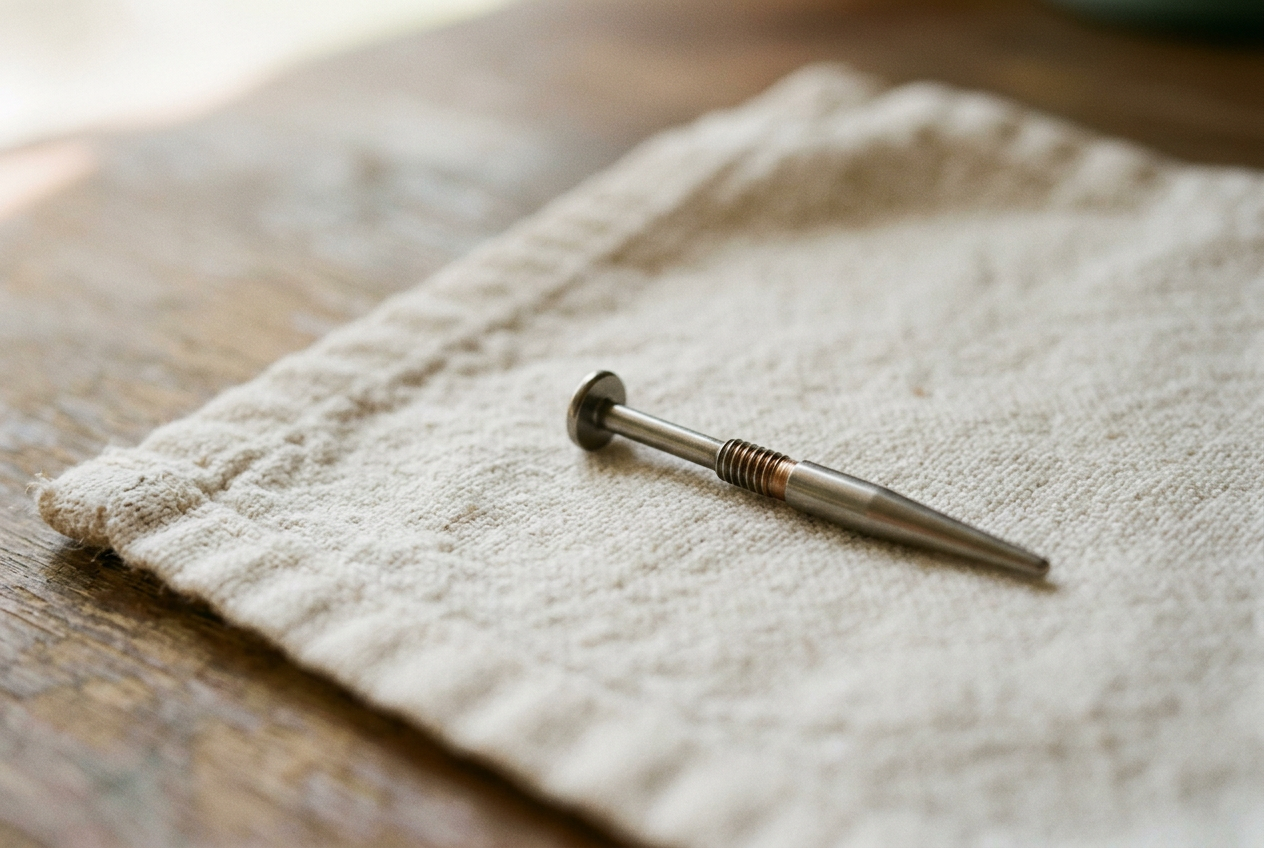
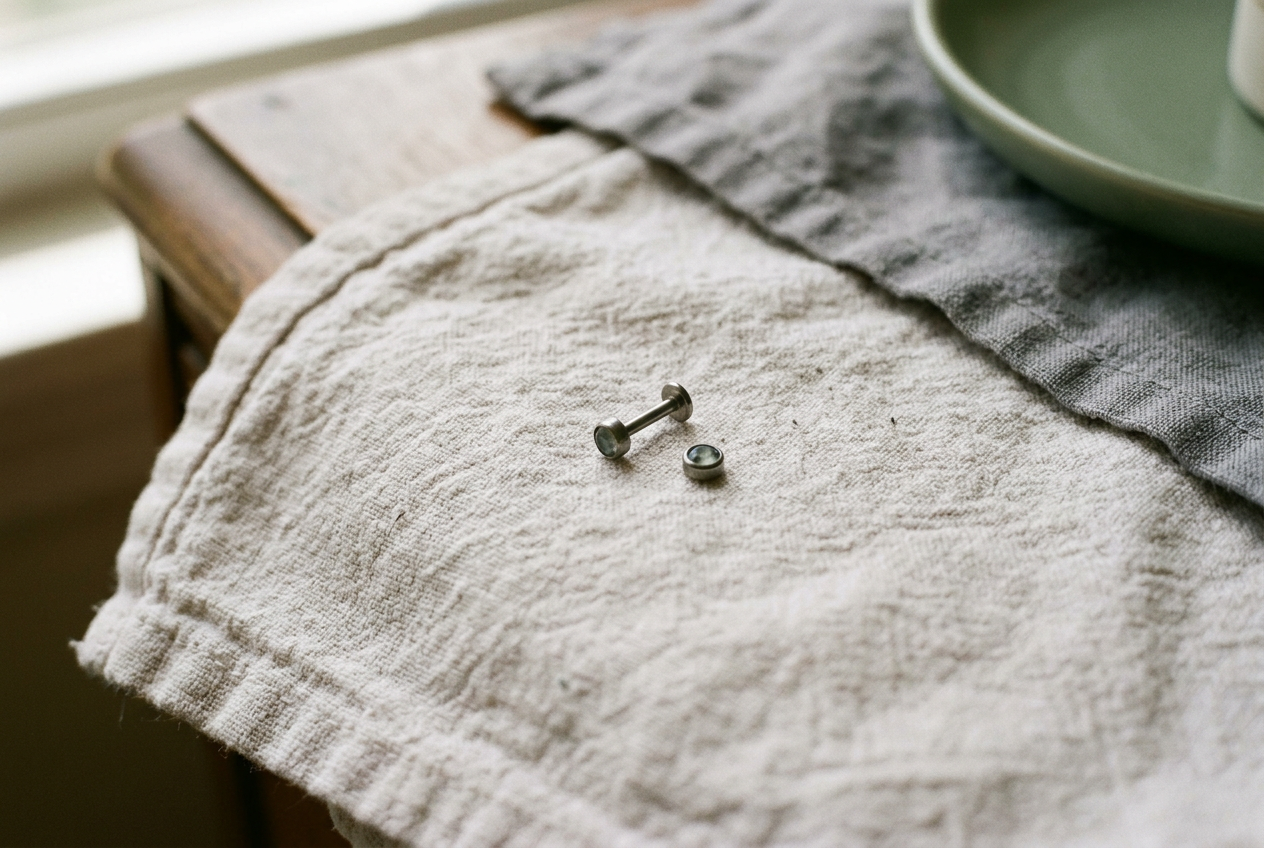
For this fit check, I used one small implant-grade titanium stud in a healed lower-lobe piercing. It had a flat disc backing, a low-profile decorative end and enough unused post to slide slightly forward and back. That extra length made it a useful test case: comfortable without headphones, less predictable once an ear pad began applying pressure.
A flat back earring, meaning the post’s backing sits flush against the earlobe, removes the protruding butterfly clutch found on many conventional studs. It is smoother against a pillow and less likely to catch on hair. Under over-ear headphones, however, the backing is only one part of the fit. The post angle, decorative end and space inside the cup matter just as much.
This is unisex advice. Ear anatomy, piercing placement and headphone geometry determine the result, not the wardrobe section where either item was sold.
Start with the contact point
Put on the headphones without music and keep your hands off the headband for a minute. A quiet test makes a light touch easier to distinguish from pressure that builds. Note whether the discomfort appears at the front of the stud, directly behind the backing or higher on the outer ear.
Next, press the cup inward with one finger. Use very little force. If the jewelry becomes noticeable at once, the pad or inner cup is already close to it, and the extra pressure of walking, adjusting glasses or carrying a shoulder bag may make the fit worse during a commute.
Remove the headphones and look at the stud from the side. In my test case, the small titanium end sat away from the lobe because the post had spare length. The flat disc was smooth, but the entire earring could shift when the pad touched the front. That movement transferred pressure along the post and into the back of the piercing.
A flush-looking disc does not guarantee a close-fitting earring.
Post angle changes where the pressure lands
A piercing channel is the healed path through the tissue. It does not always run perfectly perpendicular to the lobe, especially when the piercing sits near an edge or the ear changes shape under a headphone pad. If the channel angles downward, pressure on the decorative end can tip the disc upward behind the ear. An upward angle can do the reverse.
Check this by holding a small mirror beside the ear while looking into a larger mirror. Do not twist the jewelry to make it appear straight. Observe where the post naturally points, then compare that line with the direction in which the ear pad presses.
The lower-lobe titanium stud stayed comfortable in a roomy cup when its post could remain on that natural line. Inside a shallower cup, the cushion pushed the front end inward and slightly upward, which made one edge of the rear disc feel sharper even though the disc itself had no sharp edge. The problem was leverage, not the flat-back format.
Placement can amplify it. A centered lobe stud often sits inside the cup opening, while a high lobe or low helix piercing may land beneath the cushion’s seam. That seam is firmer than the soft face of the pad, so even compact jewelry can become uncomfortable when it occupies the same narrow ring of space.
Cup depth matters more than the outside size
A large-looking ear cup can still be shallow inside. Thick padding, angled drivers and fabric stretched over internal structures all reduce the usable distance between the ear and the cup wall.
With a shallow oval shape, the test stud made contact at the decorative end first. Repositioning the headband changed the location of the pressure but did not create more depth, so the relief lasted only until the headphones shifted while walking. This shape was the least forgiving of excess post length.
A deeper oval cup gave the lobe more room, and the stud stopped moving because neither end touched the headphone. The tradeoff was pad placement: if the cup sat too low, its upper edge crossed the outer ear, while moving it higher brought the lower pad close to the lobe. Depth solved the jewelry contact only after the cup was centered around the ear.
The compact round cup created a different problem. It cleared the front of the stud, yet its narrower opening pressed the lobe toward the head, placing the flat disc against the skin behind the ear. That pressure was broad rather than pointed. It took longer to register, which makes this shape easy to misjudge during a quick fitting-room or desk test.
Cup depth is difficult to judge from product photography. If headphones cannot be tried on before purchase, look for interior measurements and return terms rather than relying on the outer shell. Ear pads also compress with wear, so a barely adequate gap when new may shrink later.
Run a commute-length fit check
A useful test takes longer than a favorite song. Wear the headphones at home for the length of your normal commute while using the same glasses, sunglasses or hat that will accompany them. Walk around. Turn your head.
Adjust the cups once, as you would after boarding a train.
At the halfway point, notice whether you want to lift one cup away from the ear. That reflex is useful evidence. Remove the headphones at the end and check for a concentrated indentation around the jewelry, tenderness limited to one side or a stud that has shifted forward.
For the titanium test stud, spare post length was the decisive issue under the shallow oval cup. The jewelry was not heavy, and the rear disc did not protrude, but its ability to travel made each small headphone movement reach the piercing. A closer post fit would reduce that motion, provided the piercing is fully healed and the ear has enough room for normal day-to-day changes.
Do not tighten jewelry against irritated tissue to force a headphone fit. A qualified piercer can assess post length and change compatible jewelry when appropriate, particularly if the piercing is new, swollen or difficult to access.
Change one variable at a time
Begin with headphone position because it costs nothing. Lengthen or shorten the headband, center the ear inside the opening and check that the pad seam does not cross a piercing. If a small adjustment removes all contact and stays put while walking, the jewelry may need no change.
When repositioning fails, compare the stud with another healed-ear option that has a closer post fit or a smaller decorative end. Threadless jewelry, which holds the decorative end in a hollow post through tension, often lets a wearer change the front while retaining a compatible post. Internally threaded jewelry uses a small screw connection instead. Both require matching parts, and neither format compensates for a post that is too long for the anatomy.
Disc diameter matters behind the ear. A wider disc distributes pressure over more skin but occupies more space, while a smaller disc has less headphone contact yet may feel more concentrated if the cup presses it firmly. There is no universal winning size. In a compact round cup that pushes the whole lobe inward, reducing disc diameter may not address the real problem.
Material still counts. Implant-grade titanium is light and widely used for body jewelry, making it a practical starting point when weight and metal sensitivity are concerns. Solid gold can also suit everyday wear when its composition and construction are appropriate, though it usually moves the purchase into a higher price band. Plated fashion jewelry is a weak candidate for prolonged pressure, sweat and daily headphone friction because its surface finish can wear.
If several healed piercings sit under the same cup, simplify the stack for the commute rather than repeatedly buying shorter posts. Keep the lowest-profile ends in the locations touched by the cushion, and move a larger gem, prong setting or sculptural shape to a piercing that sits fully inside the cup opening. Jewelry with chains between piercings is more likely to shift when the pad moves.
The alternative may be different headphones. A deep cup is worth prioritizing when over-ear listening fills much of the day and the current pair presses multiple piercings, because changing one stud cannot correct a cushion that folds the entire outer ear. For occasional use, swapping the single problem earring before leaving home costs less and takes under a minute.
The practical buying check
Bring the earrings you wear most often when trying headphones. Check the lower lobe first, then slide a fingertip around the inside perimeter to locate any high-lobe or cartilage jewelry beneath the pad. Keep the headphones on long enough for the cushions to warm and settle.
For flat backs, inspect post excess rather than shopping by the word “sleep-friendly.” That label describes a general wearing goal, not a guarantee of headphone clearance. The small titanium stud at the center of this test was smooth enough for overnight wear, yet its loose post fit gave a shallow cup something to push.
A good pairing leaves the jewelry alone. No tapping against the inner wall. No pad seam riding over the front. No need to lift the cup every few minutes.
Questions people ask
Do flat back earrings work with over-ear headphones?
They can, especially when the cup fully surrounds the ear and leaves space in front of the jewelry. A flat disc removes the bulk of a butterfly backing, but comfort still depends on post length, piercing angle and whether the cushion crosses the stud.
Can a post be too long even if the earring feels comfortable normally?
Yes. Extra post length may be harmless in open air but allow the stud to slide when a headphone pad touches it. That movement can transfer pressure through the piercing. For a healed piercing, a qualified piercer can check whether a closer-fitting compatible post leaves suitable room.
Are deep ear cups always better for multiple piercings?
More depth helps prevent decorative ends from touching the inner wall, but the cup opening and pad shape still matter. A deep, narrow cup can press cartilage or fold the lobe inward. Try the headphones with your usual stack and check every piercing along the cushion’s perimeter.
Should
I wear flat back earrings in a fresh piercing under headphones?
Avoid treating a flat backing as permission to press on a fresh or irritated piercing. If the cup touches the jewelry or surrounding tissue, use another listening option until contact can be avoided, and ask your piercer for fit guidance rather than changing the post yourself.
One update a day
Today's fashion update, in your inbox
One fashion update each morning — no hype, no filler, just pieces worth wearing.