Your Flat Back Earring Is Loosening While You Sleep
A flush backing cannot stop an under-tensioned threadless end from slipping out. Test the pin without twisting it, then know when another bend is one too many.
August 28, 2026 · 8 min read
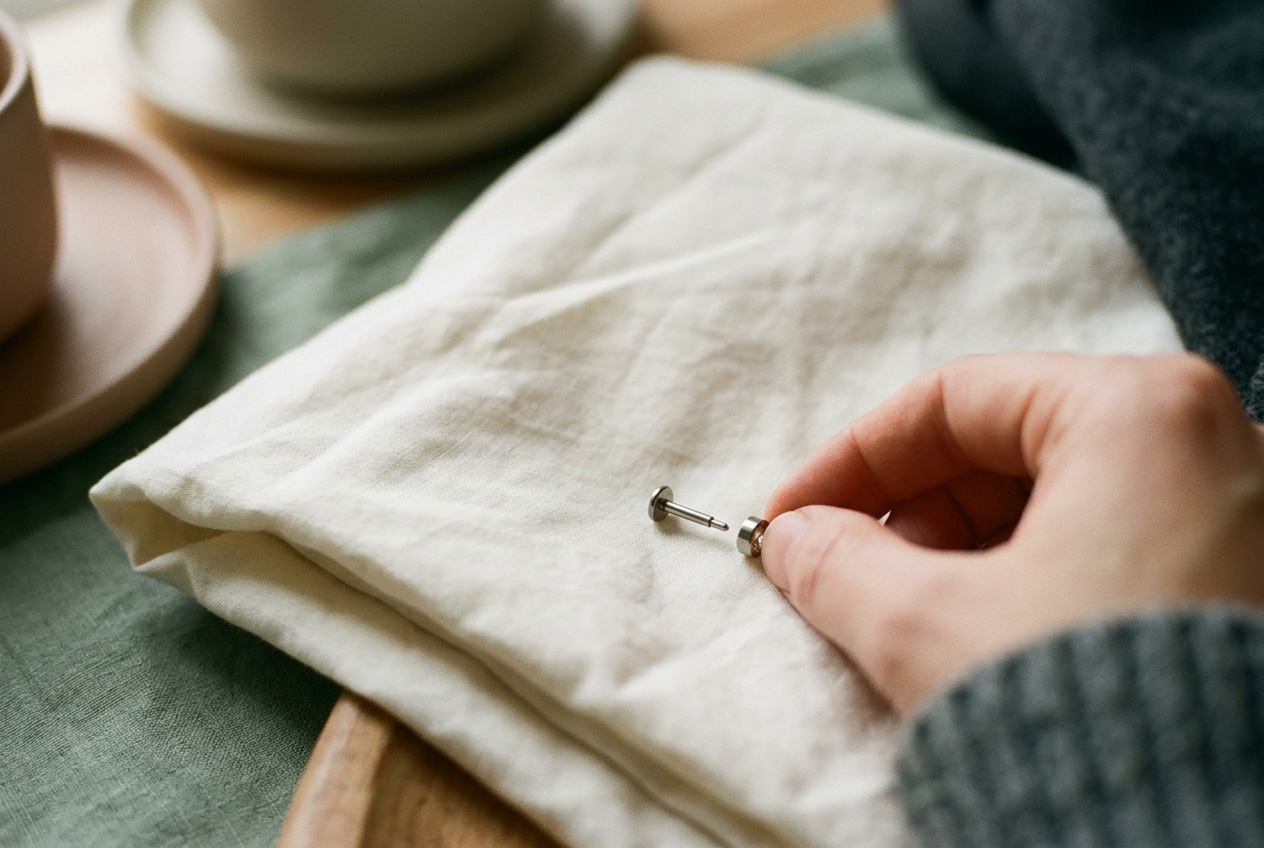
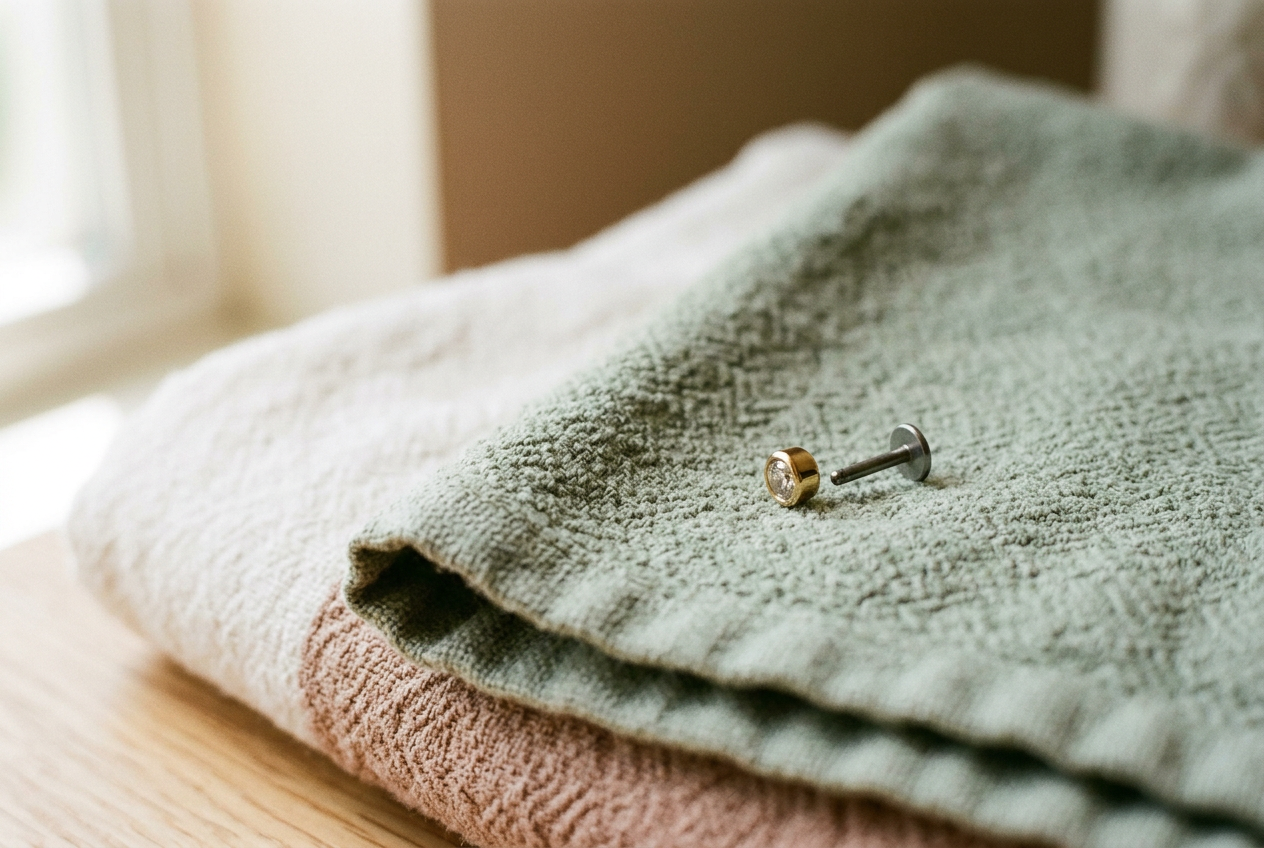
The working example here is an 18-gauge implant-grade titanium labret with a 6 mm post, a small flat disc behind the lobe and a 3 mm bezel-set end at the front. A labret is a post with a fixed backing, while gauge describes the post’s thickness. This compact setup is popular because it leaves little metal behind the ear to meet a pillow.
It can still come apart.
A flat back earring, meaning the post’s backing sits flush against the earlobe, solves the problem of a butterfly clutch poking into skin. It does not lock the decorative end in place. On the titanium stud, that job belongs to a narrow pin attached to the bezel, held inside the hollow post by tension rather than screw threads.
This advice is unisex because the mechanics do not change with wardrobe or styling. What matters is the jewelry system, the condition of the pin and whether the piercing is fully healed.
The small bend is the fastening system
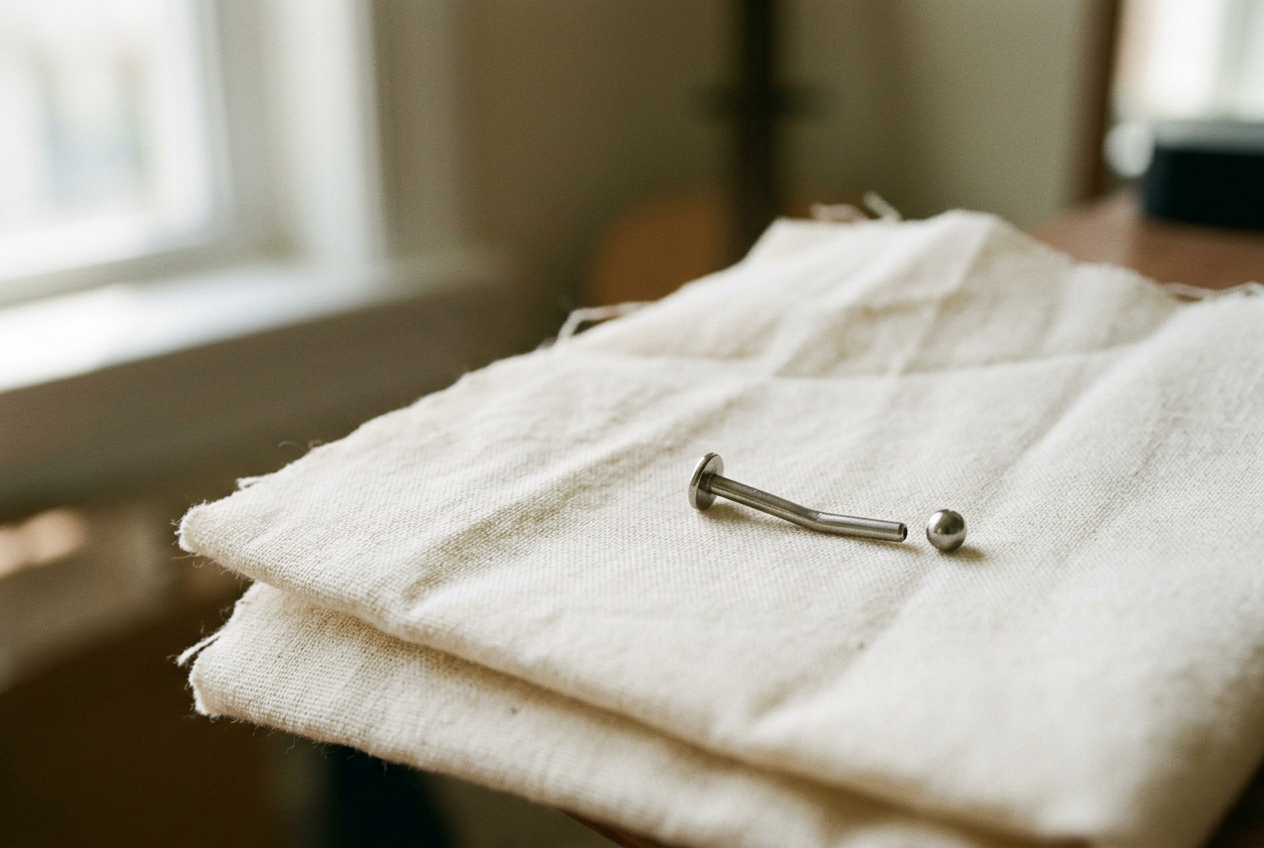
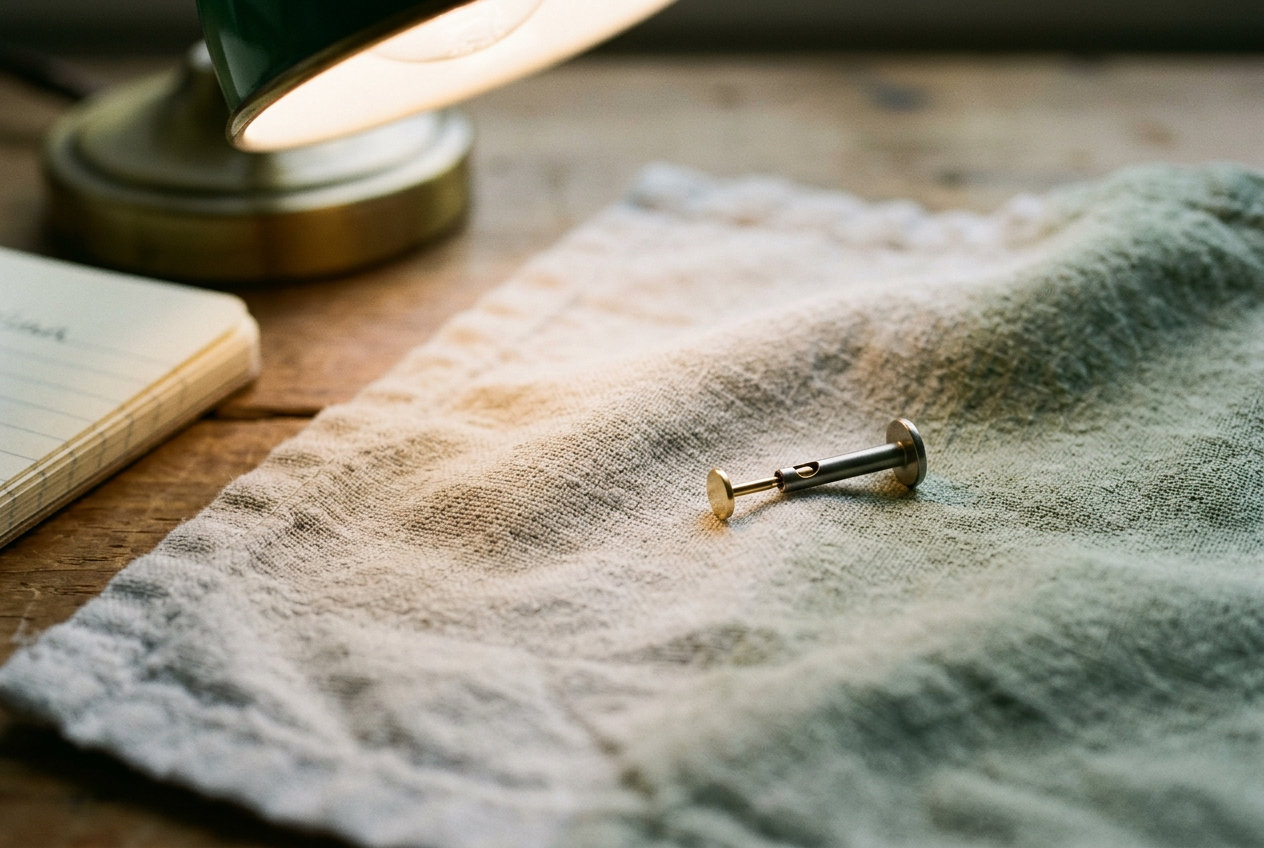
A threadless end arrives with a pin that is straight or nearly straight. Before final assembly, the pin receives a slight bend according to the jewelry maker’s fitting method. As it enters the hollow post, that bend presses against the inside wall and creates friction, which keeps the bezel seated against the post.
Too little bend means too little contact. The end may feel attached when pressed in, yet slide out after hours of small sideways loads from hair, a pillowcase or a hand tucked under the cheek. The flat disc stays comfortable while the front quietly works loose. A sleeper may find the bezel in the bedding and the empty labret still in the ear, or lose the entire piece if the post slips through afterward.
Repeated twisting can contribute to the problem. A threadless end does not unscrew, so rotating it again and again is not a useful tightening move; depending on how the pin is bent and handled, that motion can work the same small section of metal, alter its alignment or encourage the wearer to pull while turning. One cautious removal is different from treating the end like a threaded stud every night.
Return to the 3 mm bezel. Its low profile is good for sleeping because there is less surface to catch, but its tiny edge also gives fingers little purchase, which makes twisting tempting. If it needs constant turning, pressing or reseating during the day, it is already a poor candidate for overnight wear.
Check the fit before the retention
Pin tension is only one variable. The 6 mm post should leave enough room for the healed lobe without compressing it, yet not so much room that the earring rocks noticeably from front to back. A post that is too long gives the decorative end more leverage when it catches. One that is too short can press the bezel and disc into the tissue, and that irritation should not be mistaken for a secure fit.
Look at the lobe from the side. The ends should sit close without sinking into the skin, and the post should not expose a long section when the earring rests naturally. If the disc leaves a deep mark, the jewelry feels tight after sleep or tissue begins to cover an edge, stop treating this as a pin-tension problem and have a piercer assess the post length.
Disc size matters too. A larger backing can distribute pressure, although it may feel more noticeable on a small lobe or in a tightly spaced stack. A very small disc is discreet but can press into irritated tissue. Neither option compensates for a loose front end.
Test retention without yanking the piercing
Only test removable jewelry this way in a healed piercing. With a fresh or still-tender piercing, do not remove, rotate or repeatedly press the jewelry; leave the original setup alone and contact the piercer who fitted it if an end seems loose.
For a healed lobe, wash and dry your hands, then work over a clean tray or folded towel rather than a sink. Check that the bezel on the titanium stud is fully seated against the open end of the post. A visible gap can mean the pin has not been inserted all the way, even when it feels resistant.
Stabilize the flat disc and post with one hand so the piercing channel is not carrying the force. With the other hand, hold the bezel and apply light, controlled pressure in a straight outward direction. Do not jerk, tug hard or spin the end. The point is to detect immediate movement during ordinary handling, not to prove that the jewelry can withstand a forceful pull.
If the bezel shifts outward with very little pressure, slips free during the check or will not remain fully seated, do not wear that stud to bed. Remove it if the piercing is healed and you can do so without discomfort, keep the components together, and take them to a reputable piercer. A satisfactory check should leave the end seated, with no creeping gap after the jewelry is released.
Once the in-ear check is done, stop. Repeating it throughout the evening adds manipulation without telling you much more, and a sore lobe makes every later fit judgment less reliable.
Inspect the pin outside the ear
Someone familiar with changing healed jewelry can remove the end while holding the post steady, then inspect it under bright light. The pin should be intact and smoothly aligned with the end. A gentle curve may be intentional. A sharp kink, rough spot, visible crack or pin that leans at its attachment point is a reason to retire the end until a piercer or the jewelry maker can evaluate it.
The pin must also match the post. Threadless parts are not universally interchangeable, even when two posts look alike, and mixing makers or gauges can produce a connection that is too loose, too tight or damaging to the hollow post. For the titanium labret, the lowest-friction solution is to keep the original compatible post and end together rather than building a sleep set from loose components of uncertain fit.
A pin that enters with no meaningful resistance and pulls out during gentle handling lacks reliable retention. At the other extreme, forcing a heavily bent pin can distort the post, damage the end or make later removal difficult. Secure does not mean immovable.
Know when to stop bending
Some threadless jewelry makers provide instructions for adding a minute bend before insertion, and an experienced wearer may have adjusted a sound pin successfully. Follow the maker’s method for that exact system. Do not improvise with pliers, bend the pin while the jewelry is in the ear or make a large correction to compensate for an incompatible post.
Ask a piercer to handle the 3 mm bezel if it has already been bent and still loosens, if the pin has been repeatedly adjusted, or if the end carries a stone or delicate setting that is difficult to grip without stressing it. Metal can fatigue where it is worked back and forth. Another home bend may create temporary friction while bringing the pin closer to failure.
Professional adjustment is also the better call when the post itself may be distorted, the jewelry is valuable, the piercing placement makes the backing hard to stabilize, or the earring has disappeared overnight more than once. A piercer can compare compatible parts and decide whether the pin needs a small correction or replacement. The visit costs time and may end with buying a new end or post, but that tradeoff is preferable to losing the decorative piece in bedding or damaging the piercing through repeated experiments.
If reliable overnight retention matters more than quick decorative swaps, an internally threaded labret, whose end screws into threading inside the post, is the main alternative. It still needs routine checks and compatible components, but its fastening action is rotational by design. Threadless jewelry remains convenient and low-profile; it just depends on a tiny, healthy bend doing precise work.
Make the bedtime decision
After the retention test, wear the titanium stud for several daytime hours before committing to sleep in it. Normal dressing, hair movement and phone use provide a useful check without the long, unattended contact of a night on the pillow. Recheck once with clean hands before bed, using the same straight, restrained pressure.
Wear it overnight only when the end remains fully seated, the post length suits the lobe and the piercing is calm. Skip it when there is a gap, unexplained tenderness, recent pin adjustment or any need to keep pressing the bezel back into place. A flat disc improves comfort. It cannot rescue a failing connection.
Questions people ask
Can
I tighten a threadless flat back by twisting the front?
No. A threadless end is retained by friction from its slightly bent pin, not by screw threads. Twisting can manipulate the pin without improving the connection and may encourage pulling against the piercing. Stabilize the post and check with light, straight pressure instead.
How tight should a threadless pin feel?
It should meet noticeable resistance during insertion and remain fully seated through gentle handling, but it should not require force that bends the post or makes removal feel hazardous. Because makers use different tolerances, a pin that feels unusually loose or excessively tight should be checked with its matching post by a piercer.
Do flat back earrings work for a fresh piercing?
Flat back labrets are commonly used as initial jewelry, but fresh piercings need room for swelling and should not be removed or tension-tested at home. If the end appears loose, the post feels tight or the backing begins to sink into tissue, contact the piercer who fitted it rather than manipulating it.
Should
I replace a pin that keeps loosening after adjustment?
Repeated loosening suggests that the pin, post or component pairing is no longer dependable. Stop bending it back and forth. Have a piercer inspect both pieces and replace the affected component if needed, particularly when the pin shows a kink, surface damage or movement where it joins the decorative end.
One update a day
Today's fashion update, in your inbox
One fashion update each morning — no hype, no filler, just pieces worth wearing.