A Spinning Flat Back Earring Is Not Always Loose
Threadless ends can turn freely and still be secure. A controlled resistance test tells you whether the pin needs a slightly deeper bend or professional attention.
August 25, 2026 · 8 min read
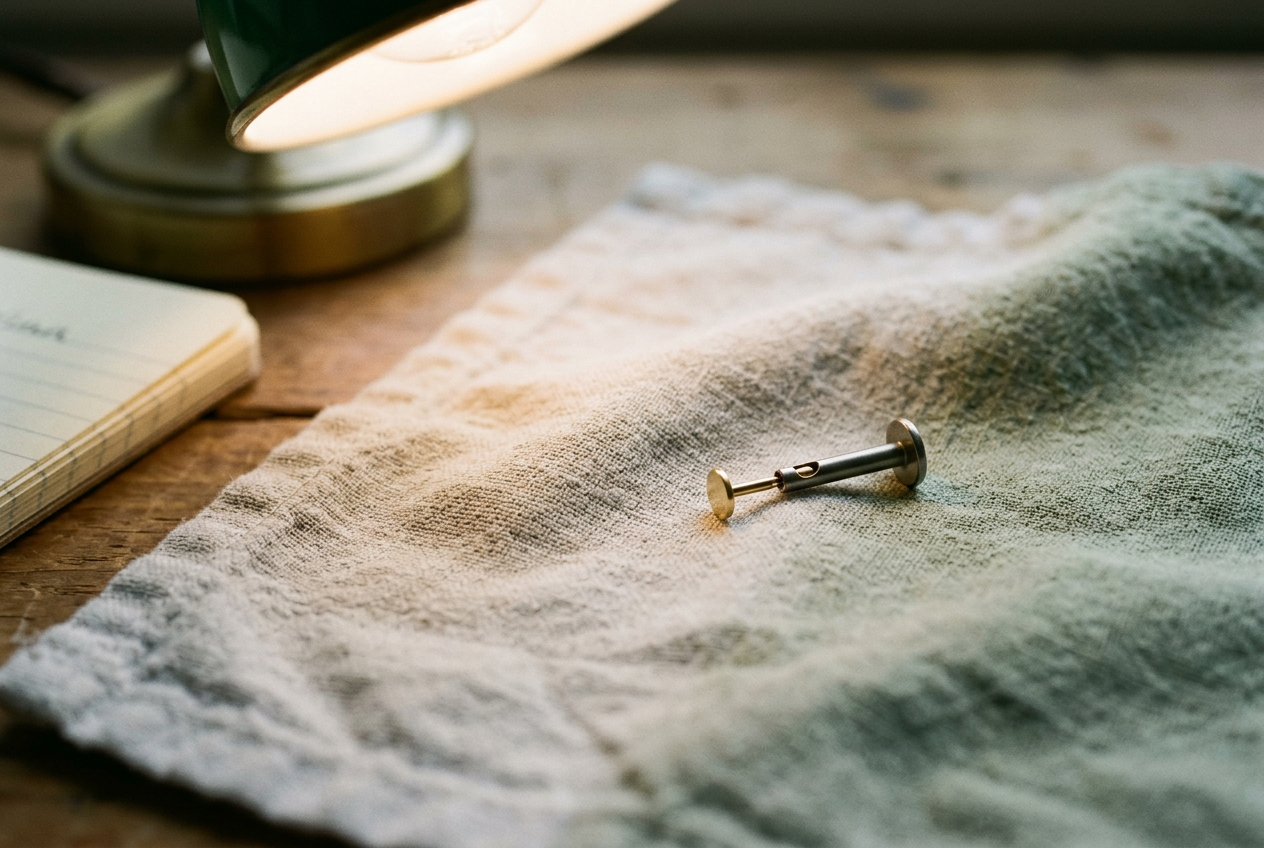
The useful detail is tiny: a shallow bend in a pin no thicker than a piece of wire. That bend supplies the friction holding a threadless earring together, and it can relax after repeated removal, an accidental tug or a night spent pressing the decorative end into a pillow.
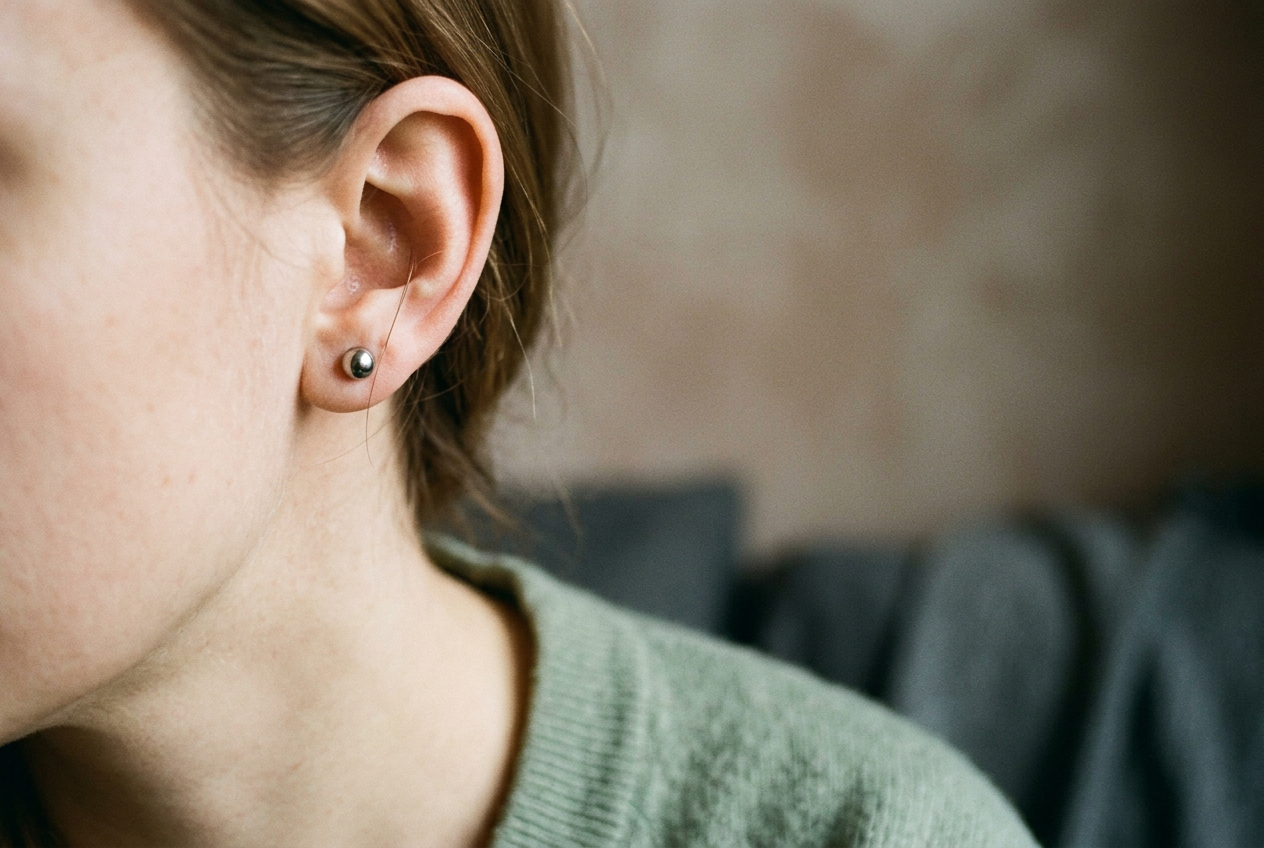
Take one common setup as the working example: a 16-gauge implant-grade titanium flat back with a small solid 14k gold end, worn in a healed helix piercing overnight for a week. A flat back earring, meaning the post’s backing sits flush against the ear, is comfortable because there is no butterfly clutch to poke the skin. The same low-profile construction makes it hard to see whether the front has lifted by half a millimeter.
This advice is unisex. The mechanism does not change with the styling around it, whether that gold end sits alone or inside a closely spaced ear stack.
First, identify the closure you have
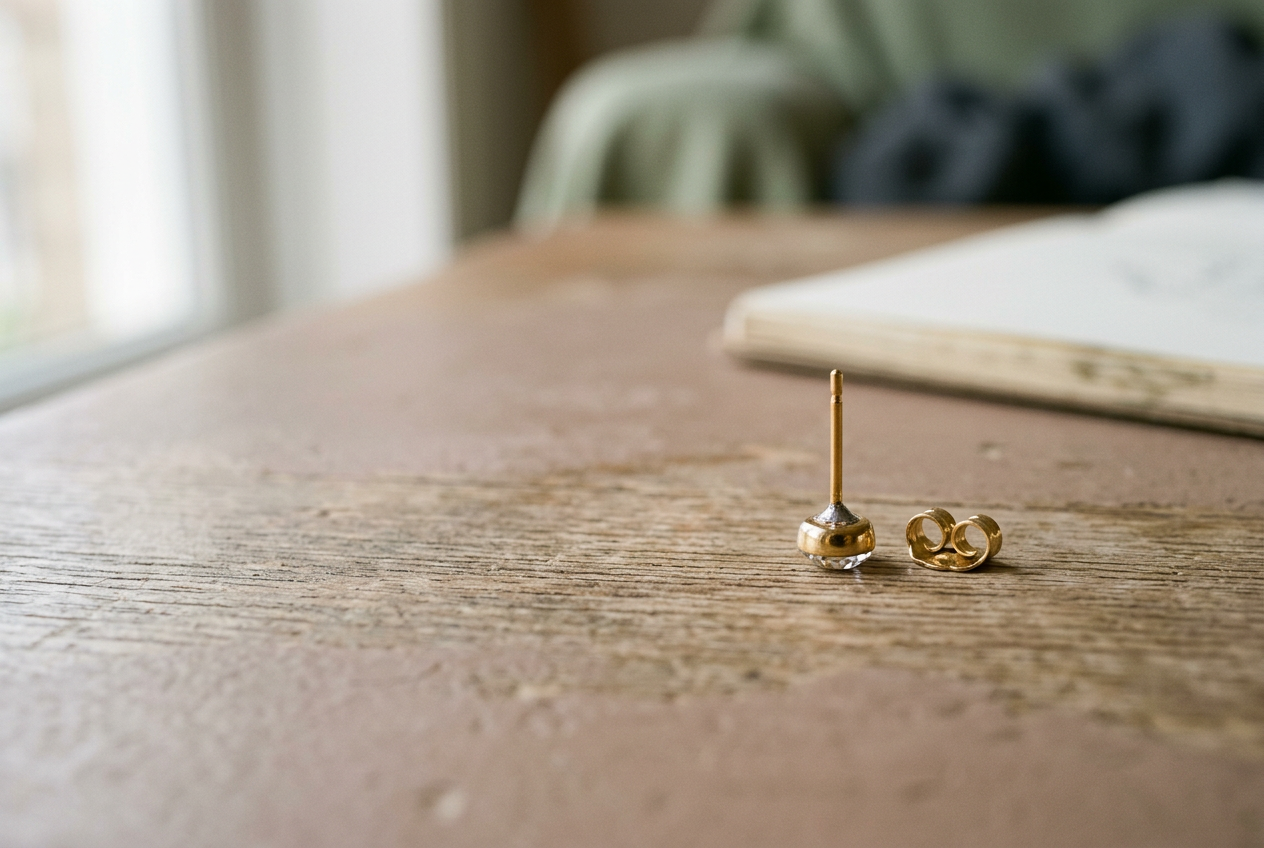
A flat back describes the shape against the ear, not the way the front attaches. Some fronts screw into an internally threaded post. Others use a threadless pin, a slender pin held inside a hollow post by friction. The tests are different.
A threaded end can loosen as it rotates counterclockwise. A threadless end may rotate in either direction without backing out, because there are no screw threads to climb. That distinction matters at 7 a.m.
, when the gold end in our helix example spins under a fingertip and appears loose even though it remains fully seated.
Look at the removed jewelry rather than guessing. A threaded end has visible screw threading on its stem. A threadless end has a smooth pin, usually with a slight bend when correctly adjusted. Do not pull firmly on an unidentified closure while it is still in your ear.
A piercer can identify it in seconds.
Why it can feel looser after sleep
Pillow pressure exposes movement that goes unnoticed during the day. The decorative end can turn against fabric, while a post with extra wearable length can shift forward and backward through the piercing channel. Neither movement proves that the closure is failing.
The warning movement runs in the same direction as the post. If the front lifts away from the post, leaves a visible gap or slides outward under a light straight pull, the pin is not holding securely enough. A front that only spins while staying flush is behaving normally for many threadless systems.
Post length can confuse the diagnosis. In the titanium helix setup, a post selected to leave room for swelling may show a section of shaft behind the front once swelling has settled. That is a fit issue, not pin failure. Downsizing to a shorter post can reduce snagging and overnight movement, but a piercer should check that the disc will not press into the ear.
Material does not cancel the mechanics. Implant-grade titanium, meaning a documented implant material rather than jewelry sold under the broad label “titanium,” is a practical post choice for daily wear. A solid-gold top changes the color and cost, yet its pin still needs the correct tension for the compatible post. Manufacturers do not promise that every brand’s pin and post will pair correctly, even when their stated gauge matches.
The safe test for threadless pin tension
Work only with jewelry from a healed piercing that can be removed without discomfort. Leave jewelry in a fresh, irritated or actively swollen piercing and ask a reputable piercer to assess it. Wash and dry your hands, use a bright table rather than a bathroom sink, and place a clean light-colored cloth beneath the pieces so a small gold end cannot roll away.
Hold the post by its flat disc. Grip the decorative end rather than the pin, then pull the two pieces straight apart with steady pressure. A small side-to-side motion can help start removal, but do not sharply bend the end while the pin is fully enclosed. If it will not release with controlled hand pressure, stop.
Pliers can mark a polished end, distort the hollow post or turn an inexpensive tension check into a replacement purchase.
Inspect the pin under good light. A slight curve is expected. A kink, flattened area, deep scratch or sharply angled base is not. Check the opening of the post for a crushed or oval shape, since adjusting the pin cannot repair a damaged tube.
Now insert the smooth pin into the post only partway. Manufacturer instructions for threadless jewelry generally use this partial insertion as the safe point for setting tension: with the pin supported inside the post, press the decorative end a fraction to one side to create a shallow bend. This is a minute adjustment. The pin should not resemble a hook.
Withdraw it, align it again and press it into the post. The pin should enter at first, meet increasing resistance and then seat flush under firm, controlled finger pressure. Some combinations give a subtle tactile stop. Many make no audible click, so sound is not a reliable test.
For our titanium post and gold helix end, the ideal result is boring: the front stays flush when rotated, resists a light straight pull and can still be removed later without tools. If the pin slides fully home with almost no resistance, remove it and add a fraction more bend at the supported halfway point. Retest after each adjustment rather than making one large bend.
Too much tension has its own signature. A pin that will not begin entering, jams before the end sits flush or requires painful pressure while the jewelry is in the ear is too bent, incompatible or damaged. Do not force it. A professional piercer can straighten the pin in smaller increments and confirm that the end belongs with that post.
Read movement in the right direction
Once the jewelry is reassembled, hold the flat disc and turn the front. Rotation by itself is not a failed test. Threadless jewelry relies on sideways pressure between the bent pin and the inner wall of the post, so the assembled end can sometimes swivel while that pressure remains intact.
Next, apply a very light pull straight away from the post. This is a check, not a strength contest. The end should remain seated without creeping outward. Stop if a visible gap opens, if the pin emerges with almost no resistance or if the decorative top rocks at its base while the pin appears stationary.
Do this test over the cloth, not while the earring is hovering above a drain. Repeated hard pulling can fatigue a fine pin, and constant removal can irritate a piercing that otherwise tolerates the jewelry well. Once the tension is correct, a quick visual check for a flush join is more useful than dismantling the earring every morning.
When overnight loosening is really a fit problem
Return to the week-old helix setup. If its gold end remains secure in the titanium post but the whole earring moves forward after sleep, the likely issue is excess post length or pressure from the sleeping position. A travel pillow or piercing pillow with an ear opening can reduce direct contact, though it does not correct an oversized post.
A disc that leaves an imprint, pinches or begins sinking into the skin points the other way: the post may be too short, the angle may be poor or the ear may be swelling. Do not tighten the jewelry against the tissue. Flat backs are sleep-friendly because they remove the projecting clutch, not because every post length is safe under continuous pressure.
Snagging also deserves attention. Hair, towel loops and pillowcase seams can catch a raised decorative end, especially when a cluster or prong setting has an uneven outline. If the closure passes the tension test but keeps being pulled forward, a lower-profile end may wear better than paying for another elaborate top with the same exposed edges.
Know when to replace rather than rebend
A pin should not need adjustment every few days. Repeated loss of tension can mean the pin has been overworked, the post opening has stretched or the components are not compatible. Replacing a plain titanium post usually costs less than risking a solid-gold end, while replacement of the end makes more sense when the pin itself is kinked or loose at its base.
Do not keep testing jewelry that causes heat, spreading redness, discharge, worsening swelling or persistent pain. Those signs are no longer a closure puzzle. Leave the piercing alone and seek guidance from a qualified piercer or appropriate health professional, particularly if removing the jewelry could trap swelling.
For a future purchase, ask whether the front is threadless or internally threaded, which post gauges it fits and whether the maker supports mixing components. The small gold end in our example is only as sleep-friendly as its correctly sized titanium post and properly tensioned pin. The flat disc solves the poke. The bend keeps the front attached.
Questions people ask
Should a threadless flat back earring spin?
It can. Rotation is common because a threadless pin has no screw threads, and the front may turn while remaining firmly seated. Watch for outward travel instead: a widening gap, easy straight-line sliding or an end that lifts under a light pull suggests insufficient tension.
Can
I bend a threadless pin while it is outside the post?
Avoid bending the unsupported pin with fingers or pliers. Insert it partway into its compatible post, then make a minute sideways adjustment while the tube supports it. If the pin is kinked, expensive or difficult to control, let a piercer adjust it rather than risking breakage.
Do flat back earrings work for a fresh piercing?
Professional piercers commonly use appropriately sized flat back labret posts for fresh piercings, but the initial post must allow for swelling and should not be removed for a home tension test. Ask the piercer to inspect a loose end, downsize the post when appropriate and confirm that the tissue is healing normally.
Why does my flat back move forward overnight?
Forward movement can come from a post that is longer than the healed tissue needs, direct pillow pressure or an end that catches on fabric. Check whether the front remains securely seated first. If it does, have a piercer assess post length rather than adding more bend to an already secure pin.
One update a day
Today's fashion update, in your inbox
One fashion update each morning — no hype, no filler, just pieces worth wearing.