Toe-Ring Sandals Are Back, and the Loop Decides the Fit
Minimal uppers make toe-ring sandals look easy. The hidden issue is whether the loop can soften around your toe or will keep pressing in the same wrong place.
Women's · September 30, 2026 · 7 min read
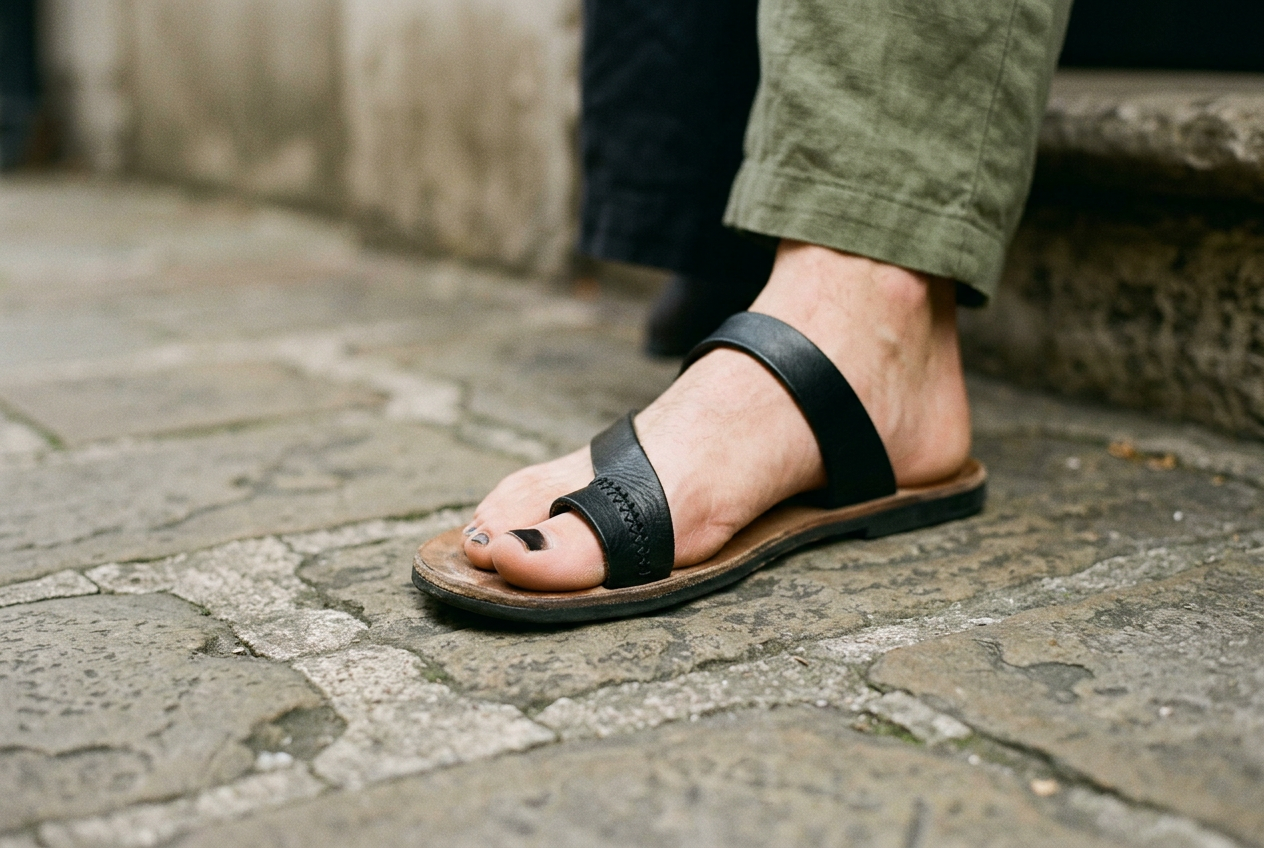
The smallest strap carries the most risk
Across current women’s sandal assortments, the toe ring, meaning the narrow loop that circles the big toe, has reappeared on spare leather flats and low heels. Some versions are almost severe: a sole, one instep strap and the loop. Others add an ankle strap but preserve the same clean line from above.
The shape looks quieter than the platform slides and padded sandals that have occupied summer shelves. It also photographs well because the upper leaves most of the foot visible. Yet that visual lightness hides a fixed contact point. A broad strap can spread pressure or shift slightly as the foot moves; a narrow toe loop concentrates force on a small patch of skin.
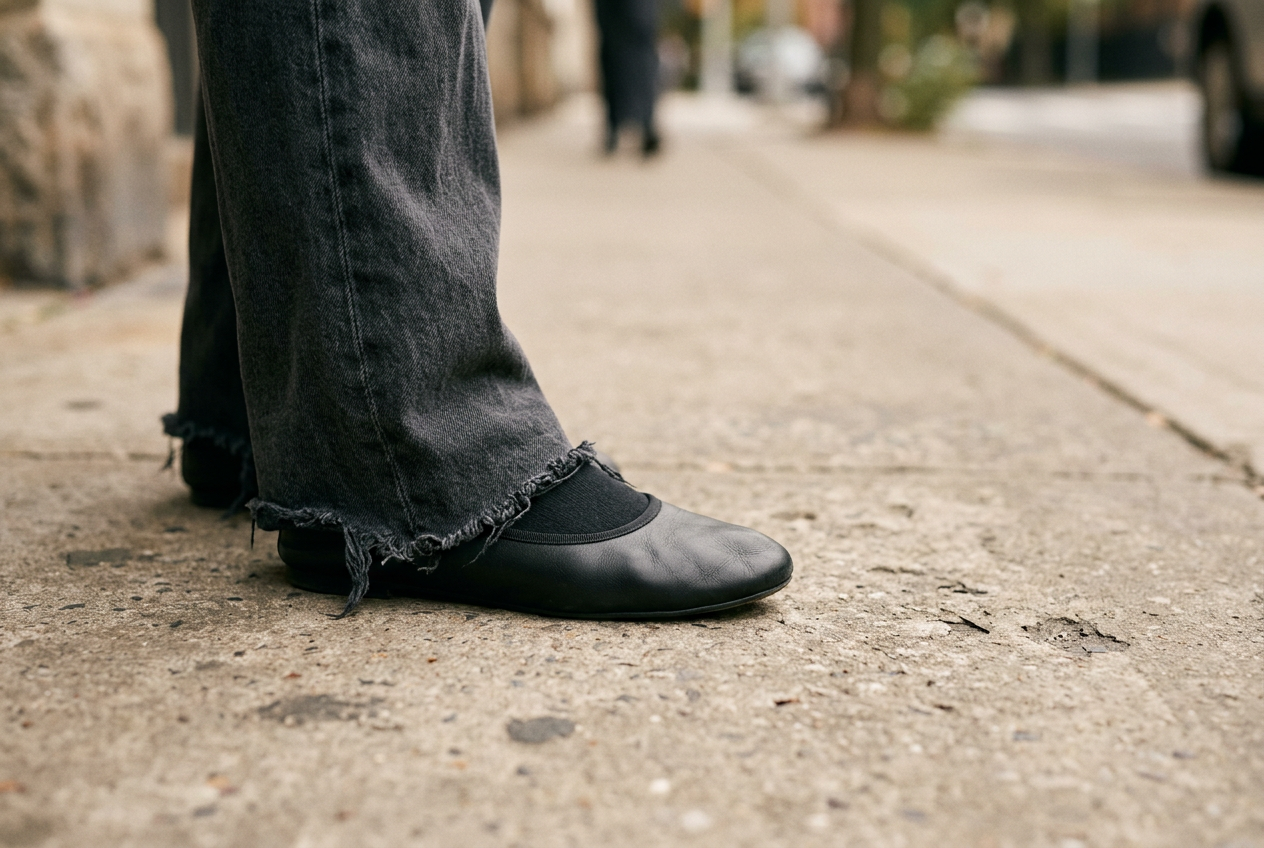
For this piece, the hands-on reference was a black women’s flat with an unlined cow-leather upper, a leather-covered footbed and a slim loop stitched down between the sole layers. The instep strap had no buckle, so neither major contact point could be adjusted. Over a week of short indoor wears and neighborhood walks, the loop’s upper edge softened. The inner seam, which sat too close to the web between the first two toes on the left foot, did not.
That distinction is the buying lesson. Stiffness can change. Placement usually cannot.
Loop diameter is only half the fit
A toe ring should hold the forefoot in line without gripping the toe at rest. On the black test pair, the right loop allowed the big toe to lift slightly and settle back without pulling the sandal forward. The left loop felt similar while standing, but walking pushed its inner edge toward the web space because that foot spread more under load.
This is why trying a pair while seated tells very little. Stand, let your toes spread, then take enough steps for the forefoot to bend. The loop should sit near the base of the toe without crossing the flex crease, the line where the toe folds as you push off. If it rides on that crease, each step asks the edge to saw across moving skin.
If it sits too far back, it can press into the web space instead.
Diameter matters, although bigger is not automatically safer. An oversized loop lets the toe slide forward and back, creating friction even when the leather feels soft. It may also leave the sandal hanging from the instep strap, which makes the heel slap and can drag the toe ring diagonally. A close loop works when its inside surface lies flat and the toe can swell a little in heat without showing a deep indentation.
Placement must also match the footbed. If your big toe naturally rests inside the printed outline or raised rim but the loop pulls it outward, the geometry is wrong. No amount of wearing around the house will move a loop whose anchor is buried in the sole.
What can settle in and what keeps rubbing
Unlined leather often improves with wear because warmth and moisture make the fibers flex more readily. Smooth calf leather and softer cow leather can round over at the top edge, while suede usually feels gentler from the first wear. Break-in, the period when a shoe starts conforming to the foot, may reduce a cardboard-like feeling or mild surface pressure.
It will not correct every fault. Thick vegetable-tanned leather can soften while retaining a firm edge, especially when the loop is cut from a narrow strip with little room to flex. A bulky seam will remain bulky. Painted or sealed edges may keep their ridge long after the main strap has relaxed, and a loop that twists as it enters the sole will continue presenting that ridge to the toe.
The black test pair showed both outcomes at once. By the end of the week, the upper edge had lost its initial stiffness and no longer pressed across the top of the right toe. On the left, the seam still met the inner side of the toe at an angle. Continuing the test would have meant accepting repeated irritation in the hope that the foot, rather than the sandal, adapted.
That is not useful break-in.
Soft synthetics deserve equal scrutiny. A polyurethane-coated upper may feel pliable in the hand but often molds less than uncoated leather, while a thin cut edge can become abrasive once heat and perspiration enter the picture. Molded rubber loops flex readily, yet the surface can hold moisture against the skin. In either material, immediate edge comfort matters more than a promise that the sandal will loosen.
A better fitting-room test
Start with the footbed rather than the loop. Your heel should sit within the back edge, and the widest part of the forefoot should meet the sandal’s widest area. This is women’s coverage, and the fit discussion assumes women’s size runs, where narrow fashion footbeds can make a correctly sized loop feel tighter by forcing the foot inward.
Next, place the big toe through the loop without using your fingers to pull the leather into position. Walk on a hard surface if the store permits it. Notice whether the pressure stays broad and stable or moves toward one edge. A clean red line that appears quickly, pinching at the web space or a loop that rotates are return signals, not minor inconveniences.
Check the rest of the upper too. On a sandal with no buckle, a loose instep strap lets the foot travel forward until the toe ring stops it. An adjustable ankle or instep strap can reduce that load, which makes it the better construction for feet that are narrow at the heel but broader across the toes. The tradeoff is a busier look.
Online, product photos rarely reveal enough. Look for top views that show where the loop enters the sole, side views that expose its thickness and a stated upper material. If the retailer does not show the inside seam or explain whether the leather is lined, the return policy becomes part of the price.
Minimal styling does not justify a difficult fit
Toe-ring sandals now range from mass-market pricing to luxury versions that cost roughly what a good leather boot does. The expensive pairs may offer finer leather, cleaner sole finishing or a more sculpted footbed, but price cannot guarantee that a fixed loop matches your toe spacing. This is one category I would hesitate to buy final sale.
The appeal is real. A black or dark brown pair gives wide trousers and long skirts a precise finish without the beach association of a rubber flip-flop. The shape also leaves more of the foot exposed than a fisherman sandal. Whether it lasts beyond the current rise is less clear; restrained leather flats tend to outlive louder summer micro-trends, though the toe ring is distinctive enough to date a pair sooner than a plain two-strap sandal.
I would buy the trend only when the loop feels uneventful during the first proper walk. The black test pair looked right and softened in one useful place, but its misplaced left seam remained the deciding detail.
Questions people ask
Should toe-ring sandals feel tight at first?
They can feel close, especially in firm unlined leather, but the loop should not pinch, rotate or leave a deep mark. Mild stiffness may ease as the leather flexes. Pressure caused by a seam hitting the toe web or by the loop crossing the flex crease is unlikely to improve enough.
Do leather toe loops stretch with wear?
Leather can relax and become more flexible, with suede and softer uncoated leathers usually changing faster than thick, heavily finished straps. Expect a small accommodation rather than a full size correction. If the loop is painfully narrow in the fitting room, stretching it may also distort the way the sandal holds the forefoot.
How do I stop a toe loop from rubbing?
Limit early wears and keep the inside surface dry, but do not use break-in as a reason to walk through persistent pain. A cobbler may be able to smooth a rough edge or gently ease leather. A loop anchored in the wrong position is a structural problem, so returning the sandal is the better option.
What is the best alternative to a toe-ring sandal?
Choose an adjustable two-strap flat if you want a similar minimal look with less pressure on one toe. A thong sandal distributes control through a central post differently, while a broad forefoot strap avoids the toe web altogether. The best substitute is the one that keeps your foot from sliding forward as you walk.
One update a day
Today's fashion update, in your inbox
One fashion update each morning — no hype, no filler, just pieces worth wearing.