The Earring Front May Be Fine. Check the Clasp for Nickel.
A titanium or sterling-silver post does not cover the solder, backing, or plated hook touching your skin. Here is how to audit every contact point before buying.
August 21, 2026 · 7 min read

Picture one gold-tone crystal stud. Its product page identifies the post as sterling silver, while the crystal setting is gold-plated brass and the butterfly back is pictured but not described. That is enough information to understand the look. It is not enough to map what rests against the ear.
The post passes through the piercing. The setting may press against the front of the lobe. A small solder joint can sit between those pieces, while the back grips the post and remains against the rear of the ear for hours. The sterling-silver claim answers one part of that construction.
That stud is the case to keep in view throughout this guide. It shows why a metal claim in a product title, filter, or short description can sound broader than it is, particularly when shoppers see “titanium post” or “sterling-silver post” and reasonably assume the whole wearing system has been covered.
This is unisex shopping guidance. The contact map applies across wardrobes, whether the earring is a small office stud, a plated fashion hoop, or a hook carrying a heavier pendant.
Start with the parts that touch skin
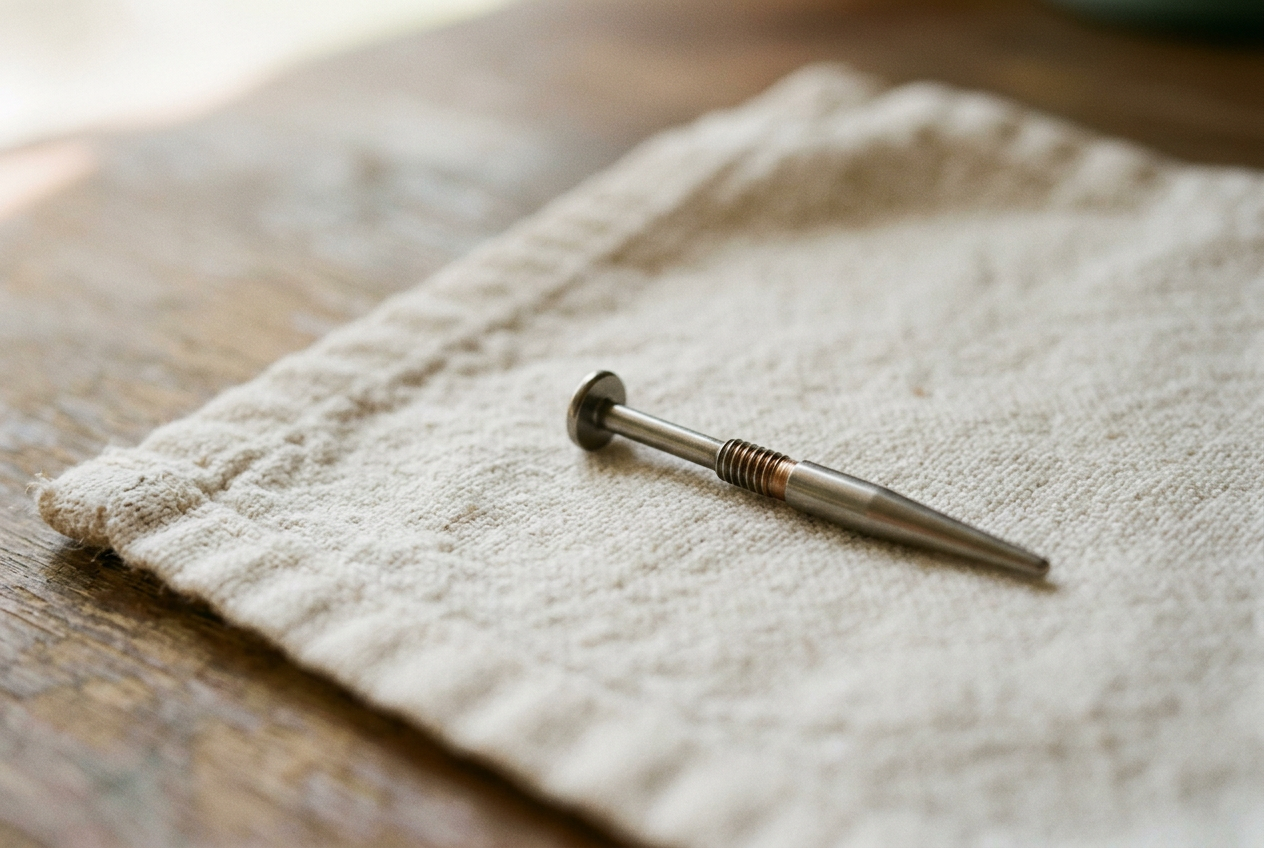
Read an earring from the ear outward rather than from the decorative front inward. A post, meaning the straight pin that passes through a piercing, has the most obvious contact, but it is rarely the only metal involved.
On the crystal stud, the front setting can touch the face of the lobe when the backing is pushed on tightly. The post meets that setting at a joint, which may be welded, cast as one piece, or joined with solder, a lower-melting filler metal used to connect components. Unless the maker documents the construction, the photograph will not tell you which method was used or what alloy is present at the join.
Behind the ear sits the butterfly back, the small clutch with curled sides that grips the post. It deserves its own material line. A silver post paired with a base-metal back is still a mixed-metal wearing system, and replacing the back may be the cheapest way to make an otherwise well-documented stud easier to assess.
Hoops shift the map. A hinged hoop may place the post, hinge, latch, inner curve, and soldered ornament against skin at different moments. The decorative outer surface matters less if it never reaches the ear, though plating wear can change that over time. Huggies fit close enough that their inner walls often count as contact surfaces.
Hooks need another pass. A French hook, meaning a curved wire that threads through the piercing without a separate post, may be plated over a base metal even when the charm below it is sterling silver. The small coil and ball near the hook’s end can be separate components. An included rubber stopper avoids a metal back, but it does not change the hook material.
A component claim is only a component claim
“Titanium post” means the claim belongs to the post unless the documentation explicitly extends it to the backing, setting, hinge, or full earring. The same reading applies to “sterling-silver post.” Sterling silver is an alloy containing 92.5 percent silver, but a 925 stamp does not identify every adjoining part or disclose the composition of the remaining alloy.
Return to the gold-tone crystal stud. Its silver post may be accurately described. The unresolved points are the solder or connection at the front, the portion of the plated setting that presses on the lobe, and the butterfly back. A shopper does not need to conclude that those parts contain nickel.
The accurate conclusion is narrower: their materials have not been established by the wording provided.
That distinction keeps the audit useful. “Not documented” does not mean “unsafe,” and “hypoallergenic” does not supply a missing component list. Hypoallergenic is a marketing term suggesting a lower likelihood of reaction, but it does not have one universal retail definition in the United States, so the supporting material specification matters more than the word alone.
“Nickel-free” also needs context. Nickel content describes what is present in an alloy; nickel release describes how much nickel leaves an item under a specified test and can reach skin. European Union REACH rules set nickel-release limits for post assemblies inserted into pierced ears and for articles intended for direct, prolonged skin contact, with a stricter limit for piercing posts. A statement of REACH compliance is therefore more informative than an unexplained icon, although shoppers should still check which product and components the documentation covers.
Plating complicates both claims because the top layer and the underlying metal are different. Gold plating can separate skin from a base-metal core while intact, yet friction at a hook, hinge, or backing can thin the surface first. European rules account for coated articles through wear and corrosion testing. A bare statement that an earring is “gold plated” identifies a finish, not the substrate beneath it or the release performance after wear.
Read the product page in layers
Begin with the full materials section rather than the color name. “Gold” may describe tone, plating, gold-filled construction, or solid gold, and those categories carry different amounts of precious metal and different wear patterns. The useful line identifies the base material as well as the finish.
Next, match each noun to a physical part. If the page says “brass with titanium posts,” assign brass to the body and titanium only to the posts. Do not silently extend titanium to the backs. If a separate line says “titanium post and backing,” the rear contact point is covered, though the front connection and body may still need attention on a close-fitting design.
Then inspect the photographs for construction. Zoom in on the rear view, where a different color at the post, a visible join, or a separate clutch may confirm that the earring uses mixed components, though appearance cannot establish an alloy. Product imagery is best used to locate questions, not answer them.
Finally, open the brand’s general materials or care page. Brand documentation sometimes explains that a metal standard applies across an entire collection, while other pages limit it to selected styles or piercing components. Save a screenshot or copy the wording before ordering, since the returns desk will need the product claim rather than your interpretation of a thumbnail badge.
For the crystal stud, the decisive request is specific: identify the material and finish of the post, post-to-setting connection, butterfly back, and any setting surface designed to rest on the lobe. A customer-service answer that repeats “the post is sterling silver” leaves the original gap open.
The clasp can undo a careful purchase
Backings are easy to overlook because they are small, removable, and often excluded from the hero image. They also stay pressed against warm skin, especially when a wearer tightens them to stop a stud from drooping. Tight is a fit quirk with consequences here. Less air circulates, pressure increases, and the backing can remain in contact with the same patch of skin all day.
A replacement back can be a practical alternative when the front and post are well documented. Match the replacement to the post diameter and shape, then check that it grips securely without forcing the stud against the lobe. Loose compatibility is a loss risk. An oversized clutch may also show around a small stud.
Buying spare titanium backs costs more than reusing the unmarked clutches already in a jewelry box, but it usually remains within an everyday-jewelry budget. Replacing an entire pair with solid gold moves the decision toward fine-jewelry pricing, and even then the seller should identify the gold alloy and all separate components rather than asking the karat mark to carry the whole claim.
Implant-grade titanium is a more exact phrase only when documentation names a recognized material standard, such as ASTM F136 or ISO 5832-3, rather than using “implant grade” as decoration. Public guidance from the Association of Professional Piercers points shoppers toward verified standards because “titanium” alone can cover multiple grades and manufacturing uses. That level of specification is commonest in piercing-focused jewelry, where threadless or threaded ends attach to a separately documented post.
The tradeoff is style and shopping time. Piercing-focused makers often provide clearer post specifications, but the decorative range may be narrower than plated fashion jewelry, while fully documented solid-gold pieces can deliver both finish and construction at a much higher price. For a trend-led earring worn occasionally, requesting the missing backing material may make more sense than paying several times more for a fine-jewelry alternative.
Know when the documentation is too thin
Skip the crystal stud if its appeal depends on wearing the included back and the seller will identify only the post. The problem is not proof of nickel. It is that the answer cannot support the decision the product page invites you to make.
A complete listing does not need to publish a metallurgical report in the description. It should state the body and contact-component materials, identify the base beneath plating, and explain whether a nickel-related claim covers the whole item or selected parts. Test-standard references are stronger still when they clearly apply to the style being sold.
Keep medical decisions separate from the shopping audit. Redness, swelling, pain, or persistent irritation can have causes beyond jewelry composition, and a clinician can assess symptoms or advise on allergy testing. The retail task is more limited: map contact, verify claims, and avoid treating silence about a clasp as evidence about its metal.
Questions people ask
Can an earring back contain nickel if the post is titanium?
Yes. A titanium-post claim normally describes only the post unless the seller says it also covers the backing. The clutch may be stainless steel, another alloy, titanium, or an undocumented base metal, so look for a separate backing specification or ask the brand to identify it.
Does gold plating stop nickel exposure?
Intact plating can separate skin from the underlying metal, but “gold plated” does not identify that underlying alloy. Hooks, hinges, and backs receive friction, so documentation covering the substrate and nickel-release standard is more useful than the finish description alone, particularly for earrings worn often.
Is sterling silver always suitable for sensitive ears?
Sterling silver identifies a silver purity of 92.5 percent, not the composition of every attached component. Suitability varies by wearer and construction, while a silver post may still be paired with an unlisted back, solder joint, or plated setting that touches the lobe.
What should
I ask a brand before buying mixed-metal earrings?
Ask for the material and finish of every skin-contact component, including the post or hook, backing, front setting, and joining area. Request clarification on whether “nickel-free,” “hypoallergenic,” or a testing claim applies to the complete earring rather than one named component.
One update a day
Today's fashion update, in your inbox
One fashion update each morning — no hype, no filler, just pieces worth wearing.