PVD Earrings Wear Longer, but the Edges Still Decide
PVD usually outlasts ordinary gold plating on daily earrings. The hinge, post and base metal still determine whether that extra durability is worth paying for.
August 10, 2026 · 8 min read
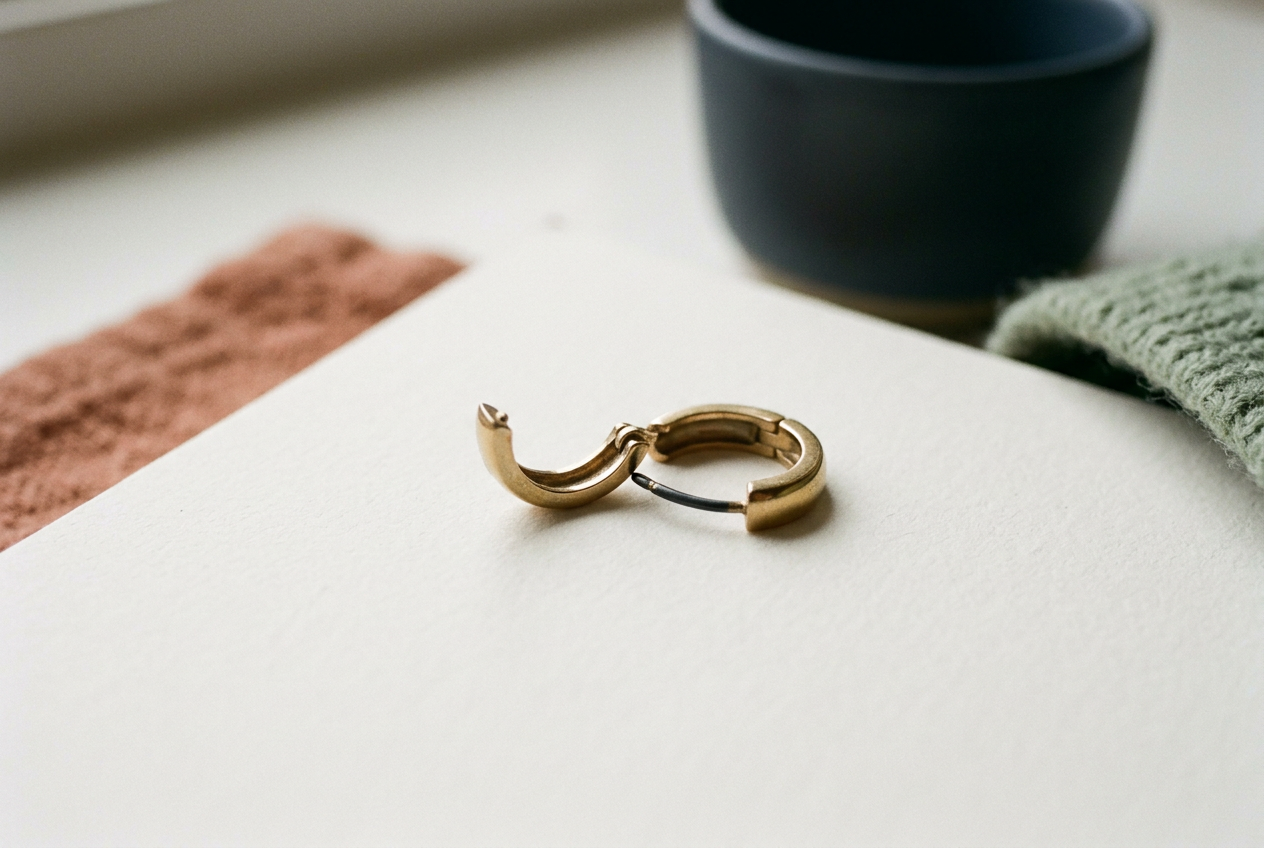
Keep one earring in view: a small gold-tone stainless-steel huggie with a click hinge, worn in the first lobe most days and removed for sleep. It sits close enough that its lower rim touches skin, while the post passes through the piercing and disappears into the opposite side of the hoop.
This is where a coating comparison becomes useful. A huggie has moving parts, narrow edges and a post that meets skin directly. Those are harder tests than the broad, untouched face of a pendant. If PVD earns its premium anywhere, it should be here.
This advice is unisex. The wear pattern comes from the earring’s construction and placement, not the wardrobe around it.
PVD changes how the coating reaches the metal
Physical vapor deposition, or PVD, applies a vaporized material inside a controlled chamber, where it condenses into a thin bonded layer on the earring. Conventional electroplating uses an electrical current to deposit metal from a liquid solution onto the object.
Both produce a surface. Neither turns stainless steel or brass into solid gold.
That distinction is easy to lose in product copy, especially when “18k PVD gold” sits beside “18k gold” in a title. The first phrase describes a finish associated with a gold color or gold content; the second should describe the metal itself, although shoppers still need to check whether a listing means solid gold, gold-filled metal, vermeil or plating.
PVD tends to create a harder, more wear-resistant finish than the very thin gold plating commonly used on inexpensive fashion earrings. Yet the label alone does not disclose the coating’s thickness, the preparation underneath it or the exact material producing the color, all of which affect how a pair ages.
Return to the huggie. Its broad outside curve may remain convincingly gold while the hinge line darkens, the post loses color and the lower inside rim develops a pale track. A finish does not need to peel across the entire hoop to look worn. One exposed silver-gray edge can be enough.
The edges tell you more than the front
Ordinary gold plating often fades first where fingers grip an earring, where two components rub and where sweat stays against the metal. On our close huggie, that means the post, hinge and lower inner curve rather than the polished outer face visible in a mirror.
PVD resists this gradual rubbing better in many everyday pieces because its deposited layer bonds firmly and can be harder than a basic plated finish. That matters if earrings stay in through commutes, workouts and rushed changes of clothes, when collars and towels repeatedly catch the same edge.
It is still a coating. The click hinge presses metal against metal each time the hoop opens, and no claim about water resistance removes that friction. A poorly aligned closure can scrape its finish from the first wear, while a rough edge created during manufacturing gives moisture and residue a place to sit after the colored surface starts thinning.
Look at the closure before buying. Open and shut it several times if returns allow. The post should enter the receiving channel without dragging sideways, and the two halves should meet evenly rather than leaving a step that catches a fingernail. This small fit check may predict the huggie’s appearance better than a broad “tarnish resistant” claim.
Conventional plating remains reasonable for earrings worn occasionally, especially larger statement designs that would feel costly or heavy in solid gold. If a sculptural pair comes out for dinner and returns to its pouch afterward, paying more for a hard-wearing coating solves a problem that pair may never face.
Color is a separate decision
Durability does not guarantee a better gold tone. Some PVD finishes look deep yellow, while others lean neutral or slightly green depending on the deposited material, the top layer and the polished steel underneath. Conventional plating can also vary, but it may offer the softer color a shopper expects from familiar gold jewelry.
Compare the earring with jewelry you already wear. Place the huggie beside a solid-gold chain or ring in daylight, then decide whether the difference looks intentional. Product photos shot under warm lighting can make a bright coating appear quieter than it will beside a 14k piece.
Matching matters most in a compact ear stack, where several gold tones sit within an inch of one another. A PVD huggie can work as the durable anchor, but a visibly orange finish beside pale solid-gold studs will read as a mismatch even if the coating remains intact for years.
The underlying metal also affects the eventual color change. Stainless steel usually emerges silver-gray. Brass can reveal a warmer yellow-brown tone before oxidizing further. Sterling silver appears pale and may tarnish dark, although gold vermeil, meaning a legally specified thickness of gold over sterling silver in the United States, generally gives a more substantial finish than basic flash plating.
A coating is not a hypoallergenic metal
PVD may delay contact with the base metal while the surface remains continuous. It cannot guarantee that a finished earring will suit sensitive skin, and a coated post deserves particular scrutiny because it passes through the piercing and takes concentrated wear during insertion.
Stainless steel can contain nickel. Its suitability depends on the alloy and manufacturing standard, not the word “steel” alone. Brass and mixed base metals may also contain components a wearer reacts to, while adhesives, solder and an uncoated hinge can introduce materials absent from the headline description.
For a healed piercing that tolerates stainless steel, the PVD huggie may be a practical daily option. For a piercing that becomes itchy, swollen or weepy when plating wears, choosing verified implant-grade titanium or suitable solid gold removes the dependence on an intact decorative barrier. Public materials guidance from the Association of Professional Piercers likewise focuses on documented metal standards and finish quality rather than marketing terms such as sensitive or hypoallergenic.
Check the product description for the post material, not only the hoop body. A solid titanium post attached to a coated decorative front presents a different contact surface from a stainless-steel post covered in gold-tone PVD. If the listing names only “PVD gold,” the information is incomplete.
Fresh or persistently irritated piercings sit outside a fashion durability test. A qualified piercer or clinician can assess the piercing, while the safer shopping principle remains straightforward: do not rely on a coating to isolate an unknown base metal.
PVD is harder to restore
Ordinary gold-plated jewelry can sometimes be cleaned, polished and replated by a jeweler, provided the construction and base metal can tolerate the work. The repair may cost more than an inexpensive pair originally did, but the method is widely understood and can make sense for sentimental pieces.
PVD needs specialized vacuum equipment, and a local jeweler may not be able to match the original color or coat a small assembled hinge evenly. The old finish may require removal, moving components can complicate preparation, and shipping the pair to a specialist can erase the price advantage over replacement.
That makes the PVD huggie durable but relatively disposable once its critical edges fail. It should last better, not be mistaken for an heirloom purchase.
Solid metal takes the cleaner long view. Scratches can often be polished, worn surfaces remain the same general color, and a competent jeweler may be able to repair a hinge or replace a post without recreating a decorative coating. Solid gold costs several times more than budget plated earrings, so the case becomes strongest for a small pair worn for years rather than a trend-led shape likely to leave rotation next season.
The useful buying line
Choose PVD over ordinary gold plating when the earring is stainless steel, the closure moves cleanly and the pair will face frequent handling. It is particularly sensible for inexpensive-to-midrange huggies, hoops and simple studs whose value lies in keeping a neat gold-tone surface through regular wear.
Skip the upgrade when the brand will not name the base metal or post material. PVD cannot rescue a rough hinge, an uncomfortable post or an alloy your skin dislikes, and “waterproof” language does not explain how chlorine, cosmetics or repeated metal-on-metal contact will affect that exact construction.
Choose ordinary plating when the design is occasional, oversized or likely to be replaced for style reasons. Keep it dry, put it on after fragrance and remove it before exercise. That routine costs time, but it may be a fair exchange for a lower entry price or a gold tone you prefer.
Choose solid titanium or solid gold when the earring will live in a sensitive piercing, when repair matters or when you are buying the same restrained huggie you expect to wear for many years. In that case, avoiding the coating cycle is more valuable than stretching the life of one.
Questions people ask
Are PVD earrings waterproof?
Some brands describe their PVD-coated stainless-steel jewelry as waterproof, and the finish generally handles routine moisture better than delicate ordinary plating. The hinge and post still collect soap, sweat and residue, while pools and cleaning chemicals can affect components differently. Follow the maker’s care instructions rather than treating “waterproof” as permission for every exposure.
Does PVD gold eventually wear off?
Yes. PVD is a thin surface layer, although it commonly resists abrasion better than basic gold plating. Expect the first visible changes at the post, hinge, clasp or skin-facing rim, where friction concentrates. A smooth, well-aligned huggie should age more evenly than one whose closure scrapes every time it opens.
Are PVD earrings safe for sensitive ears?
The coating alone cannot answer that. Check the base metal, post, solder and documented material standard, because skin may reach those components after wear or through an unfinished area. Someone who reacts to nickel or plated jewelry may find verified implant-grade titanium or suitable solid gold a more predictable choice.
Can a jeweler recoat PVD earrings?
A specialist may be able to strip and reapply a PVD finish, but many local jewelers do not have the required vacuum equipment, and matching the original gold tone can be difficult. Replating through conventional methods is more accessible. For a small fashion huggie, replacement may cost less than specialized PVD restoration.
One update a day
Today's fashion update, in your inbox
One fashion update each morning — no hype, no filler, just pieces worth wearing.