That Raffia-Look Bag May Be Paper. Read the Label First.
Natural raffia, paper yarn and polypropylene can look nearly identical online. Their labels, joins and edges reveal how each will handle rain, fraying and winter storage.
August 22, 2026 · 8 min read
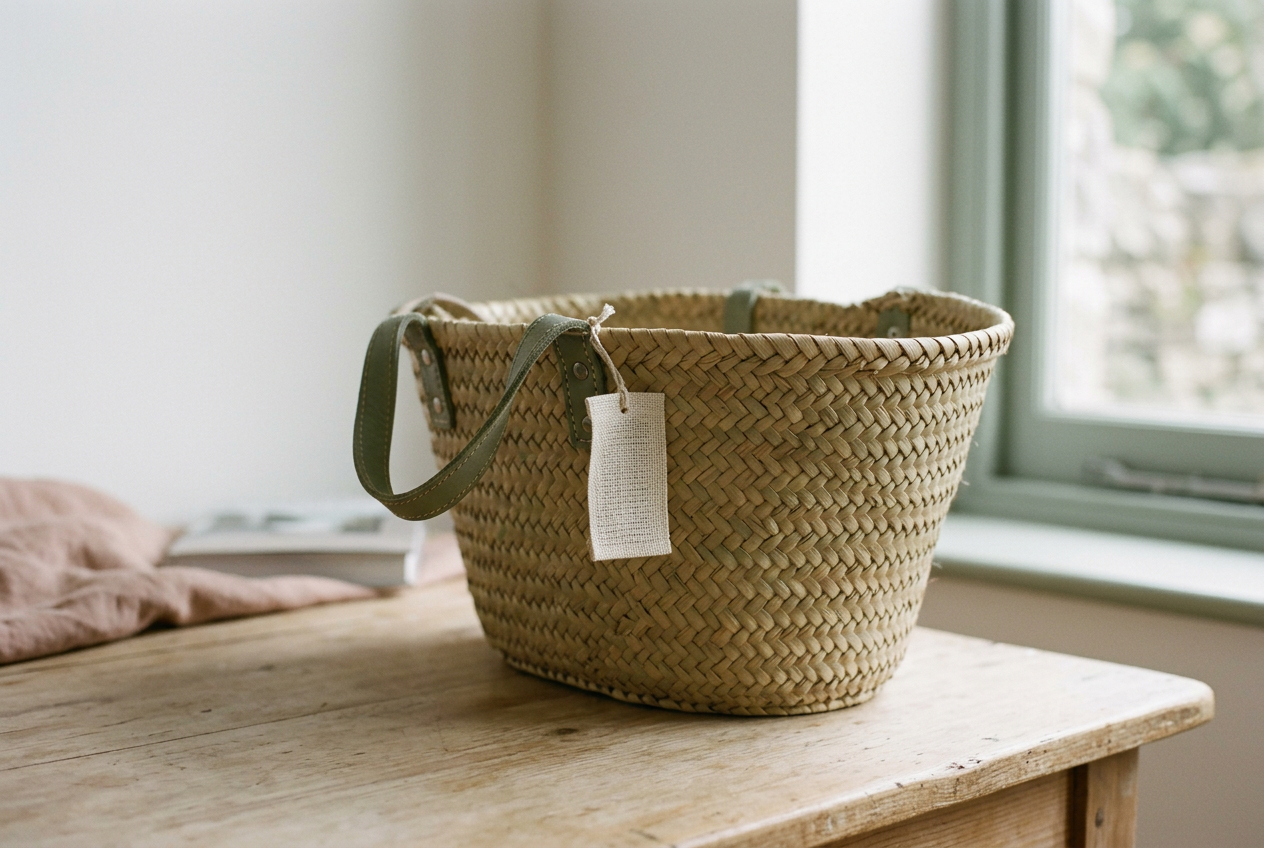
The useful line on Loewe’s Basket bag product description is not the bag’s name. It is the material: palm leaf and calfskin. The open weave and dry, straw-colored surface sit comfortably in the raffia-look category, but palm leaf is not raffia, and the distinction matters if the word “raffia” is doing part of the work of justifying a purchase.
That bag is a good marker for what has changed. Raffia-look totes, small shoulder bags and belts are multiplying across price levels, while the category name has become increasingly detached from the substance. Some pieces use true raffia. Others use paper yarn, usually narrow paper strips twisted into a strand, or polypropylene, a thermoplastic polymer that can be extruded into straw-like filaments.
Plenty use another palm fiber, as the Loewe bag does.
The advice here is unisex because fiber behavior does not change across wardrobes, though scale does: a tightly packed commuter tote puts more strain on handles and joins than a small bag carried for dinner.
Start with the noun after the percentage
“Raffia bag” in a product title may describe appearance rather than composition. Move past the title and find the material breakdown for the outer, body or shell. “100% raffia” points toward fiber taken from the leaves of the raffia palm, though it does not tell you how heavily the strands have been dyed, treated or reinforced. “Paper,” “paper fiber” and “paper yarn” mean the woven structure is cellulose-based paper rather than palm fiber.
Polypropylene may appear under its full name or as olefin, the generic textile-fiber name used for a group that includes polypropylene. A listing that says only “synthetic” is not detailed enough to predict behavior. Ask the retailer for the composition if wet-weather use matters.
Then check which part the percentage describes. A bag can have a paper outer, polyester lining and polyurethane trim; a belt may combine a woven synthetic body with a leather buckle tab. “Leather trim” near the top of a description can visually outrank the less glamorous body material below it, even though the body accounts for most of the surface and most of the weather exposure.
The Loewe Basket bag offers a cleaner lesson. Palm leaf is the body material, while calfskin reinforces the handles and branded patch. That reinforcement matters as much as the botanical distinction because handles take repeated bending and concentrated weight, two demands that dry woven leaf does not welcome indefinitely.
The weave can tell you more than the trend name
Construction changes the outcome. A plait, meaning several strands crossed into a flat band, spreads strain differently from a loose crochet-like structure with open loops. On a tote, look at the top edge first. A bound rim, doubled weave or stitched tape can stop the opening from spreading when the bag is full.
A raw cut edge may begin shedding before the main panels look tired.
Next, follow one row until it reaches a side seam. Ends should disappear into the weave or sit under binding rather than protrude as short, dry tails. With paper yarn, an exposed end can untwist and open into a flat strip after friction or moisture. Natural raffia tends to split into fibrous wisps.
Polypropylene usually resists that papery blooming, but a snag can pull out a long, shiny filament that is difficult to trim invisibly.
Handles deserve a mild stress test in the store. Hold the bag by one handle, support the body with the other hand, and inspect the attachment without yanking it. Closely spaced stitches through a reinforced patch distribute weight; a narrow attachment stitched directly into an open weave concentrates it. Belts reveal the same issue around the buckle, where repeated folding can crack coated paper yarn or leave a permanent pale crease.
A lining can help a loose weave retain small items and reduce abrasion from keys, but it also hides the reverse side, including knots, adhesive and sparse reinforcement. If the lining is stitched rather than glued, the bag is generally easier to repair. “Handwoven” describes labor, not fiber content or rain tolerance.
Rain separates the materials quickly
True raffia is flexible and can handle incidental humidity, but it is not a rainproof material. Water can deepen its color temporarily, disturb dye and alter a structured shape, especially where several damp layers press together. If a natural raffia bag gets caught in light rain, empty it, blot rather than rub, restore its shape with plain tissue or a clean towel, and let it dry with moving room-temperature air. A radiator or hair dryer can make drying uneven and encourage brittleness.
Paper yarn is the least forgiving choice for unpredictable weather. Twisting and coatings give it more resilience than ordinary writing paper, yet water can still soften the strand, raise the surface and weaken a crease. The danger is not always immediate collapse. A damp paper tote may dry with a rippled base, softened handle or tidemark that becomes obvious only when the bag is used again.
Polypropylene is hydrophobic, meaning the fiber itself does not readily absorb water. That makes it the practical choice for pool edges, damp grass and summer travel, provided the lining, dye, adhesive and hardware are equally suitable. Water can still sit inside an unventilated bag, and faux-leather trim may react differently from the woven body. A synthetic raffia-look bag is rain-tolerant, not automatically washable.
This is where paying more does not settle the question. Paper yarn appears at both accessible and elevated prices because price also reflects design, labor, hardware and branding. If a product page offers only a beach image and the word “raffia,” the price is not evidence of the fiber.
Fraying has a material signature
Natural raffia rarely stays uniformly smooth. Small splits and fine ends can be normal in a hand-worked plant fiber, particularly along the rim, but rapid shedding at a handle attachment signals strain rather than character. Do not pull a projecting strand. A repairer can often secure it from the reverse before more of the weave loosens.
Paper yarn usually shows wear as fuzzing, flattened ridges or partial untwisting. Pale stress marks around a buckle or folded flap suggest that the colored surface has cracked. A coating may delay this, though a thick coating can make the accessory feel more like plastic and may peel at hard folds.
Polypropylene keeps a cleaner surface for longer under casual rubbing, then fails differently. Snags stretch, heat can flatten the texture, and an exposed filament may look glossier than the surrounding weave. Keep it away from hot car interiors when possible and never press it with an iron. Cutting a pulled loop without understanding where it runs can release part of the construction.
Return to the palm-leaf Loewe bag and the hierarchy becomes clearer: its leather handles protect a high-stress area, but the open natural body still needs sensible loading and dry storage. The material line predicts that better than the familiar basket silhouette does.
Storage decides whether the shape returns next summer
Natural raffia and paper bags should be emptied before storage, lightly stuffed with acid-free tissue or clean undyed paper, and supported upright without crushing the handles. Use a breathable dust bag. Sealed plastic can trap residual moisture, while newspaper may transfer ink. Do not overstuff a structured bag into a new silhouette; the aim is to support the existing corners.
Paper yarn needs the driest, least compressed position available. Keep it off a closet floor that may become damp and away from a heavy bag leaning against its rim. If the piece has already been wet, store it only after the base, seams and handle folds feel dry.
Polypropylene is less anxious about humidity, but it can still retain a crushed shape after months under pressure. Stuffing helps, as does keeping buckles and chains from imprinting the weave. Before storage, wipe surface dirt with a barely damp cloth only if the brand’s care instructions allow it; adhesives, trims and dyes remain the unknown variables.
The buying decision
Choose true raffia or another clearly named palm fiber when natural variation, hand feel and a gradually softening surface are part of what you want. Accept that the accessory should avoid sustained rain and may develop fine ends. Inspect reinforcement rather than treating every irregularity as proof of craft.
Choose paper yarn for a light, sharply shaped fashion piece that will be carried in dry weather and stored with care. It can deliver crisp color and an even weave, but a high price should buy excellent finishing, lining and handle construction because the base material alone does not promise longevity.
Choose polypropylene when weather tolerance and easy summer use matter more than natural-fiber character. Check for shiny exposed ends and weak trim, then read the care line before assuming it can be rinsed. For belts, synthetic construction may also recover better from repeated flexing than paper, although a poorly secured buckle remains a poorly secured buckle.
The undecided part is value. A well-constructed paper bag may suit a careful owner better than loosely finished natural raffia, while a plain polypropylene tote may outlast both in wet conditions. The label narrows the tradeoff. The rim, joins and handles decide whether the object is worth its price.
Questions people ask
How can I tell whether a bag is real raffia?
Read the composition for the outer or body rather than relying on the product name. True raffia should be identified as raffia, while paper, paper fiber, polypropylene, olefin or palm leaf describes a different material. Natural variation can support the label, but appearance alone is unreliable because paper and synthetic strands can be textured convincingly.
Can a paper raffia-look bag get wet?
A few drops may not ruin a coated paper-yarn bag, but sustained rain can soften strands, distort the base and leave tidemarks. Empty it, blot the surface, support the original shape and air-dry it away from direct heat. Do not scrub the damp weave or carry it again until the handle folds and seams are dry.
Is polypropylene better than natural raffia?
Polypropylene is usually the easier choice around water because its fibers resist absorption, and it often frays less during casual use. Natural raffia offers a drier hand and organic variation that plastic does not reproduce exactly. Neither is inherently better: construction, trim and the conditions in which the bag will be carried matter more.
How should I store a raffia-look bag over winter?
Empty it, clean it according to the maker’s instructions and support its shape with acid-free tissue or clean undyed paper. Keep natural raffia and paper yarn dry in a breathable dust bag, with nothing pressing on the rim or handles. Polypropylene also benefits from stuffing because months under a heavier bag can leave a permanent dent.
One update a day
Today's fashion update, in your inbox
One fashion update each morning — no hype, no filler, just pieces worth wearing.