Soft Running-Shoe Foam Can Make Standing All Day Harder
Plush foam feels persuasive in five steps. Over hours of slow walking and standing, a firmer, broader midsole may demand less work from your feet.
September 13, 2026 · 7 min read
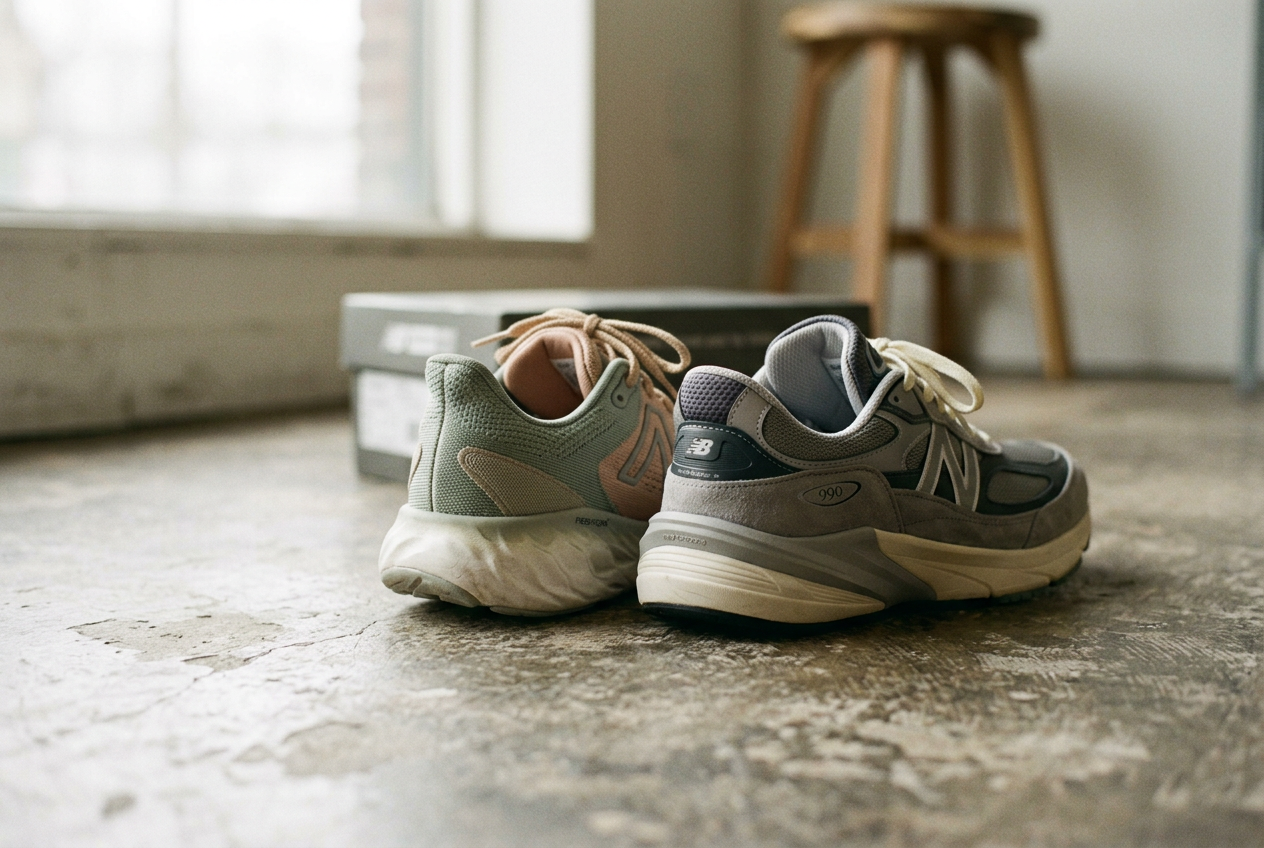
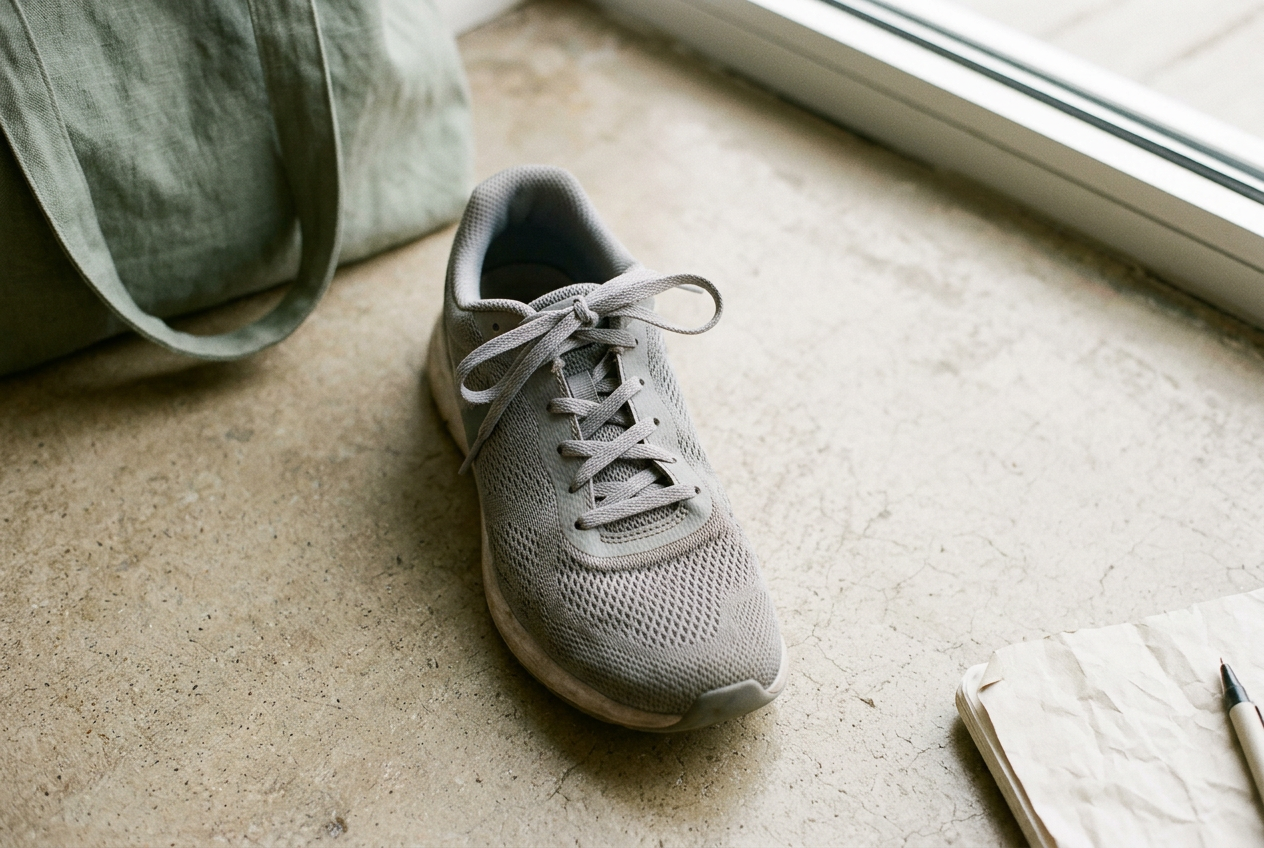
The New Balance Fresh Foam X 1080v13 made the problem clear during a week split between desk work, errands and long stretches standing indoors. Its tall Fresh Foam X midsole, meaning the cushioning layer between the upper and rubber outsole, felt pleasantly soft as soon as my heel landed. During faster walking, that compression helped the shoe roll forward. Standing still was less convincing.
After a while, my heel settled into the foam and small weight shifts produced more movement than expected. Nothing dramatic happened. The shoe merely asked my feet and lower legs to keep making tiny corrections, which is a tedious assignment when the rest of the body has already accepted that the line is not moving.
I alternated it with the New Balance 990v6, a pricier pigskin-and-mesh sneaker that combines soft FuelCell cushioning with ENCAP, a construction that places foam inside a firmer polyurethane rim. The 990v6 did not produce the same plush first impression. It held my heel more consistently, however, and its firmer perimeter reduced the side-to-side sway that became noticeable in the 1080v13.
This is unisex advice. Individual models may use men's and women's size labels, different width offerings or slightly different standard widths, but the useful test is the same across wardrobes: judge how the shoe behaves under your body rather than how luxurious the foam feels under one thumb.
Running foam has moved into everyday wardrobes
Casual sneaker design has borrowed heavily from performance running shoes. Thick sculpted midsoles, breathable engineered mesh and rocker geometry, an upward curve that encourages the foot to roll through a step, now appear with trousers, long skirts and office clothes rather than only running shorts. The look is established enough that a high stack of foam can read intentional, not as evidence that someone took a wrong turn on the way to a 10K.
The mechanical priorities have traveled with the look. Running shoes are designed around repeated forward motion, and many soft foams work best when they compress under impact and rebound as the foot moves on. Slow museum walking, retail shifts and standing at a counter provide a different job description. There is less momentum, more time spent loading one area and plenty of small lateral movements.
That distinction explains why the 1080v13 felt better during a brisk errand than while waiting in place. Its cushioning was doing something useful in motion. At a standstill, the same softness allowed more heel sink, while the curved profile encouraged movement that had nowhere interesting to go.
Softness and instability are not synonyms. A broad sole, supportive upper and firm sidewalls can control a compliant center, while a narrow shoe made from denser foam may still tip easily. The complete structure matters, which is inconvenient for online shopping and excellent news for anyone who enjoys refusing a shoe after six minutes under fluorescent lighting.
The store test starts after the first lap
Put on both shoes with the socks you expect to wear, lace them as you would at home and take enough time to let the initial softness stop being novel. The 1080v13 makes a strong opening argument, so five quick strides would have favored it. The comparison changed once I stood in one place.
Begin with heel sink. Stand evenly, then shift most of your weight onto one foot without lifting the other completely. A useful amount of cushioning compresses and then settles. Be wary if the heel continues drifting downward, feels lower on one side or makes the shoe's collar press differently around the ankle.
The goal is not a hard platform. It is a platform that reaches a stable stopping point.
Next, move your weight slowly toward the outside edge of each foot and back to center. Keep the sole on the floor. Watch the shoe in a mirror if possible: the upper should not spill far over the midsole, and the foam should not fold so much that your ankle follows it sideways. On the 1080v13, the broad base prevented a true tipping sensation, but I could still feel more lateral movement through the soft rear section than in the 990v6's firmer rim.
Then stand normally for two or three minutes. This is awkward, though less awkward than discovering the problem halfway through a workday. Notice whether you keep changing stance to escape pressure, whether your toes start gripping inside the shoe or whether one heel feels as if it has sunk farther than the other. Those sensations do not diagnose anything.
They do tell you that the shoe requires active management while you are barely moving.
Finish with a slow lap rather than a performance-minded stride. Stop, turn and take a few short steps as if navigating a crowded store. Plush running shoes often feel most flattering when the wearer lengthens the stride and moves straight ahead, while everyday use includes shuffling around chair legs and reversing direction because the elevator button was on the other wall.
Compare the pair rather than grading either shoe in isolation. If the firmer option feels harsh immediately, stability will not redeem it. If the softer one feels pleasant but keeps moving after your foot has settled, consider whether you are buying cushioning for forward miles or for hours spent mostly upright.
Firm does not have to mean flat
The useful alternative to maximal softness is usually a layered or contained midsole, not a thin slab of rubber. The 990v6 still has responsive foam underfoot, but its polyurethane ENCAP rim limits how freely that foam can spread at the edges. The tradeoff is a denser feel and more weight, plus a price that sits above many mainstream casual sneakers.
A firmer running or walking shoe can achieve a similar result with a wide heel, vertical sidewalls or a less compressible rear section. Look at the sole from behind. A heel that is visibly narrower than the upper gives the foot less platform to land on, while an exaggerated outward flare can catch the floor during tight turns; the sensible middle is broad enough to support the heel without turning each shoe into a small shelf.
Upper fit matters too. Engineered mesh can be forgiving across the forefoot, but stretch around the heel allows the foot to wander even when the sole is stable. The 990v6's layered upper held more securely than the softer, running-oriented 1080v13 upper in my comparison. That extra structure also looks heavier, and under a fluid trouser it reads more traditional than the clean foam profile of the 1080v13.
For styling, the plush runner wins when the outfit benefits from an obviously technical sole: wide-leg pants, straight denim or a simple knit dress can carry the volume. The firmer mixed-construction sneaker suits clothing that needs a little texture and less visual bounce. Neither choice disappears. These are substantial shoes, and pretending otherwise usually ends with a trouser hem resting unhappily on the heel.
Buy for the slowest part of the day
Choose the softer shoe if most of the day involves purposeful forward walking, the heel settles evenly and the sidewalls keep your foot centered. The 1080v13 remained the more enjoyable pair for brisk errands during my week, and its rocker felt natural once the pace increased.
Choose the firmer or contained midsole when standing occupies the largest block of time, especially if a plush shoe makes you shift position constantly. The 990v6 demanded less correction from me at a counter and during indoor stop-start wear, although it did not deliver the marshmallow impression that sells many sneakers before the wearer reaches the second display table.
People with persistent pain, numbness or an existing foot condition need individual guidance from a qualified clinician rather than a foam ranking from a footwear column. For everyone else, the store test has a narrower purpose: expose movement, sinking and fit problems before the return window becomes the most supportive feature of the shoe.
Questions people ask
Is soft running-shoe foam bad for standing all day?
Not automatically. Soft foam can work when the sole is broad, the heel settles evenly and the upper prevents sideways movement. Trouble starts when the cushioning keeps compressing or lets the foot drift, since prolonged standing may then require more frequent stance changes than a firmer platform.
How long should I test sneakers in the store?
Spend at least a few minutes standing after the initial walking lap, then make slow turns and short stops. You are waiting for the first impression to fade. A shoe that still feels centered after the heel has settled provides more useful information than one that feels spectacular for ten forward steps.
Is a firmer sneaker always more stable?
No. Sole width, heel shape and upper hold affect stability alongside foam density. A narrow firm shoe may tip more readily than a soft shoe built on a broad platform, so use the side-to-side weight-shift test instead of treating hardness as proof of support.
Can I use running shoes as casual sneakers?
Yes, provided their motion suits the way you spend the day. A rocker and soft foam may feel excellent for brisk walking but busy during long standing. Test the shoe at your slowest likely pace, and make sure its technical volume works with the hems and proportions you wear most.
One update a day
Today's fashion update, in your inbox
One fashion update each morning — no hype, no filler, just pieces worth wearing.