Small Thick Hoops Can Feel Heavier Than Large Thin Ones
Hoop diameter tells only half the fit story. Wire gauge, closure space and the hoop’s path past your jaw can make the smaller pair less comfortable.
October 5, 2026 · 8 min read
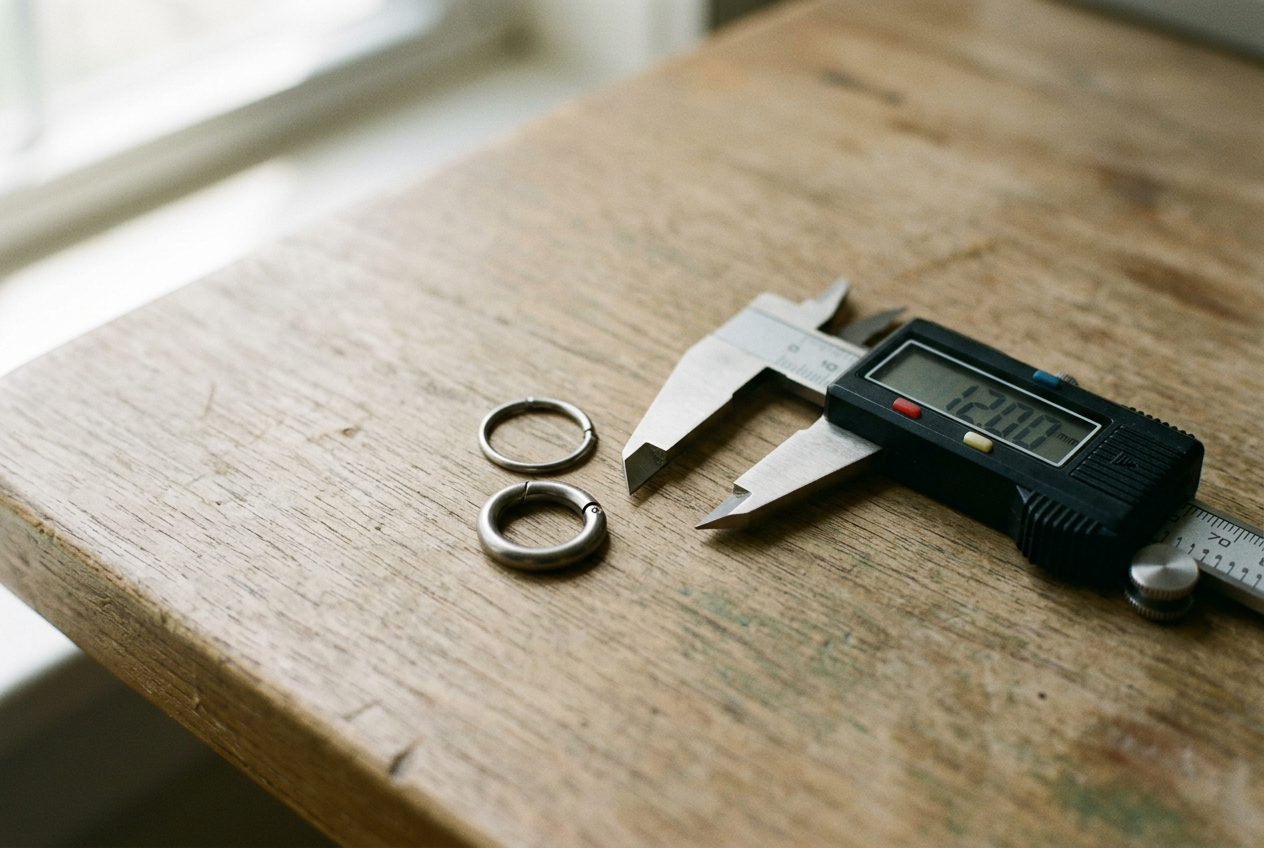
The smaller hoop on my evaluation tray looked like the easy everyday option. It had an 8 mm inner diameter and substantial 1.2 mm wire, while the second hoop measured 12 mm across the opening with slimmer 0.8 mm wire.
Both were plain titanium clickers, meaning hinged hoops that snap shut through the piercing.
The compact hoop was less cooperative. Its thicker wire required a piercing already comfortable at that size, and the tight curve left little room for fingers around the closure. The larger hoop slipped in and closed faster. It also felt less concentrated at the piercing, although its wider swing brought it closer to an over-ear headphone cushion.
That comparison is the reason diameter alone is a poor way to shop. A product page may call both earrings small, yet the measurements describe different jobs: one hugs the lobe with a solid visual line, while the other hangs farther down and places less metal through the piercing. This is unisex sizing advice. Ear anatomy, piercing placement and daily equipment matter more than the department named on the packaging.
Start with the empty space, not the outside edge
Inner diameter is the straight-line distance across the empty center of a hoop. On the compact test hoop, that space measured 8 mm. The metal sat outside it, so the hoop’s total footprint was larger than the number in the listing might suggest.
Check whether a seller reports inner or outer diameter. Inner diameter is more useful for predicting whether the ring will clear the bottom of the lobe, but some charts show only the full outside measurement. If the listing is unclear, do not assume. Two hoops with the same outer diameter can leave very different amounts of space around the ear when one uses thicker wire.
A caliper gives the cleanest reading. With the hoop closed, place its inside jaws against the widest points of the opening without pressing the metal out of shape. A millimeter ruler can work, though the curve makes small differences harder to see. Measure a hoop you already wear comfortably before shopping; that reference is more dependable than a generic label such as mini, huggie or medium.
The 8 mm test hoop cleared the lower edge of the lobe, but only narrowly. That close fit kept it still during walking and while changing a sweater. It also meant that slight swelling, a low piercing or a thicker lobe would remove the available gap. There is no useful break-in period here.
A metal hoop does not relax around the ear like a leather strap.
Gauge changes both insertion and weight
Gauge is the thickness of the section that passes through the piercing. In the comparison pair, the 1.2 mm wire corresponds to 16 gauge, while the 0.8 mm wire corresponds to 20 gauge; gauge numbers run backward, so the higher number indicates thinner wire.
That reversal causes avoidable buying mistakes. Someone accustomed to a slim fashion earring may see 16 gauge and interpret it as smaller than 20 gauge, even though the 16-gauge post is thicker. If the piercing has settled around thinner jewelry, forcing in the larger size can cause soreness or damage. The sensible alternative is to match the post already worn comfortably or ask a reputable piercer to confirm the size.
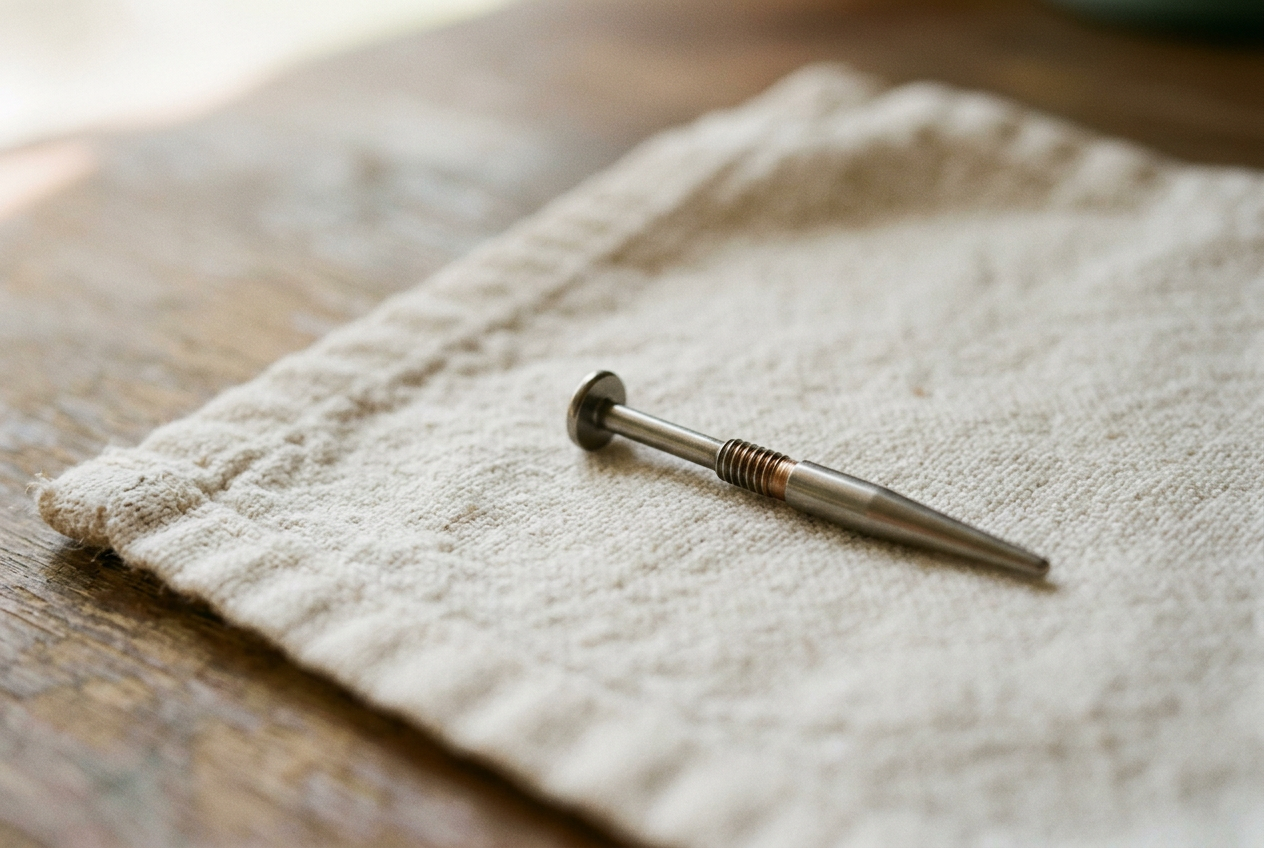
Look closely at which part of the earring the seller measured. A chunky huggie, meaning a close-fitting hoop with a post that locks into the opposite side, may have a thick decorative body but a much slimmer wearable post. That can deliver the visual weight of the 1.2 mm test hoop without putting equally thick wire through the ear.
Uniform-wire clickers are different. Their visible ring and wearable section may share one thickness, which gives a continuous line but makes gauge nonnegotiable. The compact test hoop had more metal packed into a shorter circumference, so its small diameter did not make it the lighter-feeling choice. Material changes that equation: titanium is less dense than steel or solid gold, while hollow tubing can make a bold hoop lighter than its dimensions imply.
Hollow construction has its own tradeoff. It reduces weight, but a dent or distorted closure can be harder to correct cleanly. Solid wire feels more substantial and usually tolerates handling better, though increasing its thickness adds material quickly. A higher price does not settle the fit question; solid gold sits in a higher price band, while plated base metals are often lower, but diameter, gauge and closure geometry still decide whether either pair is wearable.
Leave room to operate the closure
Closure clearance is the usable space around the hinge and fastening point while the hoop is being opened or closed. It is rarely listed as a formal measurement. You can still assess it from a side photograph, especially if the image shows how far the post swings away from the ring.
The 8 mm clicker failed its first convenience test. Its hinge opened normally, but the compact curve placed the free end close to the lobe, leaving little room to align the post with the receiving notch. Closing it took both hands and a mirror. The 12 mm hoop offered enough space to guide the post by touch, which mattered more during a rushed morning than the difference in diameter looked on paper.
A snug hoop can also pinch skin into the closure if the inner opening barely clears the lobe. That does not mean every close-fitting design is flawed. It means the hinge, post and ear need enough separation to work together. If a product photograph shows the closure only while shut, look for another view or choose a retailer with a practical return policy for unworn earrings.
Endless hoops, which use a thin wire end inserted into a hollow tube, can look nearly uninterrupted. They are often fiddlier than clickers because the two ends must meet precisely, and repeated bending can distort the circle. For a hoop removed every night, the cleaner appearance may not repay the extra handling time. A well-aligned clicker was the better daily mechanism in this test, provided its inner diameter left room for fingertips.
Map the hoop’s full path around the ear
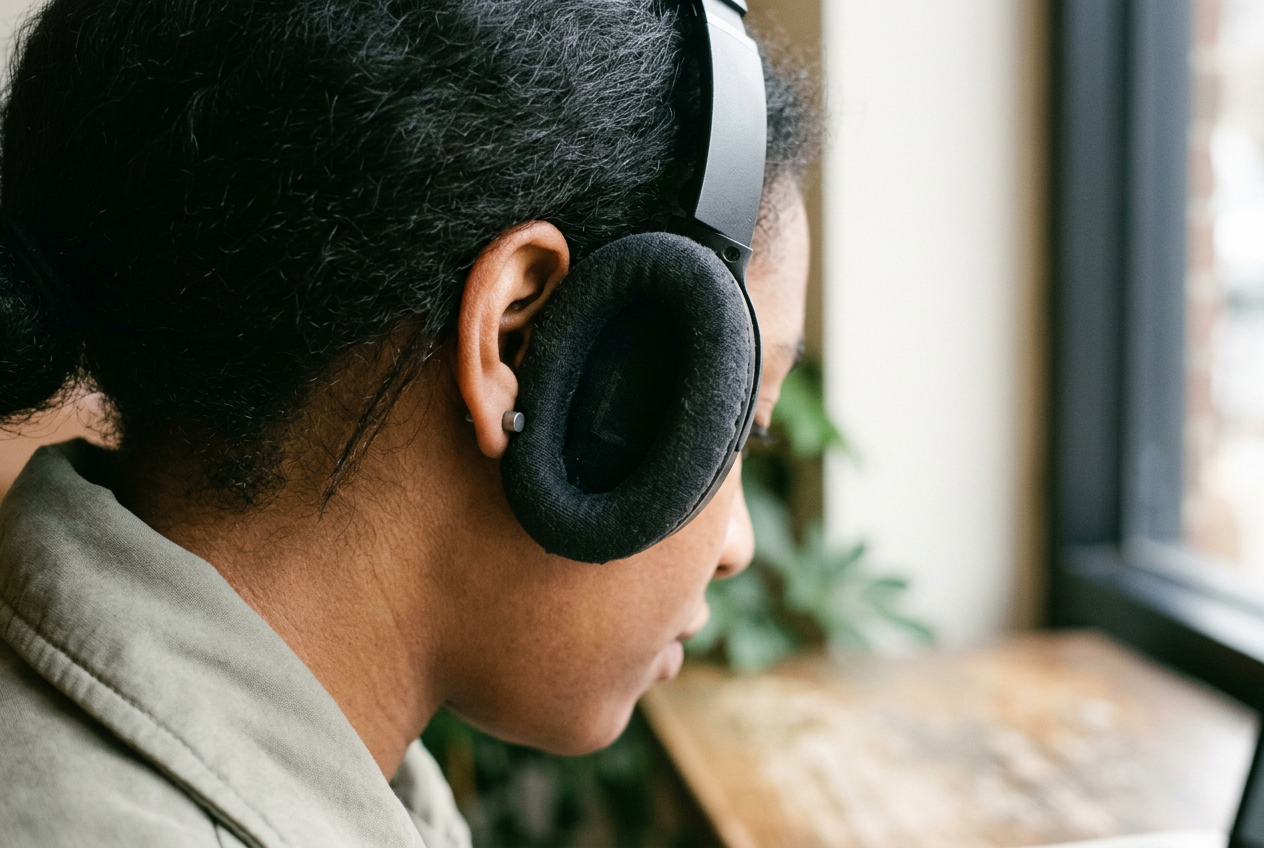
The larger test hoop was easier at the piercing but occupied more space below it. During a phone call it stayed clear of the jaw. Under over-ear headphones, the cushion touched its outer edge and pushed the ring inward. The compact hoop avoided that contact, although its thicker wire felt more present where it passed through the ear.
Piercing position changes the result. A low lobe piercing gives the same 8 mm hoop more clearance beneath the ear, while a higher placement uses up part of the opening before the ring closes. Multiple piercings introduce another constraint because adjacent hoops can knock together even when each one fits comfortably on its own.
Before buying, draw the listed outer diameter as a circle on paper, cut it out and hold it beside the piercing. Do not insert the paper. This rough check shows where the bottom and outer edge will sit in relation to the jaw, glasses arm or headphone cushion, though it cannot predict weight or closure access.
Then compare the drawing with a comfortable pair already owned. Record the inner diameter and post thickness in a phone note. Add whether the hoop clears headphones. Those few details turn the next product chart into usable information rather than a set of isolated millimeters.
Make the tradeoff deliberately
Choose the compact, thicker shape when a close line around the lobe matters and the piercing already accommodates its gauge. It tends to move less, looks substantial at a small scale and stays farther from collars or headphone edges. Confirm the opening has enough spare room around the lobe. Close fit should not mean compressed tissue.
Choose the larger, thinner hoop when easy insertion and a lighter visual line matter more. The 12 mm test hoop was quicker to fasten and put less thickness through the piercing, but it had a wider movement path. That made it better without headphones and less predictable beneath them.
For the appearance of a thick small hoop without the same gauge, look for a huggie with a slim post and a hollow or sculpted body. Check the material description rather than relying on color: gold-tone plating describes a finish, not the metal touching the ear. People sensitive to nickel or other metals need that information separately from the dimensions, since irritation can make an otherwise correct fit feel wrong.
The useful shopping order is inner diameter first, wearable post thickness second, then closure access and outer footprint. On the two titanium clickers, the 8 mm option won for stillness but lost for easy handling. The 12 mm hoop reversed that result. Small was not automatically comfortable, and large was not automatically heavy.
Questions people ask
What hoop diameter is best for everyday wear?
There is no universal diameter because lobe size and piercing placement change the available clearance. Measure the inner diameter of a hoop that already fits, then note how much space remains below the lobe. For a closer fit, reduce that gap cautiously rather than choosing the smallest label on a product page.
Is a thicker hoop always heavier?
Not always. Weight depends on circumference, material and whether the body is solid or hollow, but thicker solid wire adds material quickly. In the evaluation pair, the small 1.2 mm titanium hoop felt more concentrated at the piercing than the larger 0.
8 mm hoop, despite occupying less space around the ear.
Can
I wear a 16-gauge hoop in a regular ear piercing?
Only if the healed piercing already accommodates 16-gauge jewelry. A 16-gauge post is about 1.2 mm thick, which is larger than the posts used in many fashion earrings. Do not force it through resistance.
Match a known comfortable post or have a reputable piercer check the existing channel.
Which hoop closure is easiest to use every day?
A well-made clicker is usually quick because the hinged post snaps into a notch, but it still needs enough room around the lobe for alignment. Very tight clickers can be harder to close than larger ones. Endless hoops offer a cleaner circle, though joining their thin wire and tube often takes more time.
One update a day
Today's fashion update, in your inbox
One fashion update each morning — no hype, no filler, just pieces worth wearing.