A 20g Stud Does Not Prepare Your Ear for a 16g Post
A post can look familiar and still be too thick for your piercing. Here is the measurable difference between 20g, 18g, and 16g, plus a printable comparison.
October 4, 2026 · 8 min read
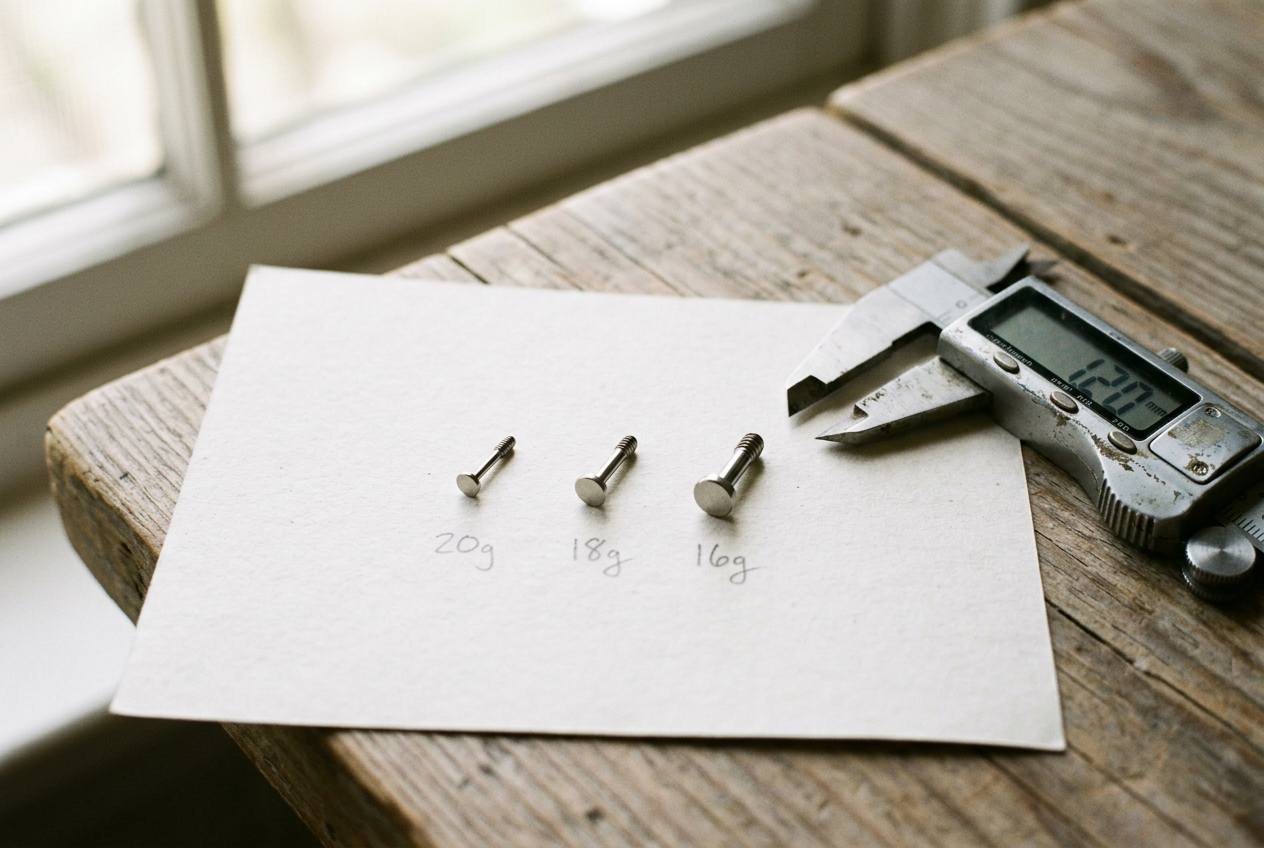
Match the gauge your healed piercing already wears, and never push through resistance.
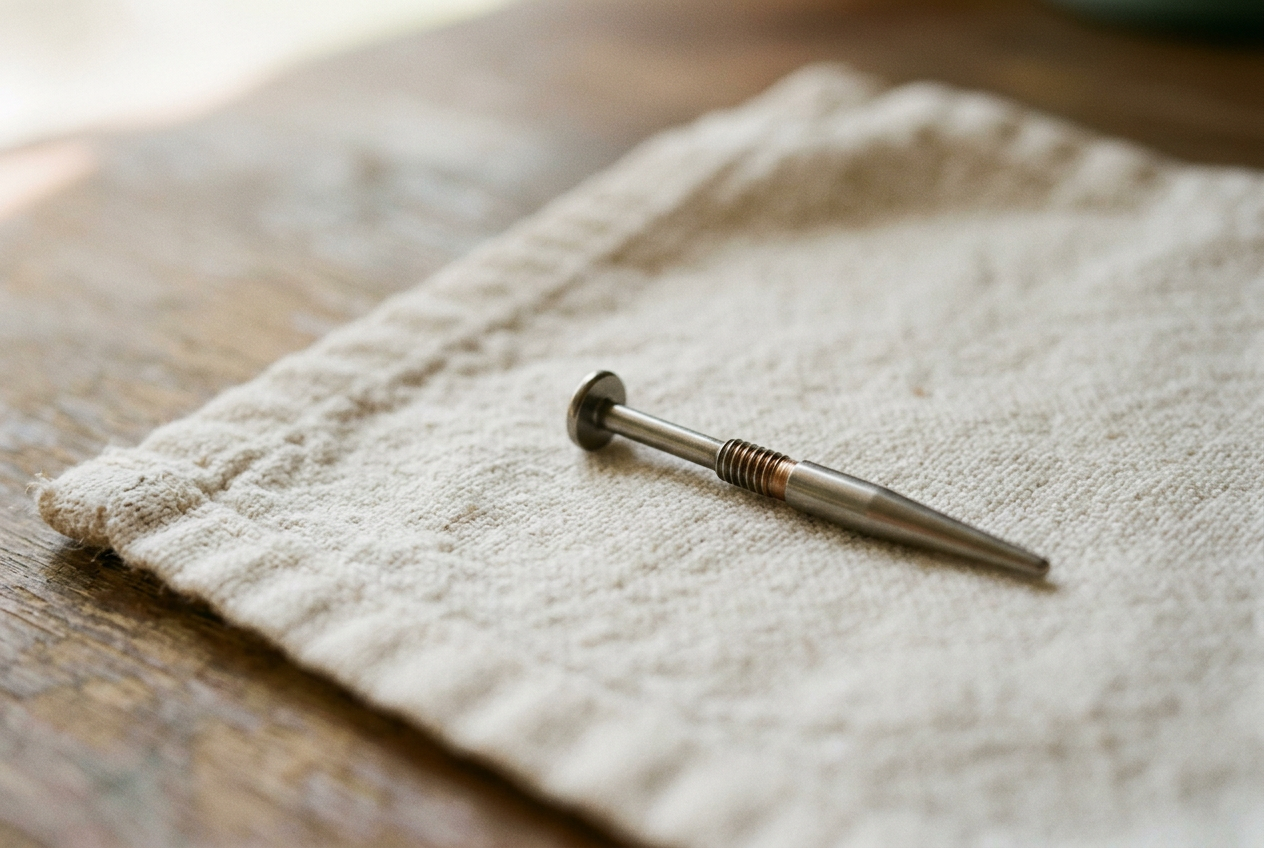
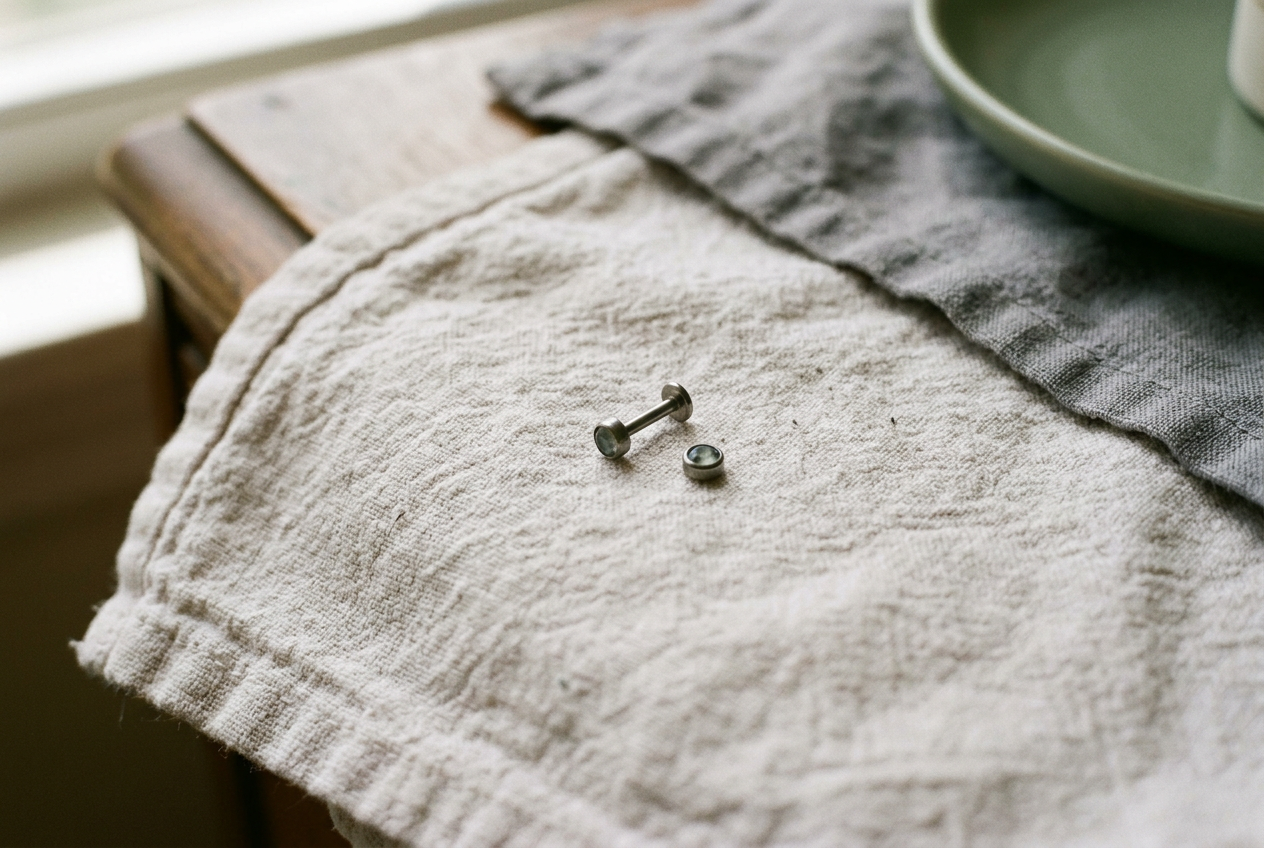
The troublesome swap looks ordinary: remove a slim 20g solid-gold stud with a butterfly back, then insert an 18g implant-grade titanium flat-back post topped with a small ball. Both belong in a lobe. Both look like everyday earrings. The second post is thicker.
That 0.2 mm difference is easy to miss on a product page and quite noticeable at the piercing channel, particularly if the hole has settled closely around a fine conventional post. Moving directly from the same 20g stud to a 16g post adds 0.4 mm to the diameter.
That is not a routine jewelry change for every ear.
This guide is unisex because gauge describes the hardware, not the wardrobe wearing it. The same measurements apply to a diamond stud, a plain titanium ball, and a decorative threadless end.
Gauge measures thickness, not length
Gauge is the thickness of the post that passes through the piercing. The numbering runs backward: a lower gauge number means a thicker post.
Brand sizing documentation from Maison Miru and Studs uses the standard jewelry conversions relevant here: 20g equals 0.8 mm, 18g equals 1.0 mm, and 16g equals 1.2 mm.
NeoMetal’s threadless jewelry documentation also identifies posts by gauge, underscoring why the number must be checked even when two flat backs share a similar silhouette.
Post length is separate. It measures the wearable distance from the front setting to the backing, and it determines whether the jewelry presses, sits flush, or leaves excess room. A flat-back earring, meaning the post’s backing sits flush against the ear, can therefore have the correct gauge and the wrong length. A too-short post pinches.
A long one shifts and catches.
The reference swap has two variables: the backing changes from butterfly to flat, while the post changes from 20g to 18g. The flat disc may feel better against a pillow, but that does not make the thicker shaft an automatic fit. Comfort at the back cannot cancel pressure inside the channel.
The printable 20g, 18g, and 16g comparison
Print this table at 100 percent or save it with your jewelry notes. The numbers, rather than a drawn line or circle that a printer may rescale, are the comparison standard.
| Marked size | Post diameter | Diameter in inches | Added diameter versus 20g | |---|---:|---:|---:| | 20g | 0.8 mm | 0.0315 in | Reference size | | 18g | 1.0 mm | 0.0394 in | 0.2 mm thicker | | 16g | 1.2 mm | 0.0472 in | 0.4 mm thicker |
Write the marked gauge of each pair beside the table. If the listing, order confirmation, or package gives only millimeters, match 0.8 to 20g, 1.0 to 18g, and 1.
2 to 16g. Keep post length in a different column so the two measurements do not get conflated.
A ruler is not precise enough to distinguish these posts reliably. Digital calipers can measure diameter, but their jaws should close gently around the straight shaft rather than a thread, taper, decorative end, or bent area. Packaging and manufacturer documentation remain preferable because small manufacturing tolerances and awkward measuring angles can alter a home reading.
Visual comparison fails for another reason. The difference sits around the full circumference, not on one obvious side, and polished metal reflects light along its edge. A 16g titanium post beside a 20g gold post may appear nearly identical in a photograph even though the thicker post has more than twice the cross-sectional area. The ear feels that change more clearly than the eye sees it.
Why a familiar stud may stop halfway
A healed piercing can narrow around the jewelry worn in it. If the reference lobe has held the same 20g butterfly-back stud for months, an 18g flat back may meet resistance even though 18g is common piercing jewelry. Leaving the hole empty can also allow it to contract, with timing that varies from person to person and piercing to piercing.
Stop at resistance. Pressure that turns into sharp pain, tearing, bleeding, or pronounced heat is not the cost of upgrading to a sleep-friendly back. Forcing the shaft can injure the channel and leave swelling that makes the new post’s length inadequate as well as its gauge uncomfortable.
A qualified piercer can assess a healed channel and, where appropriate, use an insertion taper, a smooth tool that guides jewelry through a piercing. That is different from pressing a blunt-ended post through at home. If the piercing is fresh, persistently sore, swollen, or producing concerning discharge, jewelry changes belong with a piercer or health professional rather than a sizing experiment.
The practical alternative is less dramatic: buy the flat back in the gauge already worn, if the brand offers it. A 20g flat-back style preserves the familiar shaft diameter while replacing the protruding butterfly backing. Selection is narrower than at 18g or 16g, particularly among professional piercing systems, but the fit may be worth prioritizing over a specific decorative end.
Threadless ends do not make posts interchangeable
A threadless labret uses a small bent pin on the decorative end to create tension inside a hollow post. The attachment method is convenient for curated ears because one post can accept different compatible ends, but compatibility belongs to a system, not to every piece labeled threadless.
Some brands make decorative threadless ends that fit both 18g and 16g posts because the internal pin specification is shared across those particular posts. That does not mean an 18g post and a 16g post have the same outside diameter. The end may transfer. The shaft does not shrink.
Check the documentation for both components. A post must match the piercing gauge, while its internal opening must match the end’s pin specification. Threaded jewelry needs the same discipline: internally threaded jewelry, where the threading sits inside the post, may use brand- and gauge-specific thread patterns. Mixing parts because they screw together for one turn risks a loose end or damaged threading.
This is where the reference 18g titanium flat back earns a pause. Its polished disc and tiny ball may look interchangeable with the 20g gold stud as everyday jewelry, yet the relevant measurement is hidden along the shaft. Buy from the number on the specification sheet, not the size of the visible top.
Material quality cannot correct the wrong gauge
Implant-grade titanium is valued for piercing jewelry because it is lightweight and commonly available through professional systems. Solid nickel-free gold in an appropriate alloy is another established option. Those materials can reduce avoidable variables, but even excellent metal can irritate a channel when the post is pushed through at the wrong thickness or fitted too tightly.
“Hypoallergenic” is not a gauge and does not guarantee personal compatibility. Plated fashion jewelry can add another complication because the surface may wear at the post, exposing the underlying metal where it contacts the piercing. For a daily flat back, look for a clearly identified material and gauge rather than relying on a broad sensitive-ear label.
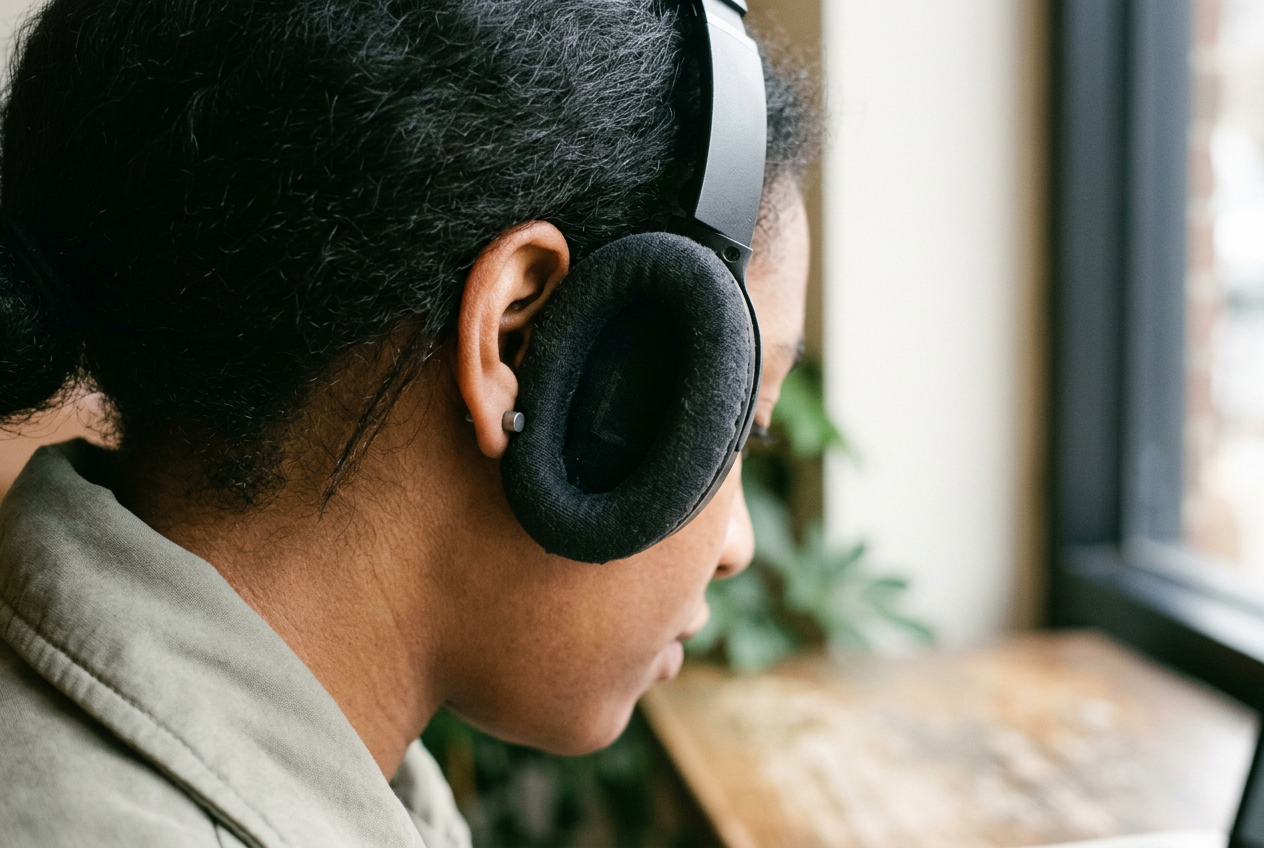
Construction affects the buying decision too. Butterfly-back studs are widely available at 20g and slide easily into many long-healed lobes, though the backing can trap buildup or press behind the ear. Flat backs sit closer and are often easier under headphones or against bedding, but many professional-style options begin at 18g or 16g. The tradeoff is better back-of-ear geometry with a potentially thicker shaft.
A buying check that takes two minutes
Open the product specification before choosing the decorative end. Find the gauge first, then the wearable post length, material, backing type, and attachment system. If a listing says only “standard earring post,” ask for a millimeter diameter or skip it; the phrase does not establish whether the item is 20g, 18g, or another size.
Next, check the jewelry already worn successfully. Use its original order record or packaging when possible. Measure only if the documentation is gone, and treat a caliper result near the boundary with caution rather than rounding toward the thicker option.
For the reference lobe, the low-friction purchase is a 20g flat back in a documented metal. The 18g titanium post is a reasonable choice only after confirming that the piercing already accepts 18g or having a qualified piercer evaluate the change. The 16g version should not enter the cart merely because it carries the same small ball end.
Questions people ask
Can I put an 18g earring in a 20g piercing?
An 18g post is 1.0 mm thick, while a 20g post is 0.8 mm. Some well-healed piercings may accommodate that change, but resistance is a reason to stop rather than push.
Choose a 20g version or ask a qualified piercer to assess whether a controlled size change is appropriate.
Are 18g and 16g threadless ends interchangeable?
Sometimes the decorative ends are compatible with both post sizes within one manufacturer’s threadless system. The posts themselves are not interchangeable in thickness: 18g is 1.0 mm and 16g is 1.2 mm.
Check the brand’s pin specification before combining an end and post, even if both are described as threadless.
Is 20g a standard earring size?
Many conventional lobe studs use slim posts around 20g, but “standard” is too imprecise for ordering body jewelry. Flat backs and professional piercing jewelry are also commonly sold in 18g or 16g. Confirm the listed gauge or millimeter diameter instead of assuming that every lobe earring matches the pair already in your jewelry box.
Does a thicker post make a piercing more stable?
A thicker post may suit a piercing established at that gauge, but it is not an automatic comfort upgrade. Stability also depends on suitable post length, backing shape, placement, and jewelry construction. Forcing the reference lobe from its familiar 20g stud to a 16g post exchanges a tidy flat disc for pressure inside the channel.
One update a day
Today's fashion update, in your inbox
One fashion update each morning — no hype, no filler, just pieces worth wearing.