Switching From 20G to 18G Earrings Can Hurt. Don't Force It.
An 18-gauge post is 0.2 millimeters thicker than a 20-gauge post. That small change can meet real resistance in a piercing accustomed to thinner jewelry.
October 3, 2026 · 7 min read
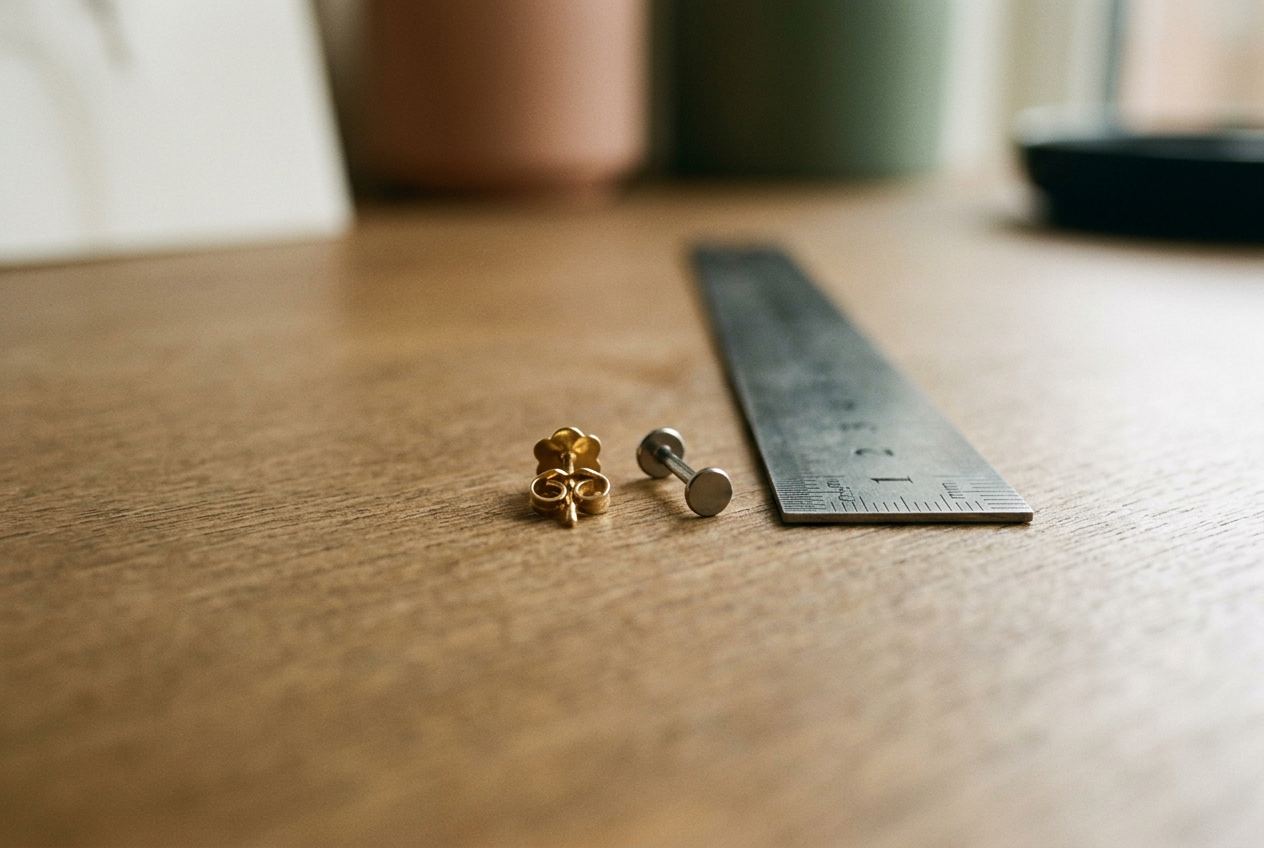
The difference is 0.2 millimeters. An 18-gauge earring post measures about 1.0 millimeter across, while a 20-gauge post measures about 0.
8 millimeter. That adds roughly 0.1 millimeter on each side of the post, enough to turn an easy jewelry change into a sharp, stubborn fit.
Gauge, the measurement used for post thickness, works backward: the lower number is the thicker post. This unisex sizing advice applies across wardrobes because the piercing channel, jewelry construction and fit matter here, not the styling category assigned to the earring.
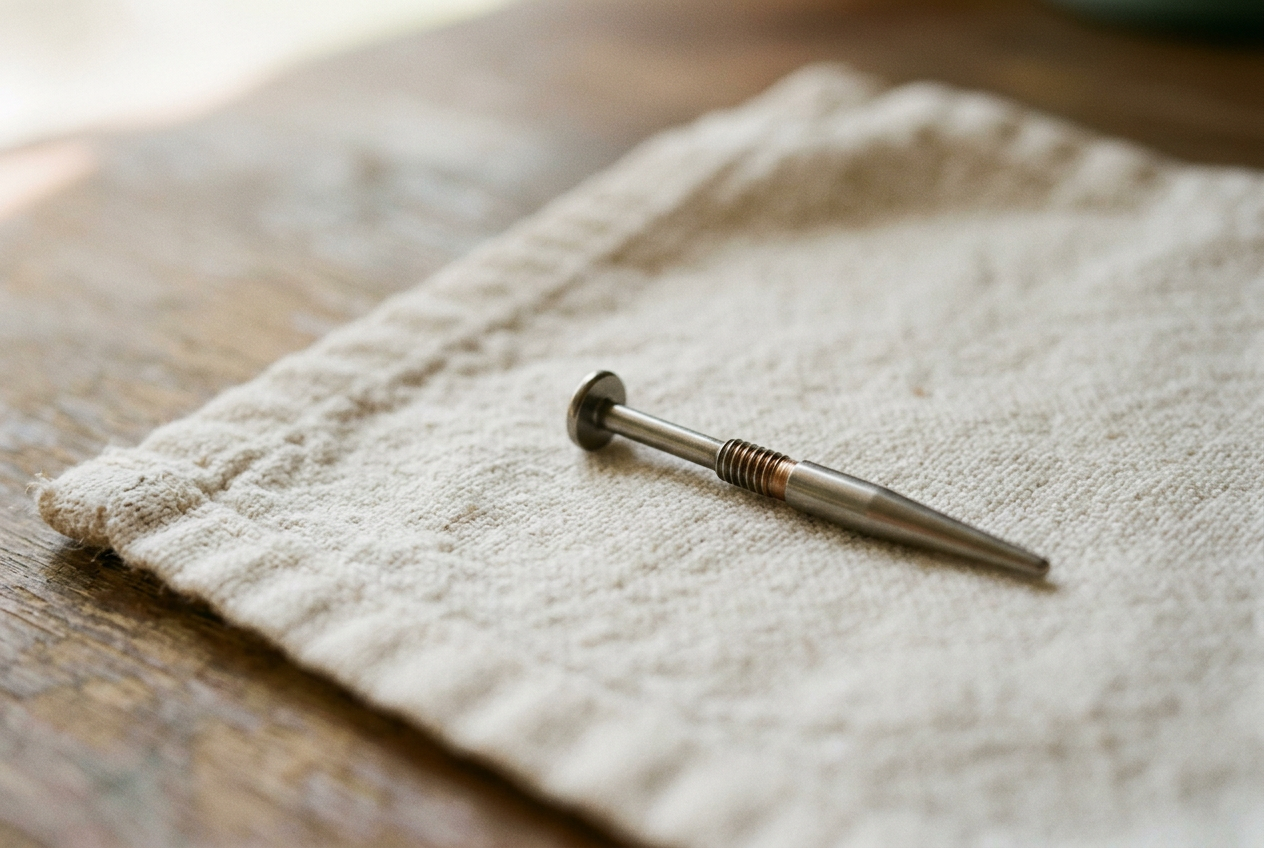
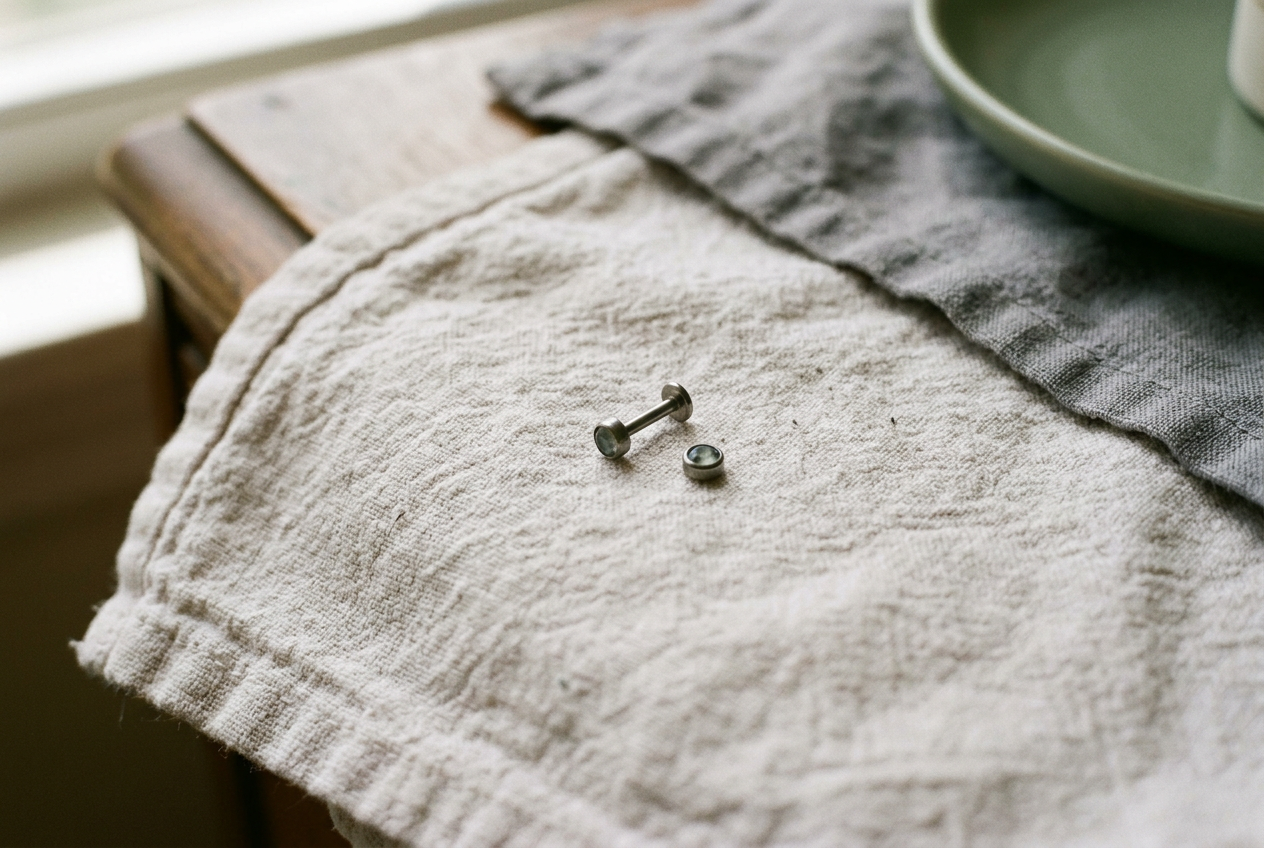
Keep one concrete swap in view. A 20-gauge, 14k solid-gold stud with a butterfly back has been worn comfortably for months. Its replacement is an 18-gauge implant-grade titanium flat back with a 6-millimeter post and a small polished top. The new earring looks ideal for sleeping, but the post meets resistance halfway through the lobe.
Do not push harder.
Why 0.2 millimeters can feel like much more
The piercing channel can settle around the jewelry occupying it, particularly after months of wearing the same slim post or leaving the piercing empty for stretches of time. Even a long-healed lobe piercing may tighten, and there is no dependable timetable for how quickly that happens; placement, age, previous stretching and the amount of scar tissue all change the fit.
An 18-gauge post is not dramatically larger when the two pieces sit on a tray. Inside a snug channel, however, the increase applies around the full circumference. If the route through the lobe is slightly curved, or if the original piercing was made at an angle, the blunt end of a flat-back post may also catch where a pointed fashion stud previously found its way through.
That distinction matters in the reference swap. The pointed 20-gauge gold stud can mask an awkward angle because its tip guides the post toward the exit. The 18-gauge titanium flat back is commonly inserted from behind the ear and has a blunter end. Thickness may be one source of resistance.
Direction may be another.
Pain is not proof that the larger gauge is nearly through. It is a stop sign. Forcing the post can tear the channel, cause bleeding and create swelling that makes both the new jewelry and the original pair harder to wear.
Thicker posts trade easy insertion for stability
There are practical reasons to choose 18 gauge. A thicker post feels more rigid, is less likely to bend than a very fine fashion post and is common in flat-back earrings, meaning the post's backing sits flush against the earlobe. That construction can reduce snagging on hair, collars and pillowcases when the length suits the ear.
Stability does not come from gauge alone. The 6-millimeter titanium post in the reference pair may still be wrong if the lobe needs more room, while an overly long post can tilt, slide and catch despite its extra thickness. Wearable length, the space between the decorative top and the backing disc, has to accommodate the lobe without pressing into it.
The back disc matters too. A broader disc spreads contact over more skin but may feel noticeable behind a small lobe or crowded ear stack. A tiny disc can be discreet, though it may be fiddlier to handle. Gauge answers one fit question.
It does not settle the whole earring.
Material remains separate from size. Verified implant-grade titanium is light and widely used for body jewelry, while solid 14k or 18k gold can also suit daily wear when the alloy and construction are appropriate. Gold-plated fashion jewelry may fit perfectly at 20 gauge yet wear through at high-contact points, and an unidentified metal advertised only as “hypoallergenic” gives the buyer little useful construction information.
Why a channel can shrink around 20 gauge
A piercing is not permanently fixed at the largest size it has ever accepted. Once thinner jewelry occupies the channel, tissue can contract around it; if the jewelry comes out, tightening may happen faster. The amount varies too much to promise that an 18-gauge post will still fit next week, next month or after several years.
This is why an old order confirmation or product page is worth checking before buying a replacement. Standard fashion studs are often 20 gauge, but “standard” is not a guaranteed measurement, and product descriptions sometimes omit gauge altogether. Measure with an appropriate gauge card or caliper only if you know how to use it without squeezing or damaging the post. Otherwise, ask the maker or take the jewelry to a piercer.
A 20-gauge channel does not need to become 18 gauge for style reasons. If the gold stud is comfortable, stable and compatible with the intended backing, keeping the thinner size avoids an unnecessary sizing change. The alternative is an 18-gauge flat back fitted by a piercer, chosen because its post system, length and backing suit the ear rather than because 18 gauge sounds more professional.
The cautious sizing checklist
Before replacing the reference gold stud with the titanium flat back, check the whole assembly rather than treating the post as an isolated number.
- Confirm both gauges. Look for a millimeter measurement as well as “20G” or “18G” in the maker's documentation. A missing gauge is a reason to ask, not to estimate by sight.
- Wait for a healed piercing. Jewelry changes in a fresh or irritated piercing should be handled by a qualified piercer. Downsizing an initial post is also about swelling and placement, not just choosing a neater silhouette.
- Inspect the insertion route. A flat-back post may enter from behind, unlike the pointed stud it replaces. If the channel angle is difficult to locate, repeated probing can irritate the lobe even before the thicker section reaches it.
- Check post length independently. The 6-millimeter reference post is common, not universal. There should be room for the lobe without the top or back embedding, but not so much exposed post that the earring leans and catches.
- Verify system compatibility. A threadless earring, in which a bent pin on the decorative end holds inside a hollow post, requires components designed to work together. Threadless and internally threaded ends are not interchangeable, and compatibility can vary between makers even when the gauge looks right.
- Stop at resistance. Pressure, pinching or a sharp sensation means the home jewelry change is over. Bleeding, new swelling or heat calls for professional assessment rather than another attempt with lubricant or a different angle.
A reputable piercer may determine that the healed channel can accept 18 gauge with an appropriate insertion tool, or may recommend staying at 20 gauge. That is an assessment, not permission to imitate the technique at home. Tools used to guide jewelry are not meant to force a larger post through resistant tissue.
Buying the replacement without creating another fit problem
The cleanest purchase starts with the post, then the decorative end. Search the brand documentation for gauge, wearable length, backing-disc diameter, material specification and closure type. If a listing supplies only the front design and a generic claim of comfort, it has not given enough information for this swap.
Buying a complete pair can be less confusing than mixing components, although modular flat-back systems become useful once the correct posts are established because decorative ends can be changed without repurchasing every part. The tradeoff is an upfront fitting step and stricter compatibility. A low-cost fashion stud usually arrives as one ready-to-wear unit; a quality titanium or solid-gold system may require separate posts and ends, plus a piercer's fitting fee.
Return once more to the 18-gauge titanium pair. If its post slides through without pain but the backing presses a visible ring into the lobe, gauge is no longer the main problem. The wearable length is too short, the top or disc may be exerting pressure, or the tissue may already be irritated. Moving back to a thinner post will not correct a compressed fit.
Likewise, if the earring hangs forward after a week, a longer post is not automatically more comfortable. Excess length creates movement. A better fit may come from a shorter post after swelling has settled, a larger front that balances the backing, or a different placement within the stack.
Questions people ask
Can
I put an 18-gauge earring into a 20-gauge piercing?
A well-healed piercing may accommodate the 0.2-millimeter increase, but it should not require force. If the 18-gauge post meets resistance, pinches or causes sharp pain, stop and have a reputable piercer check the channel, angle and jewelry dimensions.
Will my piercing shrink after wearing 20-gauge earrings?
It can tighten around a thinner post, even if the piercing once held 18-gauge jewelry. How much and how quickly varies by person, placement and how long the piercing sits empty, so previous fit does not guarantee that the thicker post will slide in later.
Is 18 gauge better for flat-back earrings?
Eighteen gauge is common and offers a rigid, stable post, but better depends on the existing piercing and the complete fit. A comfortable 20-gauge flat back is preferable to an 18-gauge post that requires force, while post length and backing size often affect daily comfort more than gauge.
What should I do if the new post starts to bleed?
Stop inserting or removing jewelry repeatedly, and do not push the post through. A qualified piercer can assess mechanical irritation and the fit; seek medical care for worsening pain, spreading redness, marked heat, substantial swelling, discharge or other signs that concern you.
One update a day
Today's fashion update, in your inbox
One fashion update each morning — no hype, no filler, just pieces worth wearing.