Silver Jewelry Is Rising. Your Gold Does Not Need Replacing.
Cooler metal is gaining shelf space, but resale points to continuity rather than a gold clear-out. One sterling silver hoop can test the shift without forcing a new jewelry wardrobe.
November 11, 2026 · 7 min read
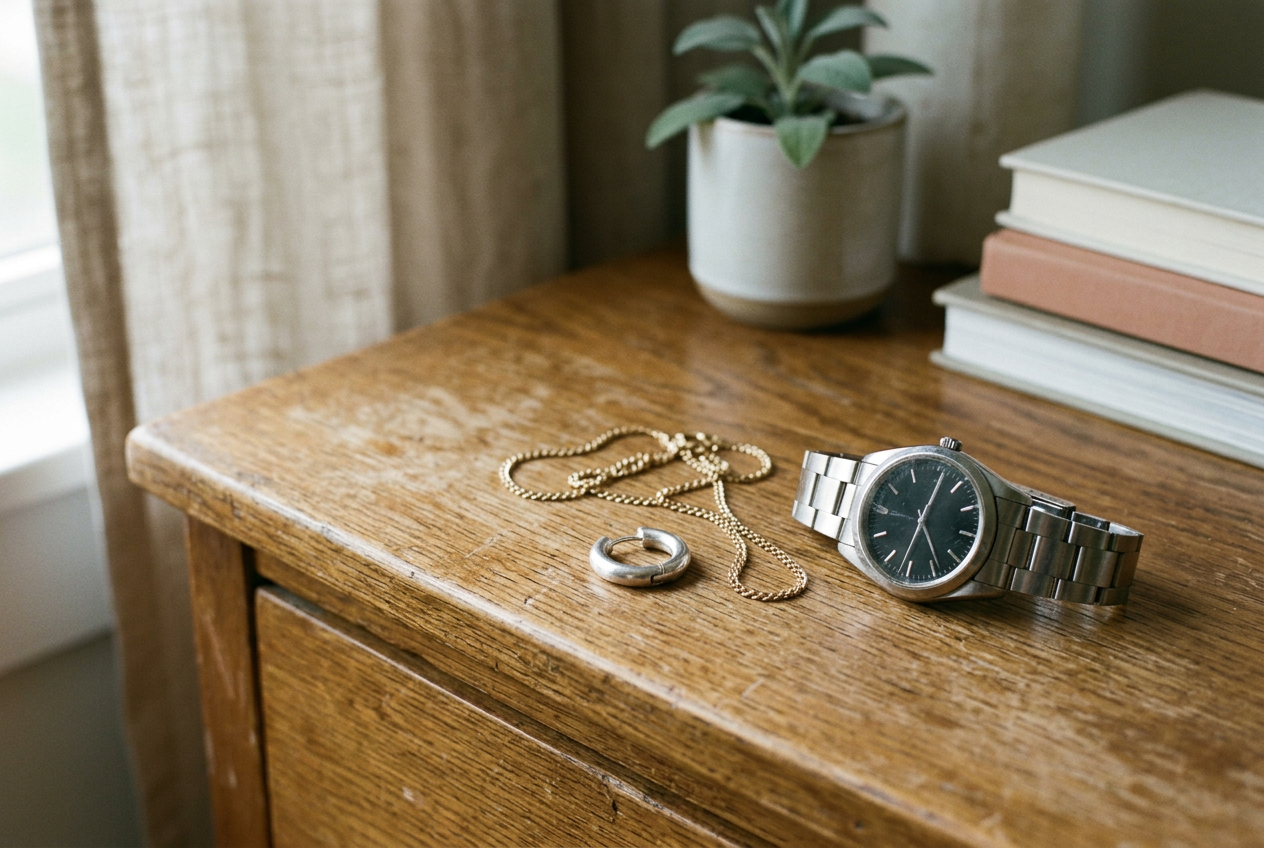
The object to watch is a plain 15-millimeter sterling silver hinged hoop, stamped 925 and made from a tube about 2 millimeters thick. It is neither a tiny sleeper nor a large statement earring. It sits close enough to the ear for daily wear, yet presents enough cool metal to change how a gold necklace, steel watch or silver bag buckle reads beside it.
That hoop is a better measure of the current shift than an oversized silver cuff photographed for a feed. It has to earn its place repeatedly, with knitwear, office clothes and whatever coat has metal hardware already attached. If silver is moving into ordinary wardrobes rather than passing through as styling chatter, pieces at this scale should be easy to find new, sensible to buy secondhand and uncomplicated to wear with existing gold.
On those terms, the shift is visible. It is also less decisive than it first appears.
What retail shelves are showing
Silver is no longer confined to a small alternative-metal tab while gold vermeil dominates the main jewelry page. Publicly viewable assortments from jewelry retailers including Mejuri, Missoma, Monica Vinader and Pandora place silver-tone hoops, chains and rings alongside their warmer equivalents, while fashion retailers regularly use cool-toned metal for sculptural earrings and hardware-led accessories.
The important signal is repetition across useful shapes. A silver version of a basic hinged hoop takes more merchandising commitment than one dramatic cuff tied to a seasonal image, because the hoop competes on comfort, closure quality and material rather than novelty. Repeated silver options in hoops, chains and everyday rings suggest retailers expect customers to live with the color, even when the most directional styling remains louder.
Material varies sharply beneath the similar-looking finish. Sterling silver is an alloy containing 92.5 percent silver, usually marked 925; it can tarnish, but a polishing cloth restores the surface unless heavy plating or deliberate oxidation complicates the finish. Silver-plated brass costs less and gives the same initial color, though friction at an earring post, ring edge or chain clasp can expose the warmer base metal.
Stainless steel is harder and slower to tarnish, but it can look grayer and is harder for a jeweler to resize or repair.
Some white-metal jewelry is rhodium plated, meaning a thin, bright layer of rhodium covers the metal beneath. That finish can make sterling silver look crisp and resist tarnish for a time, but replating adds maintenance once high-contact areas wear through. The material line matters more than the trend label.
Our 15-millimeter hoop makes the distinction plain. In sterling silver, it can acquire fine scratches and darkening around the hinge, then be cleaned. In plated brass, the same repeated opening, closing and contact with skin may shorten the useful life of the finish. If this is a one-season experiment, plating may be enough.
If the hoop is meant to become the default pair, sterling or well-finished steel is the more legible purchase.
Resale confirms silver, with a qualification
Secondhand platforms including eBay, Vestiaire Collective and The RealReal carry established white-metal categories rather than a sudden crop of trend-only pieces. Sterling silver from Tiffany & Co., Georg Jensen and David Yurman has circulated for years, alongside unbranded 925 chains, hoops and rings. That depth matters because it gives buyers recognizable construction, repair possibilities and comparable alternatives beyond the current retail cycle.
Listing volume alone cannot prove demand. A crowded search page may reflect plentiful supply, slow sales or loose tagging, and silver-colored pieces are often described inconsistently when sellers do not know whether an item is plated, steel or sterling. Sold listings, where a platform makes them visible, are more useful than active listings because they show that an item found a buyer, although condition and model differences still limit comparison.
The durable signal is not that old silver suddenly exists. It is that current retail styling now connects with a secondhand supply that was already broad, making the look easier to enter without paying for a newly branded micro-trend. A plain 925 hoop can be bought new for roughly the cost of everyday footwear at many jewelry specialists, while secondhand designer silver may cost more because the maker and model carry value. Unbranded used silver can cost less, but unclear measurements and worn hinges deserve attention.
Check four things in a resale listing: a clear 925 mark, the hoop's outside diameter, a close photograph of the hinge and an image showing the post. Diameter decides whether the hoop clears the earlobe; a weak hinge can open during wear, while a bent post turns a low-cost purchase into a repair errand. Tarnish looks worse in photographs than it often is. Missing metal or flaking plate is the harder failure.
Mixed metals are not fading in the same way
Gold remains embedded in existing wardrobes through wedding bands, heirloom chains, watch cases and bag hardware. Retailers know that a silver shift requiring customers to abandon those pieces would be commercially awkward, so mixed-metal jewelry remains visible in interlocking rings, two-tone watch bracelets and linked earrings. The styling conversation may favor a clean silver stack, but the products accommodate overlap.
This is unisex advice because the decision turns on metal, scale and existing hardware rather than gendered sizing. A silver hoop beside a gold pendant works across wardrobes when one element repeats elsewhere: steel eyeglass frames, a silver belt buckle, cool snaps on a jacket or the metal bracelet of a watch. Exact matching is unnecessary. Repetition makes the contrast look chosen.
The 15-millimeter hoop is useful here because it does not demand a second silver item at the neck. Wear it with the gold chain already in rotation, then look at the outfit rather than the jewelry tray. If the hoop picks up the zipper or watch and the necklace still belongs, mixed metal has done its job. If the silver makes every warm accessory feel disconnected, the issue may be the rest of the wardrobe's hardware, not resistance to a trend.
Scale can settle what color cannot. Two delicate pieces in different metals usually coexist more quietly than a heavy silver earring beside a fine gold chain, where the mismatch in visual weight becomes more noticeable than the color difference. Match presence before matching tone.
A two-week decision test
Do not begin with a full stack. Start with one object that touches several outfits and can be returned or resold without much difficulty. The hinged hoop qualifies, as would a medium-width chain or a watch with an interchangeable steel bracelet, but the hoop gives the clearest test because it sits near the face and changes the temperature of an outfit immediately.
Wear it for two ordinary weeks, not only with monochrome evening clothes. Include the coat with gold snaps, the navy knit used for work and the weekend T-shirt. Photographing each combination in the same daylight helps, since warm indoor bulbs can make silver appear dull and gold unusually harmonious. The aim is not to generate content.
It is to see whether the cool metal survives repetition.
Notice comfort as well. A hollow sterling hoop is lighter than a solid one of the same dimensions, though thin tubing can dent if crushed in a bag. A secure hinged closure should click shut without requiring pressure against the piercing. People sensitive to nickel should verify the full alloy or choose implant-grade titanium, a corrosion-resistant metal commonly used for body jewelry, rather than treating every silver-colored piece as hypoallergenic.
At the end of the test, keep silver in one of three roles, without rebuilding the whole collection. It can become the everyday neutral, remain an occasional contrast or operate as a bridge to steel hardware. The verdict may stay conditional. That is more useful than buying a matching necklace because a feed made the first hoop look urgent.
Where the purchase fails
Silver is poor value when the finish matters more than the form. A badly soldered sterling hoop is still badly made, and a designer name does not prevent a narrow hinge from loosening. Examine the closure, the thickness around the post and whether the pair hangs symmetrically before judging the metal color.
It also fails when maintenance is unwelcome. Bare sterling darkens faster around humidity, skin products and storage materials containing sulfur; keeping it dry in a closed pouch and using a silver polishing cloth takes minutes, but those minutes recur. Stainless steel asks less. Solid white gold costs considerably more and may still carry rhodium plating, so its pale surface is not maintenance-free by definition.
The cheap silver-tone option makes sense when the shape itself is experimental, particularly for a large earring that will not rub constantly against skin or clothing. For the 15-millimeter hoop, which opens at the same joint and touches the same area every time it is worn, better material and a firm mechanism justify more of the budget than branding does.
Silver has crossed into ordinary retail, and secondhand supply makes the move easier to sustain. Mixed metal is the evidence that the shift need not become a purge. The useful stopping point is one hoop whose hinge still clicks after regular wear.
Questions people ask
Is sterling silver better than silver-plated jewelry for everyday wear?
Usually, if the piece will face regular friction. Sterling silver scratches and tarnishes, but it can be polished and often repaired; silver plate may expose brass or another base metal once the surface wears. A plated statement piece worn occasionally can still be a reasonable lower-cost test.
Can
I wear silver earrings with a gold necklace?
Yes. Keep the visual weight comparable, then repeat the cool tone in existing hardware such as a watch bracelet, glasses or belt buckle. A medium sterling hoop beside a very fine gold chain can work, but an oversized silver earring may overpower the necklace rather than merely contrast with it.
What should
I check before buying sterling silver secondhand?
Look for a photographed 925 mark, exact dimensions and close views of the post and hinge. Tarnish is often removable, while a split tube, flaking surface or weak closure signals structural wear. For earrings, also ask how they were cleaned and plan to sanitize them appropriately before use.
Do
I need to replace gold jewelry if silver is becoming more popular?
No. Test one daily piece for two weeks with the gold and hardware you already own. If the silver works repeatedly, add only the category you still use most, such as a chain or ring; if it requires a different outfit every time, leave it as an occasional contrast.
One update a day
Today's fashion update, in your inbox
One fashion update each morning — no hype, no filler, just pieces worth wearing.