Peep Toes Are Back, but the Small Opening Looks Better Used
The wearable return is a slim pump or slingback with a restrained opening, not a towering platform. On resale, the leather around that opening tells you most of what matters.
Women's · November 11, 2026 · 8 min read
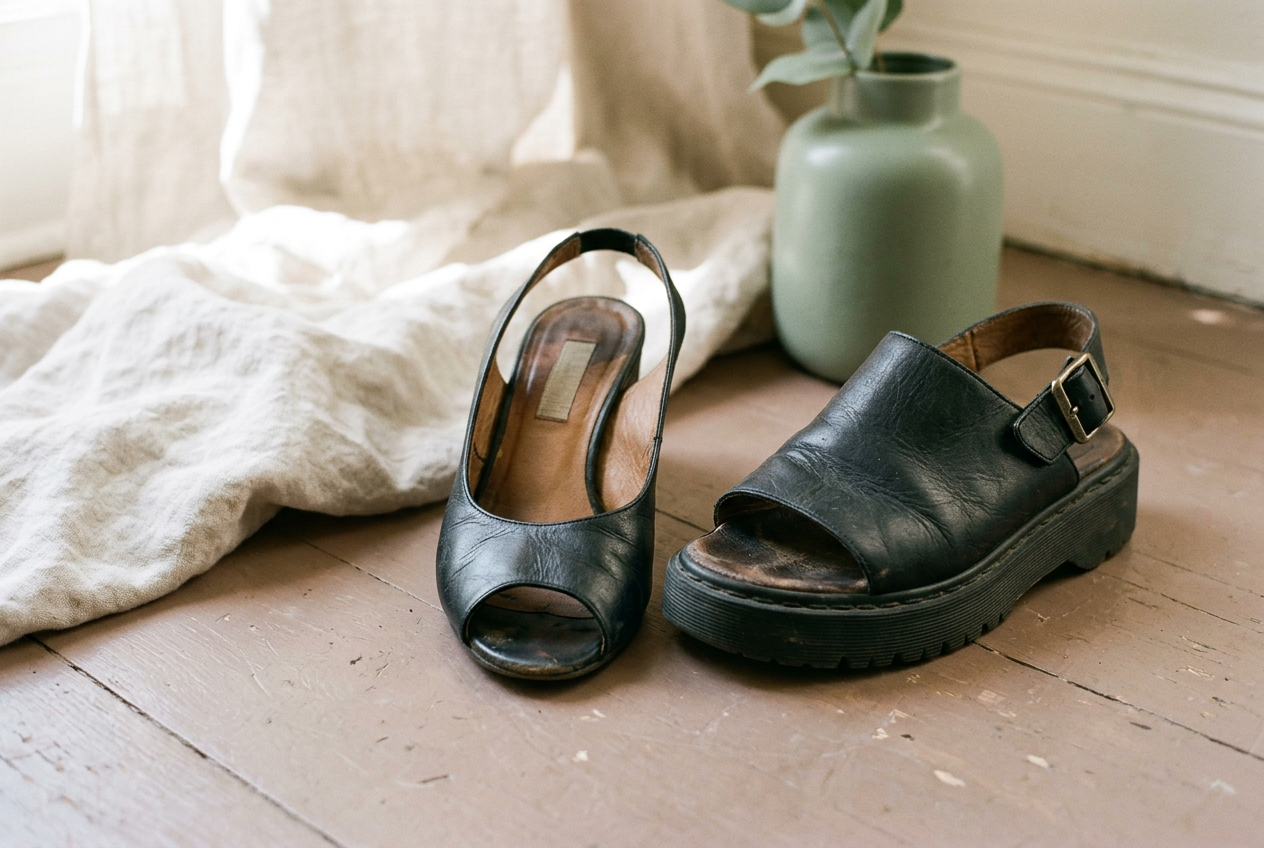
The pair I kept returning to while reviewing resale listings was a black leather slingback pump with a mid-height heel, an almond-shaped front and an opening no wider than two toes. It was not the most dramatic shoe in the results. That was the point.
Its proportions matched the more restrained peep-toe shapes appearing at current retail: a longer toe, less bulk beneath the forefoot and enough upper coverage to look like a pump rather than a sandal. It could sit under wide-leg trousers without disappearing into another decade, and the slingback reduced the enclosed, slightly formal character that older peep-toe pumps can carry.
The question for this return is not whether the toe is visible. It is how much shoe surrounds it.
The modest opening is doing the work
A useful peep toe reveals the tips of the first two or three toes without exposing the joints. That small opening preserves the line of a closed pump, which makes the shape easier to wear with tailored pants, a column skirt or straight jeans. It also gives the toes somewhere to go as the foot moves forward.
The black slingback had a vamp, meaning the section of upper that covers the front of the foot, that reached high enough to hold the foot without looking heavy. This matters more than heel height. A shallow vamp combined with a large opening can let the foot slide forward until the edge presses across the toes; a higher vamp distributes that pressure farther back.
Current retail versions often sharpen the idea with an elongated almond or softened square toe. Those shapes look newer than the stubby, rounded openings common on many older office pumps, yet neither requires the extreme sole thickness associated with the platform peep toe. A thin outsole and mid heel leave the upper in charge.
For secondhand shopping, that means the quiet pair may be the better find. Search results tend to reward novelty, including oversized bows, thick platforms and highly visible toe openings, while a plain leather slingback can look unremarkable in isolation. Under trousers, it is the one that makes sense.
Four shapes, with different shelf lives
The slingback pump is the safest resale buy. Look for smooth leather or suede, a narrow opening and a heel that does not force the foot steeply toward the front. An adjustable back strap offers some fit tolerance, although old elastic inserts can lose tension and allow the heel to drop. If the strap is already buckled at its tightest hole in the seller’s photograph, there may be nowhere left to adjust.
A low block-heel peep toe is less directional but more forgiving. The broader heel reduces wobble, and a softly squared front gives the toes room without requiring a visibly wide opening. It can read conservative when paired with a thick outsole or beige synthetic lining, so the better versions keep the sole edge narrow and use an upper with some structure. Leather that has collapsed across the toe will not recover through polishing.
The flat peep toe deserves caution. Without heel height to pull the shoe into a defined pump shape, some pairs resemble ballet flats with a hole cut into them, and the front edge can catch under the toes during a longer stride. A close-fitting upper and a flexible but intact sole are essential. If the listing photograph shows the opening lifting away from the foot-shaped insert, expect a similar gap when worn.
Then there is the platform. A high heel, deep front platform and large opening create the most recognizable version of the earlier peep-toe cycle. It is available in abundance secondhand, often in patent leather or suede, but abundance does not make it neutral. Buy it only if that period-specific proportion is the appeal.
The platform version has not become the everyday retail default again, and paying a designer premium for it is difficult to justify when resale offers so much choice.
Creasing reveals the fit history
Return to the black leather slingback. The most useful photograph would not be the sole or the heel; it would be a close side view of the opening, where the leather bends during each step.
Fine, shallow lines across both shoes are ordinary. Deep diagonal folds running from the opening toward the outer edge suggest that the upper repeatedly flexed at a point it was not shaped to flex, often because the shoe was too long or the wearer slid forward. If one shoe is much more creased than the other, the pair may also have molded around an uneven gait. That is not automatically a fault, but it makes fit less predictable for the next owner.
Patent leather needs a stricter standard. Its coated surface can show stress as cloudiness or tiny cracks around the opening, and conditioner will not reverse damage in the coating. Suede hides fine creasing but develops a polished, flattened patch where toes rub the edge. Ask for angled photographs in natural light when the listing images are too soft to show texture.
The opening itself should look symmetrical when the shoes are resting. A stretched edge, exposed backing material or loose stitching will sit directly against skin and is more troublesome than a scuff at the heel. Cobbler repairs may be possible, but rebuilding a distorted toe opening can cost too much relative to an ordinary resale pair.
Exposed insoles need more scrutiny
Peep-toe listings often show the uppers carefully and treat the insoles as background. Do the reverse. The visible insole is part of the shoe once the toe is open, and wear near the front cannot be hidden by the upper.
A faint footprint is cosmetic. Dark, concentrated wear beneath the toes, lifting lining material or a rough edge around an old insert is reason to pass unless the pair is inexpensive enough to accommodate professional cleaning or a replacement insole. Full-length adhesive inserts can also alter volume, raising the foot until the opening cuts across the toes.
Look for shadows that reveal an insert has been removed. A change in color, a line of residue or branding that appears partially rubbed away can indicate that padding once occupied the shoe. The remaining fit may be looser than the labeled size suggests.
This is especially relevant to women’s sizing, which is the focus of this roundup. A peep toe has less margin for error than a closed pump because the front edge establishes where the toes must stop. Going up half a size may relieve pressure but create forward sliding; going down may place the toe joints against the opening. Foot length, opening placement and forefoot width matter more than the number alone.
The resale price should leave room for work
There are three broad value levels, though marketplace prices change too quickly for a fixed figure to be useful. At the low end, heavily worn synthetic pairs compete with inexpensive new shoes and rarely justify shipping or repair. In the middle, lightly worn leather slingbacks and block heels offer the strongest case for buying used, particularly when the outsole and heel tips still have life. At the top, designer branding can push a familiar platform shape toward the cost of a good new leather pair.
Set the ceiling by adding the likely work. Worn heel tips are routine; peeling insoles, stretched straps and damaged toe edges are not. A used peep toe should remain comfortably below the cost of a comparable new leather slingback after shipping and any cobbler visit, unless the specific design is difficult to replace.
The black leather slingback passes that test only with clear photographs and modest wear. Its appeal comes from proportion, not rarity, so there is no reason to accept a cracked opening or a deeply marked insole while waiting for the shape to return more fully at retail.
Styling separates the pump from the throwback
The narrow opening works best when the rest of the outfit does not labor over it. Let a dark slingback continue the line of full-length trousers, or wear it with a below-the-knee skirt and a fine sock-free ankle. A toe opening framed by a heavy platform already makes a strong period reference; adding cropped skinny pants fixes it there.
Pedicure color changes the effect more than it does in a sandal because only a small area is visible. A low-contrast shade keeps the opening quiet. High contrast turns that sliver into a focal point, which can be useful with a plain black shoe but less so when the upper already includes hardware or patent shine.
I am less decided on peep-toe flats. The best current shapes have the ease of a ventilated ballet shoe, but the opening still introduces a pressure point without giving the support of a pump or the openness of a sandal. The slingback remains the clearer buy: narrow at the toe, clean through the upper and ordinary enough to survive the trend report.
Questions people ask
How much toe should a peep-toe shoe show?
The most adaptable versions show the tips of two or three toes while keeping the toe joints covered. A larger opening behaves more like a sandal and allows more forward movement, which can increase rubbing along the edge. Check photographs from above rather than relying on a side profile.
Can creased leather on a used peep toe be repaired?
Light surface creasing can be softened with appropriate leather care, but deep diagonal folds usually reflect how the shoe has molded and flexed. Cracking in patent coating or distortion around the opening will not disappear with conditioner. Price the pair as worn rather than assuming restoration will reset it.
Should peep-toe shoes be sized up?
Not automatically. Extra length may let the foot slide until the toes press through the opening, while a smaller size can force the edge across the toe joints. Compare the insole length with a pump you own, then check the width and placement of the opening before buying.
Are platform peep toes worth buying secondhand?
They can be, if the high platform is the look you want and the sole remains firmly attached. They are less convincing as a neutral investment because the proportion is highly recognizable and widely available used. Skip pairs with separating sole edges, unstable heels or cracked patent leather, even at a low price.
One update a day
Today's fashion update, in your inbox
One fashion update each morning — no hype, no filler, just pieces worth wearing.