Rigid Platform Sandals Get Wobbly at the Curb
A solid platform can feel planted on flat ground, then tip as one unit during a turn or curb landing. Flex, sole shape, and a useful ankle strap matter more than the extra width suggests.
Women's · November 19, 2026 · 8 min read
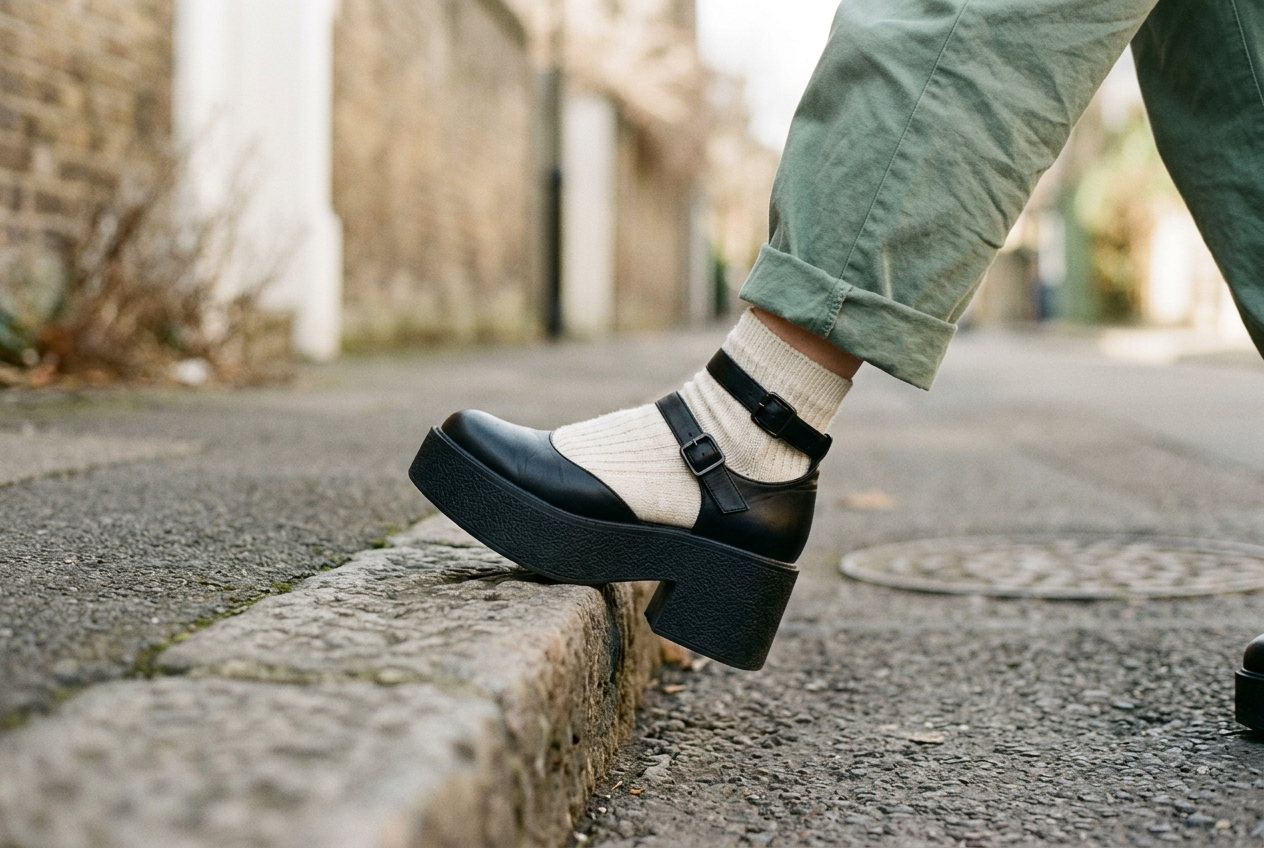
The test pair looked reassuring: a black women’s ankle-strap sandal with wide synthetic leather straps, a broad base, and a continuous molded EVA platform, meaning the sole runs from heel to toe as one thick piece. A thin rubber outsole added grip. On level pavement, the whole arrangement felt steady enough.
The curb exposed the problem.
During a week of wear, I used the pair on a route with right-angle turns, a sloped parking ramp, patched sidewalk, and ordinary curb edges. The platform did not flex much through the forefoot or twist from side to side, so whenever the full sole could not meet the ground, the shoe behaved like one large block. One edge touched down; the rest followed with considerably less diplomacy.
For comparison, I walked the same route in a similarly substantial platform with flex grooves and in a lower articulated sandal. Flex grooves are channels cut across the sole so the forefoot can bend. An articulated sole uses separate or partly separated sections that move with more independence. Neither comparison shoe made broken pavement pleasant, an achievement currently beyond footwear, but both gave the foot more opportunity to correct a tilted landing.
Why a broad platform can still tip
Sole width helps only while the ground supports it. On a flat sidewalk, a wide platform gives the foot a larger base, which is why rigid styles can feel calm during a fitting-room walk. The floor is level, the pace is careful, and nobody is stepping half onto a curb while carrying a tote and reconsidering the purchase.
At an edge, that broad sole can become a lever. If the outer portion lands on the curb while the inner portion hangs over it, the shoe cannot drape around the height change. The continuous platform stays flat, then rotates toward the unsupported side as body weight moves over it. A narrower flexible sole may feel less imposing underfoot, yet it can bend sooner and keep more of the shoe in contact with the surface.
Thickness adds distance between the foot and the ground. That extra height increases the effect of a small tilt, particularly when the platform is stiff enough to transmit the angle to the entire foot. Width can offset some of that leverage, but only when it extends in useful places. A dramatic flare at the heel does little for a forefoot that narrows under the ball of the foot.
The black test pair had a broad heel and a less generous waist through the midfoot. It looked chunky from the side, though the working base under the foot was not equally broad from front to back. On a curb approached straight on, it managed. During a diagonal step, the narrower middle section found the edge first and the platform rolled as a unit.
Turns reveal stiffness before straight walking does
A turn asks the shoe to load one edge, pivot, and transfer pressure across the forefoot. Bare feet do this through many small movements. A rigid platform prefers that the ground reorganize itself.
The test pair stayed aligned during long, straight strides, but a quick corner caused the heel to shift toward the outside of the footbed before the sole changed direction. The ankle strap prevented the shoe from leaving the foot, which is useful, though it did not stop the platform from lagging behind the turn. Tightening the buckle reduced movement at the heel and introduced pressure across the front of the ankle. Stability bought with strap bite is still a bill.
The flex-grooved comparison pair bent under the ball of the foot, allowing the heel to lift while the forefoot remained planted. Its platform still felt substantial, but the sole completed the turn in stages rather than rotating as one slab. The articulated sandal adapted most readily because its forefoot section could meet the ground at a different angle from its heel section; the tradeoff was a less visually continuous platform and more exposed channels where grit could collect.
Try a tight figure-eight during a fitting, provided the store has room and you are not menacing a display. Watch whether your heel remains centered. If the sole swings wide, the straps stretch, or your toes grip to keep the sandal underneath you, straight-line comfort is disguising poor control.
Ramps put the rocker shape to work
A rocker sole has a curved bottom that helps the foot roll from heel to toe. Some platform sandals need this curve because the sole itself bends very little. A moderate rocker can smooth forward walking, but an aggressive curve reduces the amount of outsole touching the ground at once.
On the parking ramp, the black pair’s upturned toe helped on the ascent. The foot rolled forward without forcing the thick forefoot to bend. Going down was less settled: the curved front contacted first, then the platform tipped toward its flatter middle as weight moved ahead. The ankle strap held the heel, but the front straps had enough space for the foot to slide a little downhill.
Fit matters here. Platform sandal straps that feel pleasantly loose on level ground can allow the foot to travel forward on a decline, changing where body weight sits over the sole. The toes may then reach the front lip while the heel pulls against its strap. A molded footbed or a grippier lining can reduce that movement, although neither fixes a platform whose rocker drops too abruptly.
Compare the shoe’s profile while it sits on a flat surface. If only a short patch beneath the midfoot touches the table, the sandal will balance on a smaller contact area during part of each step. That shape may produce an easy rolling stride on predictable ground. It gives less margin during a slow downhill step, when the wearer wants the sole to wait rather than proceed with its own plans.
Uneven pavement favors controlled movement
The articulated sandal was the least polished-looking of the three, but it handled patched sidewalk best. Its sections adjusted independently enough that one forefoot pod could land on a raised patch while the heel stayed closer to level. The sensation was not soft. It was informative: the foot could detect the change and respond before the entire shoe tilted.
Flex grooves offered a middle position. They allowed front-to-back bending but did less for side-to-side changes because the platform remained broad and fairly stiff across its width. That construction worked well on shallow ramps and during push-off, yet a broken curb still caught the outer edge. Groove direction matters.
Channels running across the sole assist forward flex; cuts or separated sections along the length can permit more lateral adaptation, though too much movement may make a tall platform feel vague.
The rigid pair transmitted fewer small bumps on flat sections because its thick EVA absorbed some impact and bridged shallow gaps. That is the appeal. A stiff platform can isolate the foot from pebbles, hot pavement, and the general administrative burden of the sidewalk. Once the height difference exceeded what the sole could bridge, however, the platform stopped filtering the surface and began amplifying its angle.
After the week, the upper had softened slightly where the wide straps crossed the forefoot. The sole had not developed meaningful flex. Buyers should not assume a rigid molded platform will become articulated through persistence; the more likely break-in is that the straps loosen while the block underneath keeps its original opinions.
The useful fitting-room checks
Start by holding the sandal at the heel and pressing up beneath the toe. A flex-grooved platform should bend at or near the ball of the foot, not fold through the arch. If it barely moves, check the rocker rather than expecting later flexibility. Deep grooves can look technical without opening under pressure, especially when a rubber outsole bridges them.
Set the shoe on the floor and press alternately on its inner and outer edges. This is a rough check for torsional stiffness, meaning resistance to twisting along the sole’s length. A very tall sandal does not need to twist like a sneaker, but a small amount of controlled movement helps it meet uneven ground without tipping the whole foot. If the platform snaps from one edge to the other, that transition will be more abrupt with body weight on top.
Next, use the straps. The heel strap should keep the back of the foot over the center of the platform without cutting into the ankle when the toes bend. Forefoot straps need to limit downhill sliding, yet they should not leave the toes doing unpaid gripping work. On the test pair, the middle buckle hole worked for level walking; one hole tighter improved turning but pressed at the front of the ankle on the ramp.
That is not a fit problem likely to improve through optimism.
Finally, look at the outsole from below. Favor a base that remains broad beneath the ball of the foot and heel, with rubber placed where the shoe first lands and pushes off. A platform that flares mainly for visual volume may deliver the styling without the usable footprint. Price does not settle this.
Continuous molded platforms, decorative grooves, and genuinely articulated constructions all appear across broad price bands, so the underside deserves more attention than the logo on the insole.
For mostly indoor floors, smooth promenades, or short straight walks, the rigid pair’s broad stance and thick EVA may be a reasonable trade. For frequent curb changes, sloped streets, or fast turns, I would choose the flex-grooved version at modest height, then accept that it looks a little less architectural. Architecture gets handrails.
Questions people ask
Are all rigid platform sandals unstable?
No. A low, broad rigid platform with a gradual rocker and secure straps can feel stable on predictable surfaces. Trouble increases as height rises, the working base narrows, or the sole balances on a short contact patch. The concern is how the whole construction responds when the ground supports only one edge.
Does a wider platform always make a sandal safer?
Width improves the base only where the outsole contacts the ground. Check beneath the ball of the foot, through the midfoot, and at the heel rather than judging the side profile. A decorative flare can make a sandal look broad while leaving the load-bearing section unexpectedly narrow at a curb edge.
Can an ankle strap fix a stiff platform?
A well-fitted ankle strap keeps the heel centered and stops the shoe from separating from the foot, but it cannot make the sole adapt to uneven pavement. Overtightening may reduce sliding while adding pressure or rubbing. The strap should control the foot without becoming the only part preventing the platform from wandering.
How should I test platform sandals before buying?
Walk straight, make a tight figure-eight, and use any permitted incline in the store. Press the forefoot upward by hand, test whether the sole twists slightly, and check that your heel stays centered throughout. If your toes grip or the platform tips sharply from edge to edge, extra indoor laps will not turn it into a flexible sole.
One update a day
Today's fashion update, in your inbox
One fashion update each morning — no hype, no filler, just pieces worth wearing.