Remove Deodorant Buildup Without Fading a Black Top
The safest method depends on the fabric. Start with detergent and minimal friction, soak only when needed, and keep the top out of the dryer until the mark is gone.
October 14, 2026 · 8 min read
The reference garment here is a black 100 percent cotton jersey crewneck, worn close under an overshirt and washed cold. Its care label permits a normal machine wash, but the underarm has developed a stiff gray crescent that remains after laundering. That last detail matters: a fresh white swipe on the surface is transfer, while a patch that feels waxy or rigid is buildup inside the knit.
This is unisex care advice because deodorant residue behaves according to fiber, finish and product formula, not the department where the top was sold. Antiperspirant salts can combine with sweat and body oil, while stick deodorants may contribute waxes or emollients. On black fabric, that material looks pale before the garment itself has faded, which makes vigorous scrubbing feel productive right up to the point that it changes the surface permanently.
Read the mark before treating it
Start with the dry top in bright, indirect light. A loose, chalky streak from pulling a shirt over recently applied deodorant usually sits on the face of the fabric and moves when brushed lightly with a clean cloth. A gray underarm area that feels thick, slick or crunchy needs moisture and detergent. If the patch is lighter but feels as soft as the surrounding jersey, some dye may already be missing.
Check the care label next. Machine-washable cotton gives you more room than a polyester-elastane workout top, while rayon, wool, silk or a dry-clean-only construction should not inherit a cotton treatment by default. Test any cleaner at an inside hem for colorfastness, meaning the dye stays put when exposed to moisture and the chosen product. Blot the test area with a white cloth and stop if black color transfers heavily.
Return to the cotton crewneck. Its deposit is embedded rather than loose, so rubbing the two underarms together would grind residue through the jersey and raise the yarn surface. The correct first move is a spot treatment, not a brush.
Spot treatment does most of the work
Turn the top inside out and rinse the marked area from the reverse with water at the warmest temperature allowed by the label. Water entering from behind helps push loosened material outward instead of driving it deeper. Keep the whole underarm damp so that a concentrated wet edge does not dry into a ring.
Apply a small amount of liquid laundry detergent directly to the deposit. Liquid detergent spreads through a knit more readily than undissolved powder, and its surfactants, cleaning agents that help water lift oil from fibers, address the waxy part of the mark. Press the detergent through the fabric with fingertips or the smooth back of a spoon, using short motions without scraping. Let it sit only for the pretreatment period given on the detergent label, then rinse and reassess.
That sequence follows the broad approach in public care guidance from detergent brands such as Tide and Persil: pretreat, wash according to the garment label and inspect before drying. Brand directions vary by formula, so the bottle in the laundry room outranks a universal timing claim.
Cotton can take this controlled handling, but black cotton often develops a pale, fuzzy patch after repeated friction because protruding fibers scatter light and the surface dye wears unevenly. If the gray crescent on the reference crewneck softens after one treatment, move it to the wash rather than chasing the last visible shadow by hand.
Polyester needs less rubbing and sometimes another detergent pass. The fiber holds oily material readily, so an old mark may release in stages even though the fabric itself appears sturdy. Use cool or warm water as the label permits, keep brushes out of the knit and avoid escalating immediately to a strong oxidizer.
For a cotton-polyester blend, treat it as the less forgiving fiber when the composition is close. If the top contains elastane, the stretch fiber commonly sold under names such as spandex, limit heat and skip prolonged aggressive treatments. Stretch recovery is a larger loss than a faint underarm shadow.
Gentle mechanical removal has a narrow job
Mechanical removal means lifting residue by physical contact rather than dissolving it. It works well on a fresh surface swipe: use a clean, dry white cotton cloth and make a few light passes in one direction. A piece of the garment itself can work if the fabric is smooth and the contact stays gentle, though rubbing two sections together is a poor choice on brushed jersey, ribbing or anything already pilling.
For a thick ridge that has softened after pretreatment, the rounded edge of a spoon can lift material without concentrating pressure into bristles. Support the wet fabric on a towel and move across the deposit once or twice. Do not use a razor, nail brush or abrasive paste. Those tools may remove the visible wax quickly, but they also disturb the black fiber surface, and the resulting light patch cannot be washed back to its original shade.
A dryer sheet is often suggested for white transfer marks. It may shift loose powder, but it can also leave fragrance or conditioning material behind, which is an unnecessary trade when a clean cloth will do. Save mechanical methods for material sitting on top. Embedded residue needs chemistry and rinsing.
Soaking is for a broad or stubborn deposit
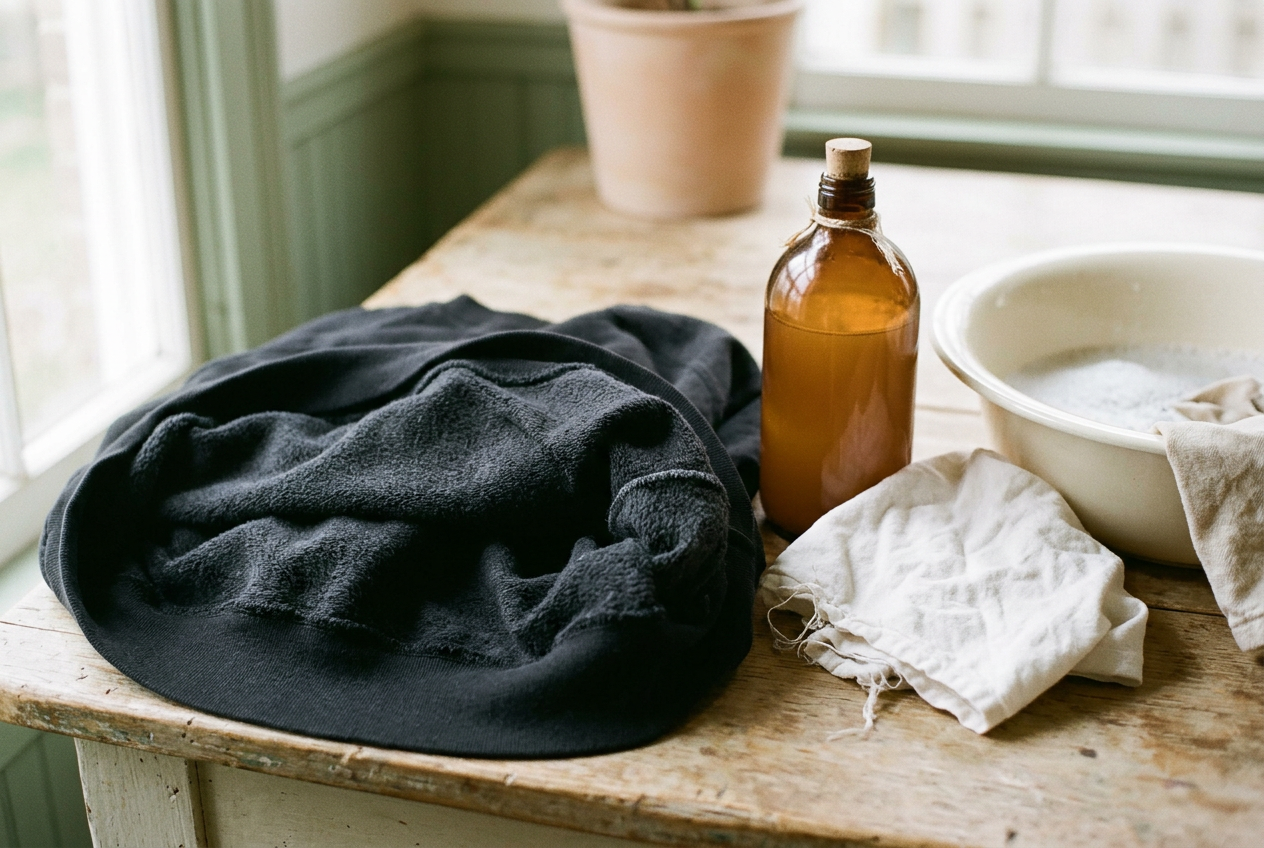
Soaking earns its time when spot treatment has softened the underarm but left residue spread through a larger area. Fill a basin with water at the care-label temperature and dissolve the measured amount of laundry detergent specified for soaking. Submerge the washable top, allow the product its labeled contact time, then rinse and machine-wash.
The advantage is even exposure with little friction. The cost is that the entire garment, including its black dye and any printed finish, spends longer in cleaning solution. A soak is therefore gentler mechanically but broader chemically, which is why it should follow a failed spot treatment rather than precede it.
A color-safe oxygen bleach, an oxidizing cleaner that releases peroxide in water, may help on washable colorfast cotton when both the garment label and product directions allow it. Test first. Oxygen bleach is different from chlorine bleach, but different does not mean harmless to every black dye, print or stretch fiber. Chlorine bleach is the wrong choice for this job because it can strip black color and weaken compatible-looking fabric before the residue has fully moved.
Household mixtures add uncertainty. Vinegar, baking soda, dishwashing liquid and peroxide appear in many stain recipes, yet garment dyes and deodorant formulas vary, and combining cleaners can neutralize them or create a safety risk. Do not mix cleaning products. A labeled laundry detergent, followed if appropriate by a labeled color-safe soak, is easier to control and rinse out.
On the reference cotton crewneck, soaking becomes reasonable only if the detergent-treated crescent remains stiff after washing. If it is soft and merely looks slightly lighter, another long soak may attack the black more than the remaining deposit.
Wash, air-dry and make the decision
Wash the treated top according to its care label, preferably inside out and with similarly dark items. Skip fabric softener during this attempt because it deposits conditioning agents that can complicate an oily underarm patch. Use the normal amount of detergent rather than pouring extra directly into the machine; poorly rinsed detergent can create another pale residue.
Air-dry the top away from strong sun. Dryer heat can make remaining oil and wax harder to remove, while direct sunlight can alter black dye and confuse the inspection. Once dry, feel the underarm before judging its color. A soft, even knit with no slickness is clean enough, even if years of wear have left the area marginally different from the body.
One repeat of the spot-treatment and wash sequence is reasonable. Repeated cycles of scraping, oxidizing and hot washing are not. If the patch grows fuzzy, thin or noticeably lighter, the treatment is damaging the garment; stop and accept the cosmetic mark, cover it through layering or consult a professional cleaner for a top whose construction or value justifies the expense.
The cotton crewneck sets the limit clearly. Residue can be loosened. Removed dye cannot.
Questions people ask
Can white deodorant marks come off without washing the shirt?
A fresh surface swipe often comes off with a clean, dry white cloth and a few light passes. Stop if the knit starts to fuzz or the mark smears. A stiff, waxy underarm patch is buildup rather than transfer, so dry rubbing will not remove what has settled between the fibers.
Is soaking safer than scrubbing a black top?
Soaking avoids concentrated abrasion, but it exposes the whole garment to detergent or an oxidizer for longer. It is a sensible second step for widespread residue on colorfast, washable fabric. Spot-treat first, follow the product’s contact time and avoid soaking stretch blends in aggressive cleaners unless both labels permit it.
Can oxygen bleach be used on black cotton?
Some color-safe oxygen bleaches are labeled for washable darks, but black dyes and garment finishes differ. Check the clothing label, follow the cleaner’s directions and test an inside hem before treating the underarm. Do not substitute chlorine bleach, and stop if the test area loses color or changes texture.
Why does the mark return after the shirt dries?
Moist fabric temporarily hides pale residue, so a deposit can look gone at the sink and reappear after air-drying. It may also remain deeper in the knit after the surface has been cleaned. If the area still feels waxy, repeat the detergent treatment once; if it feels soft but looks lighter, further treatment risks fading.
One update a day
Today's fashion update, in your inbox
One fashion update each morning — no hype, no filler, just pieces worth wearing.