Deodorant Residue and Yellow Sweat Stains Need Different Fixes
A gray, waxy streak needs detergent and gentle friction. A yellow underarm halo needs a stain treatment chosen for the fabric, with no dryer heat until it is gone.
September 27, 2026 · 8 min read
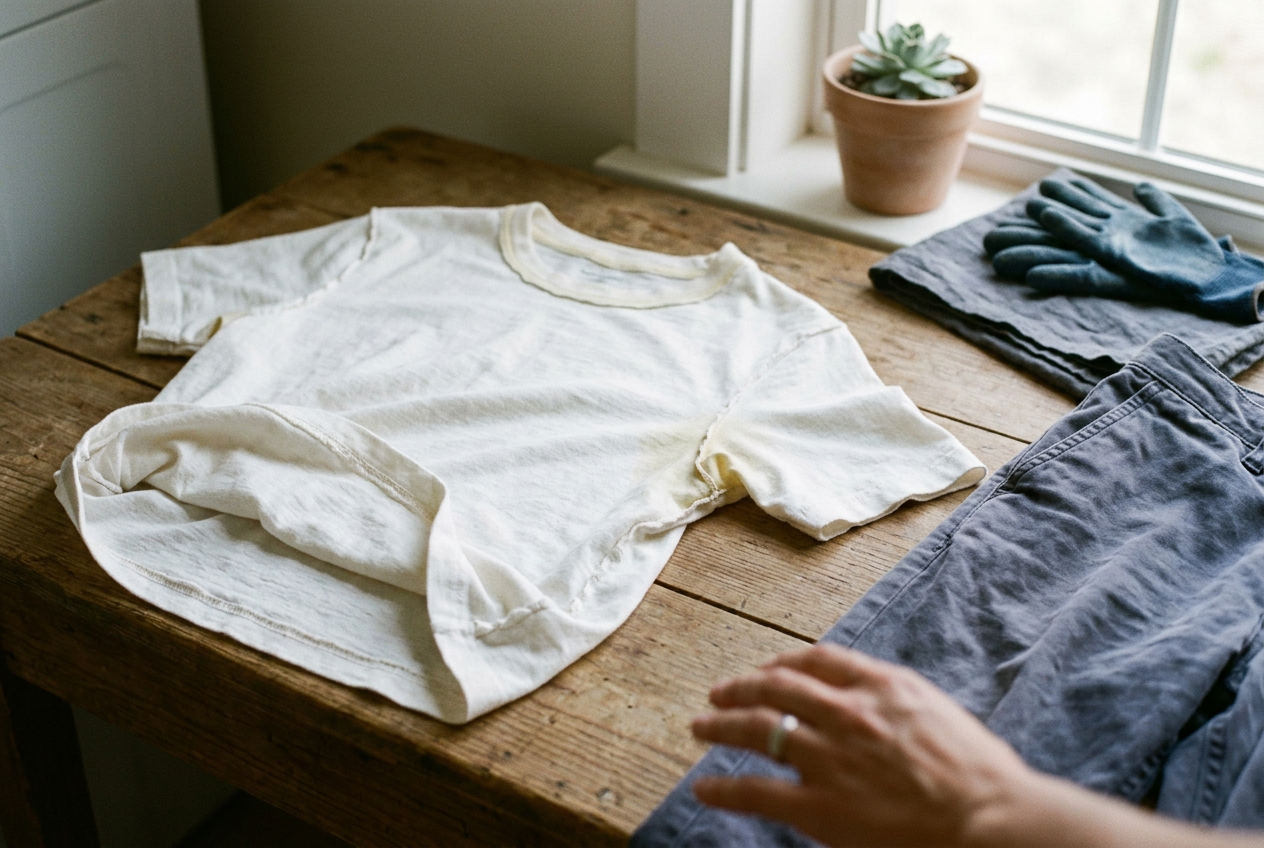
Take a midweight white cotton crewneck worn twice under a navy blazer during a warm commuting week. Near the underarm seam, it can develop two marks at once: a gray-white ridge that feels slightly stiff and an older, diffuse yellow halo extending into the cotton jersey. They share a location, but one cleaning method will not reliably remove both.
The ridge is usually surface buildup from deodorant or antiperspirant, mixed with body oil and detergent that did not rinse away. The halo is discoloration within the fibers, often produced as perspiration, skin oils, product ingredients and repeated washing interact. Antiperspirant, meaning a product formulated to reduce perspiration rather than only mask odor, may contain aluminum salts that contribute to stubborn deposits.
This is unisex care advice. The chemistry does not change with the department where a shirt was sold, though close armholes, tight sleeves and layered tailoring can press more product into the fabric.
Start with touch, color and location
Inspect the garment dry and in good light. Surface residue tends to look chalky, gray or white, with a distinct edge where a deodorant stick met the cloth. Pinch the fabric. A coated patch may feel waxy, slick or harder than the surrounding knit, and gently rubbing the material against itself may lift small crumbs.
Yellowing usually has softer boundaries. It sits inside the weave rather than on top, and the fabric may feel normal once dry. On a white cotton crewneck, the oldest part often appears at the underarm seam, where several layers of fabric trap perspiration and rinse less freely. Colored shirts can show dull, dark or bleached-looking patches instead of obvious yellow.
Do not assume every pale streak is a stain. Deodorant transferred while pulling on a dark top often sits on the surface and may come away with a clean, dry microfiber cloth or by rubbing the fabric gently against itself. That quick fix is appropriate before leaving home. It is not enough for a stiff patch that has survived laundering.
Check the care label next. The label outranks a generic cleaning recipe, particularly on silk, wool, embellished garments and anything marked dry-clean-only. Test every treatment on an inconspicuous area, even when the shirt is white, because optical brighteners, prints, trims and blended fibers can react differently from the main cloth.
Lift waxy buildup before soaking the garment
For the gray-white ridge on the cotton crewneck, work on dry fabric first. Use a soft laundry brush or clean microfiber cloth to loosen material without grinding it farther into the jersey. Turn the shirt inside out so you can reach the residue from both sides of the underarm seam.
Rinse the area with cool or lukewarm water. Apply a small amount of liquid laundry detergent directly to the patch, then massage it through the fabric with your fingers or a soft brush. Liquid detergent is useful here because its surfactants, meaning ingredients that help water carry away oil and dirt, can loosen the oily and waxy portion of the deposit. Let it sit for the interval stated on the detergent label, rinse, and wash according to the garment label.
A grease-cutting dish liquid can help on sturdy, washable cotton or polyester when ordinary detergent has failed, but use very little and rinse it out before machine washing; excess suds are hard on a washer and can leave another deposit. Skip aggressive scraping. A credit card edge, stiff nail brush or repeated twisting may abrade the cotton surface, leaving a fuzzy patch after the residue is gone.
Polyester needs patience. The fiber is oleophilic, meaning it readily holds oily material, so deodorant mixed with body oil can return after a quick wash. Work detergent into the patch, allow label-directed contact time and wash without fabric softener, which can add a coating that makes odor and oil harder to release. Hotter is not automatically better.
Treat yellowing as a stain within the fiber
Return to the white crewneck. Once its waxy ridge has lifted, the yellow halo may remain because the discoloration sits below the surface. Pretreat it with an enzyme-containing liquid laundry detergent if the care label permits; enzymes break down components of body soil so detergent can carry them away. Follow the product’s contact-time instructions rather than letting it dry on the shirt.
For washable white cotton, a color-safe oxygen bleach may help after pretreatment. Oxygen bleach, usually based on sodium percarbonate or hydrogen peroxide chemistry, releases oxygen in water and is generally less harsh on fibers than chlorine bleach. Use the dilution, water temperature and soaking time on the package. More concentrated is not more effective if it weakens the cloth or leaves a pale ring.
Avoid reaching first for chlorine bleach. It can damage elastane, strip color and intensify some underarm discoloration rather than removing it. Never mix bleach with vinegar, ammonia or another cleaning product. Rinse one treatment out fully before trying a different one.
A colored cotton shirt calls for more restraint. Spot-test liquid detergent and any oxygen treatment labeled safe for colors, then compare the test area only after it has dried. If the underarm has already lost dye, stain remover cannot put that color back; continuing to soak it may make the faded patch larger. At that point, professional redyeing or retiring the garment from jacket-free outfits is more realistic than another home mixture.
Match the method to the fiber
Cotton tolerates the broadest range of home treatment, though a cotton-elastane ribbed tee should be handled like a stretch blend rather than indestructible plain cotton. Use cool or warm water as the label directs, pretreat only the marked area, and avoid scrubbing until the knit pills. The white crewneck can take a longer oxygen-bleach soak only if its label and trims permit it.
Synthetic athletic tops are often polyester or nylon blended with elastane. Their underarms hold oily residue and odor, while high dryer heat can stress stretch fibers. Turn them inside out, use liquid detergent sparingly, skip fabric softener and give water enough room to move through the load. A detergent sold for activewear may be useful, but buying a separate bottle is not necessary before trying a thorough pretreatment with the detergent already at home.
Silk changes the decision. Perspiration can weaken silk and alter its color, while strong alkalinity, vigorous rubbing and long soaking can damage the fiber or finish. Blot fresh moisture, do not scrub, and use only a detergent and method explicitly approved by the care label for washable silk. A structured silk blouse, saturated color or dry-clean-only label belongs with a professional cleaner; point out the underarm mark rather than assuming routine cleaning will target it.
Wool is also a protein fiber, so avoid chlorine bleach and stain products that do not specifically allow wool. Some enzyme detergents contain protease, an enzyme that attacks protein stains but can also harm protein-based fibers during prolonged contact. For washable wool, use cool water and a wool-approved detergent without rubbing or temperature swings, then press out water in a towel and dry flat. Tailored wool jackets should go to a professional cleaner, especially when the lining carries the stain.
Keep heat out until the inspection
After treatment, wash the garment as its label allows and air-dry it in good light. Do not put it in the dryer or press the underarm with an iron until both the waxy feel and discoloration are gone. Heat can make remaining body soil and product residue harder to remove, while also hiding the problem until the shirt cools.
Inspect the white crewneck from both sides. If the ridge remains, repeat the detergent step. If only the halo remains, repeat the fabric-safe stain treatment rather than scrubbing harder. Two controlled rounds cost more time, but they are safer than one concentrated soak that roughens the jersey or weakens the seam.
Prevention is less elaborate. Let deodorant dry before dressing, use no more product than its label recommends, wash close-fitting tops before residue accumulates, and avoid packing the washer so tightly that underarm seams cannot rinse. On the blazer week, a washable cotton layer protects the jacket, but that layer still needs prompt care.
Questions people ask
Can vinegar remove deodorant buildup?
Diluted white vinegar may loosen some mineral or product deposits on washable cotton and certain synthetics, but the garment and product labels should permit it. Rinse it out before using another treatment, and never combine vinegar with chlorine bleach. Skip home vinegar treatments on silk, wool and unstable dyes unless their care instructions explicitly allow them.
Can
I put the shirt in the dryer after the stain looks lighter?
Air-dry it first. A damp shirt can make yellowing appear less obvious, and dryer heat may make remaining body soil or product deposits harder to remove. Check the underarm when fully dry, under bright light and from both sides; repeat the appropriate treatment if the fabric still feels coated or looks discolored.
Why does the underarm stay yellow after the white residue is gone?
The white or gray material was surface buildup, while the yellow color developed within the fibers through perspiration, body oil, product chemistry and repeated laundering. Removing one does not remove the other. Pretreat the yellow area with a fabric-safe detergent, then consider oxygen bleach only for washable garments whose labels allow it.
Should silk and wool underarm stains go to a cleaner?
Usually, if the piece is structured, richly dyed or labeled dry-clean-only. Perspiration can weaken protein fibers, and strong stain removers may cause color loss or texture damage. Tell the cleaner where the mark is and whether deodorant or antiperspirant was used, so the underarm receives targeted attention rather than only a standard cleaning cycle.
One update a day
Today's fashion update, in your inbox
One fashion update each morning — no hype, no filler, just pieces worth wearing.