A Secondhand Wool Coat Needs Better Photos Than the Listing Shows
A remote coat inspection should cover the wool, lining, shoulder structure and old alterations. Here is what to request, what can be repaired and when to walk away.
November 11, 2026 · 8 min read
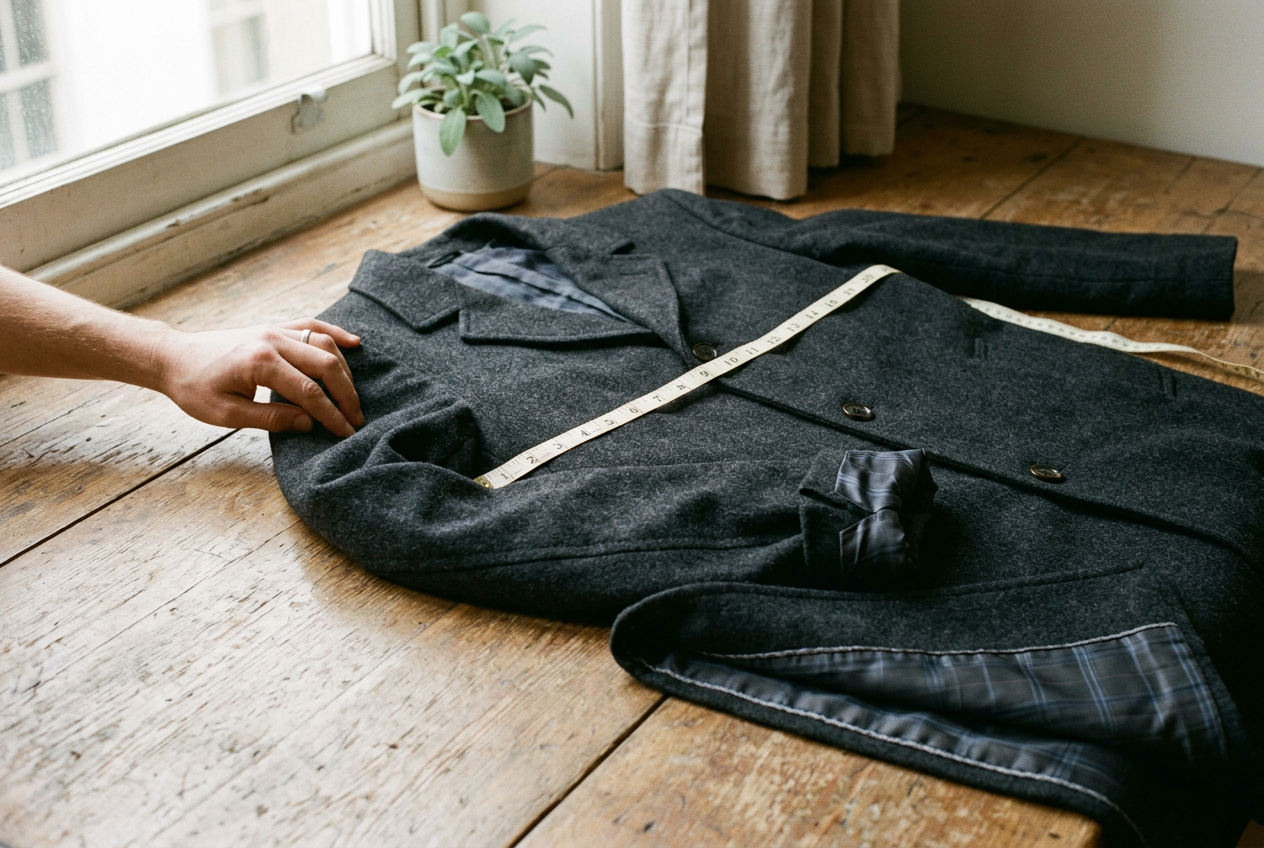
To make this checklist useful, picture the kind of listing that is hardest to judge: a charcoal, knee-length, single-breasted wool coat with set-in sleeves, meaning each sleeve joins the body at a defined shoulder seam, and a full lining. The seller has posted a polished front view, one label photo and a measurement copied from the size tag.
That is not enough information to buy the coat.
This is unisex guidance because the inspection points and measuring method apply across wardrobes. A coat labeled for men or women may have different proportions through the chest, waist and hip, but the number on the tag still matters less than the dimensions of the garment in front of you.
Start with the coat, not the size label
Remote secondhand shopping works best when you compare the listing with a coat you already own, rather than trying to convert your body measurements into a vintage or unfamiliar size. Choose a coat with a similar cut, close it, lay it flat without stretching the fabric and record the same measurements you will request from the seller.
For the charcoal coat, the first useful number is the chest width measured straight across from armpit to armpit. Ask the seller to place the tape just below the armhole and photograph the tape in position, since a measurement taken farther down can be several inches wider on an A-line coat.
Request the shoulder width from shoulder seam to shoulder seam across the back, the center-back length from the base of the collar to the hem, and the sleeve length from the shoulder seam to the cuff. An underarm-to-cuff measurement helps when a shoulder seam sits slightly beyond the natural shoulder. For shaped coats, add flat waist and hip widths at clearly stated points, plus the upper-arm width across the sleeve.
Do not compare those figures directly with your body. Outerwear needs ease, the extra room built into a garment for movement and layers, and the right amount depends on whether you expect to wear the coat over a fine knit, a blazer or a heavy sweater. Compare it with your own coat worn over the intended layers, then note where that reference coat could be narrower, longer or roomier.
Request a photo sequence, not another beauty shot
Ask for full-length front and back photos with the coat hanging straight, first buttoned and then open. A side view should show whether the hem drops evenly and whether the front swings forward, which can point to stretched fabric, poor hanger storage or an alteration that changed the balance.
The wool needs indirect daylight. Flash can flatten texture and hide shiny patches, while warm indoor lighting can make a faded black or charcoal coat look evenly colored. Request close-ups of the collar fold, shoulder tops, elbows, pocket openings, cuffs, underarms and hem. These are the areas where friction wears down the nap, the raised surface fibers that give wool its soft, even finish.
A smooth, slightly lighter cuff may be ordinary wear. A hard shine at the elbows or seat is more difficult to reverse because the fibers have been compressed, sometimes by wear and sometimes by an iron that was too hot. Steaming may improve a minor pressure mark, but it will not restore wool whose surface has been worn away.
For moth inspection, broad photos are nearly useless. Ask for close, sharply focused images of the front and back panels, under the collar, beneath pocket flaps, inside cuffs and along the folded hem. Small irregular holes, clusters of pinpricks, loose fibers or fine webbing deserve attention. One isolated hole may be repairable; several holes in different areas suggest damage that a seller has not fully mapped, and the unseen portion may be worse.
The charcoal color makes this harder. Shadows can read as holes, and worn nap can resemble a pale patch, so ask for the suspicious area photographed from two angles with a fingertip or ruler nearby for scale. Photos cannot prove that a coat is free of moth activity. They can show whether the visible fabric already makes the purchase unreasonable.
The shoulder decides whether tailoring is sensible
Return to the set-in shoulder on the sample coat. Its seam should sit smoothly, and the sleeve head, the rounded top of the sleeve where it enters the armhole, should not cave inward, twist or form a ridge beyond the intended structure.
Ask for one close photo of each shoulder from the front and another from the side, with the coat on a broad hanger rather than a thin wire one. Uneven padding, puckered seams and a sleeve that rotates differently from its partner can signal previous alteration or damaged internal structure. A collapsed shoulder can also result from poor storage, but that does not make it an easy home repair.
Shoulder narrowing or widening changes the armhole and sleeve relationship, which makes it among the least attractive alterations to fund on a secondhand coat. If the shoulder measurement is wrong by enough to bother you, pass. A raglan coat, whose sleeve runs diagonally into the neckline instead of ending at a shoulder seam, offers more tolerance, but its sleeve length still needs checking from the center back of the neck to the cuff.
Sleeves are less final, within limits. A tailor can shorten a plain cuff, although buttons, straps or working buttonholes increase the labor. Lengthening requires extra matching fabric hidden inside the cuff, and the old fold may leave a permanent line. Ask for a photo with the sleeve lining pulled back and the cuff unfolded as far as it moves without force.
No visible allowance means no dependable extra length.
Turn the coat inside out
The lining often gives a more honest account of wear than the outer wool. Request a complete front and back view of the open interior, followed by close-ups at both armholes, the underarms, pocket bags, center-back vent, side seams, sleeve ends and hem.
A short opening along a lining seam is usually straightforward to stitch. Fraying fabric is different: if the lining has worn thin around the armholes or seat, a repair may tear again beside the new stitches. Replacing the full lining can be worthwhile for an exceptional coat, but it is a substantial job, so it should be part of the buying decision rather than a surprise after delivery.
Interior photos also expose hidden alterations. Look for mismatched thread, duplicate stitch lines, abrupt changes in seam allowance, clipped fabric and sections where the lining has been hand-sewn back with uneven stitches. Seam allowance is the fabric left inside a seam; once it has been cut away during downsizing, a later tailor has little material available to let the coat out.
Ask to see the hem beneath the lining if it is accessible without cutting stitches. A deep, consistent fold leaves options for modest length changes. A narrow or jagged edge suggests the coat has already been shortened. On the charcoal coat, a knee-length description has little value if an old hem alteration shifted the proportions and removed the fabric needed to reverse it.
The label area matters too. Request clear photos of the fiber-content label and care label rather than accepting wool coat as a complete description. A blend can wear well, but it should be assessed and priced as the blend it is. The composition also helps explain surface behavior: fuzzy pilling, crisp melton-like density and a soft brushed finish will not age in the same way.
Sort flaws by the repair they require
Loose buttons, an open lining seam, a detached hem tack and light surface pilling are ordinary repair territory. Minor sleeve shortening is often reasonable when the cuff is plain. These flaws can support a lower offer, provided the coat fits and the wool around them remains sound.
An isolated moth hole sits in the middle category. Invisible reweaving, which rebuilds the damaged area with matching fibers, is specialist work and may cost enough to erase the advantage of buying secondhand. A visible mending technique may suit a casual coat, but it can look misplaced on formal charcoal outerwear. Decide which finish you would accept before purchasing, not after the hole is in your closet.
Full relining, substantial sleeve lengthening and repairs to torn pocket openings can make sense when the coat is unusually well cut or made from excellent cloth. Add the likely cleaning and alteration costs to the delivered price, then compare that total with a similar secondhand coat that is ready to wear. A low listing price does not protect a poor coat from becoming an expensive one.
Pass on widespread moth holes, brittle or extensively shredded lining, mismatched shoulders, severely shined wool and alterations that removed the original seam or hem allowance. Strong odor is another reason for caution because a photo cannot show it and cleaning does not guarantee removal. If the seller will not answer a direct question about smoke, mildew, fragrance or storage, a restrictive return policy shifts too much risk to the buyer.
Send one organized seller message
Keep the request easy to complete. Identify the charcoal coat, explain that you are checking fit and condition, and ask for the flat chest, shoulder, sleeve and center-back measurements with the tape visible. Follow with the daylight exterior views, shoulder close-ups, high-wear areas and full lining photos. Ask whether the coat has holes, odors, stains, repairs or known alterations, and whether the measurements were taken with the coat buttoned.
A seller may decline a long request. That is useful information. For a modestly priced coat with returns, you may accept a little uncertainty; for an investment purchase, missing shoulder, moth and alteration evidence is not a small gap. It is the inspection.
Questions people ask
Which wool coat measurement matters most online?
Chest width is the best starting point, but it cannot rescue the wrong shoulders. Compare the flat chest and shoulder measurements with a similarly cut coat you own, then check sleeve and back length. A size label alone cannot show whether an older or altered coat will fit over your intended layers.
Can a moth hole in a wool coat be repaired invisibly?
Sometimes. A specialist may reweave a small isolated hole with closely matching fibers, although the result and cost depend on the cloth, color and location. Multiple holes, webbing or damage across separate panels are reasons to pass because the visible holes may not represent the full extent of the problem.
Is a torn coat lining a reason to reject it?
A clean opening along a seam is often a manageable repair. Thin, fraying lining around the armholes, seat or hem is more serious because new stitches may tear through weakened fabric, leaving full relining as the durable option. Price that work before committing to the coat.
Can coat sleeves be made longer?
Only when enough matching fabric remains inside the cuff. Ask for a photo of the cuff interior and measure the needed change against a coat you own. Even with an allowance, the original fold may leave a visible line, while cuff buttons, straps or worn edges can limit a convincing alteration.
One update a day
Today's fashion update, in your inbox
One fashion update each morning — no hype, no filler, just pieces worth wearing.