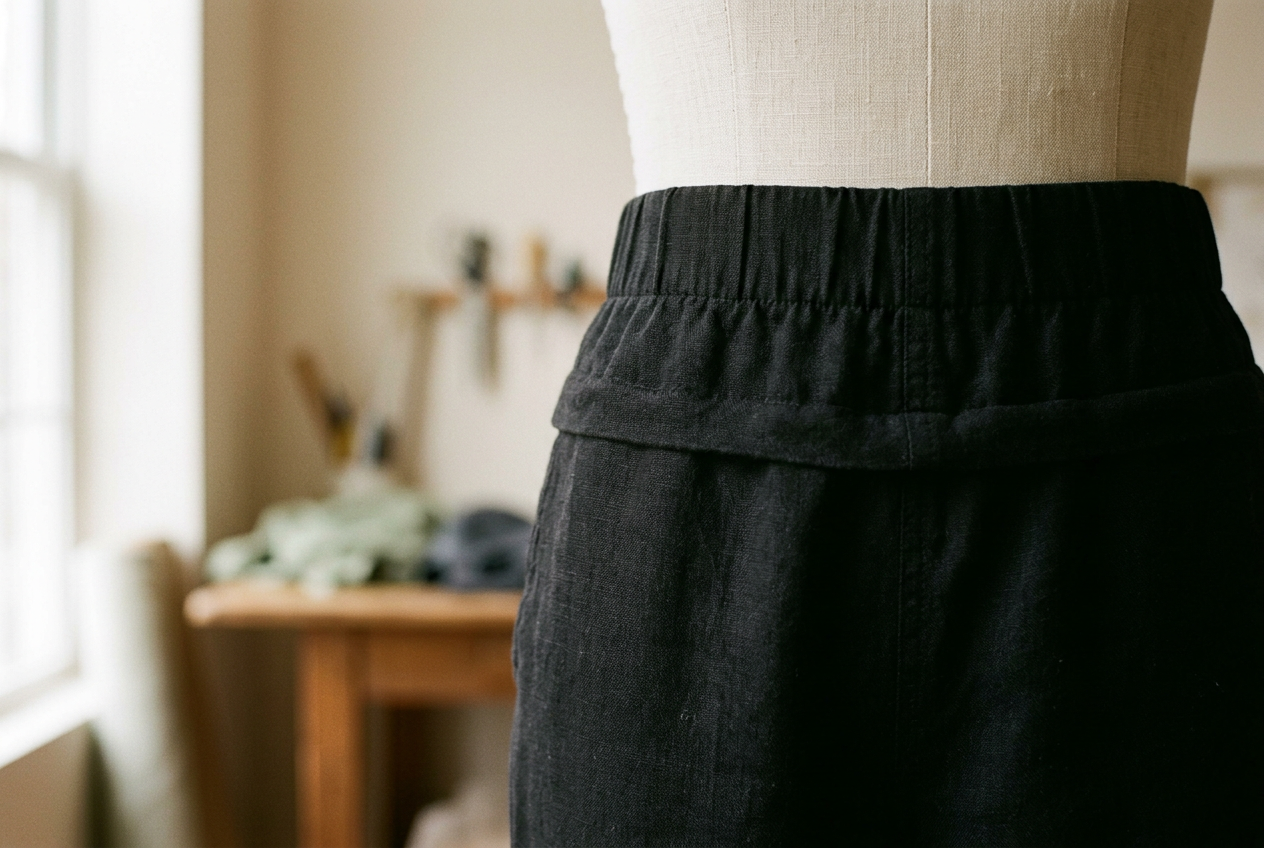
Your Garment-Dyed Shirt May Bleed Past the First Wash
Garment dye can keep transferring after one laundry cycle. A white cloth, a controlled wash test and the care label will tell you whether to separate, keep washing or return the piece.
October 7, 2026 · 8 min read
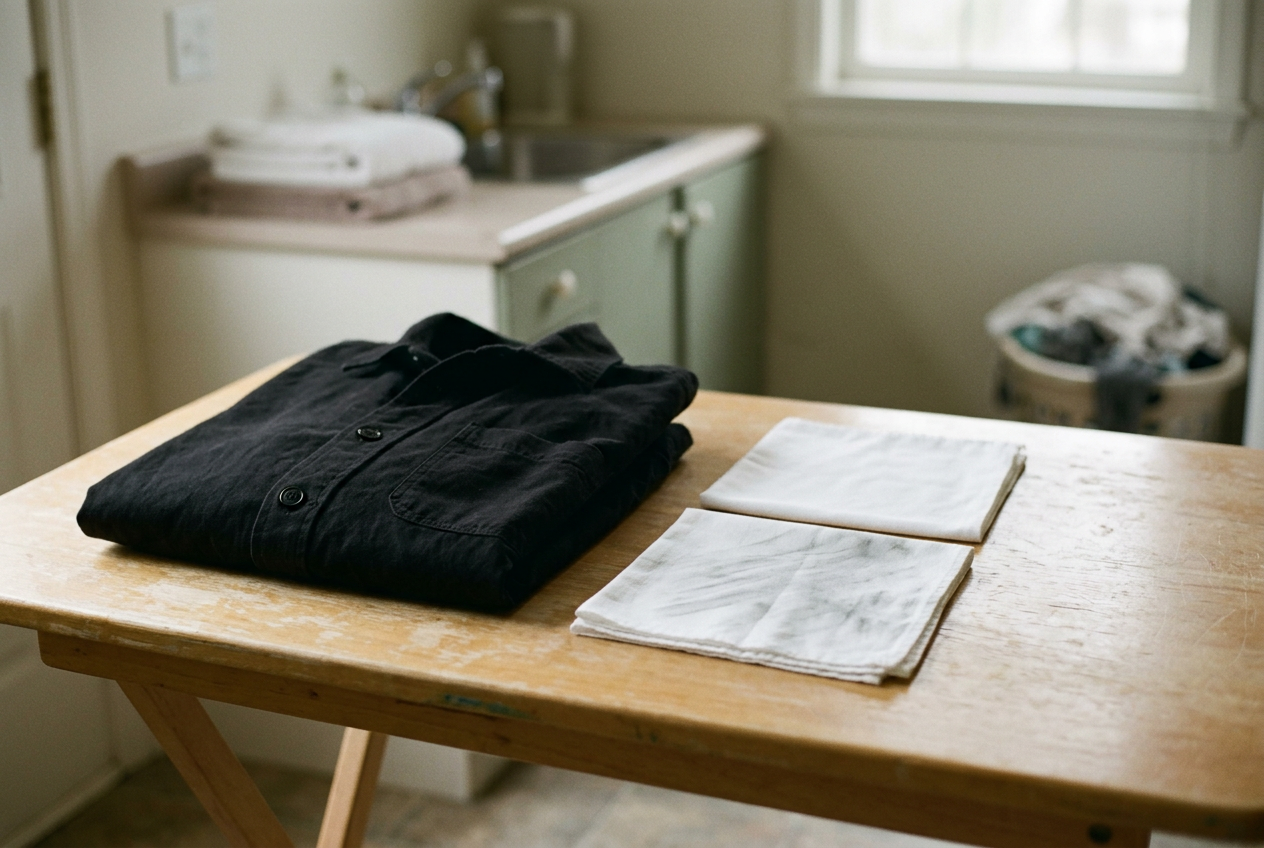
Use a new black, 100 percent cotton-twill overshirt as the working garment here. It is the sort of unisex piece worn open over a white T-shirt, which makes even slight color transfer visible at the collar, underarms and waistband. The same checks work for garment-dyed jeans, sweatshirts and chore jackets across women’s and men’s wardrobes.
Garment dyeing, meaning color is applied after the item has been sewn, can give cotton a softened, slightly uneven depth that looks less formal than fabric dyed before cutting. The tradeoff is that loose color may remain on the surface, particularly with saturated black, navy, red or indigo-toned finishes. One wash may remove much of it. One wash is not a guarantee.
Why the black overshirt may still release color
A garment-dyed piece enters the dye bath with its seams, pockets and hems already assembled, so the thread, labels and layered areas may take color differently. That variation is often part of the appeal. It does not mean every garment-dyed item will bleed, but the method can make fading and shade variation more noticeable than on a conventionally dyed cloth.
Colorfastness is the fabric’s ability to resist fading or transferring under conditions such as rubbing, washing and light. Those are separate tests. The black overshirt could hold its shade well in a cold wash yet leave a gray cast on a white T-shirt where the two fabrics rub all day. It could also pass a dry rubbing test but transfer when damp from rain or perspiration.
Read the care label before testing. “Wash separately,” “color may transfer” or similar wording signals an expected care burden, while “wash with like colors” gives more room to combine the piece with dark laundry once its release settles. Neither phrase excuses unlimited transfer. A jacket that repeatedly marks a pale bag, upholstered seat or base layer may be too demanding for ordinary wear even if fading was disclosed.
Test for crocking before you wear it
Crocking, meaning dye transfer caused by rubbing, is easy to check at home with a clean white cotton cloth. Choose a hidden but representative area on the overshirt, such as the inside hem, rather than a pocket edge that may have a different concentration of dye.
Rub the dry white cloth back and forth over the black twill about ten times with firm, even pressure. Do not grind at one spot. Inspect the cloth in daylight, then photograph it beside an unused white cloth so you have a comparison and, if needed, a record for the retailer. A faint gray trace suggests caution with white layers.
A dark, obvious patch means the overshirt should not yet touch pale clothing, leather upholstery or a light canvas bag.
Repeat with a second white cloth that is damp, not dripping. Use a nearby section of the inside hem and the same number of strokes. Let the cloth dry before making the final judgment, since wet cotton looks darker and can exaggerate both dye and lint. If the damp test shows much more transfer, treat rain, sweat and a steamy commute as higher-risk conditions.
This home check is comparative rather than a laboratory rating, but it answers the practical question: whether the overshirt can be worn open over that white T-shirt without leaving a shadow along the points of contact. Test again after laundering under the label instructions. Improvement matters more than a perfect first result.
Check wash transfer without risking a full load
For the first wash, turn the overshirt inside out, close any fasteners that could abrade the cloth and follow the labeled water temperature and cycle. Wash it alone or with very dark, sturdy cotton items that would not be harmed by extra black dye. A short, cold cycle often reduces fading and friction, but the care label takes priority if it specifies something else.
To make transfer visible, add an old white cotton washcloth that you are willing to stain. This is a test tool, not a color-catcher. After the cycle, remove both pieces promptly and inspect the washcloth once it has dried. A pale gray cast shows that loose color entered the wash water; a charcoal result means the next load should also be separate.
Color-catching laundry sheets can collect some dye suspended in water, but they cannot prove that a garment has become colorfast, and they do nothing about dry crocking during wear. If the sheet darkens, consider that evidence of release rather than permission to add cream trousers next time.
Repeat the controlled wash only as often as you are comfortable subjecting the garment to extra laundering. Each cycle costs time, water and some surface color. The black overshirt should show a clear downward trend in transfer. If the test washcloth remains heavily stained after repeated care-label washes, more washing may leave you with a faded shirt that still cannot be trusted.
Separate loads by consequence, not by vague color groups
“Darks” is too broad when one new garment is releasing dye. During the early washes, keep the black overshirt away from white, cream, pale denim and heather gray, as well as synthetic athletic clothes with light panels. Loose dye can settle unevenly, and a slightly dulled print is harder to correct than an old black towel.
A safer companion load contains washable black or very dark cotton pieces whose appearance will not suffer from a small shade shift. Avoid adding expensive dark garments merely because the colors look similar; a warm brown knit and a blue-black overshirt may react differently, while a delicate surface can pick up lint or abrasion even if the dye causes no problem.
Once the white washcloth shows little transfer and the dry crocking test is clean or nearly clean, move the overshirt into ordinary dark loads. Keep using a mild detergent in the recommended amount. Extra detergent does not fix loose dye and can leave residue if the washer cannot rinse it away.
Wear still needs its own decision. The overshirt may be ready for black jeans but not for a white tee on a humid day. If the damp rubbing test remains strong, pair it with dark base layers until the result improves, or decide that the styling restriction defeats the reason you bought it.
Vinegar is not a universal dye fix
A vinegar soak is common laundry folklore, but household vinegar cannot reliably set every dye on every fiber. Acid plays a role in some industrial dyeing methods, under controlled conditions and with dyes suited to particular fibers; pouring vinegar into a basin with a finished cotton overshirt does not recreate that chemistry or bond unfixed color to the cloth.
Salt has a similar reputation. It can have a technical role in certain dye baths, yet a home salt soak is not a general repair for faulty fixation. Both treatments may consume another wash cycle without resolving the transfer, and using an unlabeled treatment can complicate a return claim.
Follow the manufacturer’s care directions instead. If the label permits machine washing, use that method for the controlled test and judge the outcome with the same white cloth each time. Consistent evidence is more useful than changing the water temperature, detergent and home remedy all at once.
When persistent dye release warrants a return
Some early color loss is compatible with the washed-in look of garment-dyed cotton. Persistent release becomes a return issue when the piece cannot perform its ordinary job without staining other belongings, especially after you have followed the care label and given the transfer a reasonable chance to decline.
For the black overshirt, a return is sensible if dry rubbing still produces an obvious black mark after laundering, if damp contact leaves strong transfer, or if multiple controlled washes show no meaningful improvement. The case is stronger when the product description did not disclose transfer or special separation, though the retailer’s stated return policy still governs what it will accept.
Stop testing before improvising with vinegar, stain removers or repeated hot washes. Keep the label attached if you noticed the issue before wear, and save photos of the garment, care label and white test cloths under similar lighting. Describe what happened in plain terms: dye transferred during dry rubbing, during a label-compliant wash, or onto a specific pale item.
If transfer is mild and declining, keeping the overshirt may be reasonable when you already wear dark base layers and like the evolving finish. If its main purpose was to sit over white tees, accepting permanent separation and contact restrictions is a poor trade. The alternative is a piece-dyed or yarn-dyed black overshirt with stronger colorfastness, though construction method alone cannot guarantee it, so the white-cloth check still earns its place.
Questions people ask
Is it normal for garment-dyed clothes to bleed?
Some loose color during early washing can be normal, particularly on saturated cotton garments sold with fading or transfer warnings. The useful measure is direction: dry, damp and wash transfer should diminish. Strong release that stays unchanged and interferes with normal wear is not a care quirk you must accept.
Can vinegar stop a garment-dyed shirt from bleeding?
Vinegar is not a dependable fix for a finished garment because dye classes and fibers need different chemistry. It may change the wash water’s acidity without securing loose dye. Follow the care label, run a controlled wash test and preserve the untreated garment if a return may be necessary.
Can
I wash a bleeding garment with other black clothes?
Only combine it with dark, washable pieces that would not be harmed by extra dye or abrasion. Start alone or with an expendable dark cotton load, plus an old white washcloth as an indicator. Move it into regular dark laundry after the dried cloth shows little transfer.
What should I do if dye stained another garment?
Do not machine-dry the stained item, since heat can make removal harder. Rewash it promptly according to its own care label, keeping it separate from the dye-releasing piece. If the stain remains, document both garments before trying an unapproved treatment or contacting the retailer.
One update a day
Today's fashion update, in your inbox
One fashion update each morning — no hype, no filler, just pieces worth wearing.