Dark Denim That Still Stains After Washing Is a Bag Risk
A first wash may clear loose indigo. If rubbing still leaves a navy streak, the jeans remain risky around white shirts, pale leather and canvas bags.
September 21, 2026 · 7 min read
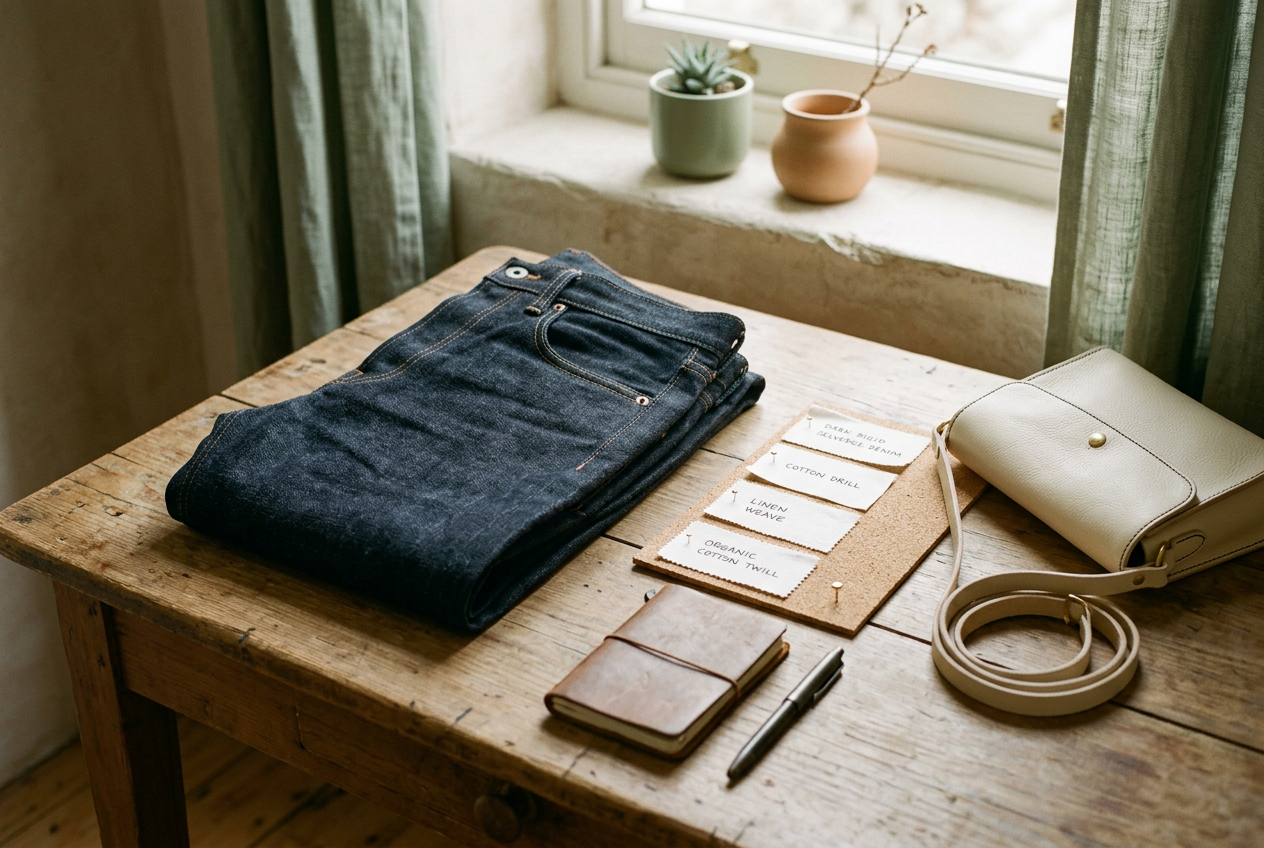
The working case is a new pair of rigid, dark-indigo jeans made from 100 percent cotton, worn with a white cotton poplin shirt and an ivory leather crossbody bag. That combination makes sense on a hanger. In motion, the shirt hem brushes the waistband and upper thigh, while the bag swings against the hip for hundreds of small contacts.
This is unisex care advice because the mechanics do not change with the department named on the jeans. A close fit through the hip can increase contact with a bag, while a loose leg can sweep against a long pale coat, but any dark denim may transfer color if its surface holds mobile dye.
The useful distinction is between loose surface dye, which may rinse away during early washing, and crocking, meaning color transfer caused by rubbing. A little blue in the wash water does not tell you which problem you have. The better evidence is what happens when the jeans are dry, subjected to ordinary friction and checked again after washing.
Start with the care label, not a home remedy
Read the sewn-in care label before testing or washing. The rigid jeans in this case may permit a cold machine wash, require line drying or call for separate washing because of color transfer; that exact instruction outranks generic denim advice, particularly when the fabric contains stretch fiber, has a coated finish or includes leather trim.
Raw denim, meaning denim sold without the usual garment rinse or wash, needs a separate decision. Its dark surface and high-contrast fading are often the point, so washing it repeatedly to control transfer may change the appearance sooner than its owner wants. If preserving that finish matters more than wearing an ivory bag, keep the bag away. No treatment can promise both zero transfer and untouched fading.
Skip the reflexive salt or vinegar soak. Salt can influence dyeing under controlled manufacturing conditions, and vinegar changes the acidity of water, but neither reliably fixes indigo onto a finished pair of jeans in a home sink. A long soak also keeps dye-rich water against pocket bags, labels, hardware and any contrasting thread, creating more opportunities for uneven color.
Run a dry rub and a damp blot
Use a clean piece of white cotton, such as an old undershirt or handkerchief, rather than a tissue that may shred or a colored towel that hides the result. Test an inconspicuous area first to make sure moisture does not leave a ring or alter a coating.
For the dry check, place the jeans on a firm surface and rub the white cloth back and forth over the outer hip with the pressure used to wipe a countertop. Ten passes give you a repeatable baseline without grinding at the fabric. Look at the cloth in daylight. Gray lint or a barely visible cool cast is different from a defined navy streak that can be seen without tilting the cloth.
Next, dampen a fresh section of white cotton with plain water and press it against the inside hem for several seconds without rubbing. This blot is deliberately low friction. If it picks up obvious blue, dye is mobile even before a bag strap or shirt hem starts moving against the surface; if the blot stays fairly clean but the dry rub leaves a streak, friction is the larger problem.
Keep both cloth sections until the jeans have been washed and dried. Memory is poor at comparing shades of blue, while two labeled swatches show whether transfer fell sharply, changed only a little or stayed much the same.
Do not test the jeans directly against the ivory bag. Leather coatings and pale stitching can hold denim pigment, and cleaning may change their sheen before it removes the mark. The white poplin shirt is not a sensible test cloth either, since a blue shadow at its hem creates a second laundry problem.
Give loose dye one controlled wash
If the label allows machine washing, turn the jeans inside out, fasten the zipper or buttons and wash them separately in cold water with a modest amount of mild detergent. Inside-out washing limits abrasion on the visible face, while detergent and moving water can carry away loose material that a dry brush would only redistribute.
Do not crowd the machine with dark clothing just to avoid running a small load. Other garments can release their own dye, making the water look dramatic without telling you what the jeans contributed, and they prevent a clean comparison with the first white-cloth test. A short or standard cycle is preferable to an improvised overnight soak unless the care label directs otherwise.
Heat is not the shortcut. Hot water may encourage shrinkage, alter a finish or stress stretch fibers, yet it still cannot guarantee that rubbing will stop. Chlorine bleach is more destructive: it can strip color unevenly and weaken cotton rather than turn unstable dark denim into a dependable companion for pale accessories.
Air-dry the jeans fully in a ventilated place, out of harsh direct sun if preserving the dark color matters. Testing damp denim exaggerates transfer and does not reflect an ordinary dry outfit, though it does reveal why dark jeans become especially risky in rain or on a humid commute. Full drying costs more time, but it is necessary for a fair before-and-after check.
Once dry, repeat the test on the same outer-hip area with a clean white cloth and the same ten passes. Return to the rigid jeans and their ivory crossbody here: the outer hip is the relevant contact zone, not an untouched patch behind the knee.
Read the result as a wardrobe decision
There is no universal household pass mark for crocking, so judge the result against the pale item you want to wear. If the post-wash cloth remains white or shows only a faint cast after deliberate rubbing, the jeans present a lower practical risk with a washable cotton shirt. Check again after rain, because moisture can make transfer more likely.
A clear navy streak after one label-safe wash means the jeans still demand separation from pale leather, suede, coated canvas and light upholstery. You can repeat the wash once if the second cloth is much cleaner than the first, since that downward change suggests loose dye is still being removed. If the marks look similar, more washing may fade the jeans without solving the underlying friction problem.
For an expensive ivory bag, the acceptable result is stricter than it is for a white T-shirt that can be laundered. A bag rests against the same patch of denim for long periods, its corners and piping receive concentrated rubbing, and pigment can settle into textured leather or pale edge paint where home cleaning is risky.
An untucked top can act as a temporary barrier, but the shirt becomes the contact surface and may pick up a blue band along its hem. A long dark jacket, a dark bag or a hand-carried pale bag avoids that exchange more reliably. Spraying the jeans or bag with an unspecified protector is not a substitute for testing, since finishes respond differently and many product labels do not promise protection from denim dye.
The rigid pair has now reached its practical fork. If the second white cloth is clean enough, wear the jeans with the poplin shirt and keep the ivory crossbody under observation at the first outing. If the cloth still shows a defined streak, style the jeans with black, navy or saturated accessories, or return them if the retailer’s policy allows and pale bags are central to your wardrobe.
Continued crocking is not proof that the jeans are fake, poorly cut or unwearable in every setting. It does mean they carry an ongoing styling cost. A pair that requires dark seating, dark outer layers and constant bag management may be an acceptable raw-denim project, but it is an impractical everyday buy for someone who regularly wears cream tailoring or light leather.
Questions people ask
Will vinegar stop dark jeans from staining clothes?
Vinegar is not a dependable fix for crocking on finished denim. Follow the garment label and use a cold wash with mild detergent if washing is permitted, then repeat the white-cloth rub test after the jeans dry. A cleaner cloth is useful evidence; the smell of vinegar is not.
Can
I wear new dark jeans before washing them?
You can, but first rub the hip and waistband with clean white cotton. If the cloth shows a strong blue streak, keep the jeans away from white shirts, pale upholstery and light bags until they have had a label-safe wash and passed the same test when dry.
Does raw denim always stain pale bags?
Not every pair transfers at the same rate, but unwashed dark denim deserves a cautious assumption because surface indigo is meant to wear away and form fades. Test the exact pair. If preserving its raw finish matters, use a dark bag rather than washing repeatedly to accommodate a pale one.
How should I remove a denim mark from a light bag?
Stop rubbing, which can spread pigment or disturb the bag’s finish. Check the maker’s care guidance and use only a cleaner approved for that material; suede, coated canvas and smooth leather need different treatment. For a valuable bag or a set stain, use a specialist cleaner rather than denim laundry products.
One update a day
Today's fashion update, in your inbox
One fashion update each morning — no hype, no filler, just pieces worth wearing.