New Dark Jeans Can Stain Light Bags. Test Them First.
Dark indigo can rub onto an ivory tote, white sneakers, or a pale sofa before you notice. A white-cloth test shows when separation is wiser than styling optimism.
September 7, 2026 · 8 min read
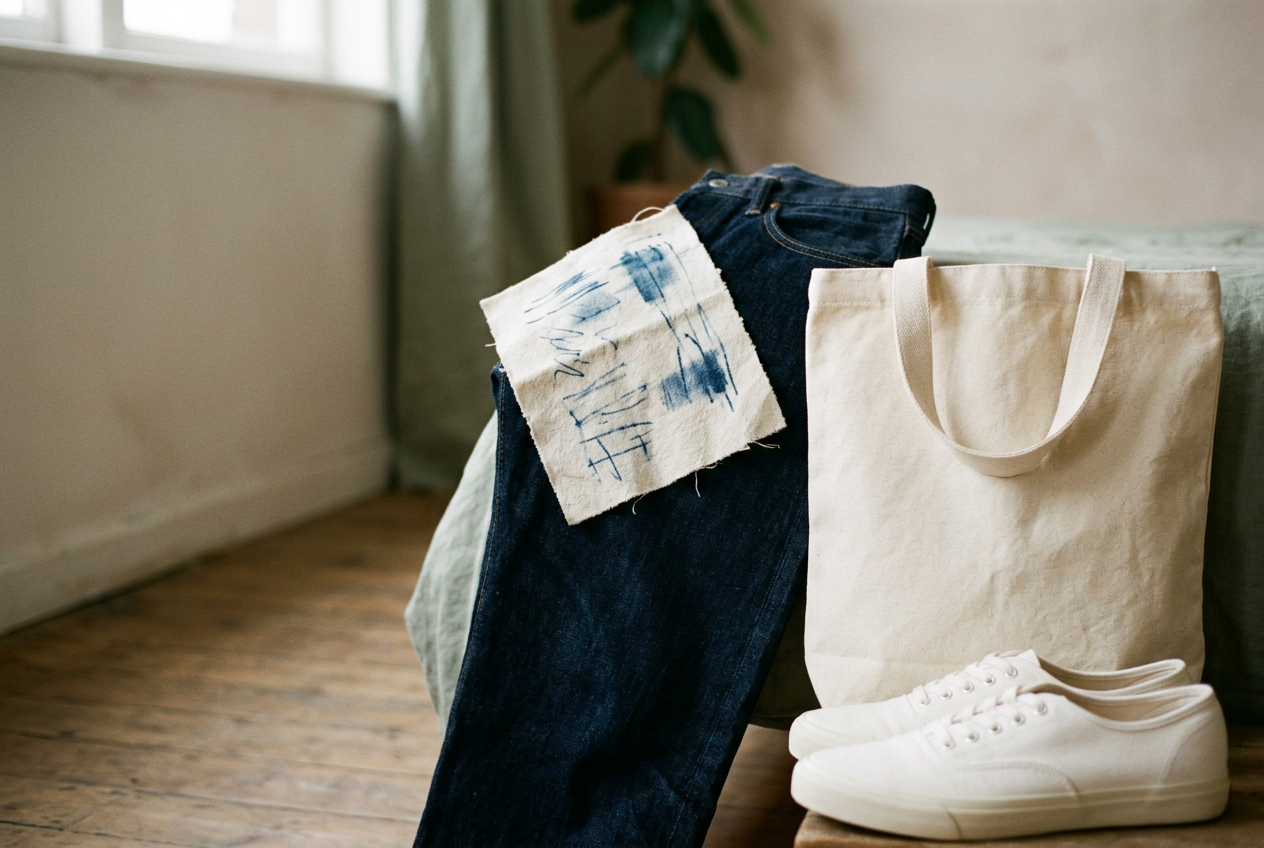
The concrete case here is a new pair of rigid, 100 percent cotton, dark-indigo five-pocket jeans. Before that pair meets an ivory canvas tote, white leather sneakers, or a cream upholstered chair, it needs a five-minute check with a clean white cotton cloth.
This is unisex care advice. The cut of the jeans may change where fabric makes contact, but loose dye responds to friction in the same way across wardrobes: a crossbody bag rubs the hip, a tote rests against the thigh, a pale belt scrapes through the loops, and a longer hem brushes a shoe with every step.
The blue mark is crocking
Crocking, meaning dry dye rubbing off a fabric onto another surface, is common enough with saturated dark denim that many care labels warn about color transfer. It does not automatically mean the jeans are defective. It does mean the color may travel before washing and sometimes afterward.
Indigo is concentrated near the outer layer of the blue yarns rather than coloring each yarn evenly to its center. Friction gradually removes some of that surface color, which is part of how jeans develop pale creases and worn areas. During the first wears, however, the same behavior can leave a blue cast on a light bag before the fading on the jeans looks noticeable.
Our rigid dark-indigo pair presents several contact points. The lower corner of an ivory tote can drag across the upper thigh for an afternoon. A cream crossbody strap may stay pressed against a belt loop, where body movement repeats the same rub hundreds of times. If the hem stacks over white sneakers, the inside edge can sweep the leather or mesh near the collar.
Upholstery is a larger risk because pressure joins friction. Sitting holds the dyed fabric against one area, and warmth or perspiration can make transfer more likely than the dry test suggests. Pale car seats deserve the same caution, particularly when a long drive follows the first wear.
Run a white-cloth test before getting dressed
Read the care label first. A garment-specific warning such as “color may transfer” or “wash separately” settles the matter even if a quick test appears clean, while instructions about cold water, hand washing, or avoiding a dryer should shape any attempt to remove loose dye.
Use a clean, dry, lint-free white cotton cloth. Wrap it over two fingers, then choose an inconspicuous section of the jeans’ outer face near the inside ankle or lower inseam. An interior pocket bag is not a useful substitute because it may be undyed fabric, and rubbing only the inside of the denim does not represent what the tote will touch.
Press with about the force a bag would apply against the thigh and rub back and forth ten times over the same small patch. Do not grind at the fabric. The goal is a cautious screening test rather than a laboratory measurement, and excessive rubbing could create a faint worn spot on deeply colored denim.
Move the cloth into good light. A distinct blue or gray-blue streak means the rigid indigo pair should not meet the ivory tote yet. A barely visible haze lowers the concern but does not remove it, especially for porous materials such as untreated canvas, suede, nubuck, or pale fabric upholstery, which can hold transferred color more stubbornly than a coated surface.
Repeat the dry test at another likely contact point, such as the upper thigh. Denim finishing and friction can vary across a garment, so one clean result near the ankle does not promise that the seat or hip will behave identically.
Do not turn this into a damp-cloth experiment on an exposed area. Moisture can lift more color, but it can also leave a local mark or change the finish. The safer conclusion is narrower: if dry rubbing produces visible blue, separate the jeans from pale accessories; if it does not, remain cautious around heat, rain, perspiration, and long periods on light upholstery.
Decide whether preserving the wash matters most
There are two reasonable paths for our dark-indigo jeans. The first preserves their saturated look: wear them with a black or dark brown bag, choose shoes that will not show a blue edge, and avoid pale seating until later. This costs no money and does not disturb the finish, but it restricts the outfit during the early wears.
The second path is washing, provided the label allows it. Turn the jeans inside out, close the fly, use cold water and a small amount of mild detergent, and wash them alone or with comparably dark items. A gentle cycle limits abrasion. Air-drying avoids dryer friction and heat, although the label remains the authority if it specifies another method.
Once the jeans are fully dry, run the same white-cloth test on the outer thigh. One wash may reduce loose surface dye without stopping transfer altogether, so the cloth rather than the wash itself decides whether the ivory tote comes back into the outfit. If blue remains obvious, repeat only within the label’s instructions or continue pairing the jeans with darker pieces.
Washing has a visible price. It may soften rigid denim, reduce the depth of the indigo, set new creases, or change the fit through shrinkage, depending on the fabric and finish. A reader who bought the jeans for a crisp, inky surface may reasonably prefer temporary outfit limits; someone who needs to sit on cream upholstery every day may find an early wash more practical than guarding every chair.
Skip the home dye-fixing tricks
Salt and vinegar are often suggested as universal ways to lock dye into jeans. They are not a reliable substitute for the dye chemistry and controlled treatments used during manufacturing, and a home soak may shift the color, affect trims, or create uneven fading without solving crocking.
Commercial dye fixatives also demand restraint. Some are designed for particular dye and fiber combinations, while finished jeans may include coatings, stretch fibers, leather patches, metal hardware, or contrast stitching that respond differently. Unless the jeans manufacturer recommends a product for that garment, experimenting on an expensive dark wash is a poor trade.
A spray protector applied to the bag is not a dependable workaround. Protectors are material-specific, may alter the color or hand of pale leather and suede, and do not prevent dyed denim from rubbing against the surface. Follow the bag maker’s care guidance rather than treating a new ivory accessory as the test site.
Build distance into the first outfits
The safest early outfit for the rigid indigo pair keeps pale objects away from moving contact points. Carry an ivory tote by hand rather than resting it on the hip, or switch to a dark bag for a day that requires walking. If white sneakers matter to the look, cuff the jeans high enough that the hem cannot sweep the collar, then check that the cuff stays put once seated.
A pale leather belt can pick up blue along its edges where the waistband and loops rub. A dark belt avoids that contact problem without changing the jeans, and it is a better first-week choice than trying to clean transferred indigo from unfinished leather.
For unavoidable pale seating, place a thick, washable, light-colored cotton throw between the jeans and the upholstery, folded so dye cannot pass through a single thin layer. This is protection, not permission to ignore the test. Check the throw after sitting; visible blue confirms that the chair still needs a barrier.
If transfer reaches an accessory, stop wearing the pieces together before attempting repeated cleaning. Use only the maker’s instructions for that material. Coated leather may tolerate a prompt wipe with an approved cleaner, while suede, nubuck, and untreated canvas can absorb color; alcohol, bleach, household wipes, and hard scrubbing may enlarge the mark or strip the accessory’s finish.
Questions people ask
Do all dark jeans transfer dye?
No. The risk varies with the dye, wash, finishing, and amount of loose color left on the surface. A saturated rigid pair deserves more caution than denim already washed and faded by the manufacturer, but color alone cannot settle it. Check the care label and run the white-cloth test.
Will one wash stop dark denim from rubbing off?
One label-approved wash can remove some loose dye, but it cannot guarantee a clean result. Let the jeans dry fully and repeat the same test on the outer fabric. If the cloth still shows an obvious blue streak, keep the jeans away from pale bags and seating or wash again only as directed.
Can
I wear new dark jeans with white leather sneakers?
Yes, if the hem cannot rub the shoe and the denim passes a dry cloth test. A secure cuff creates useful distance, though rain and perspiration can increase transfer beyond what a dry test predicts. Check the sneaker collar and tongue after a short wear before committing to a full day.
How long should I avoid a pale sofa?
There is no dependable number of wears because fabrics and finishes differ. Use the sofa only after repeated white-cloth tests come back clean, including one after any label-approved wash. Until then, use a folded washable cotton barrier and inspect it for blue after sitting.
One update a day
Today's fashion update, in your inbox
One fashion update each morning — no hype, no filler, just pieces worth wearing.