Padded Sandals Feel Better Until the Footbed Stays Wet
Extra cushioning can soften a sandal, but foam structure and lining decide whether sweat disappears, pools or lingers. Here is how to judge the tradeoff before the return window closes.
September 3, 2026 · 7 min read
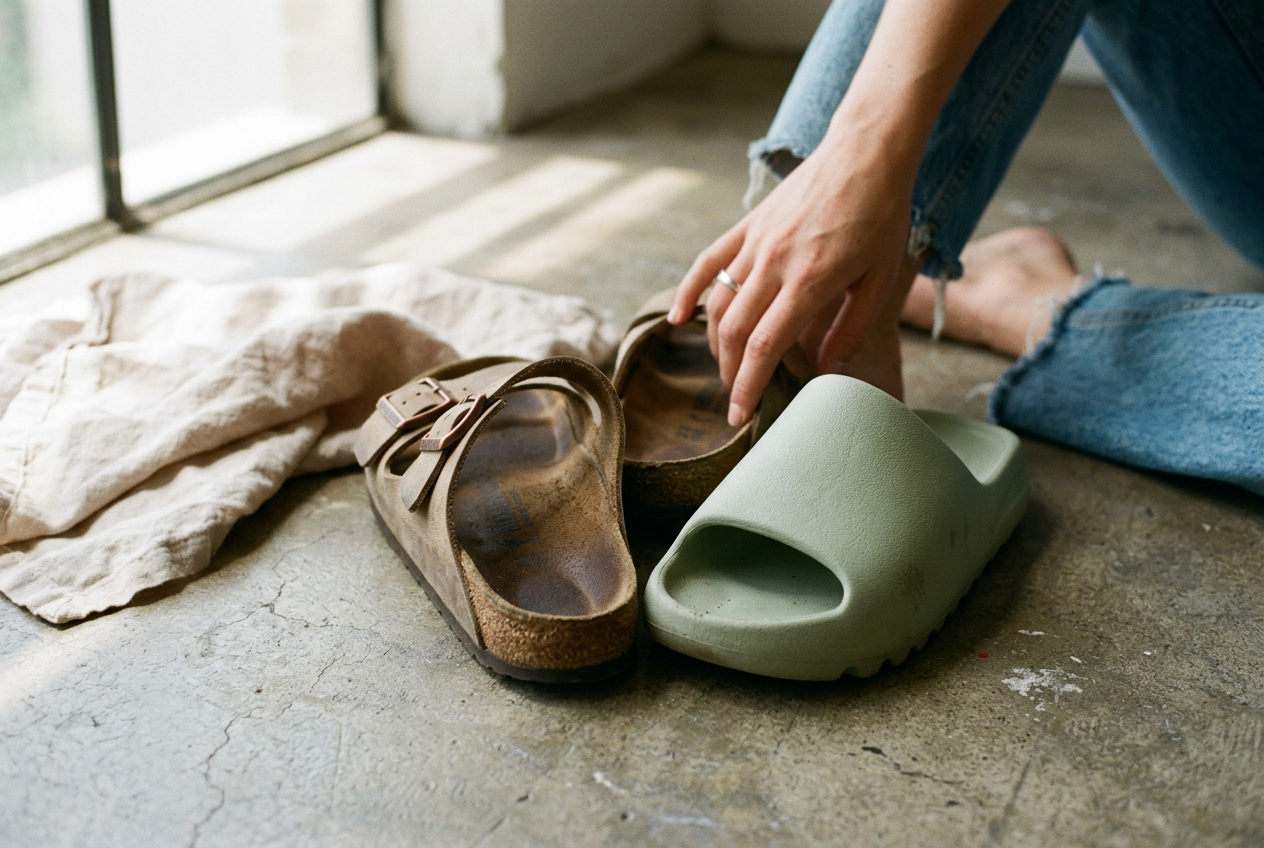
Padding has spread well beyond recovery slides. It now appears under narrow straps, polished buckles and soles intended to pass as proper shoes, which sounds useful until a humid afternoon turns the footbed into a small personal climate.
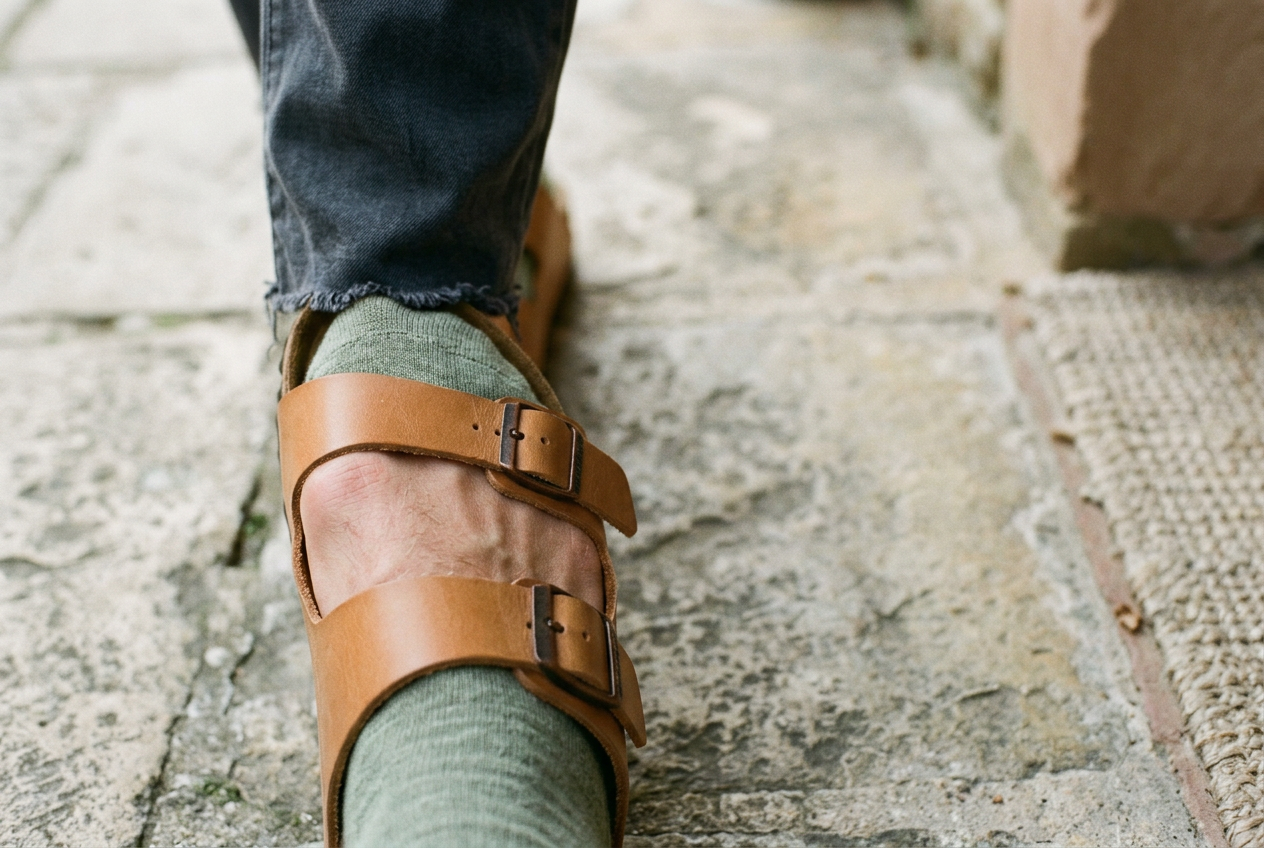
The Birkenstock Arizona Soft Footbed is a useful reference point. According to the brand’s construction description, it adds a latex foam insert to the anatomically shaped cork-latex footbed and covers the surface with suede. The result is not a pillow strapped to a sole; the cushion sits under a contoured, moisture-buffering layer, while the original Arizona footbed remains the firmer alternative.
That distinction matters. “Padded” can describe an absorbent open-cell foam under fabric, a water-resistant closed-cell platform, a foam layer hidden beneath leather or a molded synthetic surface with no lining at all. Those constructions may feel similarly yielding under a thumb in a store. They do not behave alike after an hour of walking.
This is unisex advice, though shoppers should compare actual footbed width rather than rely on a men’s or women’s label. A padded surface can make a sandal feel narrower at first, particularly when the foam rises around the heel or pushes the foot closer to the straps.
The foam matters more than the squish
Open-cell foam, meaning the internal pores connect to one another, compresses readily and can take in moisture. It often produces the softest first step because air moves out of the structure under pressure, but sweat can follow, especially when the covering above it is porous or stitched through.
That softness has a bill attached. Once damp, open-cell foam needs enough exposed surface and moving air to dry; buried under a lining and bonded to a rubber outsole, it may get neither. A sandal left in a warm entryway can feel dry on top while moisture remains lower in the padding, where repeated wear gives odor-producing bacteria a better arrangement than they deserve.
Closed-cell foam contains sealed pockets rather than connected pores. EVA, or ethylene-vinyl acetate, is a common example in sandal midsoles and molded footbeds. It generally absorbs less liquid than open-cell foam, so it suits pool decks, travel showers and days when the forecast has given up. The tradeoff appears on the surface: sweat that cannot enter the material has to evaporate, run off or stay under the foot.
A textured closed-cell footbed can manage that film better than a smooth one. Shallow channels give moisture somewhere to move, while a matte texture provides grip after the skin warms. Glossy molded surfaces are easier to wipe clean, but they can feel slippery and may squeak once sweat sits between foot and sandal. There are quieter ways to announce an entrance.
Density counts as much as foam type. Very soft foam bottoms out, meaning it compresses until the foot meets the firmer structure beneath, so the initial plushness disappears during a longer walk. Dense foam yields less dramatically but keeps more of its shape, which usually makes the sandal’s fit easier to predict.
A leather cover changes the moisture equation
The suede surface on the Arizona Soft Footbed shows why a covered pad should be judged as a system. Suede can take up some surface moisture and spread it away from the wettest contact points, reducing the slick feeling of bare synthetic foam. Underneath, the inserted cushion adds compliance without replacing the contoured cork-latex base.
This construction favors dry urban wear rather than regular soaking. Leather can darken from sweat, collect skin oils and stiffen if it is repeatedly saturated and dried with heat. It also needs recovery time. Wearing the same leather-lined sandal on consecutive hot days may not allow moisture trapped near the forefoot and heel to leave fully, particularly if the pair goes straight into a closet.
A leather cover does not prove that the foam beneath is breathable. It merely changes what happens at the skin. Product descriptions that emphasize “cushioned leather footbed” without naming the foam leave a useful question unanswered, and a cutaway image or materials list is more informative than a finger pressing the display sample.
The firmer original Arizona is the practical alternative for shoppers who like the shape but dislike the extra initial volume of the Soft Footbed. The softer version may suit a foot that tolerates its contours yet wants less abrupt pressure under the heel. Neither should be bought on the assumption that padding corrects a misplaced arch or an edge that cuts across the toes.
Unlined synthetics dry fast, not invisibly
An unlined synthetic footbed is usually the lowest-maintenance option because there is no absorbent top layer to stay damp. Water can be wiped away, and the sandal may be ready to wear again sooner than a leather-covered or fabric-covered pair. That is different from feeling dry while it is being worn.
Smooth synthetic surfaces keep perspiration next to the foot until evaporation catches up. On a still, humid day, it may not. Raised texture helps, though aggressive nubs can become irritating once the foot swells, and deep molded channels collect sunscreen, dust and whatever the sidewalk contributed.
Odor behavior also depends on cleaning access. A nonabsorbent surface may smell sooner during one wear because sweat remains exposed, yet it is usually easier to wash thoroughly. Absorbent padding can seem more civilized at first, then retain odor below the surface where wiping does little. Fragrance sprays conceal that problem and add residue; mild soap, limited water and complete air-drying are less theatrical.
Padding can alter the fit after purchase
The most overlooked issue is compression set, the permanent reduction in foam thickness after repeated loading. A padded sandal may feel snug across the instep in the store, then loosen as the heel and forefoot settle into the surface. Adjustable straps can recover some of that space. Fixed straps cannot.
Use the Arizona Soft Footbed as the fit check: the foot should sit within the raised perimeter without riding on its edges, and the straps should hold it without forcing the toes to grip. If the only thing preventing forward movement is fresh, uncompressed padding, the fit has no reserve once that padding relaxes.
A useful home trial takes a week, not an optimistic lap around the bedroom. Wear the sandals indoors on alternating days, using the same strap holes each time. Note where the heel sits on the first day, then compare it after several hours of cumulative wear; a deeper print, newly loose strap or foot sliding toward the front shows that the padding is changing the usable volume.
Check drying separately. After a warm indoor wear, leave the sandals in open air rather than a box, and press a clean tissue against the heel and forefoot later. Persistent coolness, dampness or transferred moisture suggests that the top layer has not recovered. Do not use a hair dryer or radiator, which can distort foam, dry leather harshly and create a test result no normal sandal could survive.
Odor deserves the same controlled approach. Smell the pair only after it has aired overnight, since any footbed can smell directly after wear. If odor remains in a washable synthetic sandal, cleaning may solve it. If it persists below a bonded fabric or leather cover, maintenance becomes harder and replacement may arrive before the outsole has earned retirement.
What is worth buying
For wet commutes, pool use or one-pair travel, a dense closed-cell footbed with visible texture is the safest practical choice. It may feel sweaty while worn, but it can be rinsed and dried without asking leather to perform aquatic duties.
For dry-weather walking, leather-covered padding offers a better skin feel and a more polished appearance, provided the sandals get a day to air between demanding wears. The Arizona Soft Footbed sits in this category: cushioning is moderated by a structured base rather than supplied by a thick, anonymous slab of foam.
Open-cell padding makes sense when softness is the priority and the sandal will not be worn daily in humidity. Look for a removable or exposed construction that can dry, though removable footbeds remain uncommon in open sandals. If the foam is heavily padded, fully enclosed beneath fabric and attached to a flat outsole, the easy first step may come with slow drying and faster fit change.
Unlined synthetic footbeds remain the budget and maintenance choice. Buy texture rather than gloss, confirm that the straps do not depend on tacky skin for stability, and accept that wiping the footbed is part of ownership. Comfort sometimes means cleaning the shoe before it develops a biography.
Questions people ask
Do padded sandal footbeds make feet sweat more?
Padding does not necessarily produce more sweat, but it changes where moisture goes. Closed-cell and unlined synthetic surfaces leave perspiration against the skin, while open-cell foam and leather coverings can absorb some moisture, then require longer drying before the next wear.
Which sandal footbed dries fastest?
An unlined closed-cell foam or molded synthetic footbed usually dries fastest because little water enters the material and the surface can be wiped. Texture and deep channels may slow surface drying slightly, but absorbent fabric, suede and open-cell foam generally need more air time.
Will a padded sandal become loose after break-in?
It can. Foam may compress under the heel and forefoot, lowering the foot and creating extra room beneath the straps. Adjustable buckles help compensate, but fixed straps leave little margin, so avoid buying a pair that already depends on thick new padding to feel secure.
Is a leather-covered footbed better for odor?
Leather or suede can buffer surface moisture and feel less slick during wear, but it may retain odor if the footbed stays damp between outings. Rotate the sandals, air them in an open space and keep them away from direct heat; a washable synthetic surface is easier when frequent cleaning matters most.
One update a day
Today's fashion update, in your inbox
One fashion update each morning — no hype, no filler, just pieces worth wearing.