Fresh Flat Back Earrings Need Room Before They Feel Sleep-Friendly
The post length that protects a new piercing from pressure can become the part that catches on hair and pillows later. Downsizing is a fit check, not a DIY deadline.
August 10, 2026 · 7 min read
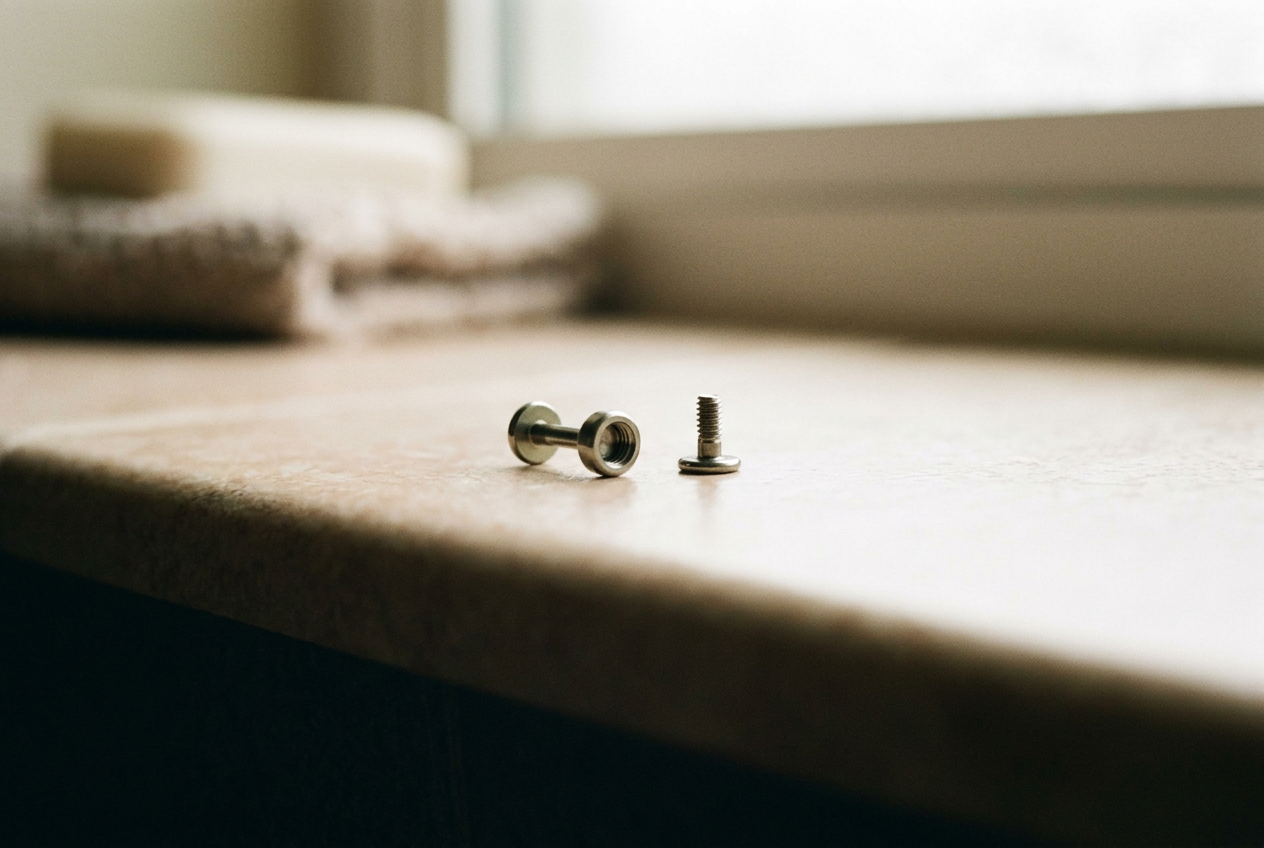
The detail to watch is a sliver of exposed metal. Picture a small polished bead on an implant-grade titanium post in a new second-lobe piercing: during the first days, the front sits close to swollen tissue while the round disc behind it leaves breathing room. Later, as the ear settles, that bead may hover away from the skin and the post may slide back and forth.
That movement explains an apparent contradiction. A flat back earring, meaning the post’s backing sits flush against the earlobe, can be easier to live with than a butterfly-backed stud, but the flat shape does not guarantee a close fit during healing. The initial post is often deliberately longer.
This is unisex advice. The mechanics do not change with wardrobe or styling, although the size and weight of the decorative end can change how much the jewelry shifts.
The post that feels too long on purpose
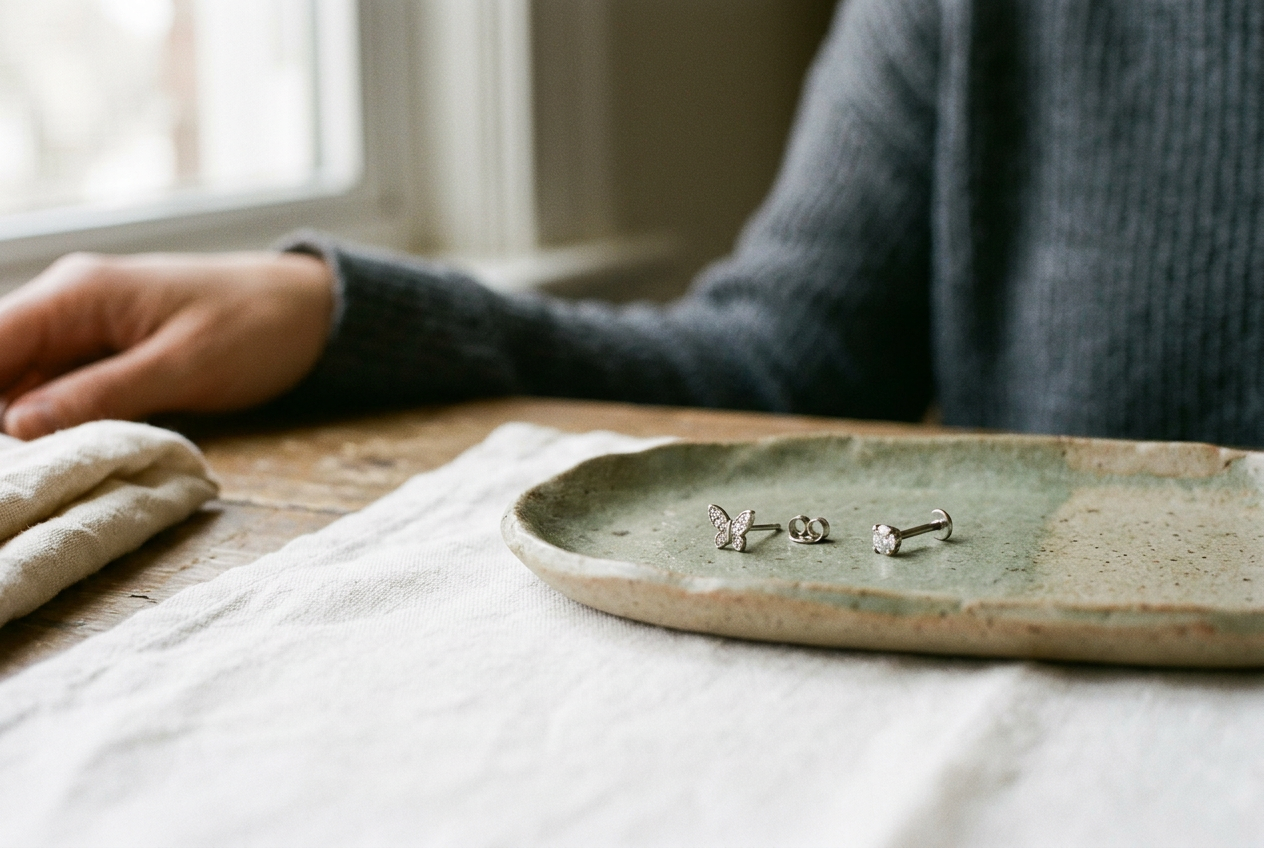
The reference earring here is a threadless labret post, a hollow post that holds a pressure-fit decorative end, finished with a low-profile disc behind the ear. Its implant-grade titanium should come with documentation showing that the material meets a recognized implant standard; “titanium-colored” and “surgical metal” are not useful substitutes for that information.
A professional piercer chooses the initial length by considering the placement, anatomy and swelling expected for that piercing. There must be enough post available for tissue to expand without the front end or backing pressing into it. That safety margin can look less polished than the fitted stack shown in jewelry photography, where every end appears to sit precisely against the ear.
The long post may even feel comfortable at first. Swelling takes up the spare space, so the disc does not dig in and the front does not feel tight. A pillow can still put pressure on the piercing, however, and a flat disc does not make sleeping directly on a healing ear risk-free. Public aftercare guidance generally advises avoiding pressure and friction while a piercing heals.
The useful distinction is between a flat backing and a fitted post. One describes shape. The other describes length.
Why comfort can get worse as swelling improves
Return to that titanium second-lobe earring after the early swelling has eased. More of the post is now visible. The front bead can tip downward, the backing can drift away from the ear, and the extra shaft can catch when hair is tucked back or when a shirt is pulled overhead.
At night, the disc may still feel smoother than a butterfly back, but the whole earring has more leverage because it can move along the longer post. A pillowcase can catch the front end rather than the backing. Side sleeping can push the angled jewelry against the piercing channel. None of this means the original fitting was wrong.
The fit requirement changed as the tissue changed.
This is where “sleep-friendly” needs qualification. For a healed piercing, a correctly fitted flat back can remove the projecting pin and curled metal wings found on a conventional stud. For a fresh piercing, swelling room comes first, which means the jewelry may be low-profile at the back while remaining loose through the ear.
A larger decorative end adds another variable. A tiny polished ball or bezel-set stone usually presents less surface area to bedding than a broad cluster, although even a small end can snag if the post has enough play. Heavy charms and chains are poor tests of whether a fresh piercing has settled; their movement can disguise a post-length problem by creating more movement of their own.
Downsizing is a fitting appointment
Downsizing means replacing the initial post with a shorter one after swelling has subsided enough to make the closer fit appropriate. It should not mean buying the shortest bar available and forcing it into place at home.
There is no universal calendar date for that change. Piercing location, tissue response and any episodes of irritation affect the timing, and a piercing can look calm from the front while still needing room. A professional piercer can assess the exposed post, check both sides of the ear and select a length that sits closer without compressing the tissue.
Ask for the measurement in millimeters and the gauge, meaning the thickness of the post, to be recorded. Also note the diameter of the rear disc and the attachment system. Those details make later jewelry shopping much easier, because a listing that says only “flat back” does not tell you whether the post will fit your piercing or accept your existing decorative end.
The titanium reference earring should look more composed after an appropriate downsize. The bead no longer droops away from the lobe, less shaft is available to snag, and the disc stays close without leaving an indentation from pressure. Close is the goal. Tight is not.
Do not remove or change jewelry merely because it feels annoying if the piercing is fresh or irritated. This explainer is not medical advice. A qualified piercer can handle jewelry fit, while concerning pain, spreading redness, heat, marked swelling or discharge should be discussed with a healthcare professional rather than diagnosed through a jewelry purchase.
The cost is often in the second post
Threadless flat backs separate the visible end from the post, so downsizing may require only a new post rather than a complete new earring. Policies vary. Some studios include a follow-up or post change in the original service, while others charge for the shorter post, the appointment or both; ask about that before the piercing rather than assuming the first piece is the final configuration.
Implant-grade titanium is often the practical starting point because it is lightweight and widely used for initial piercing jewelry. Solid gold can cost considerably more, especially when the decorative end carries stones or detailed construction, but price alone does not establish suitability. Ask for the gold purity and alloy information, and avoid plated finishes in a fresh piercing because the surface coating can wear.
The visible end usually drives the fashion price. A plain titanium ball keeps the initial purchase restrained, then a compatible threadless end can be upgraded after the piercing is stable. That approach is more useful than spending heavily on an elaborate cluster that catches during the period when the post must remain long.
There is one compatibility catch. Threadless ends and posts are not automatically interchangeable across every maker or size, while internally threaded jewelry, which uses a decorative end that screws into the post, relies on matching thread dimensions. Buy the construction details, not just the front view.
A better sleep setup starts outside the jewelry box
A shorter post can reduce snagging once a piercer says the piercing is ready, but it does not turn a healing ear into a pressure-tolerant one. If side sleeping is unavoidable, keeping the ear suspended in the opening of a clean travel-style or piercing pillow can reduce direct contact. The pillow setup must still keep pressure off the jewelry rather than bending the ear around it.
Hair management matters too. Loose strands can wind around the exposed section of the titanium post, then pull when the head turns. Keep hair away without repeatedly handling the earring, and change clothing with enough room at the neckline that the small front bead is not dragged forward.
For a fully healed piercing, the alternatives widen. A closely fitted flat back can work for overnight wear, while a smooth continuous or hinged ring may suit some placements if it has enough room and the piercing tolerates a hoop. A butterfly-backed fashion stud remains easy to find and quick to change, but its projecting post and separate clutch are usually the least appealing construction for sleeping.
The decision point is concrete: if the original second-lobe post now shows a persistent gap and moves enough to catch, book a fit check. If it feels tight, leaves pressure marks or appears to be sinking into the tissue, seek prompt professional assessment rather than waiting for a planned downsize.
Questions people ask
Do flat back earrings work for a fresh piercing?
They can, provided a professional piercer selects an appropriate material, gauge and initial post length. The backing may be flat, but the post still needs extra room for swelling, so a fresh flat back will not necessarily sit as closely as jewelry in a healed ear.
When should a flat back post be downsized?
Ask for an assessment after the initial swelling has settled and extra post remains visible or starts catching. Timing varies by placement and healing response, so use the studio’s follow-up plan rather than a fixed online deadline or the fit of someone else’s ear.
Can I sleep on a new flat back earring?
The flat disc removes the sharp projecting back found on many studs, but direct pressure can still irritate a healing piercing or push long jewelry at an angle. Avoid sleeping on that ear when possible, and ask a piercer about positioning if sleep repeatedly disturbs the jewelry.
What should I buy after downsizing?
Buy the post length and gauge confirmed by your piercer, then check whether the end is threadless or internally threaded. Implant-grade titanium offers a lightweight everyday option, while solid gold raises the price; in either case, prioritize documented material and compatible construction over a decorative front alone.
One update a day
Today's fashion update, in your inbox
One fashion update each morning — no hype, no filler, just pieces worth wearing.