Flat Back Earrings Need Swelling Room, Not a Long Post
For mild, short-term lobe swelling, one post-size increase is often enough. The fit should release pressure without leaving a length of metal that catches on hair or bedding.
September 3, 2026 · 7 min read
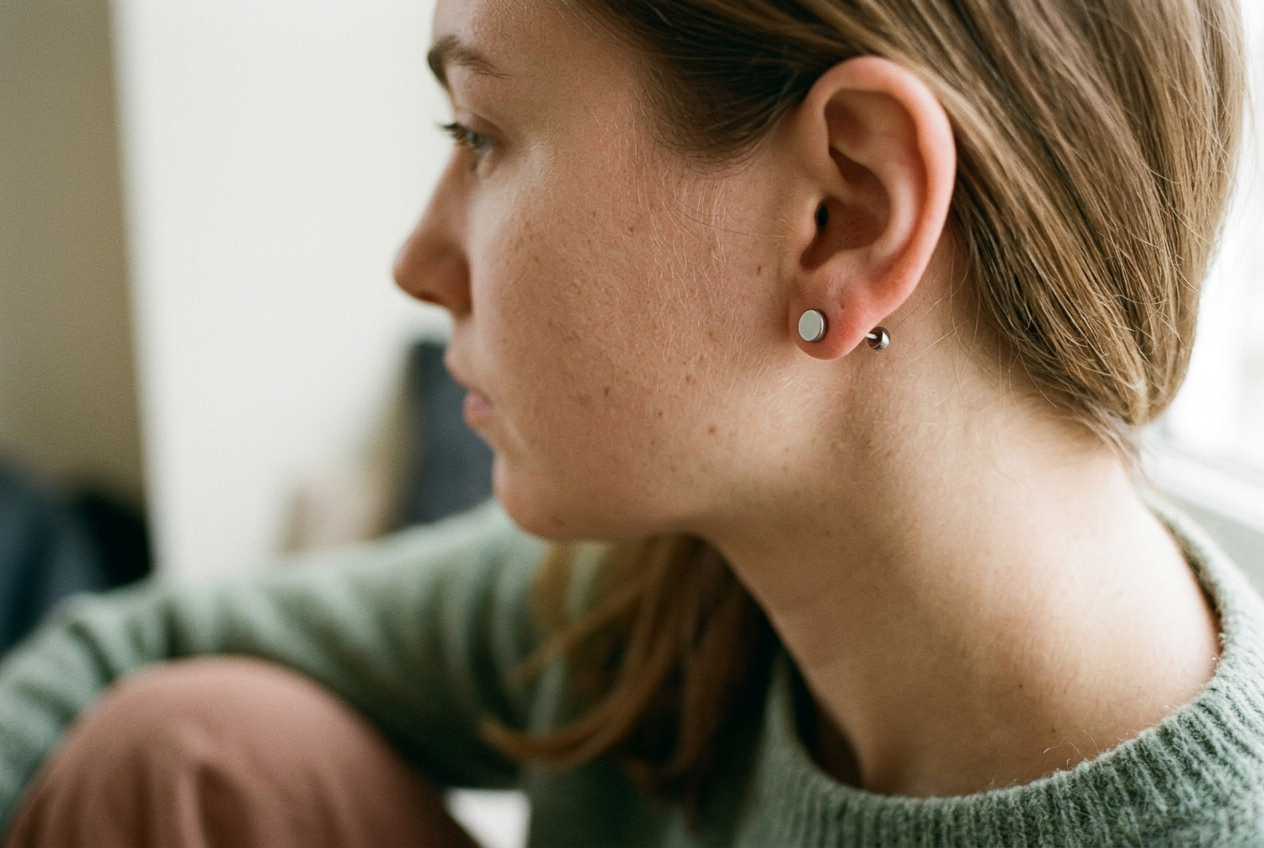
A small silver-gray disc sits against the back of the lobe. The decorative front stays close on the other side. Between them, the post has enough spare length to release pressure, but not enough to tip downward.
That is the target for a flat back earring, meaning the post’s backing sits flush against the earlobe. It applies across women’s and men’s wardrobes, so this is unisex fit guidance rather than a styling rule.
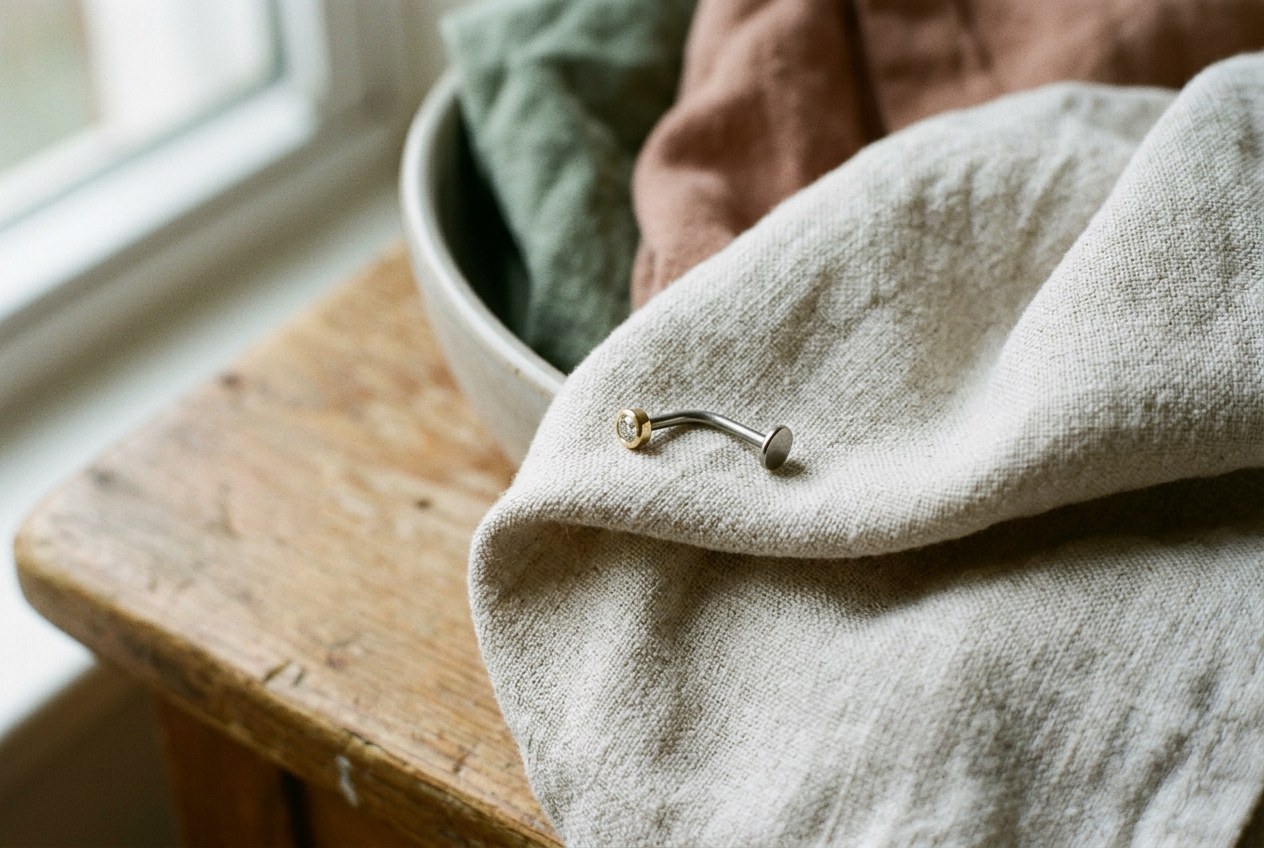
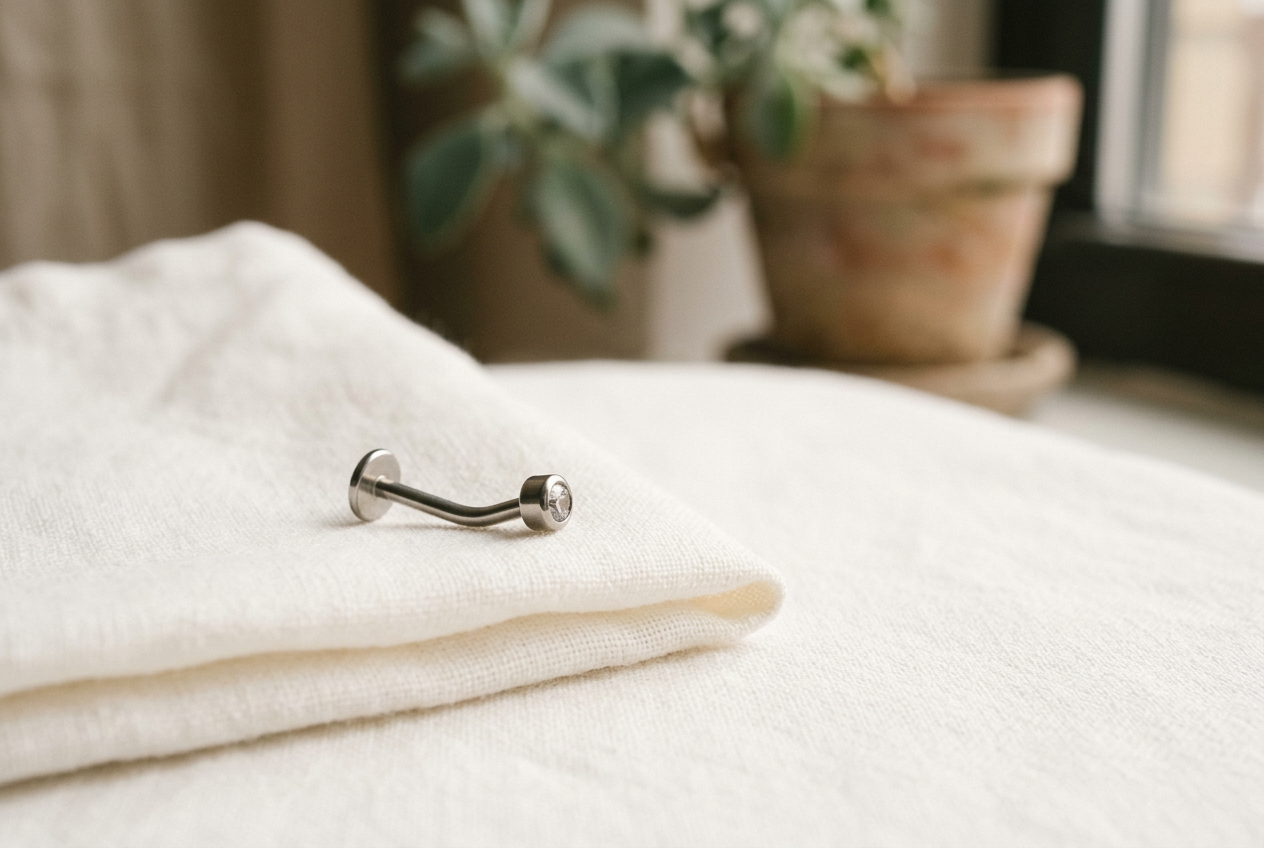
Keep one reference earring in mind: a threadless implant-grade titanium labret with a 3mm back disc, a small bezel-set front and a 6mm wearable post. “Threadless” means the decorative end has a pressure-fit pin rather than a screw thread. At its usual fit, that 6mm post sits neatly against a calm, healed lobe. If the lobe becomes mildly puffy after pressure or an accidental tug, an 8mm version of the same post creates 2mm of temporary capacity.
The extra 2mm is not the desired visible gap. Swollen tissue occupies some of it. Once fitted, the useful remainder may be closer to a slim 1mm breathing space, enough to prevent pinching while keeping the earring controlled.
Start with the normal fit
Post sizing begins with the earring that fits when the lobe is settled. The wearable length, which is the distance between the underside of the decorative front and the inside face of the flat disc, should span the tissue without compressing it.
A normal flat back may look nearly flush. Nearly matters. The disc should rest against the skin rather than carve a circular mark into it, while the front should remain fully visible instead of settling into the piercing channel. A faint impression after sleeping on the ear can happen from pressure, but a persistent groove suggests the post is too short or the ear is being compressed overnight.
Check the fit while upright and in neutral indoor conditions, not directly after a hot shower, exercise or prolonged pressure on that ear. Those moments can temporarily change how the lobe looks. Clean hands first, then gently move the jewelry forward and back without twisting it through the channel. A healed piercing with the right length usually shows a trace of movement.
The reference 6mm titanium post passes this check when the lobe is calm. That measurement becomes the baseline. Guessing from the total length of the loose jewelry can lead to a mistake because decorative ends, insertion pins and backing thickness are not part of the wearable space.
Add one size, then reassess the gap
For mild, short-lived swelling in a healed piercing, start with the next available post length rather than jumping several sizes. Jewelry makers commonly offer neighboring lengths in increments of 1mm or 2mm, although the sequence varies, so compare the listed wearable measurements rather than relying on labels such as small or medium.
On the reference earring, moving from 6mm to 8mm adds one 2mm increment. Once the swollen lobe takes up part of that length, aim to see or feel roughly 1mm of unoccupied post. This is a fit heuristic, not a medical cutoff. Lobes vary in thickness, swelling changes through the day, and a ruler cannot identify why an ear is irritated.
Look at both ends. The front must remain above the skin with its full edge visible. At the back, the disc should lie flat without a sharply defined indentation. Gentle contact is fine.
Pressure is not. If the post has no movement, the front looks lower than it did earlier or the backing appears embedded, there is not enough room.
Now test the opposite failure. Lower the chin, turn the head and move the hair around the ear. A temporary post is too long when the front noticeably pitches downward, the disc hangs away from the lobe or several millimeters of bare shaft remain exposed after the swelling has occupied its share. That lever-like movement increases the chance of catching the earring during dressing, hair washing or sleep.
Treat the longer post as temporary hardware
The longer post solves a clearance problem. It is rarely the better everyday fit once the lobe returns to normal.
An 8mm post on the reference earring may feel comfortable during the puffy stage, yet after the tissue settles it leaves the decorative front free to tilt and puts the 3mm disc farther from the ear. Hair can wind around the shaft. A shirt pulled over the head can catch the front. On a pillow, the extra length allows the earring to shift even though the flat disc itself is smoother than a butterfly clutch.
Recheck the space as swelling decreases. When the original 6mm post once again spans the lobe without pressure, returning to it restores the close fit that makes flat backs useful as sleep-friendly jewelry. Do not keep the longer post merely because it feels looser. Loose jewelry still exerts force when it snags.
A small front needs especially little surplus length because its low weight does not hold the post in one position. Larger decorative clusters can mask a long shaft from the front while tilting under their own weight, so assess the disc and exposed post from behind as well.
Keep the gauge and connection the same
Length is the variable here. Gauge, meaning the thickness of the post, should remain unchanged unless a professional piercer recommends otherwise. Replacing a short post with a longer but thicker one can stretch or irritate the channel, while a thinner post may not fit the decorative end or may move differently inside the piercing.
Connection type also matters. A threadless front must be compatible with the replacement post’s internal opening and pin design. Internally threaded jewelry, where the front screws into threads hidden inside the post, needs a matching thread pattern. “Universal” is not a safe assumption across makers.
Buying only a compatible post is often the efficient option. Implant-grade titanium, which is titanium made to a recognized implant-material specification, is generally the lower-cost hardware choice compared with replacing an entire solid-gold earring. Ask the seller to identify the material and specification rather than accepting “titanium color” or an unspecified metal description.
Solid 14k or 18k gold can work when the alloy is suitable for body jewelry, but plating is a poor substitute on a post that stays in close contact with an irritated lobe. Surface coatings can wear, and the underlying metal then becomes part of the fit and skin-contact equation. The temporary post does not need to match the decorative front visually because most of it is hidden.
Reduce snagging while the post is longer
A low-profile front and a small flat disc keep the temporary setup controlled. The reference earring uses a bezel setting, which surrounds the stone with a smooth metal rim, rather than raised prongs that can hook fibers. That choice does not fix an overlong post, but it removes one common catch point while the extra length is necessary.
Keep hair from wrapping around the exposed section, and avoid tight over-ear headphones, hats or sleep masks that press the jewelry sideways. If the earring must stay in overnight, use the side that does not put the swollen lobe against the pillow. Comfort during sleep is not proof of correct sizing; a post can be too short without waking you, then show a deep mark in the morning.
Do not add improvised spacers, silicone pieces or a butterfly backing to shorten a labret post. They change where pressure lands and create extra surfaces around an already irritated area. The cleaner alternative is the correct wearable length.
Know when sizing is no longer the issue
This guide covers mild, temporary swelling in a healed lobe. Swelling that persists, worsens or repeatedly returns needs assessment by a reputable professional piercer or clinician, particularly when the area is hot, increasingly painful, markedly red, draining, bleeding or swallowing either end of the jewelry.
A fresh piercing is a different case. Initial post length and later downsizing should be managed with a piercer because the channel is healing and swelling can change quickly. Removing or replacing jewelry without guidance may cause more trauma or allow the opening to tighten before the cause of the swelling is understood.
Material sensitivity, pressure from sleeping, a snag injury and an unsuitable post can look similar to a shopper examining an ear in a mirror. A longer post only addresses compression. It does not explain the swelling, and it is not worth buying a succession of lengths while an unresolved problem continues.
Questions people ask
How much extra post should show on a swollen lobe?
For mild, temporary swelling in a healed lobe, aim for roughly 1mm of free post after the tissue occupies the added length. Moving up one available size, often an increase of 1mm or 2mm depending on the maker, is a better starting point than choosing a dramatically longer shaft.
Can I sleep in a longer flat back earring?
You can if neither end presses into the lobe and the post stays controlled, but added length makes snagging and sideways movement more likely. Keep hair clear, avoid sleeping directly on that ear and return to the normal post once swelling subsides.
Do flat back earrings work for a fresh piercing?
Flat backs are commonly used for lobe piercings, but a fresh piercing needs post sizing and downsizing from a professional piercer. Do not use the 1mm-gap guideline to manage a new or actively healing piercing by yourself, since swelling can change and the channel is vulnerable to trauma.
Is titanium better than gold for a temporary post?
A properly specified implant-grade titanium post is light, durable and often less expensive than buying a new solid-gold earring. Suitable solid gold can also work. Compatibility, verified material and correct wearable length matter more than matching the color of a post that is largely hidden.
One update a day
Today's fashion update, in your inbox
One fashion update each morning — no hype, no filler, just pieces worth wearing.