Drawstring Sneakerinas Look Delicate. Can They Commute?
The ballet-trainer hybrid has moved from novelty to a recognizable shoe shape. A week in a satin pair shows why heel hold matters more than softness.
Women's · August 21, 2026 · 8 min read
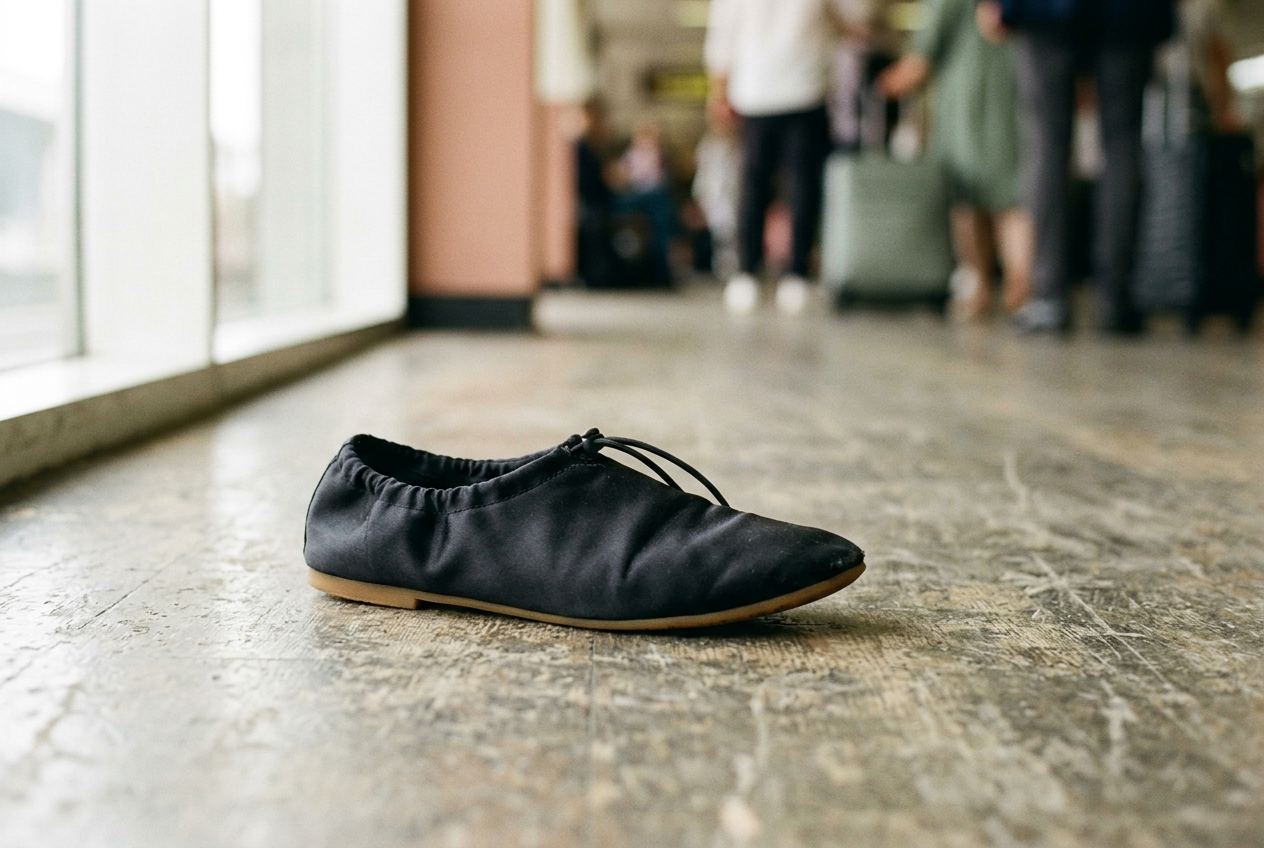
The shoe I kept returning to was the black Vivaia Cristina Lace-Up Satin Sneakerina, worn through a workweek of sidewalks, station stairs and office floors. Its satin upper gathers around the foot, while slim cords cross the instep and a low rubber sole supplies more grip than a conventional ballet flat.
This is women’s coverage because the current selection and sizing are largely presented that way, although the construction lessons apply to any similarly soft shoe. I took my usual size. The length was right, but the fit revealed the central problem with this growing category: a shoe can feel close around the opening without holding the heel securely.
The Cristina looked composed at the beginning of each trip. After sustained walking, the cords needed a firmer pull, the satin creased across the forefoot and my heel began to move more than it would in an ordinary lace-up sneaker. Nothing dramatic happened. There was no instant blister or broken component.
The compromise arrived as low-level fatigue and repeated awareness of the shoe, which is precisely what matters on a commute.
The silhouette has split from the sneaker
Fashion reporting has settled on “sneakerina” as a useful, if slightly awkward, name for shoes combining a ballet-flat upper with trainer details. The broader shift is visible in Puma’s Speedcat Ballet, the Onitsuka Tiger Mexico 66 TGRS and Adidas Taekwondo-derived shapes, though those models use different straps, openings and sole constructions. The soft drawstring version is one branch rather than a standardized category.
Its identifying features are a shallow upper, a closely cut sole and some form of gathering or cord adjustment. Compared with a regular sneaker, there is less material around the ankle and little visual separation between upper and sole. Compared with a flat, there is more rubber underfoot, a sport-derived tread and often a padded footbed.
That combination photographs well because it preserves the narrow line of a ballet shoe without putting the foot directly onto a flat leather or synthetic sole. It also fits the move away from dominant, heavily built sneakers. Thick trainers have not vanished, but they no longer own every casual outfit; the eye has adjusted to a sole that sits close to the ground again.
The drawstring adds softness and a visible sense of adjustment. It can also overstate how adjustable the shoe really is.
A thin sole still has to do a job
An ordinary lifestyle sneaker usually places a midsole, meaning the cushioning layer between the footbed and outer sole, under much of the foot. Even when that foam is not designed for running, it absorbs some impact and creates distance from pavement texture. A ballet flat generally offers much less, relying on flexibility and low weight rather than protection.
The Cristina sits between those poles. Its rubber base improved traction on polished station floors, and the footbed felt softer than that of a basic flat, but the slim construction could not disguise hard pavement for long. The forefoot was the first area to tire because there was little material between the ball of the foot and the ground. The shoe remained wearable; it stopped feeling effortless.
That distinction matters when shopping. A soft insole can feel persuasive during several minutes on carpet, yet compression under one thumb says little about how the whole shoe manages repeated impact. Look at the side profile. If the outsole and footbed together remain very thin beneath the forefoot, expect ballet-flat levels of ground feel even when the product is shelved beside sneakers.
Flexibility is not automatically comfort, either. A shoe that folds easily through the middle asks the foot to supply more stability, while a slightly firmer section through the arch can reduce that work. The Cristina bent most readily at the forefoot, which suited a normal walking stride, but it offered less structure than the conventional sneakers I would choose for a day with multiple trips.
Gathering changes fit, not always retention
A gathered upper solves one problem neatly: it lets a flat piece of satin, nylon or knit curve around the foot without the firmer shaping used in a leather sneaker. It can accommodate a little swelling and reduce the rigid edge that sometimes cuts into the top of the toes.
Foot retention is different. Retention describes how well the shoe keeps the heel and midfoot from sliding during movement, and it depends on where tension travels. Traditional sneaker laces pull two structured sides together, while a heel counter, the stiff insert around the back of the shoe, limits sideways movement. A classic ballet flat skips those systems and succeeds only when its opening and heel shape match the wearer closely.
On the Cristina, tightening the cords brought the satin closer over my instep, but it did not turn the soft rear of the shoe into a fixed heel cup. Pulling harder eventually created pressure across the top of the foot without removing every trace of heel lift. The cord was useful. It was not equivalent to sneaker lacing.
Width complicates the picture. A broader forefoot may enjoy the yielding upper, then find that the narrow sole leaves the outer toes working near its edge. A narrow or low-volume foot can tighten the cord, but excess fabric may pucker before the heel feels secure. Half sizes, where offered, matter more here than the softness suggests.
This is the fit test I would repeat in a store: walk quickly, turn sharply and take a flight of stairs without curling the toes to keep the shoe on. If the heel rises noticeably, tightening the cord once is reasonable. If more tension only presses the instep, the shape is wrong.
The commute verdict depends on the route
For a commute with a short walk, public transit and mostly indoor time, the Cristina passed. It looked sharper under straight trousers than a running-derived sneaker, packed without taking much room and handled smooth floors better than a leather-soled ballet flat. The gathered satin also avoided the stiff break-in period associated with some structured flats.
For prolonged pavement, fast transfers or a day spent moving between locations, I would still take an ordinary sneaker. Its thicker base and secured heel reduce the small muscular corrections that accumulate when a soft shoe shifts. Those corrections are easy to dismiss during a fitting and hard to ignore near the end of a long day.
Rain also exposes the hybrid’s priorities. Satin and soft woven uppers show water, collect street dirt around the gathered edge and are rarely the materials I would choose for repeated wet-weather wear. A rubber outsole keeps the foot from meeting the pavement directly, but it does not make the upper weatherproof. Spot cleaning is slower than wiping smooth leather, and vigorous rubbing can alter the sheen.
After the wear week, the Cristina still looked presentable, although the forefoot creases remained visible and the outsole edge showed the ordinary grime a black satin upper makes conspicuous by contrast. I would treat it as an office-leaning commuter shoe, not a replacement for the pair kept by the door for uncertain weather.
Buy the construction, not the label
Mainstream sneakerinas tend to cost somewhere between a fashion flat and a decent branded sneaker, while designer versions move into luxury-shoe territory. The higher price does not guarantee better commuting performance because delicacy may be the intended result. Paying more can buy finer leather or a more distinctive upper without adding sole depth, heel structure or weather resistance.
Before buying, press around the back. A heel that collapses completely may pack beautifully, but it will not supply the control of a structured sneaker. Check whether rubber covers the full contact area rather than appearing only in small patches, then stand on a hard surface if the store allows it. Carpet hides thin soles.
The most useful version has a footbed that can be removed or replaced, enough outsole beneath the forefoot to soften repeated steps and a cord that changes midfoot hold before it becomes painfully tight. If those details are absent, a secure ballet flat with a rubber sole may be the cleaner purchase. For a genuinely walking-heavy routine, a low-profile sneaker remains the better tool.
Styling should acknowledge the narrow profile. The Cristina worked best when a trouser hem cleared the floor and exposed enough of the gathered upper to make the shape legible. Fabric pooling over the shoe swallowed it and risked catching beneath the heel. A visible sock changes the line considerably, so no-show socks or a thin tonal pair preserve the ballet reference while adding some protection from rubbing.
The cord may fade before the low sole does
The durable part of this trend is likely to be the lower, closer sneaker silhouette. It answers a real styling need by sitting under tailored pants and longer skirts without adding the volume of a running shoe. The gathered drawstring is less settled. It can read as purposeful on technical nylon and decorative on satin, and its practical value depends entirely on whether it connects to a supportive structure.
I remain undecided on the category, though not on the commute test. The Cristina earned a place for lighter office days because it offered better grip than my usual flats and a finer line than my sneakers. On mornings built around distance, stairs or rain, it stayed home.
Questions people ask
Are drawstring sneakerinas comfortable for walking?
They can handle moderate walking when the heel stays secure and the forefoot has enough cushioning. Softness in the upper does not compensate for a thin sole, however. If you feel pavement pressure or start gripping with your toes during a fitting, the shoe is better suited to short trips than a full walking day.
Should I size up in a soft ballet sneaker?
Do not size up automatically. Extra length can worsen heel lift, while the gathered upper may already provide some width. Start with your usual women’s size, check that the toes remain on the sole rather than spilling over its edges, and use a half size only to solve a specific length or pressure problem.
Are sneakerinas better than ballet flats for commuting?
A version with a full rubber outsole usually offers more grip and ground protection than a minimal ballet flat. It may still lack the heel structure and cushioning of a regular sneaker. Choose it for a mostly seated or indoor commute; choose the sneaker when the route includes sustained pavement or rushed transfers.
Can satin drawstring sneakers be worn in rain?
A brief encounter with damp pavement is different from regular wet-weather use. Satin can mark, gathered seams can trap dirt and the upper is not made weatherproof by a rubber sole. Check the maker’s care instructions, spot clean cautiously and keep another pair available when the forecast calls for steady rain.
One update a day
Today's fashion update, in your inbox
One fashion update each morning — no hype, no filler, just pieces worth wearing.