The Sneakerina’s Instep Strap May Be Doing Nothing
The Puma Speedcat Ballet shows why a sneakerina should be judged as a fit system, not a novelty. Its straps, flexible sole and shallow heel need to work together.
Women's · August 10, 2026 · 8 min read
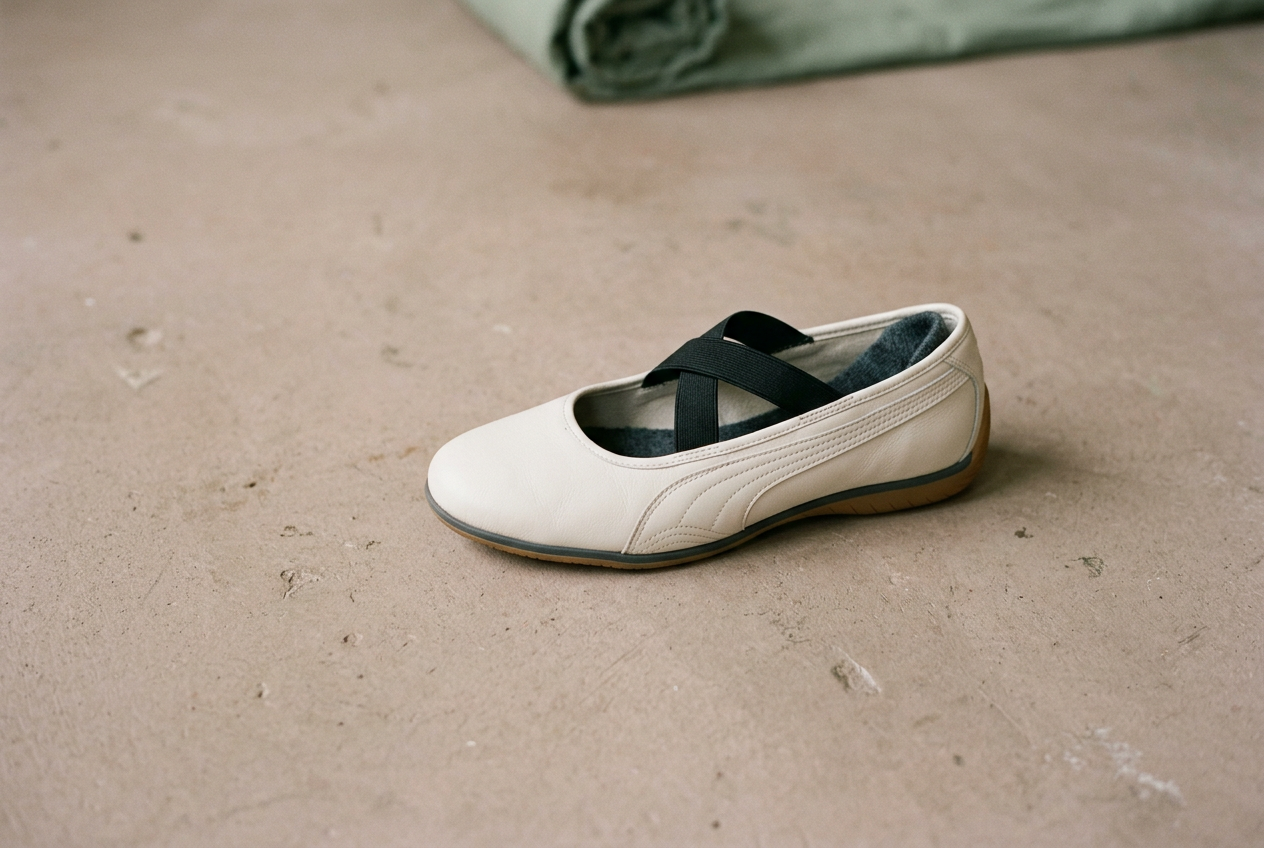
The Puma Speedcat Ballet is a useful test case because its identity rests on a visible piece of engineering: crossing elastic bands over a cutaway upper. The bands make the motorsport-derived sneaker read as a ballet shoe, but they also inherit the job of holding the foot in a shoe with less upper material than an ordinary lace-up.
That is where the trend becomes more than a styling decision. A sneakerina can look softer and feel lighter than a conventional sneaker, yet the missing laces and shallow sides reduce the usual ways a wearer adjusts volume. If the elastic cannot compensate, the hybrid has acquired decoration while giving up control.
This is women’s coverage, and women’s sizing remains the relevant retail context for the Speedcat Ballet. The fitting principles apply more broadly, but anyone translating from men’s or unisex sneakers should compare actual measurements and return terms rather than trusting a familiar size number.
For a hands-on indoor assessment, I treated a new Speedcat Ballet as a fit problem rather than taking it on a full outdoor wear test, which would have made it unreturnable. The central quirk appeared quickly: the crossing bands could feel present across the instep before the heel felt fully locked down. That distinction matters. Pressure is not proof of support.
The strap needs a job
On the Speedcat Ballet, the elastic crosses the vamp, meaning the section of upper over the top of the forefoot, then pulls toward the sides. It visually reproduces the ribbons of a ballet shoe without requiring the wearer to tie anything. Elastic also accommodates small changes in foot volume through the day.
A functional strap should resist the foot’s forward slide and reduce side-to-side movement when direction changes. It should do this before it reaches an uncomfortable level of tension. In the reference pair, pressing a thumb under each band showed that the elastic had give, but a short indoor walk made the more important issue clear: the bands were easier to notice than the rear of the shoe was to trust.
That does not make the design unwearable. It means the fit cannot be approved by checking whether the bands touch the foot. Walk briskly, turn without lifting the foot high and go up a few stairs if the fitting space allows it. The heel should remain seated while the bands stay broad and flat.
If the elastic rolls into a narrower cord, twists at the side or leaves a deep line within minutes, it is concentrating pressure instead of distributing it.
Foot shape changes the result. A higher instep can meet firm elastic even when the shoe’s length is correct, while a lower-volume foot may sit under the same straps without receiving much restraint. Sizing down to make decorative elastic feel functional is a poor fix if the toes then reach the front or the widest part of the foot no longer aligns with the widest part of the sole.
Elastic pressure is not a break-in plan
Leather can soften at a flex point. Foam can compress. Elastic may relax with repeated use, but a shopper cannot know in the fitting room how much it will yield or whether it will yield evenly, and a band that begins painfully tight has already failed the useful test.
Wear the sneakerina indoors for longer than the quick mirror check, using the socks, tights or bare-foot setup intended for ordinary wear. Feet often occupy slightly more volume later in the day. A strap that feels assertive in the morning can become distracting after walking and warmth, particularly where two elastic bands overlap.
The Speedcat Ballet’s exposed instep makes thin socks a visible styling choice rather than a hidden comfort layer. Bare skin produces the cleanest ballet-flat line, but it also puts elastic and edge binding directly against the foot. A low-profile liner may reduce friction, provided it stays below the cutaway sides; if it bunches under the arch or rises above the opening, the shoe has traded one irritation for another.
Look at the skin after the indoor test. A light temporary impression can occur under close-fitting footwear, but persistent pain, numbness or a pronounced ridge is not useful hold. The relevant comparison is a Mary Jane sneaker with an adjustable buckle or hook-and-loop strap. Adjustment is less visually minimal, though it gives a high or low instep somewhere to go.
Flex belongs at the toes
The sneaker half of the sneakerina should contribute more than rubber underfoot. A flexible sole can make a low-profile shoe pleasant for short city walks because the foot does not have to lever through a stiff platform, but flexibility needs to occur in the right area.
Hold the heel in one hand and press the toe upward with the other. The sole should bend most readily near the toe joints, where the foot naturally rolls forward. If it folds easily through the middle, the shoe may feel soft in the hand while offering little resistance under the arch. That is flexibility without much structure.
The Speedcat Ballet’s slim sole preserves the close-to-ground character of the Speedcat family. It also leaves less room for thick cushioning than a standard lifestyle running shoe. Anyone accustomed to a deep foam midsole should expect firmer ground feedback, even if the upper feels airy and the forefoot bends easily. This is not automatically a defect.
It is a tradeoff that becomes expensive if the shoe is bought to replace a supportive all-day sneaker rather than to cover shorter, lighter walking.
Test both shoes. Rubber thickness, assembly and the way an upper is bonded can produce small differences, while feet themselves are rarely identical. A pair that bends well but twists with almost no resistance through the middle deserves caution if the wearer already knows that very soft flats become tiring.
The price sits in the territory of a mainstream branded lifestyle sneaker, rather than a disposable novelty flat, so the sole should earn part of that cost. A ballet reference does not excuse a sole that feels thin only for appearance.
Heel security decides whether the hybrid works
The heel is the Speedcat Ballet’s harder problem. Its low, open-looking line is central to the silhouette, yet less material around the foot means the elastic bands must help keep the rear seated without hauling the whole foot forward.
Check heel lift while walking normally, then repeat with a faster step. A small amount of movement may be tolerable in a soft flat, but repeated lifting creates friction and encourages toe gripping, especially when the wearer unconsciously tries to keep the shoe attached. Tight instep elastic can coexist with heel slip. In the pair examined, that combination was the reason not to treat obvious strap contact as a successful fit.
The heel counter, the structured section that cups the back of the heel, should follow the wearer rather than gape as the foot rolls forward. Pressing around it reveals whether there is meaningful shape or little more than soft upper material. Then check the top edge. A secure counter with a sharp edge can trade slipping for rubbing, while a padded edge may feel pleasant but still sit too wide.
Heel grips are an imperfect rescue. They occupy space at the rear and can help with minor volume, but they may also push the foot toward already-firm elastic or shorten the usable length. If a new shoe requires a heel grip, a liner sock and a sizing compromise before it leaves the house, its appealing hybrid construction has not improved fit.
The trend has reached its sorting stage
The sneakerina remains visually persuasive. It works with wide trousers because the slim toe avoids adding bulk, and it can interrupt a soft skirt with a rubber sole rather than another delicate flat. The Speedcat Ballet makes that contrast especially legible: sporty outsole below, exposed instep above.
Novelty, though, has stopped being enough. Once several variations of a silhouette become familiar, the versions that last are usually those that solve a wardrobe or comfort problem beyond looking new. Here, that means a strap placed to control movement, elastic calibrated for a usable range of foot volumes and a heel shape that stays with the foot.
For the Speedcat Ballet, the decision lands with the individual instep-to-heel relationship. A foot that fills the upper evenly may get a light, flexible shoe with more hold than a conventional ballet flat. A lower-volume heel paired with a higher instep can receive the opposite bargain: pressure at the top, movement at the back.
Try the shoe with the hem it will meet most often, but make the buying decision while looking down at the heel, not at the outfit. If the rear rises while the crossed bands remain taut, put the pair back. An adjustable Mary Jane sneaker will be less pure as a fashion object and more adaptable as a shoe.
Questions people ask
Should sneakerina straps feel tight at first?
They should feel secure, not painful. Broad elastic may leave a light temporary impression, but pinching, numbness or a deep ridge during an indoor fitting is not a sensible break-in plan. Check again later in the day, when the foot may occupy more volume.
How much heel slip is acceptable in a sneakerina?
A slight movement may be tolerable in a soft, shallow shoe, but the heel should not lift repeatedly during a brisk walk or on stairs. If the toes start gripping to retain the shoe, the heel fit is too loose even when the instep straps feel tight.
Are sneakerinas supportive enough for all-day walking?
That depends on the sole and the wearer’s needs. A slim sneakerina such as the Speedcat Ballet offers close ground feel and forefoot flexibility, not the deep cushioning of a running-inspired lifestyle sneaker. Test where the sole bends and reserve it for shorter wear if soft, minimally structured flats usually tire your feet.
Is an adjustable strap better than elastic?
An adjustable strap usually handles differences in instep height more effectively, though buckles and hook-and-loop closures change the clean ballet line. Elastic works when its resting tension matches the foot and its placement improves heel security. If it only presses downward, adjustability is the more useful choice.
One update a day
Today's fashion update, in your inbox
One fashion update each morning — no hype, no filler, just pieces worth wearing.