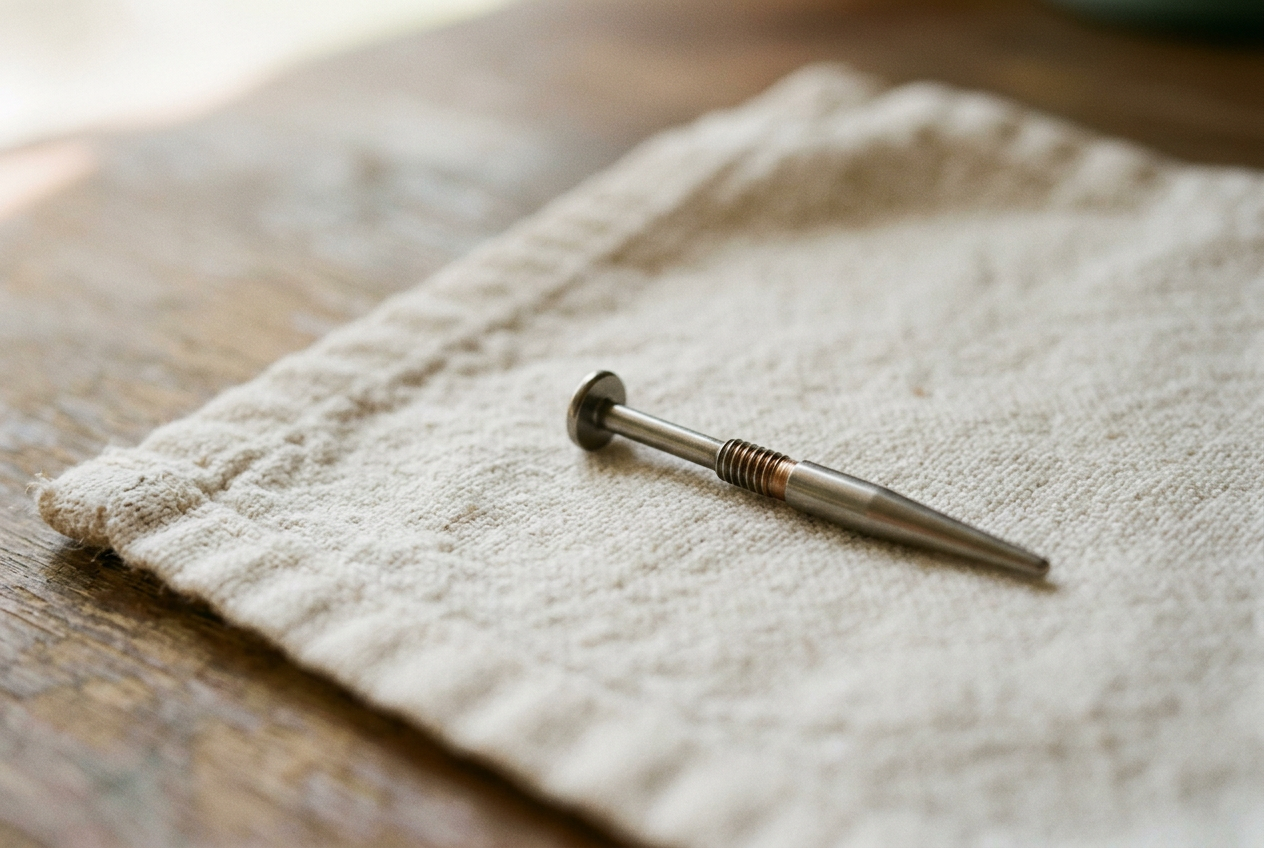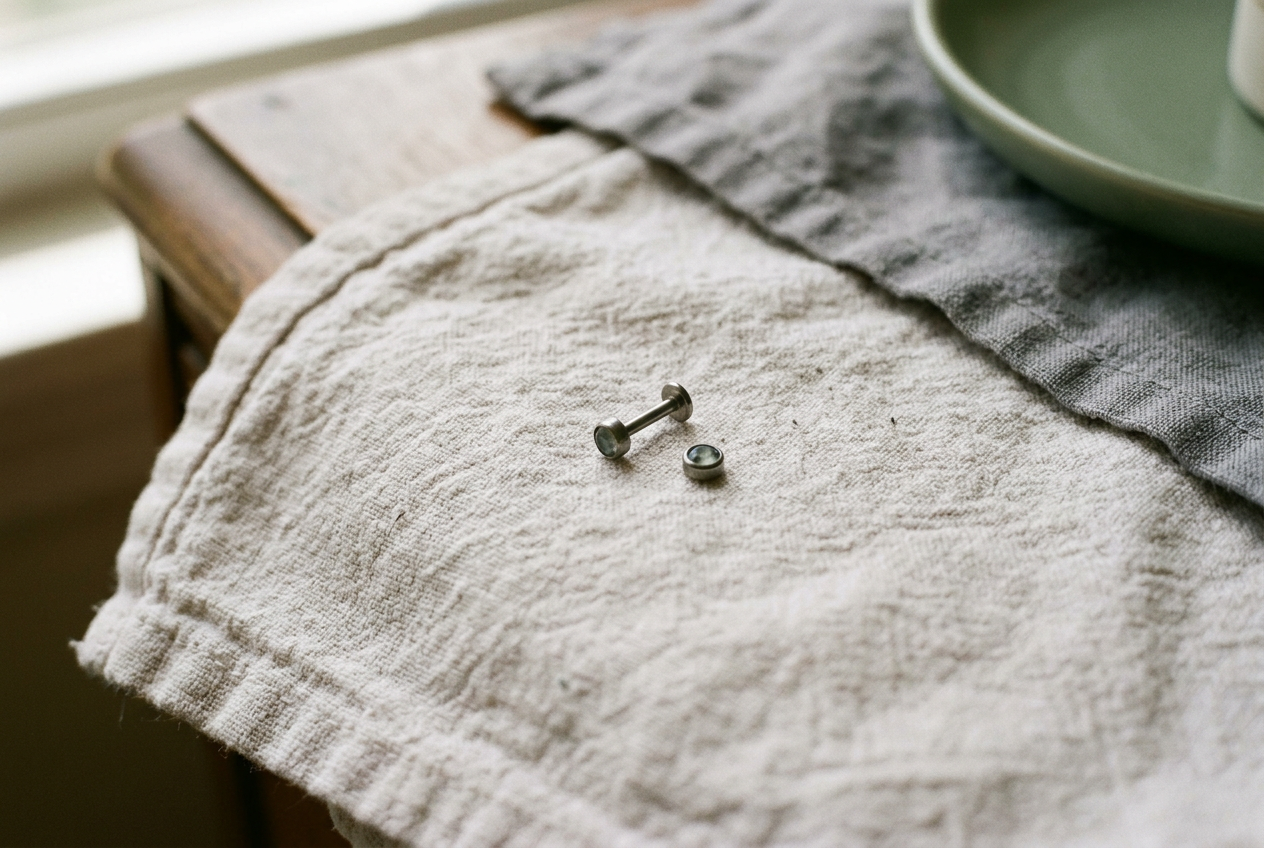
Downsize a Healing Piercing Before the Long Post Starts Tilting
The starter post needs room for swelling, but that extra length can become a snag point later. A piercer can tell when shorter jewelry will sit securely without pressing.
August 22, 2026 · 7 min read
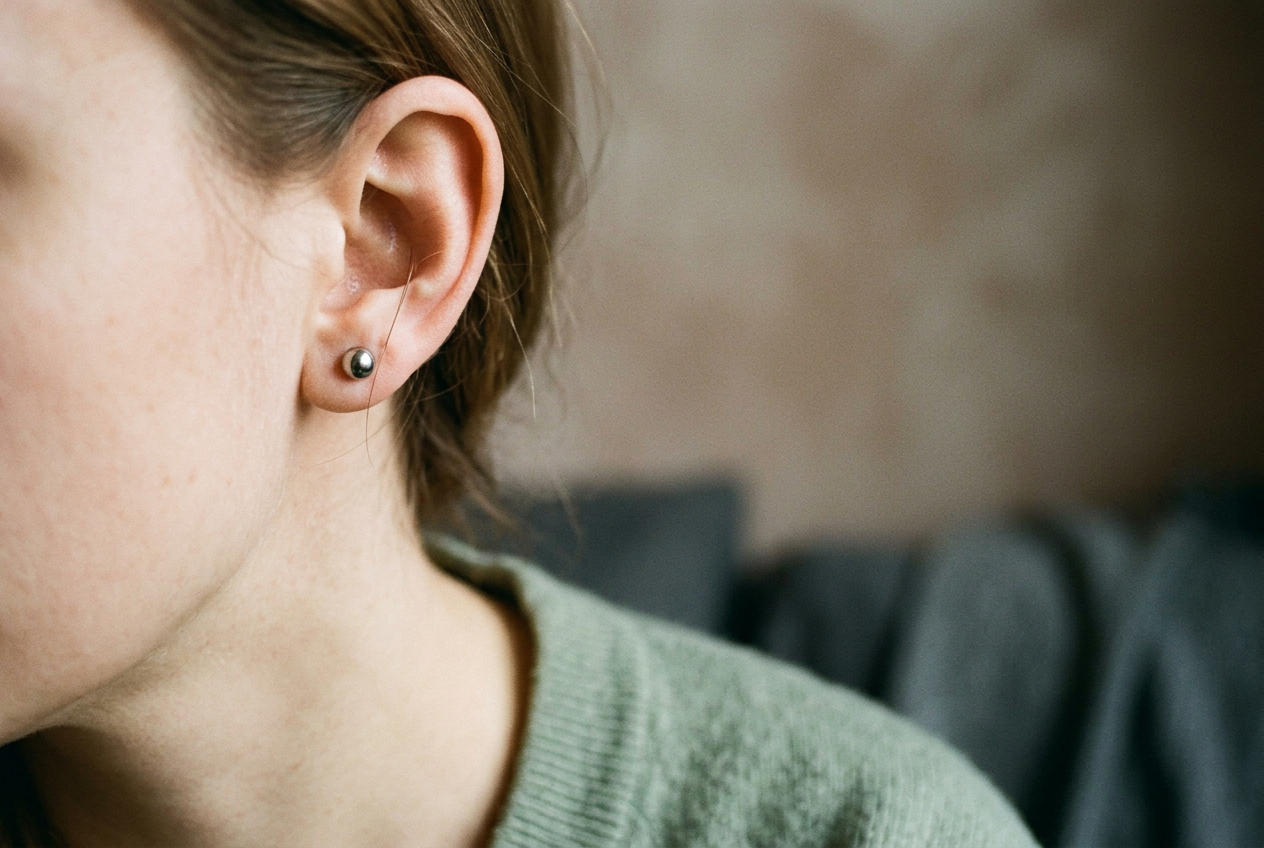
A slim strip of metal showing between the ear and the decorative end is often the first clue. Consider one specific setup: a small polished titanium ball on a threadless labret in an upper-lobe piercing, worn with enough spare post to accommodate early swelling. At first, the ball sits close to the skin. Later, it begins to lean forward, while the smooth disc at the back catches a strand of hair or nudges the pillowcase.
That change can mean the starter post has done its job.
A flat back earring, meaning the post ends in a smooth disc rather than a butterfly clutch, is often comfortable enough for daily wear once it fits correctly. The initial version is deliberately longer. Downsizing, the switch to a shorter post while keeping an appropriate decorative end, removes excess room after swelling has receded.
This fit guidance is unisex. Ear anatomy and piercing placement determine the post length, not the section of the jewelry counter where the earring was sold.
Why the first post needs visible room
A fresh piercing can swell, and the amount may change during the early healing period. The longer starter post leaves space so the front and back do not press tightly into tissue as that swelling develops. A close fit may look neater on day one, but neat is the wrong priority if the jewelry leaves no margin.
The upper-lobe example uses implant-grade titanium, a body-jewelry material commonly chosen for its biocompatibility and low weight. Its threadless labret is a post whose decorative end is held in place by a fitted pin rather than screw threads. Those construction details matter: a smooth, correctly finished post limits unnecessary friction, while the flat disc removes the protruding clasp that makes conventional studs awkward against a phone or pillow.
None of that makes the starter length ideal forever. Once the ear no longer needs the spare room, the same post can slide farther than intended, and each small movement may alter the angle at which the ball rests. Hair winds around the exposed stem. A sweater neck catches it.
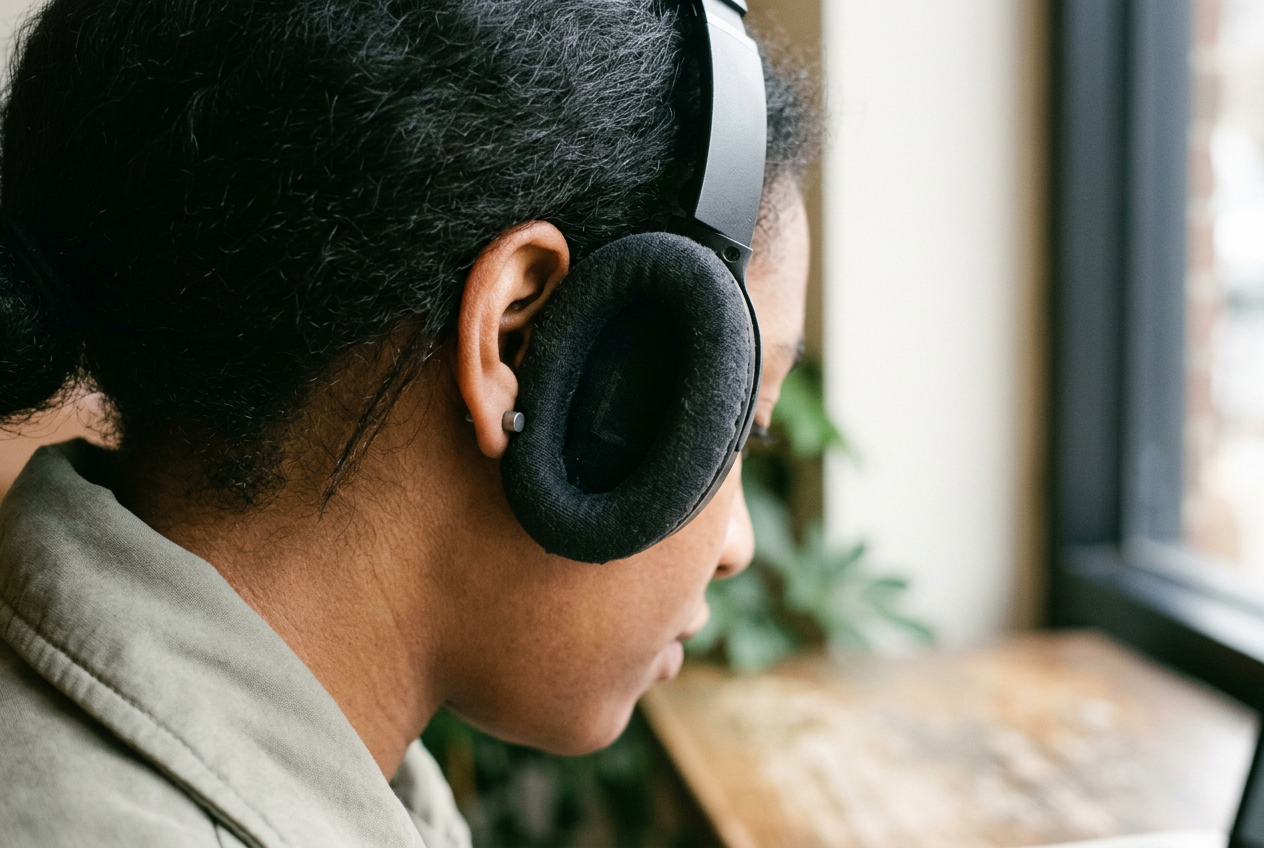
The backing shifts when over-ear headphones go on.
The tradeoff changes with the fit. Early on, extra length protects against pressure. Later, too much length creates leverage.
Look at the jewelry at rest
Do not judge the post immediately after a shower, exercise, accidental knock, or a night spent on that side. Temporary swelling can make a previously loose post look close-fitting. Check it when the ear is calm, without pushing either end to manufacture a gap.
In the upper-lobe setup, the useful sign is persistent spare stem rather than one brief glimpse of metal. The polished ball repeatedly tips downward. It no longer returns to a stable, centered position after normal movement. At the back, the disc travels enough to collect hair or catch the edge of a pillowcase, even though it was selected to be more sleep-friendly than a butterfly back.
Snagging alone does not prove that a piercing is ready for new jewelry, because a large decorative end, rough setting, poorly placed headphone, or loose hair can create the same annoyance. Several fit clues together make the case stronger: a visible gap remains while the ear is relaxed, the post moves freely back and forth, and the front sits at a new angle rather than flat against its intended position.
Do not use discomfort as the test. A post can be too long without hurting, and a post that feels tight may reflect swelling rather than an ideal close fit. The goal is a small working allowance, not a disc and decorative end clamped against the skin.
A shorter post should steady the earring, not squeeze it
The replacement may differ from the starter post by only a small amount, yet that change affects how the whole earring wears. On our titanium upper-lobe flat back, the shorter post should keep the ball upright and reduce travel while leaving enough room for ordinary fluctuations. The rear disc should rest neatly rather than press a sharp outline into the skin.
Post length cannot be selected reliably from the decorative end or piercing age alone. A thicker lobe needs a different fit from a thin one, and cartilage placement introduces its own angles and pressure points. Even two piercings on the same ear may need different posts. Buying a multipack of guessed lengths can cost more than a studio fitting, particularly if none leaves the right allowance.
Disc size matters too. A very small backing can feel less noticeable, but a piercer may prefer a broader disc where more support is useful. The decorative end also changes the balance: our small titanium ball asks less of the post than a wide cluster or a heavy charm, which can continue to tilt even after the stem is shortened.
This is why a properly downsized flat back feels uneventful. It does not swing. It does not pinch. It sits in the intended orientation, and the skin is not swallowing either end.
Let a piercer assess the healing first
A piercing may look settled at the surface before the channel through the tissue is ready for casual jewelry changes. Removing the post at home can irritate that channel, introduce contamination, or make reinsertion difficult, especially when the opening begins to tighten during the attempt. Threadless ends also require controlled tension; too little bend in the pin can leave the top insecure, while forceful handling can disturb the piercing.
A piercer can inspect the angle, account for remaining swelling, and change the post with appropriate tools and hygiene. The appointment also separates a genuine length problem from another cause of irritation. If the jewelry material, decorative end, or piercing angle is the issue, installing a shorter version of the same setup may not fix it.
Timing varies by placement and by how the individual piercing is behaving. Many studios arrange a check after the early swelling period rather than naming one universal change date, and cartilage often demands more patience than a lobe. Follow the aftercare and review schedule given for that piercing. If no check was booked, contact the studio and describe the visible gap, movement, or snagging instead of choosing a post online by age alone.
A professional downsize may mean paying for the new post and possibly a service fee, although studio policies vary. Ask whether the original piercing price includes a check or post change. With a compatible threadless system, the decorative titanium ball may be reusable, so the purchase can be limited to the properly fitted stem rather than a complete new earring.
Do not confuse a downsize with a medical fix
Persistent or worsening pain, marked heat, spreading redness, substantial swelling, fever, or discharge that concerns you calls for assessment by a qualified medical professional. Jewelry that appears embedded or an ear that suddenly has no room around the post also needs prompt attention. Do not remove or shorten jewelry on your own in an attempt to treat those signs.
This article explains jewelry fit, not diagnosis or treatment. A piercer assesses whether the hardware and healing stage suit a routine downsize; a clinician assesses possible medical complications.
Pressure deserves attention even without an urgent symptom. A shorter post is meant to reduce movement, but one that is too short can press at both ends and leave no capacity for the ear to swell after a bump. If the newly fitted ball or rear disc begins sinking in, contact the piercer rather than waiting for the jewelry to become sleep-friendly again.
What to do before the appointment
Leave the starter post in place. Keep hair, tight hats, headphone cups, and high sweater collars from dragging across the upper-lobe ball, and avoid sleeping directly on the piercing even if the flat disc feels smoother than a butterfly back. Sleep-friendly describes the hardware shape. It does not make pressure harmless during healing.
Take a clear photograph while the ear is calm, from the side if possible, so the piercer can see how much stem remains visible at rest. Then bring the jewelry information supplied by the studio, especially its material and connection type. That gives the piercer a better chance of retaining the polished titanium ball while replacing only the overlong post.
Questions people ask
How do I know if my piercing post is too long?
Look for a gap that remains when the ear is calm, repeated forward-and-back movement, snagging at the exposed stem, or a decorative end that persistently tilts. One loose moment is not enough. A piercer should check whether swelling has settled and whether the post, end size, or piercing angle is causing the movement.
Can I downsize a flat back earring myself?
Changing it yourself risks irritating a still-healing channel or losing the opening while the post is out. A piercer can assess healing, select the small amount of working room the ear still needs, and secure a threadless or threaded end without forcing it. Home changing is especially unwise when the jewelry feels tight or the area looks increasingly irritated.
Does downsizing make a flat back safe to sleep on?
A shorter post may catch less and sit more steadily, but direct pillow pressure can still irritate a healing piercing. Continue following the studio's advice about sleep position. The flat disc is usually less intrusive than a butterfly clutch; it does not turn a healing ear into a pressure-proof one.
Should the shorter post sit completely flush?
It should look tidy without clamping the tissue. The decorative end and rear disc need enough allowance to avoid pressing or sinking in when the ear fluctuates. If either end leaves a pronounced indentation, feels tight, or seems to disappear into the skin, contact the piercer promptly for another fit assessment.
One update a day
Today's fashion update, in your inbox
One fashion update each morning — no hype, no filler, just pieces worth wearing.