Downsize a Fresh Flat Back Before the Long Post Starts Snagging
Once early swelling has settled, a shorter post can stop a flat back from shifting and catching. The first change is usually a job for a qualified piercer.
August 13, 2026 · 8 min read
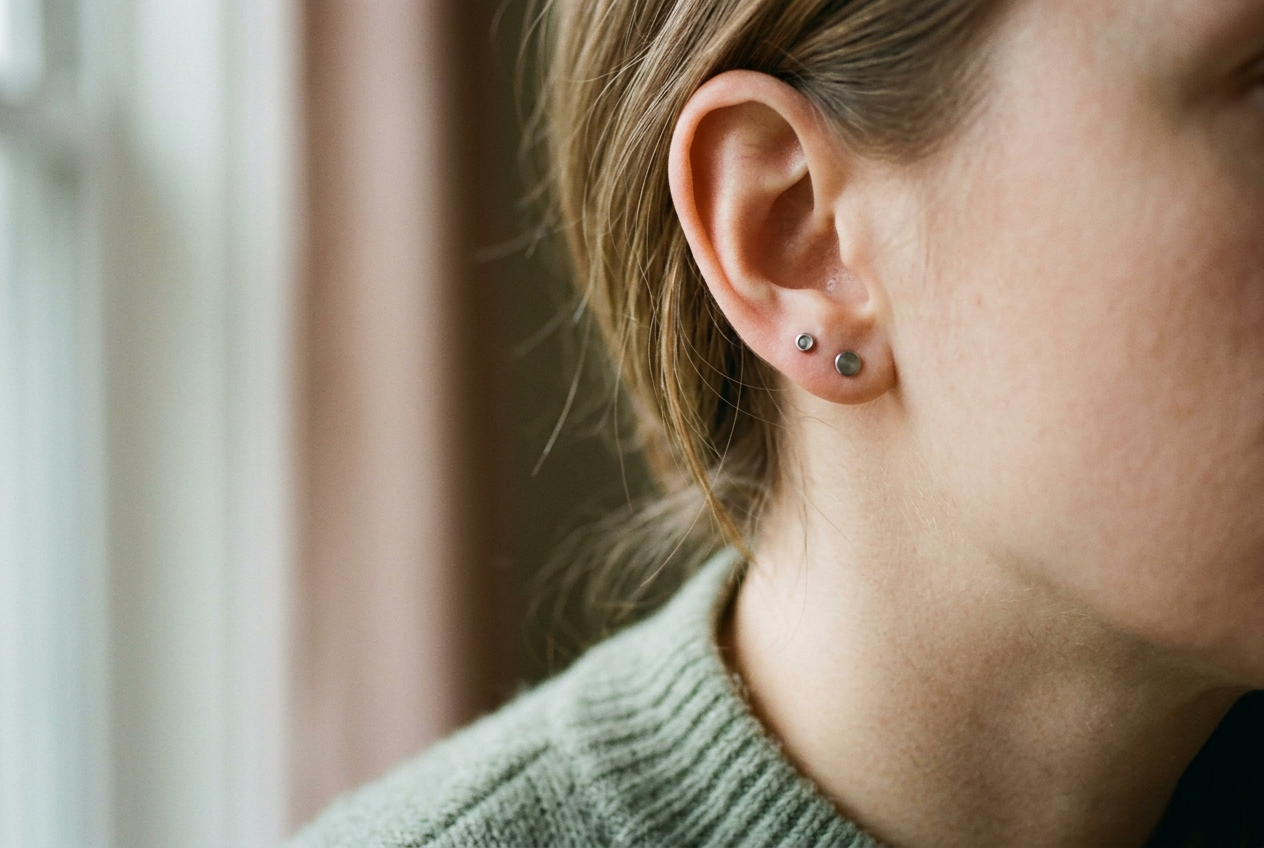
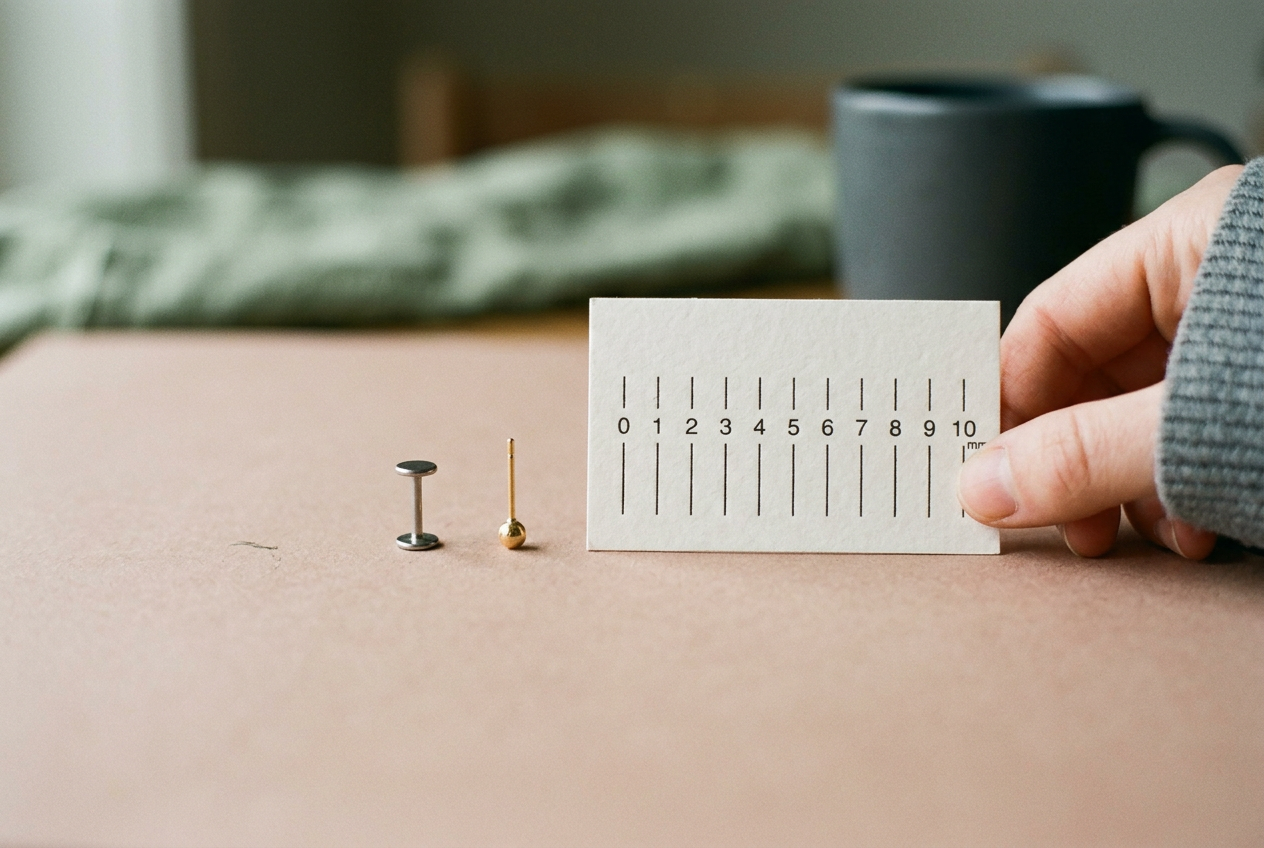
Use one specific earring as the reference point: an implant-grade titanium flat back with a tiny bezel-set stone, worn in an upper-lobe piercing. A flat back earring, meaning the post’s backing sits flush against the earlobe, can feel neater than a butterfly-back stud for sleeping and daily wear. On a fresh piercing, however, that flush disc sits at the end of a deliberately roomy post.
The extra room is useful at first. It accommodates swelling. Once the swelling recedes, the same post may project behind the ear or slide noticeably from front to back, taking the little stone with it. That visible length is the fit change to watch.
This sizing logic is unisex and applies across wardrobes. Anatomy, placement and healing matter more than whether the stud is sold in a women’s or men’s jewelry category.
The longer post has a temporary job
The first post should not fit like the final one. Fresh tissue can swell, and a close-fitting disc or decorative end may press if there is no reserve length, so a piercer usually selects jewelry with enough room for the expected early change in the area.
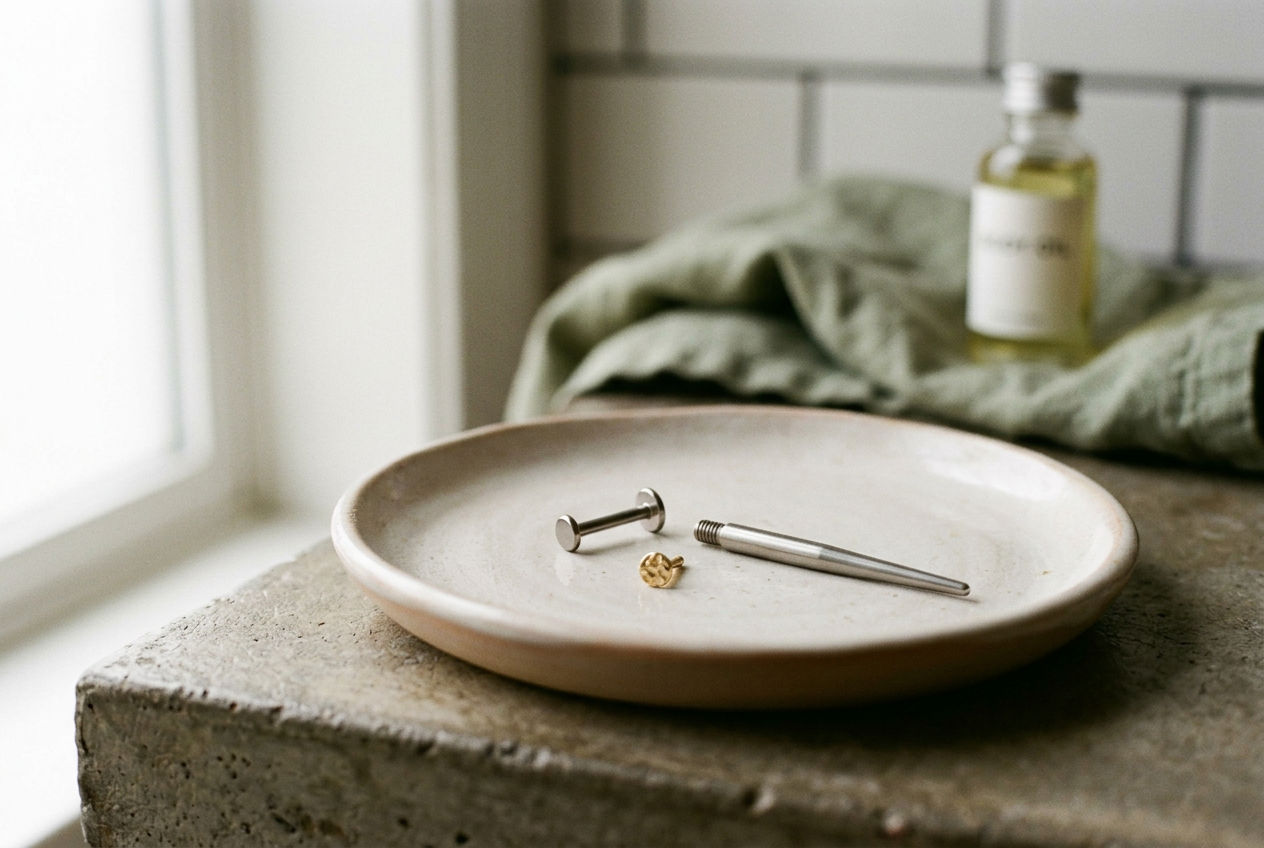
Downsizing, which means replacing that initial post with a shorter one after swelling settles, changes length rather than style. The small titanium stone can stay. The post becomes closer to the ear.
For the upper-lobe example, the important dimension is the wearable length, or the distance available between the flat disc and the decorative front. Gauge describes the thickness of the post. A routine downsize generally preserves the gauge and reduces only the wearable length, although the piercer must confirm that the existing end and replacement post are compatible.
That distinction matters when shopping. A product page may offer several gauges and lengths in adjacent menus, and choosing a thinner gauge because the current post feels loose does not solve excess length. It changes another part of the fit.
Read the fit, not a calendar
There is no universal date on which every fresh piercing becomes ready. Earlobes and cartilage do not behave identically, while an individual piercing may swell again after pressure, impact or irritation even when it appeared calm the previous day. A studio’s suggested check-in is a prompt for assessment, not permission to install the shortest post available.
Look first at the way the reference stud sits. Early puffiness should have reduced, the front should no longer look crowded by swollen tissue, and the flat disc should have room without appearing to cut into the skin. The jewelry should not feel progressively tighter during ordinary wear.
Then notice movement. If the tiny stone repeatedly tips forward, the post slides back and forth during routine activity, or a clear section of bare post remains visible while the ear is relaxed, the starter length may now be excessive. A little space is not automatically wrong. The goal is a stable fit that avoids both dangling length and compression.
Calm appearance alone is not enough if the area has recently been bumped or remains intermittently swollen. Persistent tenderness, increasing warmth, spreading redness, marked swelling or unusual discharge calls for an assessment rather than a sizing experiment. A piercer can evaluate jewelry fit; a clinician handles health concerns. Do not remove jewelry on your own in response to suspected infection unless an appropriate professional directs you.
Why spare length starts snagging
Return to the titanium stud. When its longer post projects behind the upper lobe, that projection can meet a pillowcase, towel, sweater neck or hairbrush before the smooth disc does. The catch pulls the entire earring sideways through a channel that is still maturing.
Long jewelry also has leverage. Pressure on the decorative front can tilt the post, and repeated movement can keep the piercing irritated even if no single snag feels dramatic. For a sleep-friendly earring, this is the central tradeoff: the flat disc removes the sharp butterfly-back profile, but an unnecessarily long post can still shift against bedding.
The failure is mechanical. Buying a smaller decorative end will not shorten the section behind the ear, and tightening a threadless end will not remove spare wearable length. A threadless post, meaning its decorative end is held by a tension-fit pin rather than a screw, needs the correct post length just as a threaded design does.
This is why downsizing is part of the original fitting rather than an optional polish. Keeping a long starter post indefinitely is rarely worth it once a piercer confirms that the extra room is no longer needed.
What the piercer changes
A qualified piercer can inspect both sides of the ear, account for the angle of the channel and select a post that sits close without pressing. Shorter is not synonymous with better. The front and disc need enough clearance for ordinary tissue fluctuation, and the disc should not leave a deep indentation or begin disappearing into the ear.
The piercer can also change the post while limiting handling of the fresh channel. With the reference stud, that may mean removing the longer titanium post, keeping the bezel-set end if its hardware is compatible and installing a shorter post of the same gauge. The appointment may carry a service charge, and studios may price the replacement post separately from the decorative end, so ask what is included before booking.
Bring any jewelry card or packaging you received. Brand-specific threadless pins and threaded ends are not guaranteed to fit every post, even when their listed gauge looks similar, and forcing mismatched components can damage the hardware or leave the end insecure. If the original specifications are unknown, the studio may recommend a complete compatible setup instead of reusing the front.
A fitting should end with the earring sitting quietly. On the upper-lobe example, the little stone faces forward rather than drooping, the rear disc lies close enough to avoid becoming a hook, and neither end presses into the tissue.
Material still matters after the size changes
Implant-grade titanium is a practical choice for the replacement post because it is lightweight, corrosion resistant and available from reputable jewelry makers with documented material standards. Solid nickel-free gold made for body jewelry may also be appropriate when its alloy and construction are disclosed. A vague label such as “titanium color” describes appearance, not composition.
The polished surface and construction matter alongside the metal. Externally threaded jewelry, which places screw threads on the outside of the post, can drag those threads through the piercing during a change; many professional setups instead use threadless jewelry or internal threading, where the rough connection remains away from the channel.
Do not let a cheaper mystery-metal post turn downsizing into a material downgrade. If replacing only the post costs less than buying a new decorative end, that is useful economy. If compatibility cannot be established, paying for a documented post-and-end combination is the cleaner purchase.
Do not copy the visible length at home
Measuring the exposed section with a ruler does not reveal the whole fit. The piercer needs to account for tissue thickness, piercing angle and the possibility of residual fluctuation, while a home measurement can change depending on whether the front or back has been pushed flush.
Self-changing also introduces more handling at the moment when the channel may not be ready to tolerate it. Even an experienced jewelry wearer can struggle to align a tiny threadless pin behind an upper lobe, and repeated attempts may irritate the site or contaminate the jewelry.
Use the visible post as a reason to arrange a fit check, not as a shopping measurement. If the post suddenly feels tight before that appointment, do not solve the problem by pushing the ends apart or swapping jewelry yourself. Contact the piercing studio promptly.
Check the shorter fit in ordinary wear
After a professional downsize, the reference stud should move less and catch less often, but it should not feel clamped. Check it during the activities that exposed the original problem: pulling on a knit top, brushing hair and sleeping on clean bedding without deliberately putting pressure on the fresh piercing.
Return to the studio if the disc begins pressing, swelling returns or the end looks insecure. The useful endpoint is concrete: a titanium post short enough that the little stone stays upright and the back avoids the pillowcase, with enough clearance that neither end sinks into the ear.
Questions people ask
Do flat back earrings work for a fresh piercing?
They can when a qualified piercer selects suitable jewelry, material, gauge and starter length for the placement. The initial post usually needs more room than the final fit. A flat disc may feel smoother than a butterfly back, but it does not remove the need to accommodate swelling.
How can I tell if my flat back post is too long?
Common fit clues include a section of bare post remaining visible while the ear is relaxed, frequent front-to-back sliding, a decorative end that tips and repeated catching on hair or bedding. These signs justify a piercer’s fit check; they do not identify the correct replacement length by themselves.
Can I downsize a fresh piercing myself?
The first downsize should usually be handled by a qualified piercer. The channel may still be delicate, and selecting a post from an exposed measurement can produce a fit that presses. A piercer can inspect the angle, preserve the gauge and confirm that the post and decorative end are compatible.
Should a downsized flat back sit completely tight?
No. It should sit close and stable without compressing the tissue. The front and rear disc should not leave deep marks, sink into the ear or become progressively tighter. If that happens, contact the piercing studio rather than waiting for the ear to adjust to an undersized post.
One update a day
Today's fashion update, in your inbox
One fashion update each morning — no hype, no filler, just pieces worth wearing.