Build a Summer Work Capsule That Survives Late Laundry
Sort work clothes by drying speed, then build each outfit around one fast-reset piece. A delayed load will no longer take half the week out of circulation.
Women's · October 21, 2026 · 8 min read
The useful unit for a summer work capsule is not an item count. It is a recoverable outfit: something you can wear, wash, hang overnight, and put back into service without waiting for every other garment in the hamper.
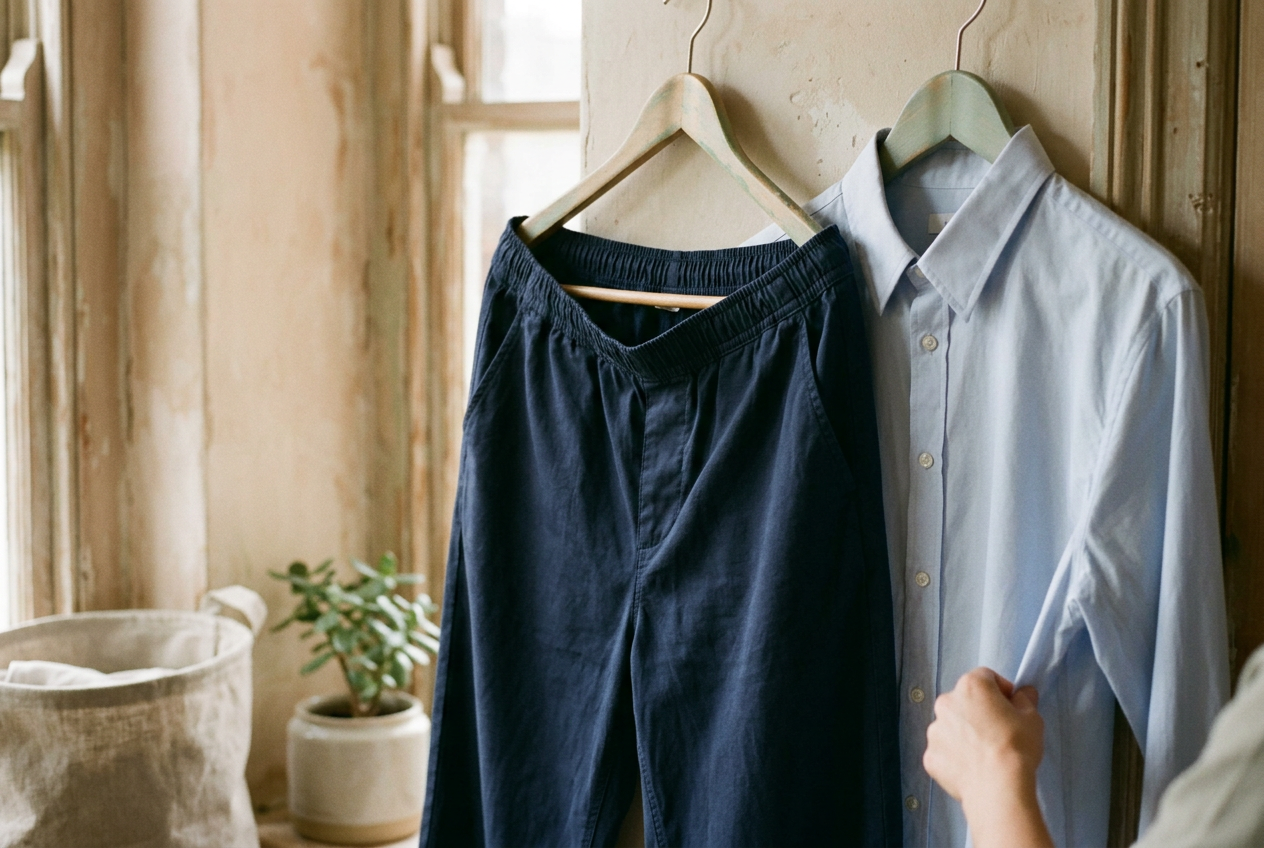
My test piece was a pair of navy pull-on work trousers made from 88 percent nylon and 12 percent elastane, the stretch fiber that helps fabric recover after bending and sitting. They had a matte woven surface, a straight leg, a machine-wash-cold label, and no lining. Rolled in a towel after washing and hung with the waistband opened, they dried much faster than the cotton poplin shirt washed beside them, especially at the waistband, placket, and double-layer cuffs.
That difference is enough to organize a wardrobe around. The navy trousers belonged to the quick lane. The poplin shirt belonged to the slow lane, even though both were washable.
This is women’s coverage, and the fit discussion reflects garments commonly sold in women’s departments, including pull-on trousers, shell tops, skirts, and dresses. The laundry method works across wardrobes, but women’s workwear often adds slower details such as lined waistbands, bust darts, facings, and partial linings.
Start with an overnight reset test
Care labels tell you whether a garment may be washed. They do not tell you whether it will be ready by morning.
Test the clothes you already rely on before buying more. Wash them according to their labels, run the normal spin cycle, then hang them where you realistically dry work clothes. A bathroom with limited airflow gives a different result from a rack near an open window. Check the waistband, underarm, cuffs, pockets, and any doubled fabric the next morning.
A quick-lane garment should be dry enough to wear after one ordinary overnight hang, without a dryer and without moving it through several positions. It should also look presentable after a brief steam or no pressing at all. If the body dries but the waistband remains wet, the piece belongs in the slow lane.
The navy trousers passed because the unlined nylon blend released water quickly and the elasticized waist could be spread open on the hanger. A similar-looking pair in dense cotton twill would not behave the same way. Nor would a nylon trouser with a polyester lining, deep pocket bags, or a thick covered waistband.
Do not use fabric names as a complete prediction. Construction decides where water gets trapped.
Build the quick lane first
The quick lane needs to make at least two complete work outfits on its own. That does not require duplicates, but it does require compatibility: every quick top should work with the quick bottom, and the layer should fit over both without pulling at the armhole or bunching at the waist.
Good candidates include matte nylon-blend trousers, lightweight polyester crepe separates, and washable technical knits that do not look like gym clothes. Check them in daylight. A shiny surface, bonded zipper, or conspicuous drawcord can push a practical garment toward commuter gear, which may be fine for a casual office but harder to dress up.
Fast-drying synthetics have a tradeoff. Polyester can retain body oils and odor, particularly in close-fitting underarms, while nylon can snag or develop shine where a bag rubs the hip. A looser shell with a washable base layer is usually easier to repeat than a fitted synthetic blouse worn directly against the skin.
For the test rotation, the navy trousers worked with a sleeveless, machine-washable crepe shell and a fine-gauge cardigan. Fine gauge means the knit uses small stitches, producing a smoother and less bulky fabric. The shell dried quickly; the cardigan did not need washing after every wear because it sat over the shell and spent most of the day on a chair.
That is the division of labor. The garment touching the body resets quickly. The more visible finishing piece gets fewer washes.
Give slower clothes a job they can finish
The slow lane is not a reject pile. Cotton poplin, linen, rayon, and tailored wool blends often look better at work than quick-drying synthetics, but they need enough time and space to dry or recover between wears.
Poplin is a tightly woven plain-weave fabric, meaning the yarns cross in a simple over-under structure that creates a crisp surface. It can feel cool and polished, yet cuffs, collars, and front plackets contain multiple layers that stay damp after the main body dries. Linen releases heat well but wrinkles sharply and may need reshaping. Rayon, a regenerated cellulose fiber made from plant-derived material, can become weaker when wet and may stretch if hung from narrow shoulders.
Keep these garments in the capsule only when the quick lane can cover their absence. The pale blue poplin shirt did not need to be ready the morning after washing because the crepe shell could take its place. Once dry, the shirt added the crisp texture that the synthetic pieces lacked, worn open over the shell or tucked into the navy trousers.
Tailoring belongs here too. A lined blazer may need airing, spot treatment, steaming, or professional cleaning rather than a full home wash. It should improve several outfits without being the only layer that makes them office-appropriate. If every quick-drying base looks unfinished without one specific blazer, the capsule still has a bottleneck.
Use outfit formulas that tolerate substitutions
A reliable formula describes proportions and fabric roles, not exact garments. For this rotation, the most useful one was a fluid top with straight trousers and a structured layer. The crepe shell and navy trousers formed the washable core; the poplin shirt, cardigan, or blazer could supply the third piece depending on what was clean.
The fit has to survive those substitutions. Pull-on trousers with a gathered waist can create bulk under a tucked poplin shirt, while a flat-front elastic back keeps the front cleaner. Shell tops need enough shoulder coverage to sit under a blazer without the neckline shifting, and an armhole cut too low exposes a bra when the jacket comes off.
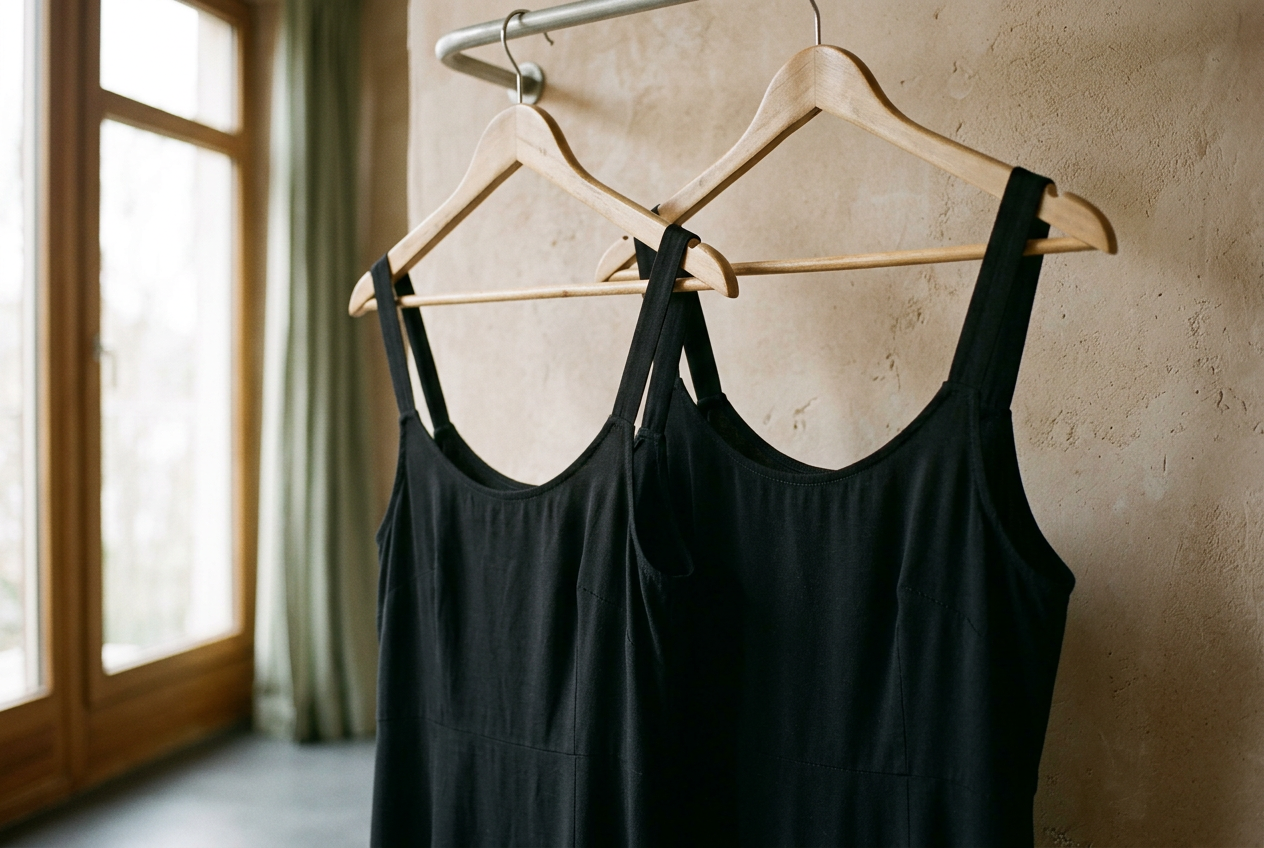
A second formula paired a washable column dress with the same cardigan or open poplin shirt. A column dress is cut relatively straight from shoulder to hem, rather than closely shaped at the waist. Look for one with enough ease through the hip to sit without riding up, plus a fabric weight that does not cling after air drying. An unlined dress resets faster, though it may require a washable slip.
Color does practical work here. Navy trousers, a dark neutral cardigan, and tops in pale blue or ivory can exchange places without looking like the exact same outfit, while a patterned shell hides minor water marks better than flat, very light fabric. The point is not to make everything neutral. It is to prevent one unusual color from having only one matching partner.
Schedule the week around the slower lane
Wear slower-care pieces earlier in the week if laundry usually happens midweek. The poplin shirt gets Monday, then dries with no deadline. The quick shell can cover Tuesday, and the navy trousers can return after an overnight wash if heat or a commute makes another wear unappealing.
Leave air between wears. A trouser worn for a cool office day may only need the pockets emptied and the waistband hung open, whereas a top worn against the skin in high heat belongs in the wash. Rewashing everything after a brief wear shortens elastic life and creates the very backlog this system is meant to avoid.
The week fails when both lanes depend on the same piece. One fast trouser does not rescue a wardrobe if every compatible top needs ironing, just as several quick tops do little when the only office-ready bottom is at the cleaner. Map complete outfits on paper or photograph them. Gaps become obvious.
Shop by wet behavior, not promises
Before buying, read the full fiber label and inspect the inside. Pocket bags, shoulder pads, linings, covered elastic, and fused waistbands can slow a garment that looks light on the rack. Scrunch a section in your hand for several seconds; if the creases remain severe, include pressing time in the cost of ownership.
For synthetics, prioritize a matte surface, secure seams, and enough room for air to move around the body. A cheap-feeling polyester shell that holds odor is not a bargain, but an expensive version is not automatically better. Because most returns end after washing, test odor retention and drying speed on one piece before buying a duplicate.
The navy nylon-blend trousers earned a place because they solved a specific interruption: the slow poplin load could run late without removing every polished outfit from the week. That is the standard. Buy the garment that closes a laundry gap, not the one that merely brings the capsule to a tidy number.
Questions people ask
Which fabrics dry fastest for a summer work capsule?
Lightweight, unlined nylon and polyester fabrics often dry faster than cotton, linen, or rayon, but construction can reverse the result. Thick waistbands, linings, pocket bags, and doubled cuffs trap water, so test the entire garment overnight rather than judging from the fiber label alone.
Can cotton shirts go in the quick-drying lane?
A loose, lightweight cotton shirt may dry overnight with strong airflow, but poplin collars, cuffs, and plackets often lag behind the body. Put the shirt in the quick lane only after testing it in your real laundry setup and accounting for any ironing it needs.
How many outfits should the fast lane make?
It should make at least two complete work outfits without borrowing a slow-care garment. That gives you coverage when a load is delayed or a piece needs another night to dry, while avoiding an arbitrary capsule count that ignores how your clothes combine.
Are quick-drying synthetic work clothes worth buying?
They are worth considering when they fill a real laundry gap and have a matte, office-appropriate finish. Skip pieces that cling, trap odor, or depend on fussy styling to look polished; a washable cotton alternative may take longer to dry but prove easier to wear.
One update a day
Today's fashion update, in your inbox
One fashion update each morning — no hype, no filler, just pieces worth wearing.