Boat Shoes Are Back. Suede Is Mostly a Styling Prop.
The revived boat shoe has reached leather, suede, mesh, and synthetic versions. Only some retain the grip, adjustable fit, and manageable drying time that made the shape useful.
August 12, 2026 · 8 min read
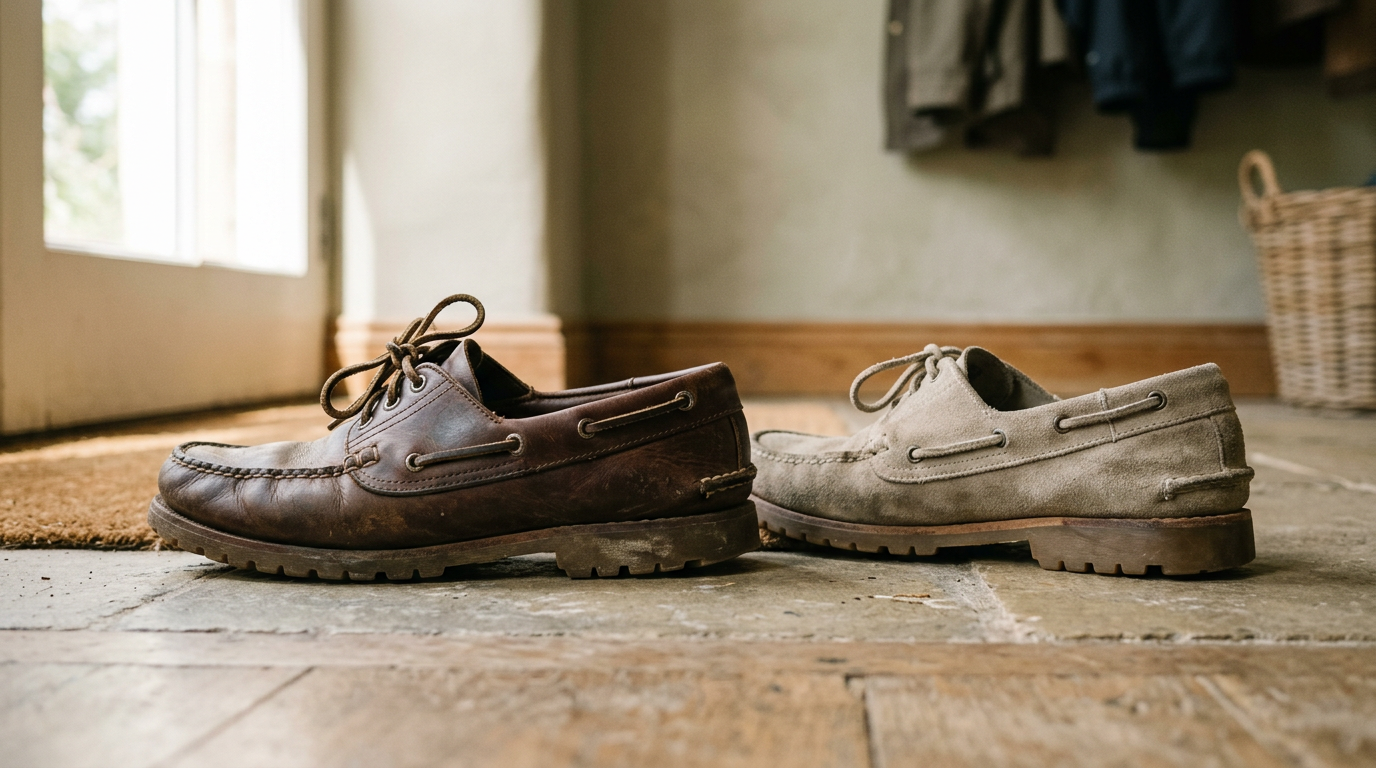
The useful reference point is still the Sperry Authentic Original 2-Eye, not because every wardrobe needs that exact shoe, but because its familiar construction makes the compromises in newer versions easier to see. The upper uses moccasin construction, meaning the leather wraps around the foot and joins at the raised apron seam, while a 360-degree lace runs through the collar and around the heel. Underneath, Sperry specifies a rubber outsole with Wave-Siping, its name for thin cuts designed to create more edges against a wet surface.
Those details have become visual shorthand. Retail versions now reproduce the two-eyelet front, contrast stitching, and low profile in brushed suede, open mesh, coated synthetics, and smooth fashion soles. Some look sharper with linen trousers or a long skirt than the brown deck shoe they reference. They do not necessarily behave like boat shoes once a bare foot, a humid afternoon, and ten minutes of hard rain enter the picture.
This is unisex coverage because the material test applies across wardrobes, though fit remains tied to each brand’s size chart and last, the foot-shaped form around which a shoe is built. The current revival often narrows and flattens the original silhouette. That makes the shoe easier to style, but less forgiving across the forefoot.
Leather remains the most workable compromise
A traditional smooth-leather upper looks warm for summer, yet it has one advantage over many fashionable substitutes: it can gradually conform to the foot. The first wears may feel firm at the apron seam and around the topline, the upper edge that meets the foot, but unlined or lightly lined leather tends to soften where toes flex and where the heel moves. That adjustment matters when the shoe is worn without socks.
Humidity complicates the bargain. Leather absorbs some moisture, and a dark, closed interior can stay damp well after the outside feels dry, particularly if the footbed contains foam or cannot be removed. The Sperry Authentic Original construction remains a sensible benchmark here because the working collar lace can be loosened rather than forcing a swollen foot into a fixed opening. It can also be tightened at the heel after the leather gives.
That lace is not a complete fit control. Pulling hard at the front eyelets can pinch the instep while leaving heel movement unchanged unless the lace genuinely travels around the collar. On a decorative version, the visible side lace may stop inside the upper or be stitched in place. The shoe then fits like an ordinary loafer: if the heel slips in the store, there is little to correct later.
Smooth leather can survive a brief shower if it is allowed to dry slowly at room temperature, with absorbent paper inside and no direct heat. Repeated soaking is different. Water can stiffen the leather, mark the finish, distort the apron seam, and loosen adhesives. A wet pair should not be worn again the next morning merely because the sole has dried.
In a one-pair travel wardrobe, that recovery time is a real cost.
Suede loses once the forecast becomes part of the outfit
Suede supplies much of the revival’s appeal. Its nap, the raised surface created on the flesh side of the hide, makes dark brown, sand, navy, and washed pastel boat shoes look quieter than polished leather. It also turns a practical summer shoe into one that needs forecast management.
Bare feet bring salt and oil to the collar. Humidity can flatten the nap unevenly, while sudden rain darkens exposed areas and leaves the apron seam holding moisture longer than the broad panels. A protective spray may reduce staining, but it does not make suede waterproof, and it adds an upkeep step before the shoe has even left the house. Brushing restores some texture only after the upper is fully dry.
This is where the Sperry Authentic Original exposes the styling prop. Copy its shape in pale suede, put it on a smooth outsole, and freeze the heel lace for symmetry, and almost every functional decision has been removed while the nautical signal remains. That can be acceptable for a dry dinner, an office, or a car-led day. It is poor value as the main summer walking shoe, especially when a designer suede version costs well above a good pair of sneakers.
Dark suede is less precious than pale suede, but it still demands rotation. If the appeal rests on the clean, velvety surface, regular bare-foot wear will challenge the very finish being paid for.
Mesh solves heat but not automatically comfort
Mesh looks like the obvious answer to hot weather. An open textile upper can release heat faster than leather, and it usually dries faster after rain. The result depends on everything underneath it. A mesh shell backed by a solid synthetic lining offers less airflow than it appears to, while a thick foam footbed can absorb sweat and remain damp after the upper has dried.
The best mesh boat-shoe translations preserve the original’s adjustability rather than using mesh as a thin cover over a rigid slip-on. Look for a collar lace that moves, a soft binding with no exposed seam against the heel, and a removable footbed that can be aired separately. Press a finger inside the shoe around the front eyelets and apron. Rough stitching that feels minor through a sock can abrade damp skin within one long walk.
Mesh also changes support. A very soft upper may spread across the forefoot, which helps wider feet, but it can let the heel drift sideways if the sole is heavy or inflexible. The shoe should bend near the ball of the foot rather than folding through the arch. If the upper twists while the sole stays flat, the foot will do extra work to keep the shoe aligned.
Rain is not mesh’s automatic victory. Water enters quickly, and a smooth rubber sole can still slide even though the upper dries by evening. The Sperry reference matters again: siping is a working detail, whereas a molded wave pattern with few real channels may be mostly graphic. Grip also declines when dust, oil, or worn rubber fills those channels, so no flat casual shoe deserves blind trust on wet tile.
Synthetic uppers divide into two different shoes
A coated synthetic upper, often made with polyurethane or another plastic-based layer over fabric, resists surface water better than absorbent suede. It may also hold heat and sweat against the foot. Without a breathable lining, the inside can feel slick before the first rain arrives, and the upper does not usually mold to pressure points as generously as leather.
A woven synthetic or quick-drying textile behaves more like performance footwear. It can be a useful choice for travel, waterfront paths, and days when getting wet is expected, provided the footbed lifts out and the sole has meaningful texture. These versions often sit around the price of ordinary casual sneakers or below it. At that level, washable construction and drying speed may matter more than whether the apron seam is hand-finished.
Check the edge coating. A stiff strip around the opening can rub the ankle once sweat softens the skin, and heat may make a slightly short synthetic shoe intolerable because the upper has limited give. Shoppers between sizes should not assume sizing up fixes this; extra length can increase heel slip. A wider fit or a different last is the better correction.
The useful revival has five visible tells
Start with the heel lace. It should move when gently pulled, and the collar should respond. Then inspect the outsole for fine, open cuts rather than a smooth fashion finish. Put a hand inside to find hard knots, uncovered seams, or foam that cannot be removed to dry.
Flex the shoe at the forefoot. Finally, stand on a hard floor and notice whether the heel lifts before the shoe bends.
After a week of humid, sockless wear, inspect the collar rather than judging only the exterior. A darkened lining, compressed heel foam, persistent odor, or a damp footbed by the following morning indicates that the shoe needs rotation. Leather may improve in fit during that week. Suede may begin to show contact marks.
Solid synthetics are unlikely to become more breathable with patience.
The trend verdict lands in the middle. Smooth leather versions with functional collar lacing, a flexible siped sole, and enough room across the forefoot preserve the boat shoe’s useful construction, although they still need drying time. Open mesh or woven synthetics can be better in sustained heat if their linings and footbeds are designed to dry. Pale suede, fixed decorative laces, and smooth soles belong to the outfit rather than the weather.
For styling, that distinction is enough. Wear the practical pair for a walking day with shorts, loose trousers, denim, or a skirt that leaves the low profile visible. Save the suede version for conditions in which a loafer would already make sense. The boat-shoe shape is current either way; only one version should be expected to handle the dockside story printed onto it.
Questions people ask
Can boat shoes be worn comfortably without socks?
Yes, if the interior has smooth seams, the heel stays secure, and the footbed can dry between wears. Bare feet expose the shoe to more moisture and friction, so alternate pairs on humid days and stop if the topline rubs. A no-show sock is the simpler answer for rough interiors.
Are suede boat shoes practical in summer rain?
They can tolerate an occasional light shower, but they are a weak choice for repeated rain or one-pair travel. Water can darken the nap and collect around the apron seam. A protective spray helps with stains, while slow drying and brushing are still required afterward.
Is mesh cooler than leather for bare feet?
Open mesh is usually cooler when it has a breathable lining and limited foam underneath. A backed mesh upper can trap nearly as much heat as coated synthetic material. Check whether the footbed removes, because a damp insert can cancel the benefit of a fast-drying upper.
How should a boat shoe fit at the heel?
A small amount of movement can settle as the sole flexes, but the heel should not rise freely with every step. Use a functional 360-degree lace to adjust the collar. If tightening pinches the instep without securing the heel, try a different width or last rather than sizing down.
One update a day
Today's fashion update, in your inbox
One fashion update each morning — no hype, no filler, just pieces worth wearing.