Boat Shoes Are Back. The Sole Matters More Than the Laces.
Low-profile deck shoes have returned, but many pairs retain the signals rather than the function. Start with the outsole, then judge construction, fit and price.
August 10, 2026 · 8 min read
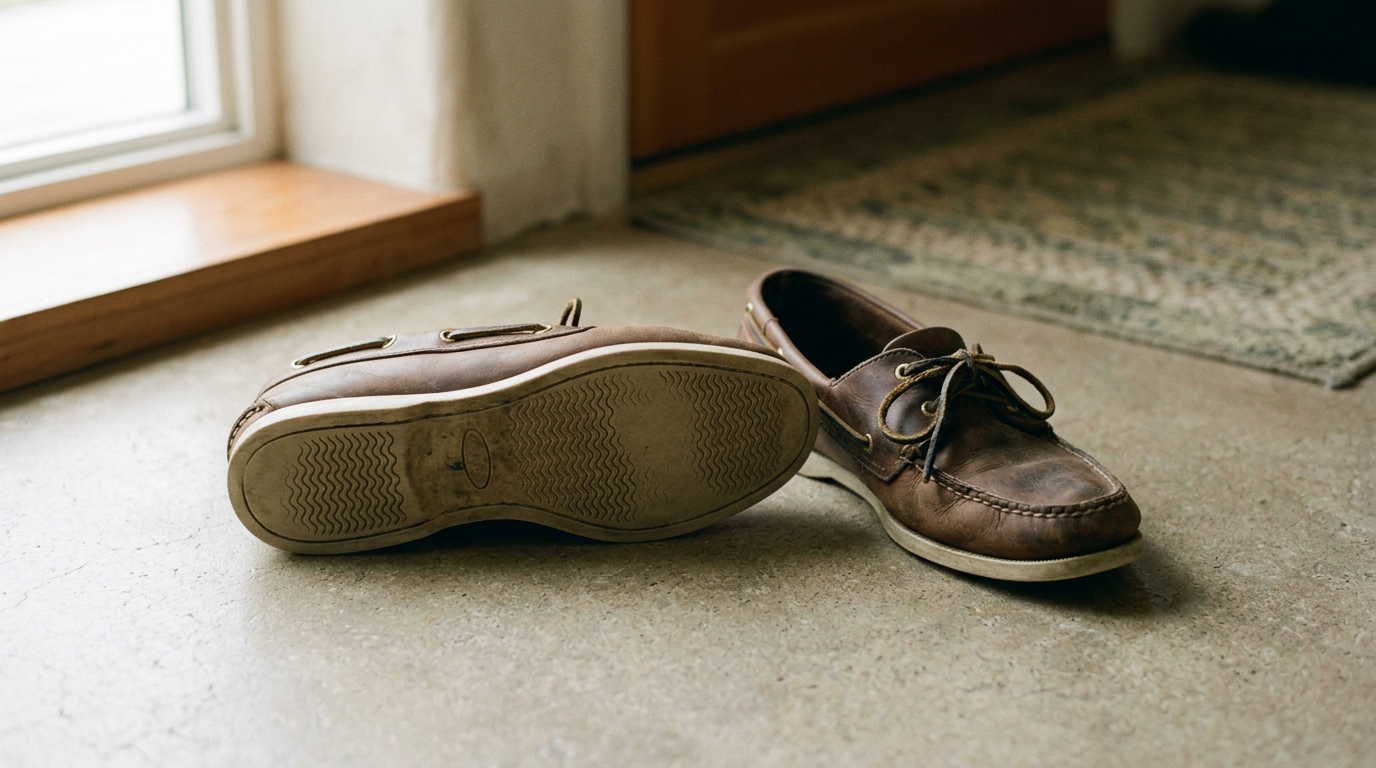
The useful way to read this revival is from the floor upward. Take the brown leather Sperry Authentic Original 2-Eye, the familiar low-cut deck shoe with a white rubber sole, two eyelets and leather lacing running around the collar. Its outline is now appearing across summer collections, sometimes faithfully and sometimes reduced to a flat loafer with nautical details.
That distinction matters. The Sperry is a unisex reference point, even though sizing and color assortments are often divided by gender, because its practical features came from a job: maintaining footing on a wet deck while staying flexible enough to move with the foot. A fashion version only needs to resemble that solution from across a room.
The revival has lowered the profile
The returning boat shoe is less bulky than the prep-era versions that dominated casual wardrobes years ago. Soles look thinner, toes appear narrower or softly squared, and dark brown leather has competition from suede, pony-effect finishes, polished leather and pale neutrals. Trousers have changed around it too. A full-length wide leg can nearly cover the shoe, while a straight cropped jean exposes the lacing and turns the same pair into a deliberate styling choice.
The Sperry Authentic Original remains a useful control because its proportions explain why the shape has survived. The low vamp, meaning the upper covers relatively little of the top of the foot, sits easily under wider pants without adding sneaker volume. The rounded toe does not demand the extra visual space of a thick sole. Worn with bare ankles or a fine sock, it occupies roughly the same part of an outfit as a slim loafer.
This is where decorative versions make sense. A wearer who wants a low-profile brown shoe for dry sidewalks may not need marine-oriented rubber, and a softer suede upper can look less literal with tailoring. The trouble starts when deck-shoe language is taken as evidence of deck-shoe performance.
Siping is the feature to inspect first
Siping means narrow cuts in a rubber outsole that open slightly under pressure, creating extra edges and channels through which water can move. Sperry product descriptions call its version Wave-Siping. On the Authentic Original, the repeating cuts across the sole are the part most directly connected to wet traction.
A quick product-page glance is not enough. Some fashion boat shoes carry shallow molded lines that reproduce the pattern without cutting far into the rubber. They may still grip adequately on dry pavement, but the appearance of siping does not establish how the shoe will behave on a wet tile floor, a painted dock or a smooth restaurant entrance after rain.
Look at a side photograph of the outsole, not just the straight-on product image. Useful channels should remain visible beyond the surface texture, and the rubber should flex at the forefoot rather than behave like a rigid dress-shoe sole. Closely spaced cuts can add edges, but grip also depends on the rubber compound, surface contamination and wear. No casual shoe becomes reliably slip-proof through pattern alone.
The white sole on the brown Sperry makes another tradeoff visible. Softer rubber can feel pliable and useful underfoot, yet pale edges show grime quickly, particularly where the outsole rises around the heel. Cleaning takes more than a wipe once dirt settles into the texture. A dark rubber sole hides street wear better, although it can make the revived silhouette look heavier.
If traction is the reason for buying, skip pairs whose descriptions say only “rubber outsole” while showing a smooth bottom. A conventional tread with real channels is a better alternative than decorative siping. It will look less historically precise, but the water still needs somewhere to go.
Rawhide lacing adjusts fit, within limits
The Authentic Original’s 360-degree rawhide lace, meaning one leather lace passes around the sides and back of the shoe, is another feature frequently copied. Its practical contribution is modest but real: tightening the lace can draw in the collar around a narrow heel, while loosening it can relieve pressure across the top of the foot.
It cannot rescue the wrong size. Boat shoes often have a shallow interior and an unpadded heel, so a pair that feels roomy in the store may begin lifting once the upper softens. Full-grain leather usually gives across the width with wear, but it does not gain meaningful length. Toes should have space from the start, while the midfoot and heel should feel held without the collar biting.
Try the shoe with the sock plan you will use. The same Sperry-shaped pair can feel secure barefoot and loose with an ultra-thin liner sock, or tight across the instep with a ribbed cotton sock. Anyone between sizes should pay more attention to heel movement and available widths than to a blanket instruction to size down.
Rawhide has its annoyances. The stiff lace can come undone more readily than a textured textile lace, especially before it softens, and repeatedly pulling it tight can roughen the holes in an unreinforced leather upper. A standard cotton or synthetic lace is easier to replace and often holds a knot better. It loses part of the visual shorthand, not much of the shoe’s wet-weather function.
After a week of ordinary wear, fit should be judged again rather than excused as unfinished break-in. Some leather relaxation across the forefoot is expected. Persistent heel lift, toes meeting the front or a collar cutting below the ankle bone usually indicates a shape mismatch; another insole may reduce volume, but it can also make a shallow shoe more cramped.
Hand sewing changes the feel more than the grip
Traditional boat shoes often use moccasin construction, in which leather wraps under or around the foot and is joined to a separate apron at the top. The visible hand-sewn seam around the toe on the Authentic Original reflects that flexible structure, although exact internal construction can vary across brands and models.
The benefit is movement. A flexible leather upper can crease with the forefoot rather than holding it in the firmer shell associated with many dress shoes. The compromise is support: a low boat shoe with a thin footbed will not become an arch-support shoe because its toe seam was sewn by hand. Readers who need cushioning should inspect the removable footbed, if there is one, and the depth available for an insert.
Decorative apron stitching is not automatically inferior. A machine-sewn upper attached to a conventional sole can be durable, lighter on the wallet and more consistent in shape. What is not worth paying extra for is a prominent contrast stitch presented as craft when the product description gives no construction detail and the rest of the shoe feels rigid.
The price test follows the use. A leather pair with functional siping, an adjustable collar lace and genuine moccasin-style construction can reasonably occupy the territory of a decent leather sneaker. A designer version priced far above that may offer a sharper last or a more unusual finish, but neither improves wet traction. At the lower end, synthetic uppers and glued decorative seams can deliver the silhouette for a season; they are harder to justify as working deck shoes.
The styling signal may be enough
The boat shoe’s return is partly a correction to several years of thick soles. Its narrow side profile works under relaxed trousers, longer shorts and straight jeans, while brown leather introduces structure without the formality of a polished loafer. That usefulness can survive after the trend’s nautical associations fade.
For the brown Authentic Original, the least costume-like combination is also the easiest: a trouser or jean with enough width to balance the rounded toe, plus a sock that is either intentionally visible or absent from view. Very short trousers, a striped top and exposed rawhide lacing can push every maritime reference at once. One signal is sufficient.
I remain undecided on the most delicate suede versions. They make the silhouette feel current and can sit neatly with softer tailoring, but suede gives up the easy wipe-down expected of a deck shoe, while a thin fashion sole may keep none of the wet-grip logic. They are attractive dry-weather flats. Buyers should price them that way.
The Sperry test remains straightforward: turn the shoe over. If the outsole has substantial siping and flexible rubber, the deck-shoe function has survived. If the bottom is smooth, the leather cord and toe seam are primarily styling information.
Questions people ask
Are boat shoes safe on wet pavement?
Functional siping can improve contact and help move water, especially when the rubber remains flexible, but it does not make a boat shoe slip-proof. Smooth tile, painted surfaces and worn soles can still be slick. Inspect channel depth and outsole condition rather than relying on a nautical product name.
Should boat shoes fit tightly at first?
They should feel secure through the heel and midfoot, not painfully tight. Leather may relax across the width, but it will not add useful length. Try the pair with your intended socks, and reject persistent toe pressure or severe heel lift rather than counting on a long break-in.
Do rawhide laces improve traction?
No. Rawhide laces can adjust the collar and help hold a narrow heel, but traction comes from the outsole’s rubber, siping and contact with the ground. A textile replacement lace may hold a knot more securely without changing how the sole performs on a wet surface.
Is a hand-sewn boat shoe worth paying more for?
It can be if you value a flexible upper, repairable stitching and leather that softens with wear. Hand sewing does not provide arch support or wet grip by itself. If the sole is smooth and the footbed is thin, a higher price is buying construction and appearance rather than better deck performance.
One update a day
Today's fashion update, in your inbox
One fashion update each morning — no hype, no filler, just pieces worth wearing.