Bend a Loose Push-Pin End in the Pin, Not at Its Base
A threadless end needs a slight curve in its insertion pin to stay put. Make the adjustment off the ear, test it in small increments, and replace any end with a kink or damaged base.
August 29, 2026 · 7 min read
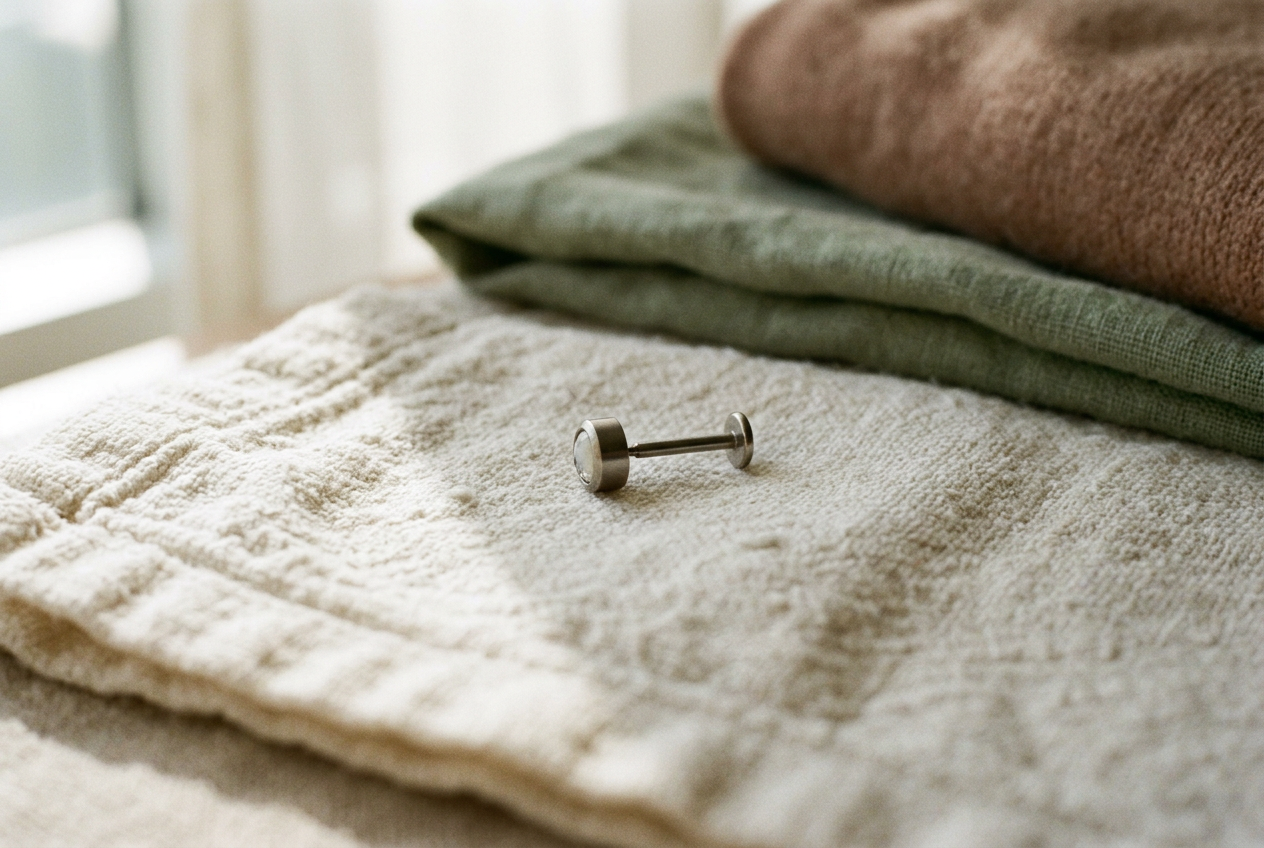
The part in question is very small: a slender metal pin extending from the back of the decorative end. That pin slides into a hollow post, and a slight curve presses it against the inside wall to create holding tension.
There are no screw threads to tighten. Turning the top may help your fingers find a grip, but twisting does not secure the connection.
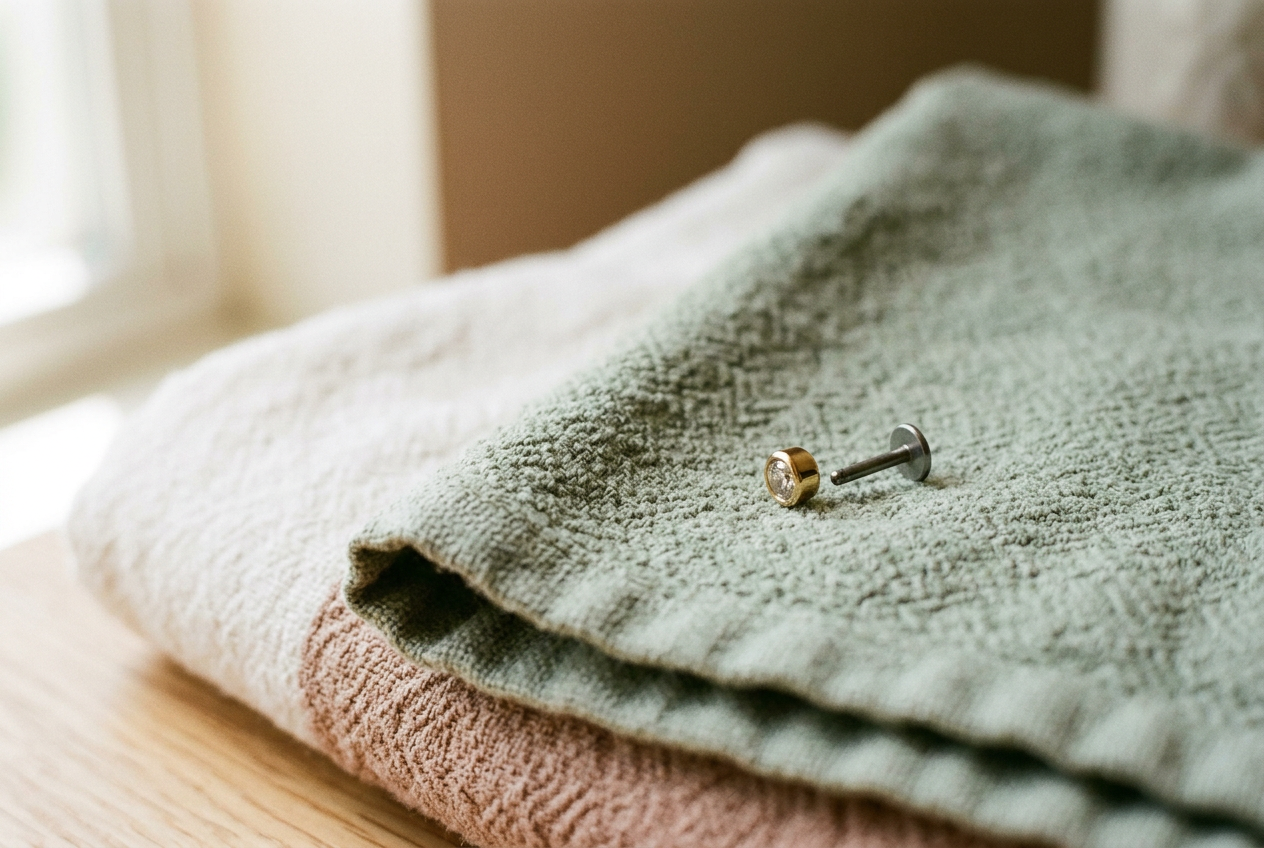
The working example here is an implant-grade titanium flat back earring, meaning the post’s backing sits flush against the earlobe, paired with a low-profile bezel-set end. It is the sort of piece chosen for sleeping because there is no butterfly clutch behind the ear. The fitting method applies across wardrobes and placements, so this is unisex advice, although every end and post still needs to be compatible in size and design.
The bend belongs in the free pin
A threadless end, the decorative top with a smooth insertion pin, is usually supplied with that pin straight or nearly straight. The pin needs a modest curve before it is pushed fully into the post. NeoMetal’s published fitting method uses the post itself to create and check that curve: insert the pin partway, apply light sideways pressure, then remove it and inspect the result.
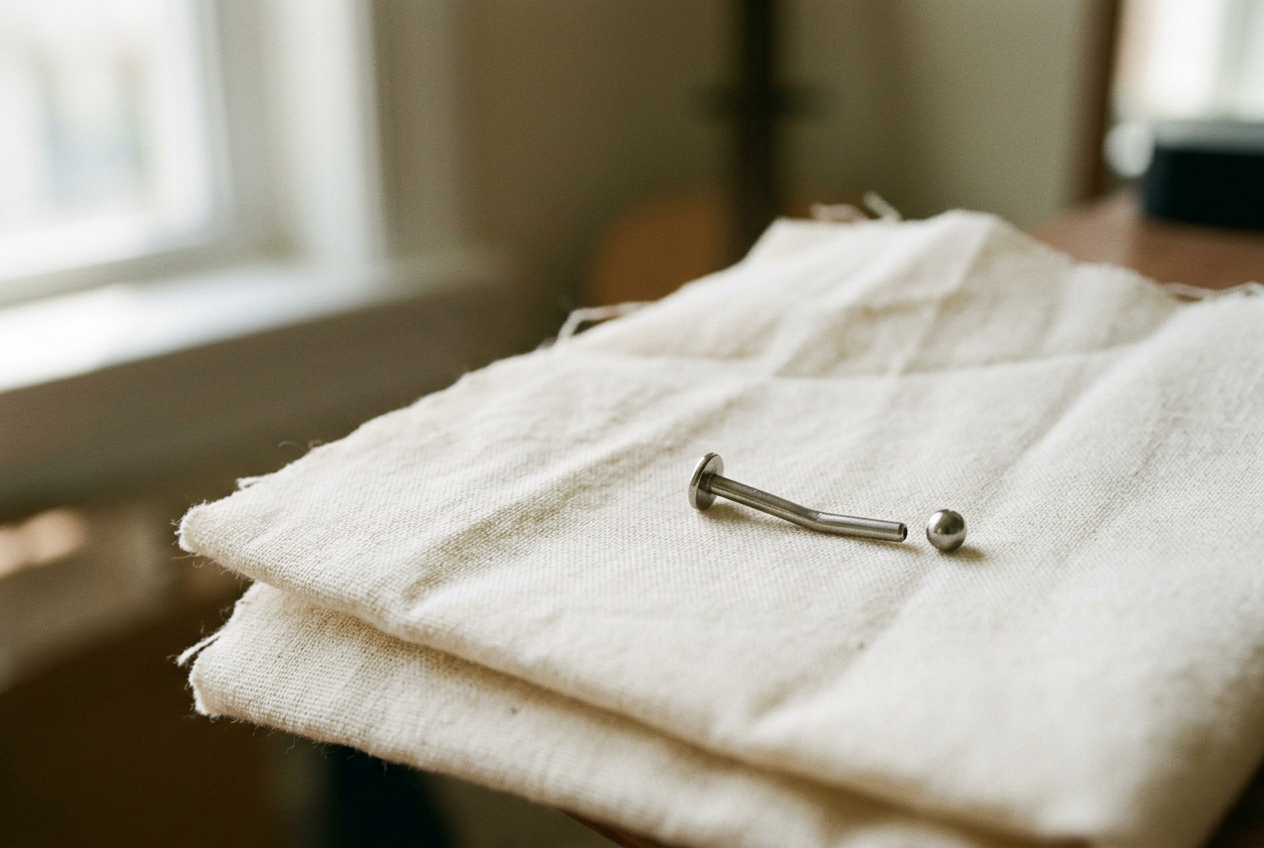
The crucial location is the free length of the pin. Keep the bend away from the point where the pin meets the decorative end. That junction may be welded, soldered, press-fit, or otherwise constructed as part of the end, depending on the maker; levering directly against it can weaken a place that was not designed to flex.
Aim for a shallow, gradual curve around the middle portion of the exposed pin. Do not fold it into an angle. The result may be difficult to see unless the pin is viewed against a straight edge, which is one reason a large bend is usually too much.
On the titanium post and bezel end used as the reference here, the useful distinction is tactile. A straight pin slips in with little resistance and pulls free too easily. A correctly adjusted pin meets steady resistance before the bezel seats against the post. A sharply bent pin catches early, refuses to sit flush, or requires enough force that removal becomes uncomfortable.
Adjust it off the ear
Remove the jewelry only from a healed piercing that can safely be left empty for the few minutes required. If the piercing is fresh, irritated, swollen, or prone to closing quickly, leave the fitting to a professional piercer. Adjustment should never happen while the pin is inside tissue.
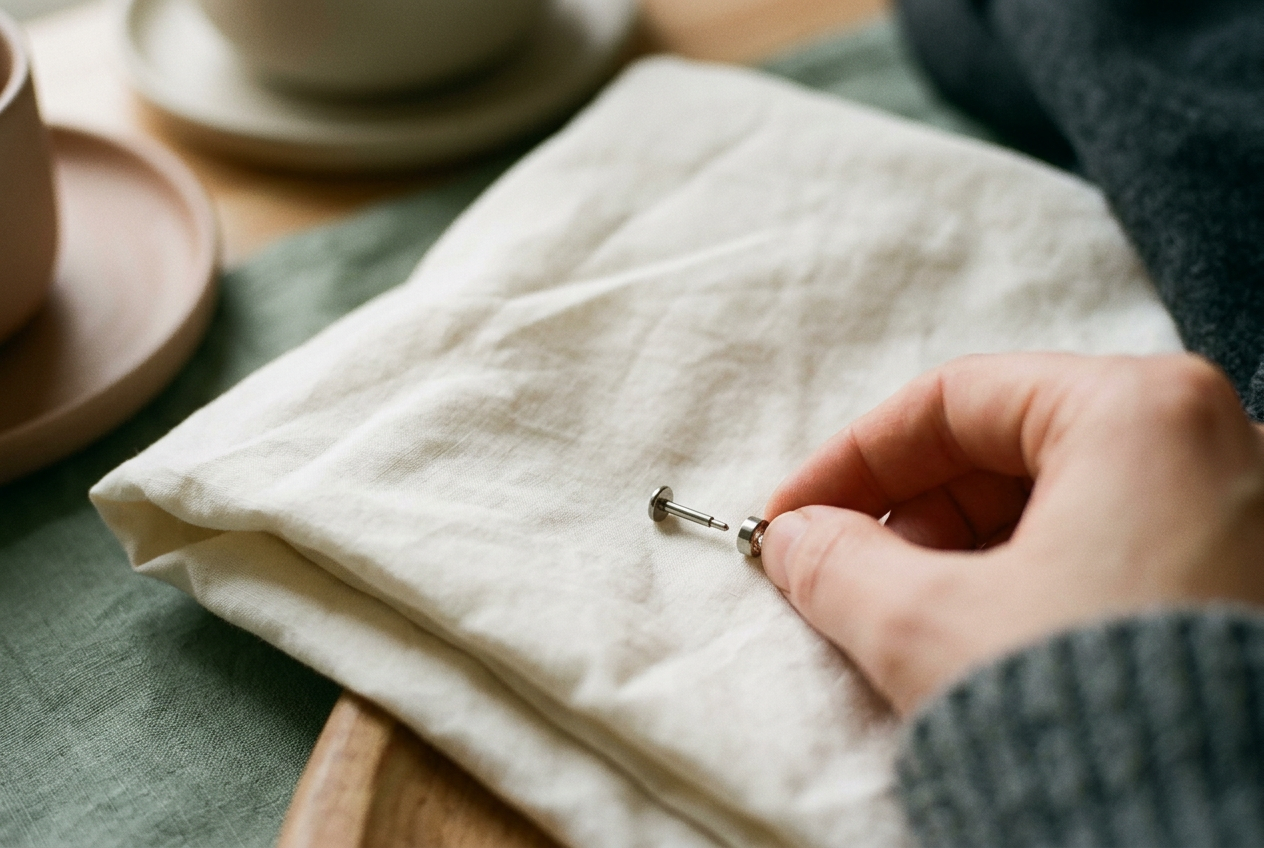
Work over a clean towel rather than a sink. Wash and dry your hands, then separate the end from the post with a straight pull, gripping the front and flat disc rather than squeezing the piercing itself. Nitrile or latex gloves can add traction when polished metal is difficult to hold.
Inspect both pieces under strong light before bending anything. The post opening should look round and unobstructed. The pin should meet the decorative end cleanly, without a visible gap, rough seam, discoloration at the joint, or movement when touched lightly. A pin that already has a hard kink should not be bent again.
Insert roughly half of the pin into its matching post. This supports part of the pin while leaving enough free length to flex, and it keeps the pressure out toward the shaft instead of concentrating it at the base of the decorative end. Hold the post in one hand and the end in the other, then make one restrained sideways adjustment.
Pull the pieces apart and look along the pin. The curve should be smooth. If it resembles a corner, or if the metal surface shows a crease, stop using that end.
Now push the pin fully into the post while both pieces remain off the ear. It should travel with controlled friction and seat all the way, leaving no visible gap between the decorative end and the post. Pull it apart in a straight line to check removal. The connection should resist an incidental tug but release with deliberate hand pressure.
Small corrections are safer than one forceful bend. If the fit remains loose, repeat the partway insertion and add a fraction more curve. If it is too tight, support the pin with the post and ease it slightly toward straight, again keeping pressure away from the base. Repeated bending in opposite directions can fatigue metal, so an end that requires several cycles is better taken to a piercer.
Too much tension has its own cost
A very tight end can seem reassuring until it needs to come out. Then the fingers pull harder, the post presses into the lobe, and the jewelry may jerk free rather than separating under control. That is a poor tradeoff for a sleep-friendly earring intended to stay comfortable through nightly wear.
The bezel end in this walkthrough should finish flush against the post without crushing skin between the two components. If it stops short, do not force the front down in the ear. Remove the pieces and reduce the curve off-body, or ask a piercer to assess whether the pin and post are a proper match.
Compatibility matters here. Threadless systems can look interchangeable while differing in pin dimensions, post openings, or manufacturing tolerances, and a bend cannot correct a fundamentally mismatched pair. Use the end with a post approved by its maker or retailer. If a known-compatible end stays loose even after a modest adjustment, the hollow post may be stretched or damaged instead.
The same caution applies to materials. Implant-grade titanium is light, corrosion resistant, and widely used for body jewelry, while solid gold ends may carry a titanium or gold insertion pin depending on their construction. Check the product description rather than assuming the pin matches the visible top. Plated mystery metal is a weak candidate for repeated adjustment, particularly when the underlying alloy and joint construction are not disclosed.
Damage that ends the adjustment
Replace the end if the pin has a sharp kink, a crack, deep tool marks, peeling plating, or movement at the place where it joins the decorative face. A loose stone or bezel also warrants retirement, even when the pin still grips. The post should be replaced if its opening is distorted, split, burred, or no longer holds another known-good compatible end.
Pliers are usually the wrong rescue tool at home. Bare jaws can score a polished pin, while padded jaws still make it easy to create a concentrated bend that looks small but weakens the metal. The matching post gives better support for the minor adjustment described in brand instructions; damage beyond that calls for replacement or professional handling.
Threadless jewelry is often sold as separate posts and ends, which makes the replacement decision less wasteful. A plain titanium end generally sits at the accessible end of the category, while solid gold, gemstones, and intricate settings cost more; replacing one suspect component can be preferable to risking an expensive end or an irritated piercing. Confirm that the remaining component is undamaged before reusing it.
Return to the titanium post and bezel end once more. The correct finished fit has three visible traits: the bezel sits flush, the post opening remains round, and the pin retains a gentle curve after removal. Any gap at the joint, angular crease in the pin, or need for brute force changes the decision from adjustment to replacement.
Wearing it after the fit check
Reinsert jewelry only into a calm, healed channel, following the care instructions already established for that piercing. Push the end straight into the post until it seats. Do not keep turning it in search of a threaded stop because there is none.
Check the connection after changing tops, catching the earring on clothing, or noticing that the front sits farther from the post than usual. Daily pulling is unnecessary and may irritate the piercing. A visual check and a light press toward the post are enough for routine wear.
Sleep-friendly describes the flat profile, not a guarantee that every size will feel good overnight. A post that is too short can press even when the end tension is perfect, while an overly long post can tilt and catch on hair or a pillowcase. Tension adjustment addresses the connection between end and post. It cannot fix post length, placement angle, swelling, or an end whose setting is too bulky for the anatomy.
Questions people ask
Where exactly should I bend a threadless earring end?
Place the bend in the free shaft of the insertion pin, around its middle, while the pin is supported partway inside the matching post. Keep pressure away from the joint where the pin meets the decorative end. The finished curve should be shallow and smooth, never a visible corner.
How do
I know whether the push-pin end is tight enough?
Test it off the ear. A secure end slides in with steady resistance, seats flush against the post, and comes apart with a deliberate straight pull. If it slips out with almost no resistance, add a tiny amount of curve. If it catches or requires force, reduce the curve.
Can
I adjust a threadless end while wearing it?
No. Remove the jewelry from a healed piercing and make the adjustment off-body, where the post can support the pin without transferring pressure to tissue. A fresh, swollen, painful, or fast-closing piercing should be handled by a professional piercer rather than emptied for a home fitting.
Should I replace a bent threadless pin?
A gentle manufactured or fitted curve is normal. Replace the end when the pin has a sharp kink, crack, deep score, damaged plating, or movement at its base, and stop if repeated corrections are needed. A professional piercer can also check whether the post is stretched or incompatible.
One update a day
Today's fashion update, in your inbox
One fashion update each morning — no hype, no filler, just pieces worth wearing.